
REVIEW · MUSEUMS
Exporail, the Canadian Railway Museum
One hour with old trains? That’s a surprisingly good plan. Exporail, the Canadian Railway Museum near Montreal, feels like a living railway set, with a tunnel packed with 400-plus artifacts that pulls you through Canada’s rail story. I also like the hands-on, real-world feel of climbing aboard public rail vehicles, from streetcars to passenger cars and big steam locomotives. One thing to consider: parts of the visit involve outdoor moving around, so wear good shoes and check the weather.
I appreciate that it’s open all year round, so it works whether you’re visiting in summer or you need an indoor-friendly fallback. You can also choose how involved you want to get, with optional add-ons like tram, passenger train, or miniature railway rides and interactive experiences (only some days, depending on the schedule).
It’s a ticket for about 1 hour, so it’s not a half-day museum crawl. That’s great if you want a focused visit, but if you love trains enough to read every label slowly, you might wish you had more time.
In This Review
- Key points to know before you go
- Exporail in a nutshell, a railway museum with real places to stand
- The tunnel with 400-plus artifacts, your fast track into rail Canada
- Climb aboard rail vehicles, streetcars to steam locomotives
- The people behind the rails, teacher car and caboose worker life
- Pick your pace with tram, passenger train, and miniature rides
- The discovery trail and shop stop, small wins that add up
- Price and value: is $17 worth it for a 1-hour visit?
- Weather and outdoor walking, how to avoid a miserable visit
- Getting there and using the right entrance near the tracks
- Languages, tour format, and how to plan your visit
- Who should book Exporail, and who might want a different plan
- Should you book Exporail?
- FAQ
- How long is Exporail?
- What languages are the tours offered in?
- Is Exporail wheelchair accessible?
- Are pets allowed in the museum?
- Where is the main entrance if I drive or park?
- Are tram, passenger train, or miniature railway rides included with the ticket?
Key points to know before you go

- 400-plus artifacts in the tunnel give you an instant sense of scale and era-hopping.
- Public access to rail vehicles means you see more than static displays.
- Teacher car to caboose worker stories add the human side, not just the machines.
- Year-round opening keeps this in play for any season.
- Outdoor walking is part of the route, so closed-toe shoes matter.
- Optional rides and interactive experiences can extend the fun beyond the core tour.
More indoor hours worth the ticket
- Museum of Illusions Montreal – 70+ Illusions to Explore★ 4.0 · 103 reviews
- Montreal: Museum of Illusions Entry Ticket★ 4.6 · 25 reviews
- Montreal: Art Center and Museum Audio Guided Tour★ 4.3 · 18 reviews
- McCord Stewart Museum – Admission★ 4.5 · 17 reviews
Exporail in a nutshell, a railway museum with real places to stand
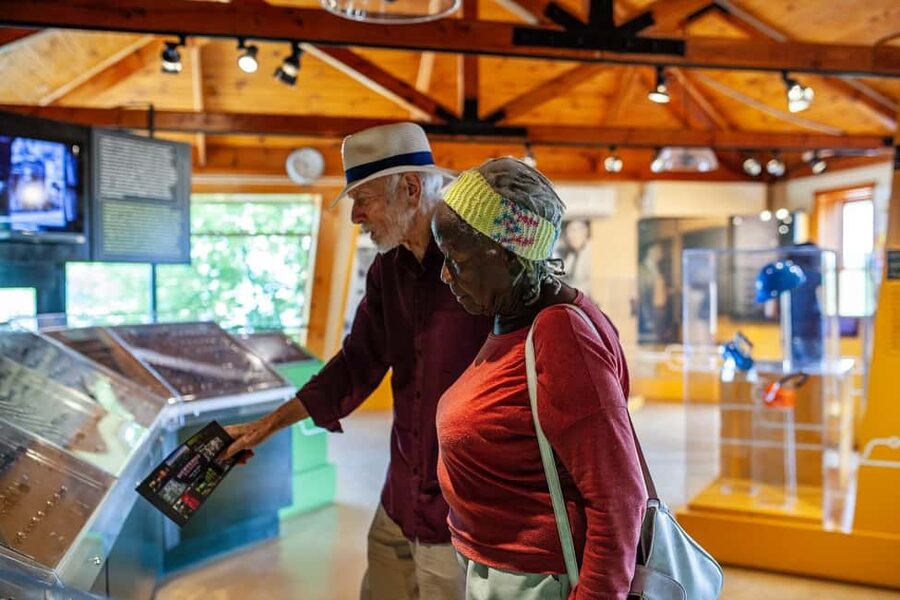
Exporail is one of those museums that doesn’t rely on fancy staging to get your attention. You walk in, and the trains and rail equipment feel close, like they could roll out the door at any moment. The big win here is that the museum is built like a working railway world, with lots of space to move and see.
At $17 per person for about an hour, it’s also a pretty solid value. You’re not just paying for a single room of exhibits. Your ticket includes access to current exhibitions, plus free parking, and there are dining areas where you can bring your lunch and eat indoors or outdoors depending on the season. That’s useful if you’re doing this as a day plan from Greater Montreal.
And if you’re thinking, yes, but is it actually fun, not just educational? That’s where the museum’s approach helps. You get to walk through scenes, see artifacts up close, and board vehicles that are open to the public. For kids, that’s often the difference between a museum they tolerate and one they remember.
The tunnel with 400-plus artifacts, your fast track into rail Canada
Right when you enter, you get a tunnel experience that sets the tone. Instead of one themed wall, you get a path that helps you move through time. The museum describes it as an immersive tunnel with more than 400 artifacts, and that’s exactly what it feels like: a lot of objects, not just a few big posters.
This is where you’ll likely get your “oh, wow” moments. The artifacts are the kind that make you picture how rail life worked day to day: tools, parts, and details connected to how people built, ran, and maintained transportation. Even if your train knowledge is limited to a few classic locomotive names, the sheer quantity and variety does the heavy lifting.
If you’re the type who enjoys spotting small differences, this is a strong stop. You can focus on how designs change and how different rail equipment served different roles. It’s also a good place to start so you understand what you’re looking at before you climb onto vehicles.
Climb aboard rail vehicles, streetcars to steam locomotives
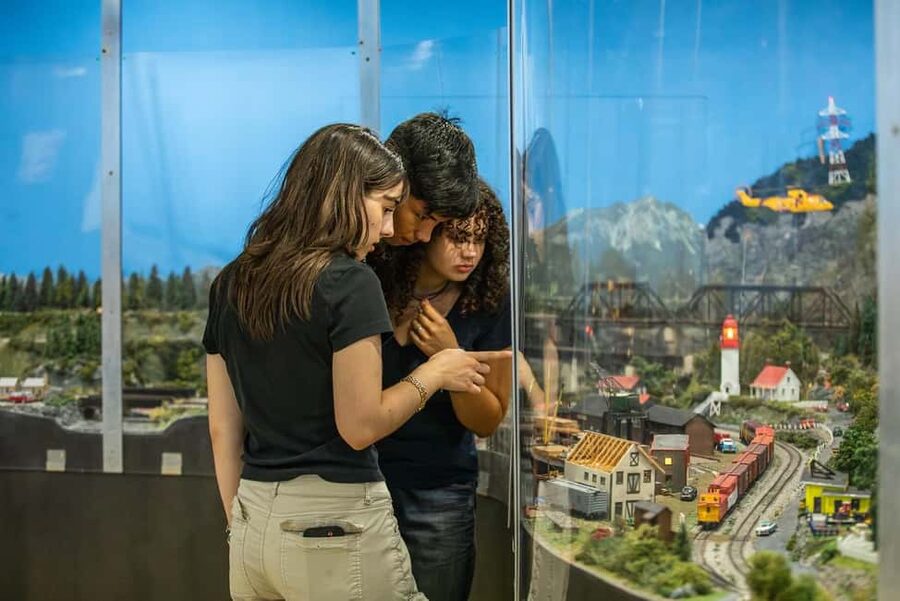
One of the best parts of Exporail is that you can board many vehicles that are open to the public. The museum isn’t content with showing you pictures. You can climb into rail cars and get a closer look at how they were laid out.
From the information provided, expect to see vehicles across several categories:
- Streetcars
- Passenger cars
- Legendary steam locomotives
That mix matters. If you only like one type of train, you still have options. And if you love them all, the variety keeps things from turning into repetitive “here’s another car” fatigue.
Practical tip: keep an eye on your footing and take your time around entrances and steps. The museum asks for closed-toe shoes, and it’s good advice. Even on a one-hour visit, your feet will do more work than you might expect, especially if you’re also walking along any outdoor segments of the route.



The people behind the rails, teacher car and caboose worker life
Trains are machines, but the museum makes sure you don’t forget the human side. The experience includes characters tied to specific places, like the teacher who taught in the school car and the railroad worker who lived and worked in the caboose.
This is a big deal for most visitors because it changes the question from “What engine is that?” to “How did people live and work around it?” It turns rail history into lived routines: teaching, managing tasks, and doing the daily work that kept trains moving.
I like this approach because it helps you connect even if you don’t know the technical terms. You don’t need a rail encyclopedia. You just need curiosity about how normal jobs would fit into a rail world.
Pick your pace with tram, passenger train, and miniature rides
Your ticket covers the core museum experience, but Exporail also offers optional rides and interactive moments depending on the day and schedule. The rides listed include:
- A tram ride
- A passenger train ride
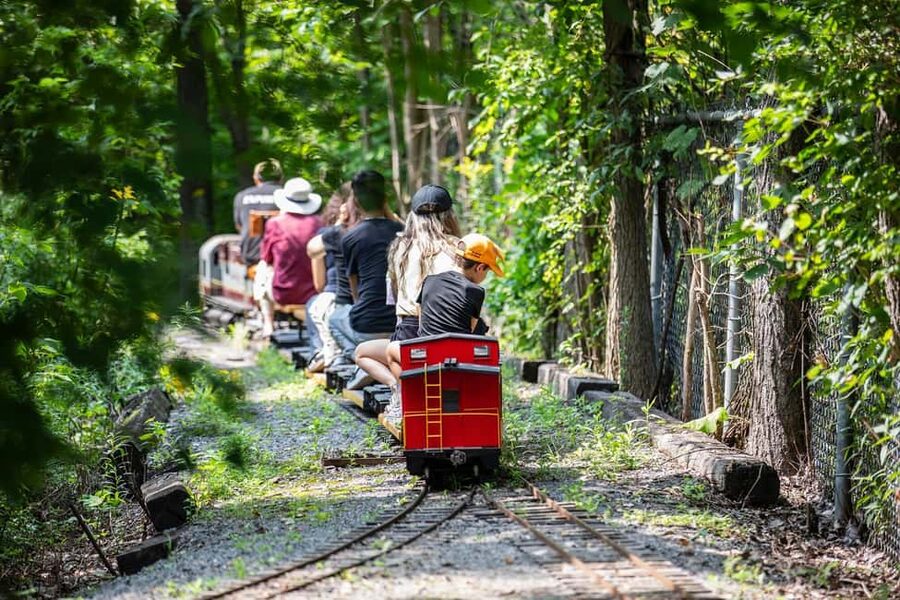
- A miniature railway ride
These are perfect if you want a little extra movement after you’ve done the main exhibits. They also help break the visit into smaller chunks, which is helpful if you’re with kids or if you just prefer not to walk nonstop.
There are also optional interactive experiences available at affordable prices to extend your railway adventure. The key detail is that these are not automatically included, so treat them as add-ons you choose based on your time and interests.
If you’re going for a one-hour visit, I suggest you keep the main path as the priority. Then, if you notice you still have energy and the schedule lines up, grab one ride. That way you’re not turning the visit into a scramble.
The discovery trail and shop stop, small wins that add up
Along with the main exhibitions, Exporail includes a discovery trail. A trail like this is underrated. It gives structure, helps you notice details, and keeps the visit from feeling like a random walk past displays.
And yes, there’s an on-site shop. It’s the kind of place where you can grab a small souvenir that actually fits the theme, without it being tacky or overly generic. It’s also a practical option if you realize you want something for a train-loving kid or a rail-obsessed adult friend later in the trip.
If you’re short on time, you can do this in a quick loop at the end, after you’ve seen the vehicles. If you’re taking things slower, give the discovery trail a little extra attention before you head to the shop.
Price and value: is $17 worth it for a 1-hour visit?
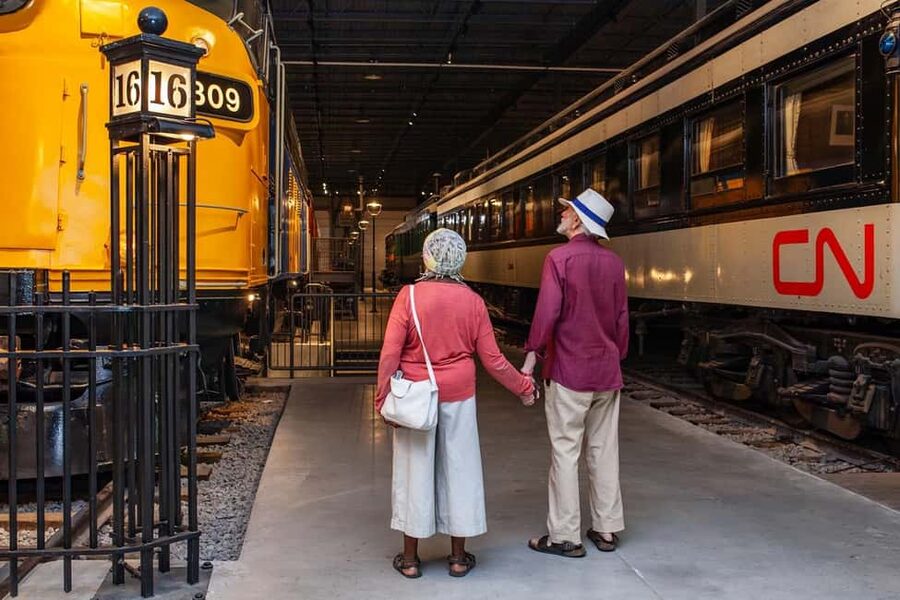
At $17 per person for about an hour, the value depends on one thing: what you want from your time.
Here’s what you get included:
- Access to current exhibitions (with “depending on the season” noted)
- A tunnel experience with more than 400 artifacts
- Free parking
- Dining areas where you can bring your lunch (indoor and outdoor depending on the season)
You also get the possibility of guided tours on Saturdays and Sundays, with a live tour guide speaking French or English. The meeting point is handled by reception based on the themed tour offered that day.
So if you’re looking for a focused, high-impact rail museum stop, $17 can feel like a bargain because there’s a lot to see in a short time window. But if you’re the slow reader, museum-label perfectionist, or you want to do multiple optional rides plus interactive add-ons, plan to spend more time than the one-hour baseline.
Think of it like this: you’re paying for access and close viewing of rail vehicles and artifacts, not for a long, drawn-out schedule. If that matches your travel style, it’s a smart buy.
Weather and outdoor walking, how to avoid a miserable visit
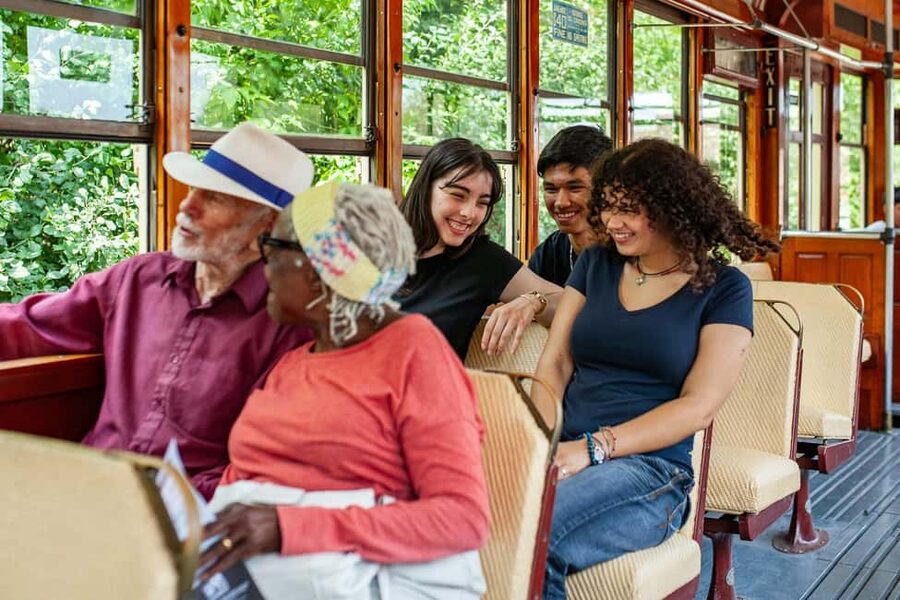
The rail museum is not purely indoors. One review points out that there are many moves outside and recommends you go when it’s nice. Another comment still appreciated that there are solid exhibits inside too, so you’re not stuck if conditions change.
So here’s what I’d do: check the forecast and dress for walking. Bring layers, and stick to closed-toe shoes no matter the season. If it’s pouring rain or bitterly cold, expect your comfort level to drop, even if the museum still has plenty to see indoors.
If you’re traveling with kids, this matters even more. Set expectations early: yes, trains, yes, fun, and yes, some walking outdoors.
Getting there and using the right entrance near the tracks
Exporail is located in Greater Montreal, Quebec, and you’ll want to know where to enter. The main entrance is currently at P1, near the railroad tracks that cross St. Pierre Street. Access via P2 is currently closed.
That sounds like a small detail, but it can save you time and frustration, especially if you’re navigating by GPS or if you’re arriving from a nearby parking area. Use the P1 info as your “source of truth,” then give yourself a few minutes to settle in before your tour time.
Meeting point also works a bit differently. It’s provided at reception according to the themed tour offered that day. On Saturdays and Sundays, guided tours are available with a live guide.
Languages, tour format, and how to plan your visit
Exporail offers live tour guidance in French and English. Some content is shown in its original language, so if you’re relying on English only, you may want to keep a flexible mindset. Visuals and physical vehicles still do a lot of work, but it’s good to know language coverage may not be perfectly uniform across every display.
Also note: the tour duration is listed as 1 hour, so treat the visit like a tight, satisfying circuit. If you want extra time, count on the optional activities and optional rides to extend things.
Wheelchair accessibility is listed, so if you need barrier-free access, Exporail is set up for that. For anyone bringing a stroller or needing more space, you’ll still want comfortable shoes and patient pacing, since you’ll be moving around vehicles and exhibit areas.
On the rules side, pets are not allowed, but assistance dogs are allowed. Alcohol and drugs are not allowed. If you’re planning a picnic, you’re covered by the dining areas where you can bring your lunch.
Who should book Exporail, and who might want a different plan
Exporail is a great fit if:
- You love old trains and want to see real rail vehicles, not just photos
- You want a family-friendly plan that works in any season
- You like museums that include people stories, not only technical artifacts
- You’re staying in Montreal and want an easy day trip in Greater Montreal
You might consider a different plan if:
- You want a long, slow museum day with extensive guided depth in one go
- Weather and outdoor walking are major concerns for your group
- You’re looking for a highly scripted, high-volume show, because this feels more like a hands-on railway world than a performance
The 1-hour structure is the real tell. Exporail is designed to be doable, even when your travel schedule is tight.
Should you book Exporail?
Yes, you should book Exporail if you want a compact rail museum that feels real. For $17, you get access to current exhibitions, free parking, and a tunnel packed with 400-plus artifacts, plus the chance to board public vehicles like streetcars, passenger cars, and steam locomotives. Add the human stories like the teacher car and caboose worker life, and you get more than “cool machines.”
Book with confidence if your group includes anyone who likes trains, or anyone who likes learning through physical places and small details. If your schedule is tight, this is one of those day-trip wins that doesn’t demand a half-day commitment.
Just plan for walking and bring closed-toe shoes. If the weather is nice, you’ll enjoy the outdoor parts even more. If it’s not, aim to spend time in the indoor exhibits and consider one optional ride only if the schedule fits your energy.
FAQ
How long is Exporail?
The experience duration is listed as 1 hour.
What languages are the tours offered in?
The live tour guide is available in French and English.
Is Exporail wheelchair accessible?
Yes, the experience is listed as wheelchair accessible.
Are pets allowed in the museum?
Pets are not allowed. Assistance dogs are allowed.
Where is the main entrance if I drive or park?
The main entrance is at P1, near the railroad tracks that cross St. Pierre Street. Access via P2 is currently closed.
Are tram, passenger train, or miniature railway rides included with the ticket?
Optional activities and rides are not included. They are available depending on the day’s schedule, so you may need to pay for them separately if you want to add them.
Indoor Hours Worth the Ticket





Just off the notebook: recent Montreal write-ups
- Secret Food Tours: Montreal – Jean-Talon & Little Italy
★ 4.0 · 4 reviews - Montreal to Quebec City Tour with Private Transportation
★ 5.0 · 4 reviews - Montreal: Iconic Landmarks All-Inclusive VIP Experience
★ 4.7 · 4 reviews - A Walking Tour of Old Montreal
★ 3.8 · 4 reviews - Day at Mont-Tremblant National Park
★ 4.0 · 5 reviews - Old Montreal: Self-Guided Tour from Place D‘Armes to Old Port
★ 5.0 · 5 reviews
Museums, compared.
 ★ 4.6Toronto: Royal Ontario Museum Admission TicketFrom $191,237 reviews
 ★ 4.5Royal Ontario Museum AdmissionFrom $19411 reviews
 ★ 4.6Toronto: Art Gallery of Ontario General Admission TicketFrom $21251 reviews
 ★ 5.0Britannia Mine Museum General AdmissionFrom $32233 reviews
 ★ 4.7Ottawa: Canadian War Museum AdmissionFrom $18232 reviews
 ★ 4.8Gatineau: Canadian Museum of History AdmissionFrom $20230 reviews
 ★ 4.6Ottawa: Canadian Museum of Nature AdmissionFrom $19226 reviews
 ★ 3.5Museum of Illusions Admission in TorontoFrom $26214 reviews
Browse the lists this tour appears in