
REVIEW · OLD MONTREAL WALKING & HISTORY TOURS
Old Montreal: Self-Guided Tour from Place D‘Armes to Old Port
Old Montreal tells its story at your pace. This self-guided audio route connects major landmarks, with clear directions and offline audio so you can stop when you want. I like that it keeps things easy to follow and still teaches you what you’re seeing, stop by stop.
Two big wins for me are the historic highlights you hit in one walk and the freedom to take your time. You can drift into side streets, pause for a snack, and then get back on track. The main thing to watch is that it’s built around your smartphone, so you’ll want a charged phone and comfortable walking shoes.
In This Review
- Key Points You’ll Actually Notice
- The Simple Pitch: A GPS Audio Walk That Fits Real Sightseeing
- Price and Value: What $11.99 Buys in Old Montreal
- Before You Go: Phone, Headphones, and Offline Comfort
- Stop 1: Place d’Armes, Where You Get Your Bearings Fast
- Stop 2: Notre-Dame Basilica, Don’t Rush the Details
- Stop 3: Montreal City Hall, Second Empire Architecture in Real Life
- Stop 4: Château Ramezay, A Building That Changes Hands
- Stop 5: Notre-Dame-de-Bon-Secours Chapel, The Sailors’ Church
- Stop 6: Bonsecours Market, A Big Building With Past Uses
- Stop 7: Place Jacques-Cartier, Where You Can Reset With Food and Photos
- Stop 8: Pointe-à-Callière Museum Area, Montreal’s Birthplace
- Stop 9: The Site of Montreal’s First Hospital, Connected to the Grey Nuns
- Stop 10: Montreal Science Centre, Modern Learning on the Old Port Promenade
- Final Stop: The Clock Tower, Old Port Views and a Strong Ending
- How to Use It Like a Pro (And Avoid the Most Common Mistakes)
- Who This Tour Is Best For
- Should You Book This Old Montreal Audio Tour?
- FAQ
- How long does the Old Montreal self-guided tour take?
- Where does the tour start and end?
- Is the tour available in English?
- Do I need museum tickets for stops on the route?
- Can I use it without cell service?
- What do I need to bring?
- Is it a guided tour with a live host?
- Is the price per person and is it refundable if plans change?
- Are service animals allowed?
Key Points You’ll Actually Notice
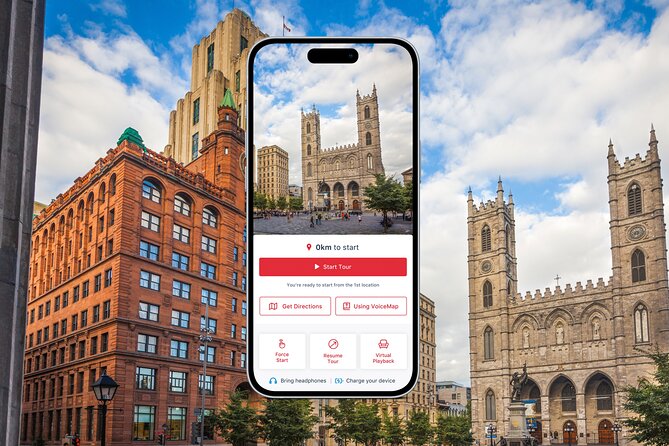
- Built for your timing: listen like an audiobook, pause often, and explore at a relaxed pace.
- Historic anchors, one after another: Place d’Armes, Notre-Dame Basilica, City Hall, and the Old Port Clock Tower.
- Offline-first: maps and geodata come with the audio, so you’re not stranded without signal.
- Great value over time: unlimited, lifetime use before and after your booking date.
- English audio only: plan around that if you need another language.
- Bring your own audio gear: you supply the smartphone and headphones.
More cobblestone hours in Old Montreal
- Montreal Mile End Authentic Food Tour with 7 Delicacies Tastings★ 5.0 · 2,598 reviews
- The Original Old Montréal Walking Tour by Guidatour★ 4.5 · 2,217 reviews
- Old Montreal Small-Group Walking Tour | Max 10 | by MTL Detours★ 5.0 · 2,088 reviews
- Montréal: The Original Old Montréal Walking Tour★ 4.8 · 911 reviews
The Simple Pitch: A GPS Audio Walk That Fits Real Sightseeing
If you like walking tours but hate being herded, this is the right kind of format. Instead of a fixed guide time slot, you get a GPS-driven route with audio cues. That means you can linger at a facade you love, cut the pace at a long stretch, and spend extra minutes where you feel curious.
I also like that the route is designed as a chain of “look, understand, look again.” You start at Place d’Armes, then you steadily work your way toward the Old Port. Along the way you pass church, civic buildings, old-world fort-era spaces, and maritime-themed sights. It feels like you’re building a mental map as you go.
One more practical advantage: it’s offered in English, and the tour runs roughly 1 hour 15 minutes to 1 hour 30 minutes. That’s short enough to fit between meals, yet long enough to learn more than the basics.
Price and Value: What $11.99 Buys in Old Montreal
At $11.99 per person, this costs about the price of a decent espresso and pastry. The smarter comparison is what you get for that money: directions that start you in the right place, a self-guided GPS experience, offline audio and maps, plus unlimited lifetime use.
The lifetime-use part matters. If you want to repeat it later, you can. If you’re back in Montreal for a weekend, you can reuse the same tour without paying again. It’s also useful as a “second take” when you’re returning the next day and notice details you missed the first pass.
The audio also includes a virtual playback option, so you can listen like an audiobook from anywhere. That means you can preview the vibe before you walk, or review later at your hotel.
Big caution for value: it does not include any museum tickets or entrance fees. If you decide to go inside a stop, expect to pay those separately.
Before You Go: Phone, Headphones, and Offline Comfort
This tour expects you to bring your own smartphone and headphones. That’s normal for modern audio tours, but it changes your prep checklist a little. I’d charge your phone fully and download anything you can while you still have Wi-Fi.
The tour also provides offline access to audio, maps, and geodata. In a city center like Old Montreal, you can still run into patchy service indoors or in narrow streets. Offline support is what makes this tour feel low-stress.
It’s also a private tour/activity, meaning only your group uses the experience. If you’re traveling with friends, you’re not sharing audio or timing with strangers.
More days someone else has already planned



Stop 1: Place d’Armes, Where You Get Your Bearings Fast
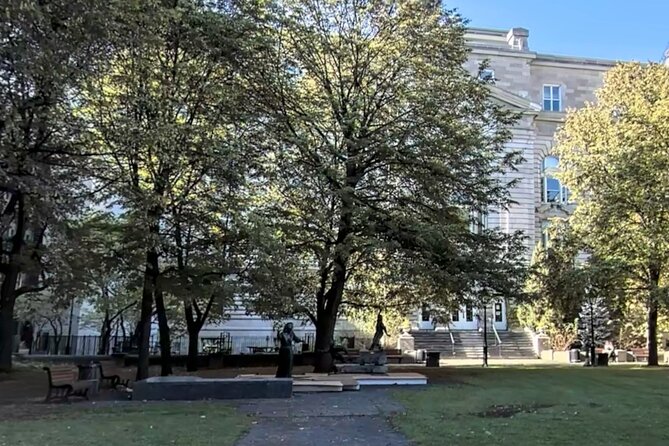
You begin at Côte de la Place d’Armes and Rue Saint-Jacques. This square works as an orientation point because it gives you a quick overview of the neighborhood and the kind of buildings you’ll keep seeing.
The audio highlights the statue of Montreal’s founder, Paul de Chomedy, and points you toward the Bank of Montreal and the old Saint-Sulpice Seminary. That matters because it sets context for what comes next. Old Montreal can feel like one long photo stop, but this start helps you understand what’s old, what’s institutional, and what connects to the city’s early power centers.
A small but real tip: take one minute to stand still and look around before you start walking. Once the audio begins, you’ll move through a lot of architecture. A good first glance makes the rest far more satisfying.
Stop 2: Notre-Dame Basilica, Don’t Rush the Details

Next up is Notre-Dame Basilica, described as Canada’s most famous church and one of the most visited monuments. You’ll hear it framed through its Gothic Revival architecture and the standout interior.
This is a stop where speed usually hurts. Even if you only step inside briefly, plan to pause for the shapes, stonework, and the overall feel. Gothic Revival churches can look “just pretty” until someone gives you a way to read the structure, and that’s what the audio does.
Possible drawback: the tour is self-guided. If you want to spend extra time here, you can. But if you’re trying to finish the whole route on a tight schedule, you’ll need to watch your timing.
Stop 3: Montreal City Hall, Second Empire Architecture in Real Life
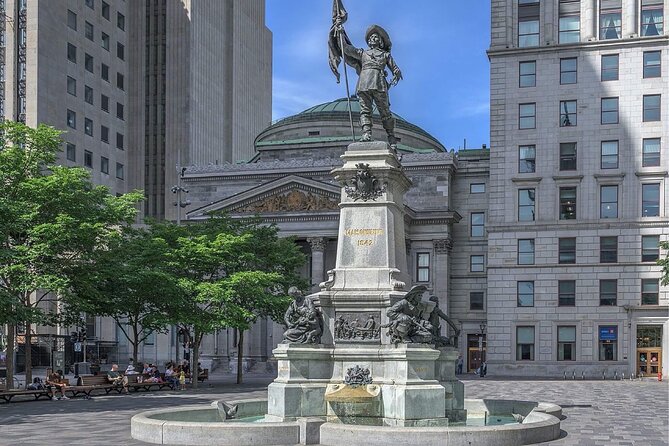
As you walk by Montreal City Hall, the audio points out its Second Empire architecture. This is the kind of building that reads differently outside than it does in a brochure. Up close, you start noticing the style choices and how the building projects civic authority.
The narration also ties it to important city events. That connection matters because the architecture becomes more than scenery. You’re not only seeing a pretty facade, you’re learning why that place became a hub for decision-making.
If you’re the type who likes to take photos, City Hall is one of those stops where a quick snap can miss the full scale. Give it a slow look from a couple angles.
Stop 4: Château Ramezay, A Building That Changes Hands
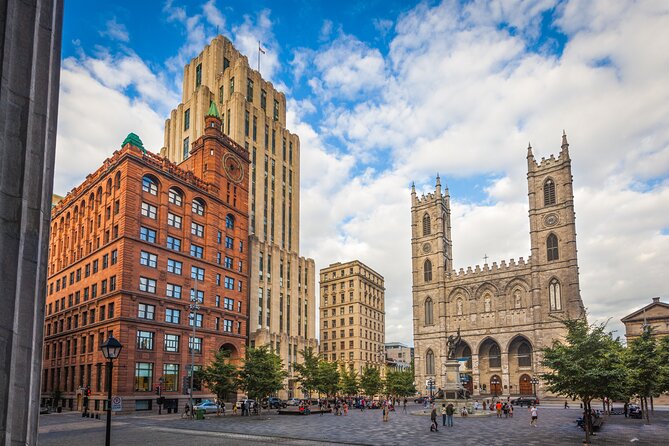
Then you come to Château Ramezay, which now serves as a museum but has had multiple owners over time: occupied by the French, the British, and briefly by Americans.
Hearing that sequence as you walk by helps you understand why the building feels like a timeline. When old structures change occupants, they often hold traces of each era. Even if you do not enter, you’ll walk with a better sense of why the site mattered.
Since the tour does not include tickets, your decision is yours. If you want to go inside, budget extra time and ticket cost. If you prefer only exterior viewing, this still works because the audio explains enough to make the stop feel meaningful.
Stop 5: Notre-Dame-de-Bon-Secours Chapel, The Sailors’ Church

Next is Notre-Dame-de-Bon-Secours Chapel, often called the Sailors’ Church. The audio leans into its maritime connection, and you’ll be ready for the atmosphere when you get there.
This is a smart stop for two reasons. First, it shifts the story from government and major institutions back to everyday life and belief. Second, the chapel’s maritime artifacts make it a fascinating complement to the Old Port area you’ll reach later.
Potential consideration: chapels and churches can have visiting hours and crowd patterns. The audio walk doesn’t control that. If you’re going at a busy time, your best move is to keep your visit short, then come back if you want more time.
Stop 6: Bonsecours Market, A Big Building With Past Uses
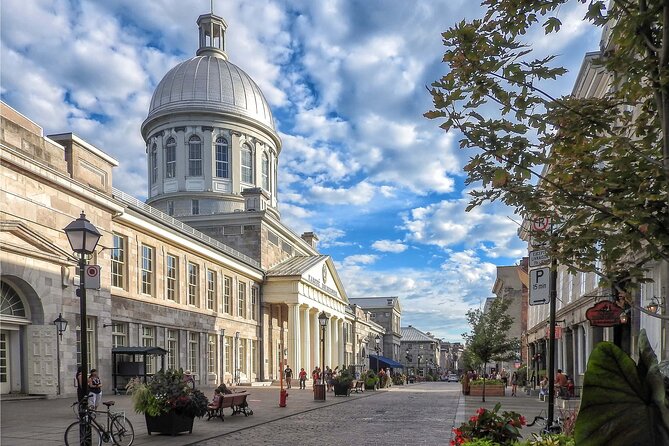
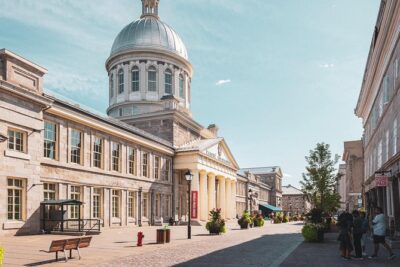
You pass by Bonsecours Market, a building with a complex past. The audio notes it has housed the Parliament of the United Province of Canada, City Hall, and later the headquarters of Montreal’s Housing and Planning Department. Today, it’s a retail space.
This is one of my favorite kinds of stops: a building that kept changing purpose without disappearing. It also gives you a way to understand Old Montreal as living city fabric, not just an old postcard.
When you listen here, pay attention to the contrast between formal civic spaces and modern retail uses. That contrast is part of the charm, because the city keeps reusing what it already has.
Stop 7: Place Jacques-Cartier, Where You Can Reset With Food and Photos
As the route keeps moving, you’ll reach Place Jacques-Cartier, a lively square with restaurants and shops. The audio frames it as a popular gathering spot for locals and tourists, and it’s a good place to take a breather.
This is also where the self-guided format shines. You can pause the audio, take a longer break, and continue when you’re ready. The route is set up so you’re not locked into a strict tour rhythm.
One practical note: make sure you keep your phone volume up. Squares with street noise can drown quiet audio cues. If you can, use headphones that cancel a little sound.
Stop 8: Pointe-à-Callière Museum Area, Montreal’s Birthplace
Next you pass the Montreal Museum of Archaeology and History at Pointe-à-Callière, positioned at the site of Montreal’s birthplace. The audio gives you a reason to pay attention even if you do not buy a museum ticket.
This part works especially well if you’re the kind of person who likes origins stories. The city doesn’t start with buildings you can name. It starts with a site, then layers of human life. Even a quick pass-by can make that click.
If you want to go inside, remember: ticket costs are not included in the tour. Plan for extra time if you add the museum.
Stop 9: The Site of Montreal’s First Hospital, Connected to the Grey Nuns
The tour then moves to the site of Montreal’s first hospital, opened by the Grey Nuns of Montreal. The audio points out the early medical history and the influence of Catholic missionaries.
This is a thoughtful stop because it adds a human angle to the walk. Churches and government buildings are easier to spot, but hospitals explain how cities actually cared for people.
If you’re hoping for a “wow, look at that building” moment here, it may feel more reflective than dramatic. But it helps you understand the city as a community, not only a set of monuments.
Stop 10: Montreal Science Centre, Modern Learning on the Old Port Promenade
After that, the route brings you along the Old Port promenade area and by the Montreal Science Centre. This is a change of tempo, switching from old-world stories to modern interactive learning.
You might not go inside, but it’s a useful reminder that Old Montreal connects to the present. The promenade area is exactly where a self-guided format makes sense, because you can pause, take in river air, and decide how much time you want near the waterfront.
Also, this stop helps with pacing. By the time you reach it, you’ve already covered major architectural sites. It gives your feet a small mental break before you finish with the landmark view.
Final Stop: The Clock Tower, Old Port Views and a Strong Ending
Your tour ends at the Clock Tower at the Old Port. This is one of those “you made it” places because it’s prominent and designed for easy navigation. The audio ties it to Montreal’s maritime heritage, and the views of the St. Lawrence River are the payoff.
This is a good ending point for two reasons. It’s visually satisfying, and it’s functional for your next steps. You can keep walking along the waterfront, grab a late snack, or simply sit with the river view and replay the parts you liked best.
If you’re the type who takes a lot of photos, you’ll probably want to spend extra minutes here. The audio ending gives you context, but the river view does the emotional work.
How to Use It Like a Pro (And Avoid the Most Common Mistakes)
I like this tour format because it doesn’t force a rigid pace. One review tip that matches how these tours work in real life: pay attention to your starting point and ending point. Put both into your phone so the route makes sense right away, especially if you arrive from a subway or bus.
Another smart tip from experience with shared phones: it’s better to have one device per person. Sharing one phone can feel awkward because the audio and controls are tied to that single screen.
Finally, use the pause power. If you want a pint or food, stop and go. The walk is designed to let you explore without breaking the whole experience. Just remember to start the audio again when you’re ready to move on.
Who This Tour Is Best For
This audio walk is a great fit if you:
- want a self-guided GPS route with offline audio and maps
- enjoy learning while you walk, without joining a scheduled group
- prefer to stop for photos, churches, and small detours
- like the idea of getting a tour you can use again later, thanks to lifetime use
It’s less ideal if you:
- rely on someone else to handle your phone navigation
- hate doing your own route control
- need museum entrances included, because tickets are not part of the package
Should You Book This Old Montreal Audio Tour?
Yes, I’d book it if you want a low-cost way to connect Old Montreal landmarks into one coherent story, without committing to a guide’s timing. The offline support, the English audio, and the lifetime access make it feel like more than a one-time product.
Skip or reconsider if you need a fully guided experience with paid museum entries included. Also, if you know you dislike smartphone-based directions, think twice, because this experience lives on your device.
For most people looking for a practical Old Montreal walk, this is a solid way to spend an afternoon, especially if you like history but still want control over your pace.
FAQ
How long does the Old Montreal self-guided tour take?
It typically takes about 1 hour 15 minutes to 1 hour 30 minutes.
Where does the tour start and end?
It starts at Côte de la Place d’Armes and Rue Saint-Jacques, Montreal, QC and ends at the Clock Tower, 1 Rue Quai de l’Horloge, Montréal, QC.
Is the tour available in English?
Yes, the tour is offered in English.
Do I need museum tickets for stops on the route?
Tickets or entrance fees are not included. If you want to enter museums or attractions, you’ll need to buy those separately.
Can I use it without cell service?
Yes. You get offline access to audio, maps, and geodata.
What do I need to bring?
Please bring your own smartphone and headphones.
Is it a guided tour with a live host?
No. It’s self-guided with GPS audio, and it’s also listed as private for your group.
Is the price per person and is it refundable if plans change?
The price is $11.99 per person, and you can cancel for a full refund if you cancel at least 24 hours before the experience starts.
Are service animals allowed?
Yes, service animals are allowed.
Easier With a Guide





More Cobblestone Hours




Just off the notebook: recent Montreal write-ups
- Secret Food Tours: Montreal – Jean-Talon & Little Italy
★ 4.0 · 4 reviews - Montreal to Quebec City Tour with Private Transportation
★ 5.0 · 4 reviews - Montreal: Iconic Landmarks All-Inclusive VIP Experience
★ 4.7 · 4 reviews - A Walking Tour of Old Montreal
★ 3.8 · 4 reviews - Day at Mont-Tremblant National Park
★ 4.0 · 5 reviews - Old Montreal: Self-Guided Tour from Place D‘Armes to Old Port
★ 5.0 · 5 reviews
Old Montreal Walking & History Tours, compared.
 ★ 5.0Montreal Mile End Authentic Food Tour with 7 Delicacies TastingsFrom $942,598 reviews
 ★ 4.5The Original Old Montréal Walking Tour by GuidatourFrom $262,217 reviews
 ★ 5.0Old Montreal Small-Group Walking Tour | Max 10 | by MTL DetoursFrom $442,088 reviews
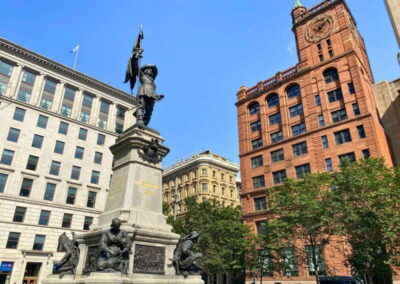 ★ 4.8Montréal: The Original Old Montréal Walking TourFrom $25911 reviews
 ★ 4.7Old Montreal: Traditional Ghost Walk of the Haunted CityFrom $24746 reviews
 ★ 4.5Old Montreal Ghost Walking TourFrom $26726 reviews
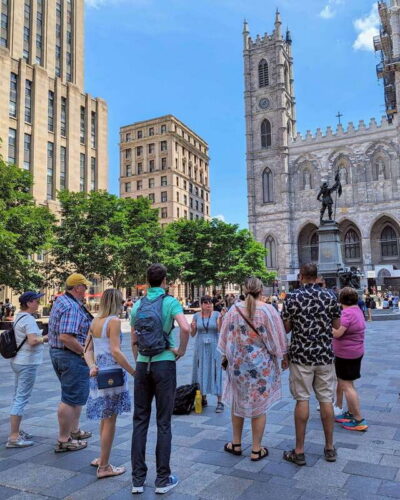 ★ 4.9Montreal: Top Rated Small Group Old Montreal Walking TourFrom $46611 reviews
 ★ 5.0Walking tour of Old Montreal – 16/42 ToursFrom $27592 reviews
Browse the lists this tour appears in