
REVIEW · WALKING TOURS
Rabbis, Writers and Radicals: Montreal Jewish History Walking Tour
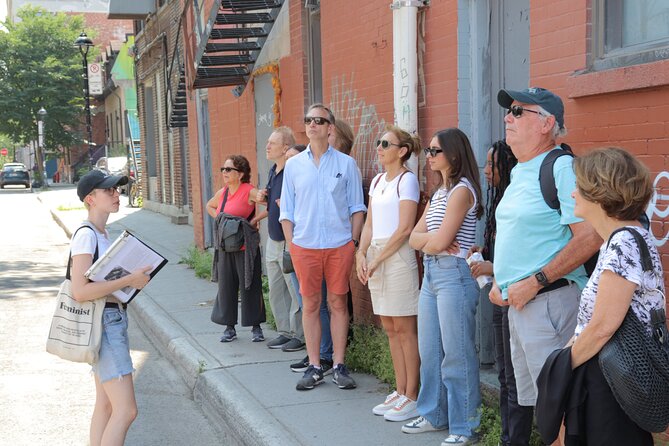
Jewish Montreal reads best on foot. This 2-hour walking tour through the Plateau and Mile End weaves together the story behind rabbis, writers, and radicals, with a local guide from the Museum of Jewish Montreal. I also like that it keeps the focus on street-level context, not just facts on a page.
One of my favorite parts is how the tour links ideas to real life, including big moments like the padlock laws and political divides such as anti-Zionist Jews. Guides such as Emily, Vivien, Serafina, Sofia, and Hannah are repeatedly singled out for staying friendly, answering questions, and keeping the group moving at a pace that works for different walkers.
The main thing to consider is that it can lean more lecture-style than storybook dramatic, and audio clarity can vary depending on where you stand. If you prefer a tighter chronological narrative, come ready to ask follow-up questions and to slow down when needed.
In This Review
- Key highlights worth your attention
- Walking the Plateau and Mile End, with real street context
- The rabbis story: more than sermons on a street corner
- Writers and ideas: when words became community infrastructure
- Radicals, politics, and the legal squeeze that shaped daily life
- How the tour actually feels: pace, group size, and hearing the guide
- Price and value for a 2-hour walking tour
- Museum of Jewish Montreal time at 5220 St-Laurent
- Who should book, and how to get the most from it
- Should you book Rabbis, Writers and Radicals?
- FAQ
- How long is the Rabbis, Writers and Radicals walking tour?
- How much does the tour cost?
- What language is the tour offered in?
- What is the group size limit?
- Where do I meet and where does the tour end?
- Is the tour family friendly, and is it suitable for walking?
- Do I get a mobile ticket?
- When will I receive confirmation after booking?
- Is there free cancellation?
- Are service animals allowed and is it near public transportation?
Key highlights worth your attention
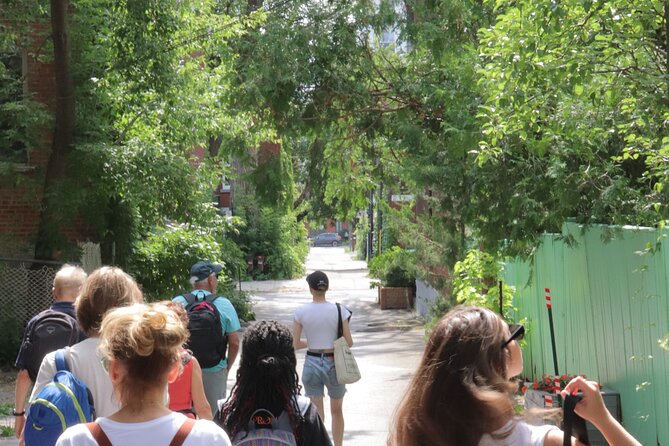
- Small group size (max 20): easier questions, calmer pace, and better chances to hear your guide.
- Local Museum guide: you get the community story, not just a generic overview of Montreal.
- Themes beyond religion: rabbis, writers, and radicals, plus law and politics like padlock laws.
- Plateau and Mile End focus: the walk centers on where Jewish life took shape in Montreal.
- Family friendly, moderate walking: built for a shared, readable experience rather than a sprint.
Montreal at walking pace, a few more routes
- The Original Old Montréal Walking Tour by Guidatour★ 4.5 · 2,217 reviews
- Old Montreal Small-Group Walking Tour | Max 10 | by MTL Detours★ 5.0 · 2,088 reviews
- Montréal: The Original Old Montréal Walking Tour★ 4.8 · 911 reviews
- Old Montreal: Traditional Ghost Walk of the Haunted City★ 4.7 · 746 reviews
Walking the Plateau and Mile End, with real street context
This is a history walking tour in Montreal that centers on the Plateau and Mile End neighborhoods. That matters because Jewish Montreal history is not only in a museum building. It lives in the geography of the city, the way neighborhoods developed, and the kinds of community institutions that tend to cluster near transit and daily life.
You start in the Plateau area on Boulevard St-Laurent at 4129 Boul. Saint-Laurent, Montréal, QC H2W 1Y7. The tour also has a clear end point at 5220 Boul. Saint-Laurent, Montréal, QC H2T 1S1, which lines up with the Museum of Jewish Montreal address. One important note: the tour does not simply begin and end at the museum. The tour starts and ends at different locations around the neighborhoods, and your ticket lists the exact points.
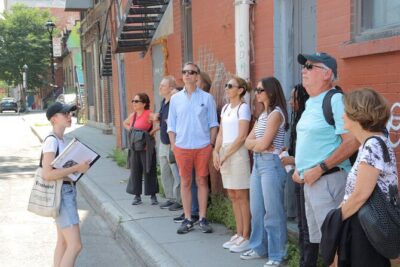
Expect a real walking pace. The tour is listed for people with moderate physical fitness, and it is also described as family friendly. With that, I’d plan on comfortable shoes and a steady headspace, not a casual stroll that barely covers ground.
A practical tip: if you want to get the most out of a guide-led talk on the street, position yourself where you can hear clearly. In a small group, that usually means sticking a bit closer toward the front or side where the guide naturally speaks. If English is not your first language, you’ll likely still find the tour manageable, since multiple guide styles seem to adapt to different needs.
The rabbis story: more than sermons on a street corner
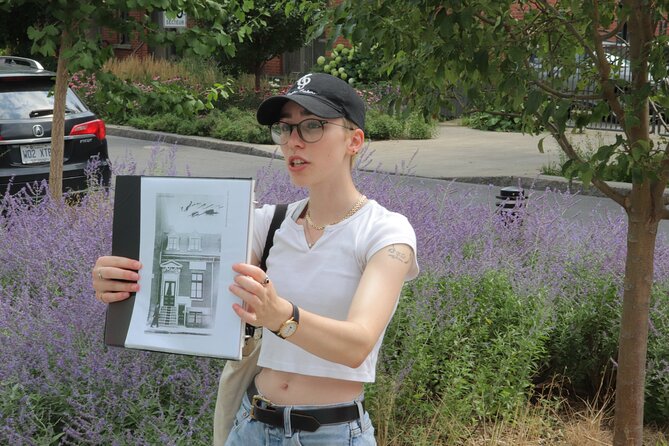
The tour title is doing a lot of work for you. Rabbis, Writers and Radicals signals that you’re not only learning about a community’s culture in broad strokes. You’re being guided through how Jewish religious leadership, public thinking, and political movements overlap in Montreal.
The rabbis section tends to matter because it explains a community’s internal “instruction manual.” Rabbis and religious institutions shaped daily life, helped interpret law, and built community cohesion, especially for immigrant groups building stability in a new country. In Montreal, that story becomes even more meaningful when you connect it to where people lived, prayed, argued, and organized.
A theme that comes through in the tour content is how policy and public decisions affected Jewish life. That means the rabbis part is not only about tradition. It’s also about how religious authority interacted with the wider Canadian setting, and how communities responded when external systems pushed back.
If you like your history focused, this is a good fit. You get interpretive context along the walk, not just a list of dates. If you want heavy timelines and major event dates, I’d pair this with a museum visit after, where you can slow down and cross-check details at your own pace.
Writers and ideas: when words became community infrastructure
One of the smartest aspects of this tour is that it takes writers seriously. Jewish history in cities often spreads through paper, speeches, and public debate. Writers, journalists, and intellectuals do not just entertain. They help organize communities, argue over priorities, and spread information when people are far from home.
In a walking format, this section works best if you treat it like a guided reading of the city. You’re not staring at a single monument and moving on. You’re hearing how the community’s voice formed, then watching the neighborhood around you serve as a backdrop for the kind of public life writers helped build.
This is also where the tour’s broader title pays off. It’s not only rabbis and faith. It’s also minds at work, discussions in print, and ideas that traveled across generations. You’ll often catch references to tensions and disagreements, because writer-driven debates are usually where communities define themselves, who they include, and what they believe the future should look like.
If you’re the type who loves public intellectual history, you’ll probably enjoy how the walk connects street-level places to these bigger ideas. If you prefer quiet reflection, you might still find this section rewarding, but go into it expecting a guiding voice that does most of the talking.
More routes into older Montreal
Radicals, politics, and the legal squeeze that shaped daily life
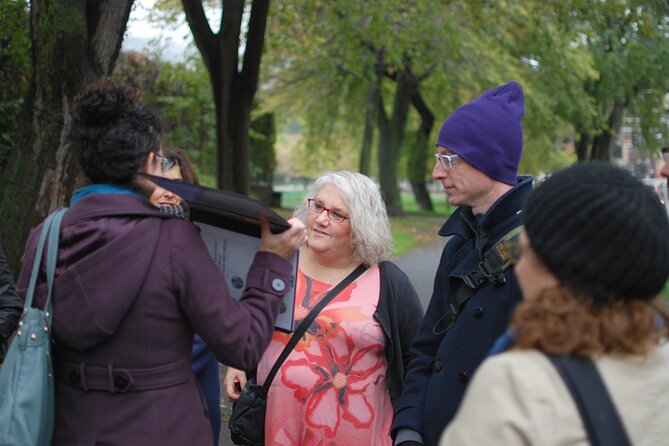
The radicals portion is where the tour title becomes practical. Political movements, activism, and ideological conflicts are not abstract. They show up in how communities are policed, how they’re represented, and what kinds of public pressure they face.
Two concrete examples that come through in the tour’s themes are the padlock laws and political divisions involving anti-Zionist Jews. These are not the kind of details you typically hear in a standard “immigration story” tour. Here, the discussion connects politics to consequences, and that’s where the walk can feel especially real.
Why is that valuable? Because it reframes what “history” means. Instead of only learning who arrived, you learn how ideas and institutions collided with the state and with each other. That’s often the difference between a tour that feels like a facts dump and one that actually helps you understand how a community functioned under stress.
You might also notice the tour’s structure can feel like separate theme blocks. Some people respond very well to that format, while others wish the story stitched more tightly from start to finish. If you fall into the second group, you can fix it for yourself by asking one simple question at the right time, like how the rabbis section connects to the political sections you just heard. A good guide can usually draw the line for you on the spot.
How the tour actually feels: pace, group size, and hearing the guide
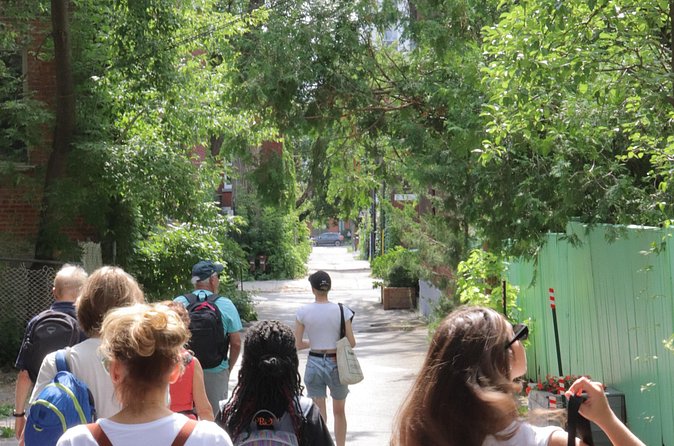
This tour caps at 20 travelers, which is a sweet spot for a walking talk. In a small group, your guide can slow down when someone needs a pause. You’re also more likely to hear the conversation without craning your neck the entire time.
Pacing seems to be a recurring strength. Guides like Hannah are highlighted for keeping a slow enough pace for seniors without letting the tour drag. Others, like Emily and Serafina, are praised for being attentive and for answering questions thoroughly. That makes a difference on a street tour, where you’re balancing movement with listening.
Still, there are two real-world considerations. First, the talk style can vary by guide. If a guide speaks quickly, you might struggle to keep up, especially if English is not your strongest language. Second, if you’re not positioned well for sound, you may lose bits of the story. The fix is simple: stay attentive early, adjust your spot if needed, and ask when something matters to you.
Family friendly usually means the guide keeps things approachable. But it does not mean it is a worksheet with a playground stop. If you’re traveling with kids, make the experience work by focusing on the themes rather than memorizing every detail. This kind of tour is a great introduction to Jewish Montreal history, then you can follow up with a museum exhibit where children can see and touch more of what the guide described.
Price and value for a 2-hour walking tour
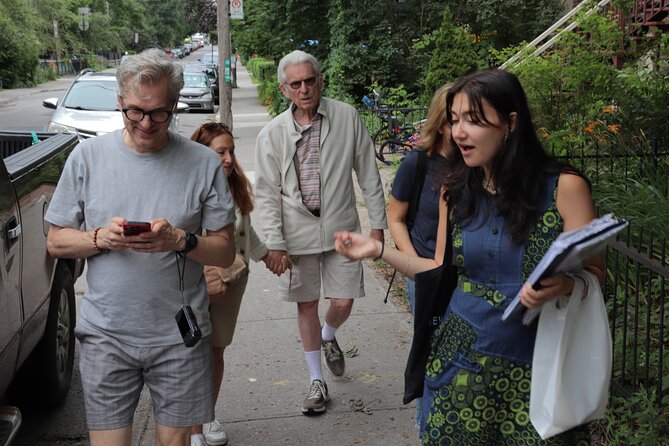
The price is $24.03 per person for about 2 hours. That’s not a budget-bargain fee, but it also isn’t the kind of high-ticket tour that demands you treat it like a once-in-a-lifetime museum gala.
Here’s the value logic: you’re paying for a local guide, a small group setting, and a focused subject that you’d otherwise spend hours piecing together yourself. Jewish Montreal history is wide. A guided route compresses it into something digestible, while still getting into meaningful themes like law and politics, not only religion and immigration.
For me, the best value indicator is not just price. It’s the structure: 2 hours is long enough to learn something real, short enough to keep energy up, and small enough that questions can happen. With a maximum of 20 participants, you’re less likely to feel like a background number on a group bus.
If you’re considering museums too, this tour can also act like a smart primer. You’ll walk away with names, themes, and questions that make the museum exhibits feel less random when you reach them.
Museum of Jewish Montreal time at 5220 St-Laurent
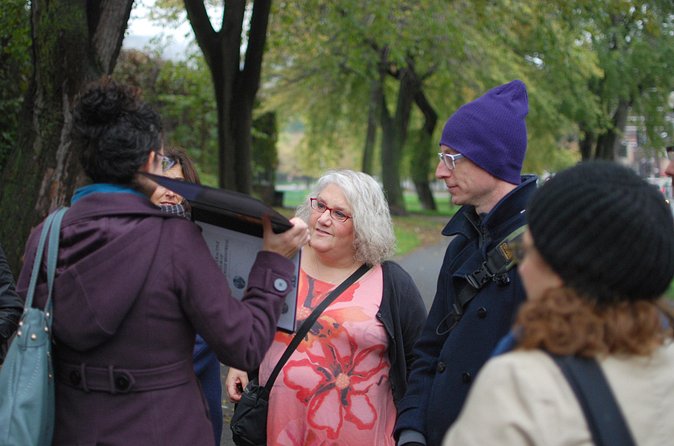
You finish near 5220 Boul. Saint-Laurent, Montréal, QC H2T 1S1, which is the Museum of Jewish Montreal address. That’s useful because you can extend your visit right after the walk instead of switching locations later.
The museum’s exhibitions are open to the public Thursday, Friday, Saturday, and Sunday. Beginning in late May 2024, they will also be open on Mondays. If you’re planning your week, this helps you choose which day to take the tour so you can pair it with exhibits.
I like doing it this way: let the walk introduce the big themes, then let the museum give you the “slow reading” version. A walking tour covers the story in motion. A museum lets you stop, zoom in on artifacts, and match what you heard to what you can see.
If your schedule is tight and you can’t do the museum afterward, still plan one small self-guided step. Find a quiet moment close to where you ended the walk and mentally sort what you just learned into three buckets, rabbis, writers, radicals. That simple mental sorting helps the information stick.
Who should book, and how to get the most from it
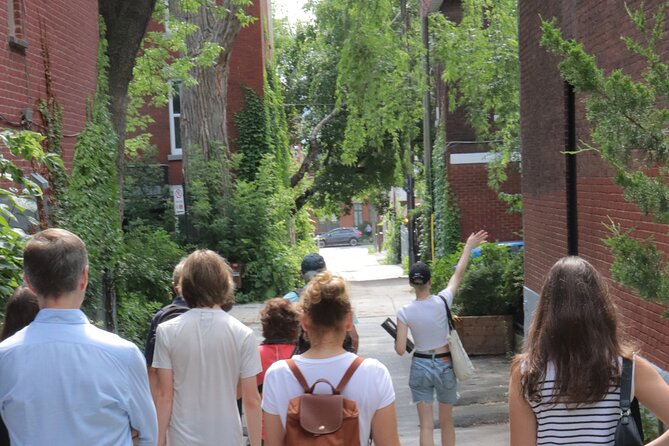
This tour fits best if you want Jewish Montreal history with a neighborhood lens. You’ll likely enjoy it if you’re curious about how religious life, public debate, and political movements interacted in a real place.
It’s also a good choice if you want something more active than reading a book in a café. You’ll get atmosphere from simply being in motion, watching the street scene while you learn how the community’s story unfolded nearby.
I’d suggest booking if:
- You like history that connects ideas to consequences.
- You want a manageable 2-hour introduction.
- You enjoy asking questions during the walk and hearing back on the spot.
I’d be more cautious if:
- You prefer highly chronological, date-heavy storytelling.
- You’re very sensitive to hearing a guide in a noisy outdoor setting.
- You want a tour that stays laser-focused on only one narrow topic, like immigration dates alone.
Even then, it can still work. Just adjust your expectations to the tour format. This is an educational walk through neighborhoods with thematic storytelling, not a museum replica in the open air.
Should you book Rabbis, Writers and Radicals?
If your goal is to understand Jewish Montreal beyond surface trivia, I’d book it. The combination of local guidance, a small group size, and theme-driven content like rabbis, writers, and radicals gives you a strong “first pass” at a complex story in a short time.
Two final decision helpers. First, pick a time when you can comfortably walk for about two hours and listen without rushing. Second, go in curious, because the tour seems to reward questions and engagement, with guides such as Emily, Vivien, Serafina, Sofia, and Hannah highlighted for attention to guests needs.
If you want, tell me your travel dates and language comfort level, and I’ll help you plan whether to pair the tour with the museum on the same day based on the listed exhibition hours.
FAQ
How long is the Rabbis, Writers and Radicals walking tour?
The tour lasts about 2 hours.
How much does the tour cost?
The price is $24.03 per person.
What language is the tour offered in?
The tour is offered in English.
What is the group size limit?
The tour has a maximum of 20 travelers.
Where do I meet and where does the tour end?
The start location listed is 4129 Boul. Saint-Laurent, Montréal, QC H2W 1Y7, and the end location listed is 5220 Boul. Saint-Laurent, Montréal, QC H2T 1S1. The tour also states that it begins and ends at different locations around Plateau and Mile End, and those locations are listed in your tour ticket, so check your ticket for the exact points.
Is the tour family friendly, and is it suitable for walking?
It is described as family friendly, and travelers should have a moderate physical fitness level.
Do I get a mobile ticket?
Yes, the tour uses a mobile ticket.
When will I receive confirmation after booking?
Confirmation will be received within 48 hours of booking, subject to availability.
Is there free cancellation?
Yes. You can cancel up to 24 hours in advance for a full refund.
Are service animals allowed and is it near public transportation?
Service animals are allowed, and the tour is near public transportation.
The Older Montreal




Montreal on Foot


Just off the notebook: recent Montreal write-ups
- Secret Food Tours: Montreal – Jean-Talon & Little Italy
★ 4.0 · 4 reviews - Montreal to Quebec City Tour with Private Transportation
★ 5.0 · 4 reviews - Montreal: Iconic Landmarks All-Inclusive VIP Experience
★ 4.7 · 4 reviews - A Walking Tour of Old Montreal
★ 3.8 · 4 reviews - Day at Mont-Tremblant National Park
★ 4.0 · 5 reviews - Old Montreal: Self-Guided Tour from Place D‘Armes to Old Port
★ 5.0 · 5 reviews
Walking Tours, compared.
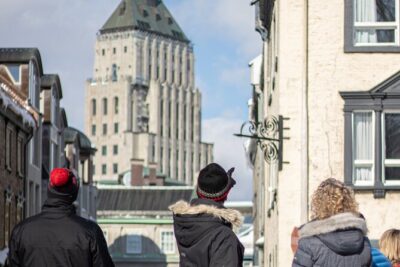 ★ 5.0Quebec City Walking TourFrom $304,716 reviews
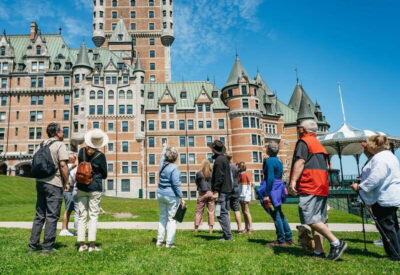 ★ 4.8Old Quebec City: Grand Walking Tour with Private OptionFrom $292,609 reviews
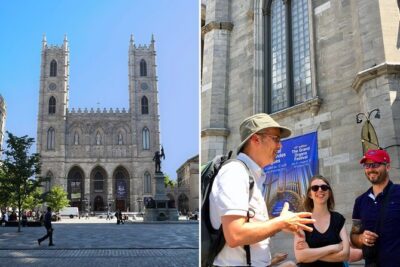 ★ 4.5The Original Old Montréal Walking Tour by GuidatourFrom $262,217 reviews
 ★ 5.0Old Montreal Small-Group Walking Tour | Max 10 | by MTL DetoursFrom $442,088 reviews
 ★ 5.0Gastown Historic Walking Food TourFrom $1161,863 reviews
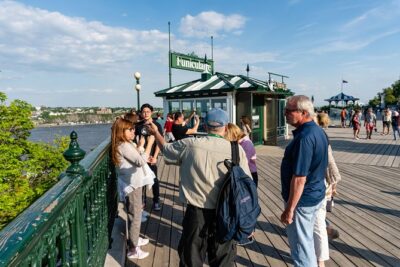 ★ 5.0Old Quebec Classique Walking Tour with FunicularFrom $421,317 reviews
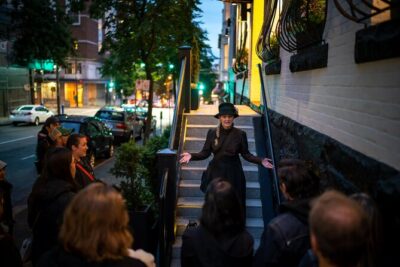 ★ 5.0Vancouver Lost Souls of Gastown Walking TourFrom $291,273 reviews
 ★ 4.6Quebec: Crimes of New France Animated Walking TourFrom $20926 reviews
Browse the lists this tour appears in