
REVIEW · OLD QUEBEC CITY WALKING TOURS
Quebec City Walking Tour
Old Quebec has a way of grabbing you fast. This small-group walk strings together the city’s biggest landmarks with stories that connect 1608 to today, all in about 2 hours. You’ll get Upper Town to Lower Town in one smooth flow, with a guide keeping the history easy to follow.
What I like most is the small-group feel and the fact that the tour is built around “see it, then understand it.” I also like that it’s not just outside sightseeing, you may get inside moments when open doors appear, which is especially helpful in winter.
One drawback to consider: in very cold weather, the walk can still feel chilly even with indoor breaks. Another practical caution, if you fall behind, you can end up separated from the group, and that means you miss stops.
In This Review
- Key things to know before you go
- Old Quebec in Two Hours: how the downhill route works
- Start at the tourist center, then kick off with Champlain
- Terrasse Dufferin and Chateau Frontenac views you can place
- The defense story: walls, Fortifications, and how the city stayed standing
- Ursulines, a cathedral courtyard, and City Hall landmarks
- Seminary courtyard time travel and Place Royale’s big meaning
- Quartier Petit Champlain and the walk’s feel-good finish
- Price and value: what $30.29 buys you
- Hearing the city story: guide styles I saw in recent experiences
- Winter reality check: how to dress so you still enjoy it
- One thing that can ruin the experience: staying with the group
- Should you book this Quebec City walking tour?
- FAQ
- How long is the Quebec City Walking Tour?
- Is the tour offered in English?
- Where does the tour start?
- Where does the tour end?
- What is included in the price?
- What group size should I expect?
- Can I get a refund if I cancel?
Key things to know before you go
- Small group up to 15 keeps it easier to hear and stay together
- Downhill from Upper Town makes the route feel smoother for most people
- True orientation in 2 hours so you know where everything is for the rest of your trip
- Upper and Lower Town mix so you get the full feel of Old Quebec
- Winter-friendly touches like indoor stops and warmers available at check-in
- English-led commentary with a guide who answers questions and adds humor
More walks inside the walls of Old Quebec
- Quebec City Walking Tour★ 5.0 · 4,716 reviews
- Quebec City: Guided Tour of Fairmont Le Château Frontenac★ 4.7 · 3,027 reviews
- Québec City: Guided Sightseeing River Cruise★ 4.4 · 3,000 reviews
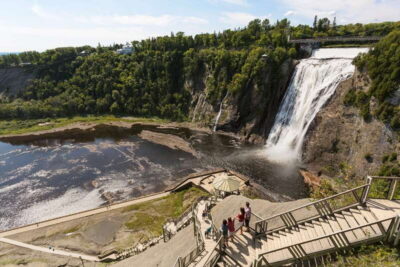
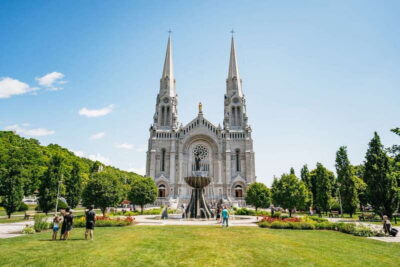
- Half-Day Trip to Montmorency Falls and Ste-Anne-de-Beaupré from Quebec city★ 4.0 · 2,718 reviews
Old Quebec in Two Hours: how the downhill route works
This tour is designed like a fast orientation lap. You start in the Upper Town area and walk downhill toward the Lower Town sights, ending close to the Funiculaire du Vieux-Québec. That “top to bottom” setup matters because Quebec City is built on slopes, and your time gets spent walking through the historic fabric instead of backtracking.
The duration is about 2 hours, which is ideal if you only have a short window or you’re arriving after a travel day. It’s also a good first activity. By the time you finish, you’re not just seeing postcard views, you’re placing them in a timeline, so your later self-guided exploring feels smarter.
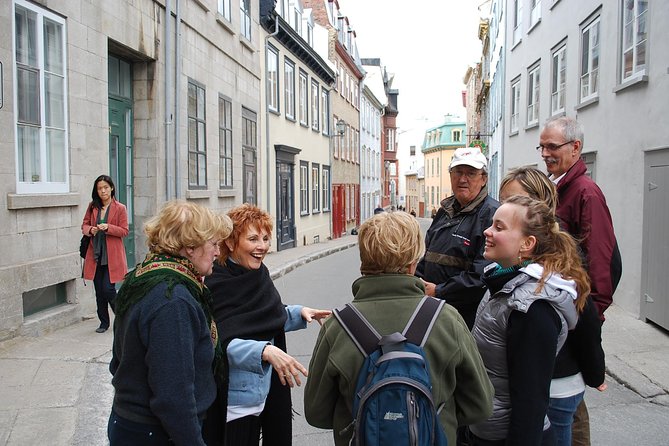
The group stays small, with a max of 15 travelers. That means fewer delays at street corners and more personal energy from the guide. You’ll also hear the commentary better when you are not swallowed by a big crowd.
Start at the tourist center, then kick off with Champlain
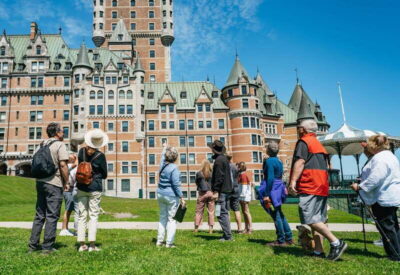
The meeting point is at 12 Rue Sainte-Anne, at the Quebec Tourist Information Centre area, directly across the park from Chateau Frontenac. The tour departs from the Tours Voir Québec sales desk inside that tourist info hub.
Right away, you’ll do more than “line up and go.” There’s a stop at Tours Voir Québec that includes an admission ticket. That first stop is a smart warm-up because it sets context before you start threading through Old Quebec streets.
Then you move to the Monument Samuel De Champlain. This founder anchor point is useful because Quebec City’s modern look only makes sense if you understand what came before it. Even if you think you know the basics, a good guide can connect why the city formed where it did and how power shifted over time.
Terrasse Dufferin and Chateau Frontenac views you can place
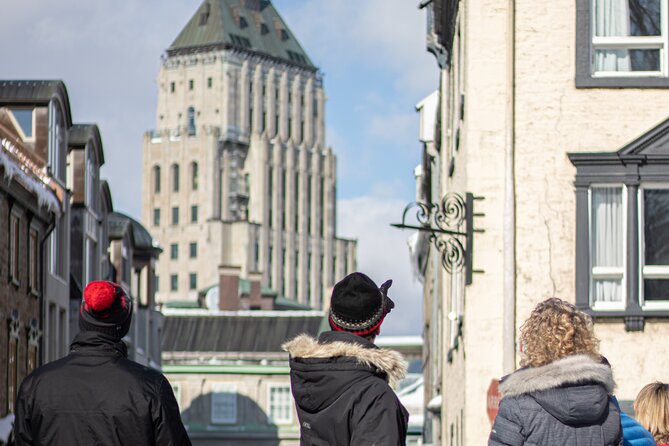
One of the first big visual payoffs is Terrasse Dufferin, the broadwalk with wide outlooks and Chateau Frontenac shadowing your viewpoint. You’ll learn what you can see from this angle, and how that vantage point fits into how Old Quebec developed.
This is also a place where the guide can connect “where you are standing” to the bigger story: geography, defense, and daily life. Quebec City’s layout feels simple on a map, but in real life it’s all slopes, walls, and sightlines. Terrasse Dufferin helps you understand those sightlines quickly.
From here, you’re not just taking photos. You’re building a mental map for what comes next, especially around the idea of walls and fortifications.
Quebec City at walking pace, a few more routes

The defense story: walls, Fortifications, and how the city stayed standing
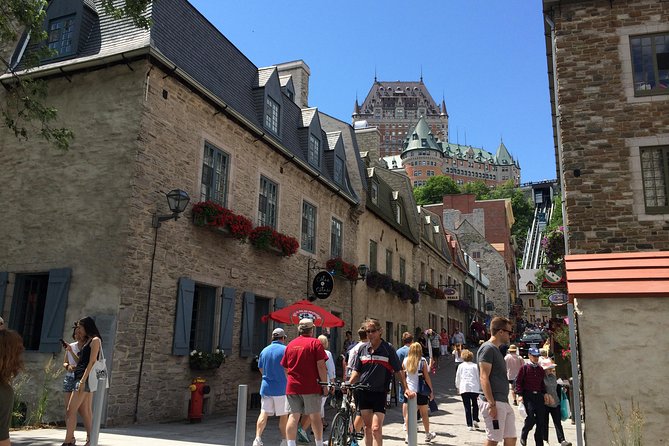
Old Quebec is one of North America’s most famous surviving walled city centers, and that theme shows up throughout the walk. As you move through the area, you’ll get history of the fortifications and why they mattered for centuries. The tour specifically calls out the role of the city walls and notes that Quebec City is the only walled city north of Mexico.
What you’ll take away is practical, not just dramatic. Walls were not only for battles. They shaped what people could do, where travel bottlenecks existed, and how the city functioned under pressure. When your guide connects those facts to what you’re seeing on the street, the stonework stops looking random and starts looking intentional.
This part of the experience is one reason the tour works even if you’re not a hardcore history buff. You get just enough structure so the rest of Old Quebec reads like a story, not like a maze.
Ursulines, a cathedral courtyard, and City Hall landmarks
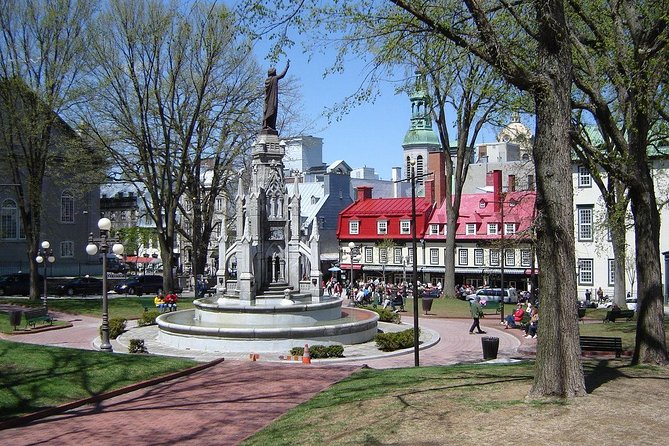
As you continue into the middle stretch of the Upper Town experience, you pass the Monastery des Ursulines. The Ursuline Sisters have been in Quebec City since 1639, and the tour may include a visit to their chapel if it’s open. That little “if open” detail is a real benefit in the winter too, because indoor stops can break up the cold.
Next up is the Cathedral of the Holy Trinity courtyard. A walking tour here isn’t just ticking off a building. It’s about showing how religious life in Quebec City shifted over the years and how different communities left their marks within Old Quebec’s walls.
Then you reach Hotel de Ville de Québec, the city hall square. The guide highlights major landmarks around this important hub. This is a great stop for orientation because squares are where you can re-enter the city’s flow later. After the tour, you’ll recognize the square and know it as a “from here, everything connects” point.
Seminary courtyard time travel and Place Royale’s big meaning
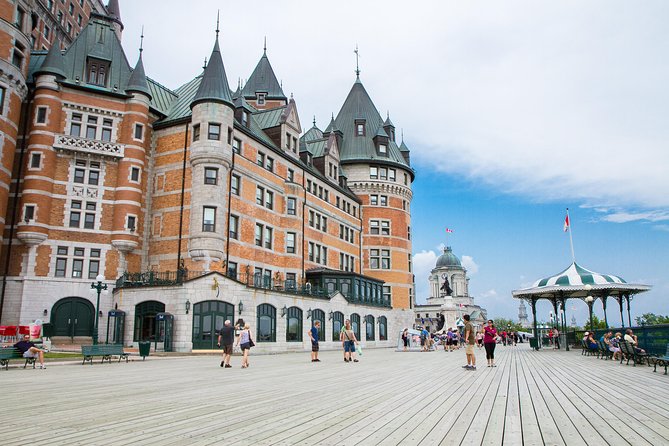
The tour doesn’t rush you through Old Quebec into a blur. One of the best slow-down moments is the Seminaire du Québec courtyard. You get the feeling of stepping back into the 18th century, which is exactly what courtyards can do when buildings and scale keep your modern distractions small.
From there, you head toward Place Royale, described as the birthplace of French America. This is one of those stops where the guide’s role becomes crucial. The square is visually striking, but the meaning comes from understanding why the area mattered at the beginning, and how it shaped what Quebec City became.
The tour also references key churches and sites as you move through the historic core, including Basilica Notre-Dame. Even if you do not spend a long time inside every place, you’ll hear enough about them to know what they represent and why they were built there.
If you like history that explains “how people lived day to day,” this segment is where the stories start feeling grounded.
Quartier Petit Champlain and the walk’s feel-good finish
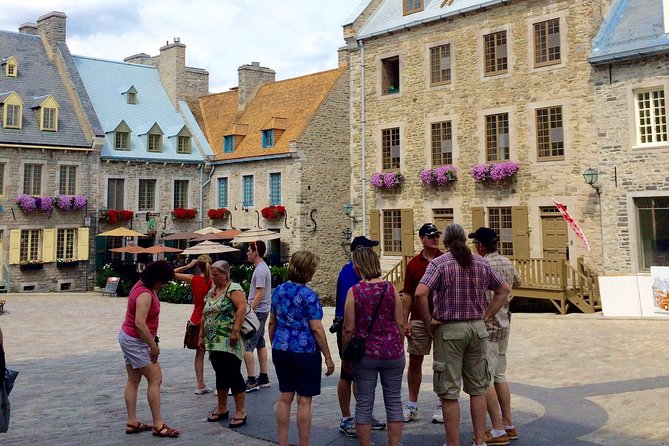
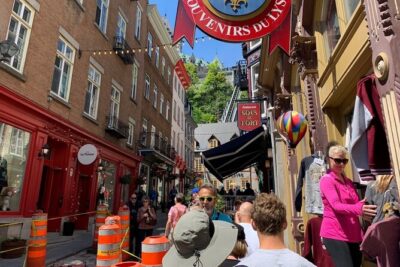
The tour ends on Petit-Champlain Street, one of the prettiest lanes in Old Quebec and often praised as one of the nicest streets in North America. Ending here is a smart choice because you finish on a street where you can naturally keep exploring on your own.
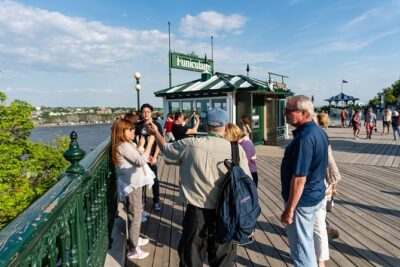
You also finish near the Funiculaire du Vieux-Québec, which makes it easy to extend your day. If you want to move between levels of the city without extra walking, the funicular is right there. And if you want to linger for dinner, this finish location puts you near plenty of options for the evening.
This ending stretch matters because it helps you remember the tour as something you enjoyed, not something you survived. After a downhill walk, ending with charm and easy wandering feels like a payoff.
Price and value: what $30.29 buys you
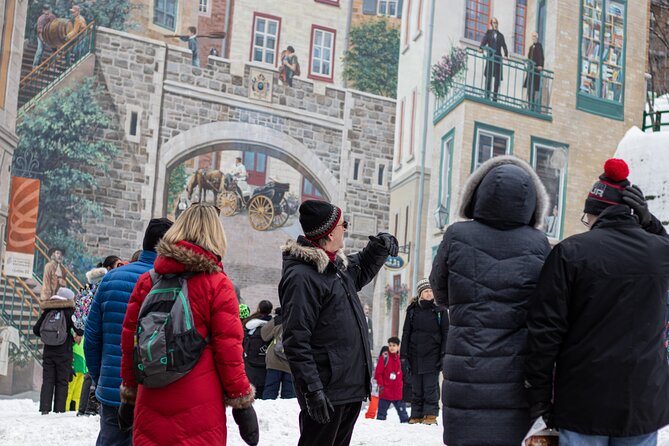
At $30.29 per person for about 2 hours, this is priced like a focused, guided orientation rather than a long sightseeing day. The value is in the structure: you get multiple landmark areas in one loop, plus a professional guide’s commentary that connects what you see to the city’s timeline from 1608 onward.
You also get a few built-in advantages that are easy to underestimate:
- Licensed, professional guide with ongoing explanations while you walk
- Small group size capped at 15, which helps you hear and stay engaged
- Local taxes included in the price
What’s not included is hotel pickup and drop-off, so plan to arrive at the meeting point under your own steam. For most people staying in Old Quebec, that’s a non-issue. For people staying farther out, you’ll want to budget a little transit time, since you begin at 12 Rue Sainte-Anne and finish near Petit-Champlain.
Also, this tour is booked ahead often, with an average booking window of about 22 days. If you’re visiting in peak times, it’s wise to reserve earlier so you’re not stuck with a less ideal time slot.
The Vancouver guide is the Vancouver Travel team.
Hearing the city story: guide styles I saw in recent experiences
The biggest praise in recent experiences is not just “they know facts.” It’s that the guide’s delivery makes the history fun and easy to keep up with, even in hard weather.
Guides named in recent tours include Mark, Stefan, Louise, Robert, Christian, Francis, and Philippe. What comes through is a mix of humor, clear speaking outdoors, and a willingness to answer extra questions after the scheduled time. One review also mentions a guide who helped adapt indoors during the cold, which is exactly what you want when weather tries to shut down attention.
So if you’re choosing based on vibe, this is a tour where the guide can change the feel. But the consistent through-line is that the narration stays tied to the places you are walking through, not just abstract lectures.
Winter reality check: how to dress so you still enjoy it
This tour runs in all weather conditions, so the practical question is simple: can you stay comfortable enough to listen and walk?
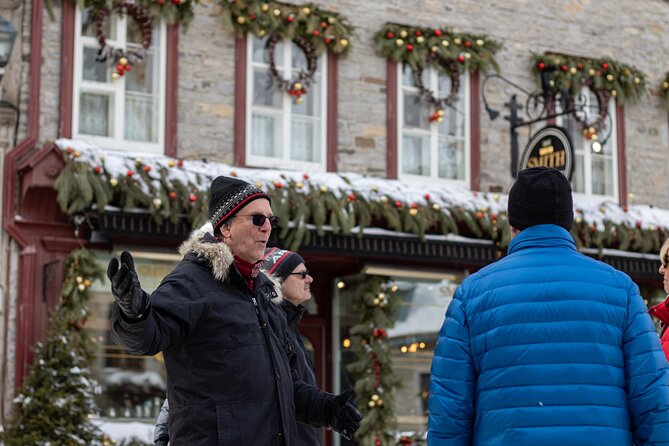
There’s clear evidence that winter can be a challenge. People describe “very cold” days and note that the guide may move the group along faster if weather bites. That doesn’t mean the tour becomes useless, but it does mean your comfort level affects how much you absorb.
Here are the best practical fixes from how the tour is run:
- Wear insulated boots and warm layers, not just a light winter jacket
- Bring gloves you can actually move in, you will need them outdoors
- At check-in, the team offers hand and toe warmers for extra comfort, and the warmers can last several hours
A key point from winter experiences is also that indoor stops happen when needed. That can keep the tour enjoyable even when temperatures are brutal.
One thing that can ruin the experience: staying with the group
The only major “watch out” point I’d flag is group separation. If you drift away, you can miss several stops, which is the opposite of what you paid for.
This is a small group, but you still need to stay aware. Keep the guide in sight at turns and do not assume the group will wait long if you stop for a photo or check a phone. If you need a quick pause, tell the guide or a nearby person so you can rejoin cleanly.
Should you book this Quebec City walking tour?
Book it if you want a fast orientation to Old Quebec with a guide who turns landmarks into a clear timeline. It’s ideal for first-timers, history lovers who still want fun, and anyone who likes walking with structure instead of wandering aimlessly.
Skip it or think twice if you hate cold-weather walking, or if you struggle to keep pace in outdoor conditions. Also, if you know you tend to wander off for photos, you’ll want to change that behavior here, because missing stops defeats the point of a tight, 2-hour route.
If you do book it, go early in your visit so you can use what you learn right away, especially for choosing where to eat and what to explore next.
FAQ
How long is the Quebec City Walking Tour?
The tour runs for about 2 hours.
Is the tour offered in English?
Yes, the tour is offered in English.
Where does the tour start?
The meeting point is at 12 Rue Sainte-Anne, Québec, QC G1R 3X3, Canada, at the Tours Voir Québec sales desk inside the Quebec Tourist Information Centre.
Where does the tour end?
The tour ends near the Funiculaire du Vieux-Québec, at 16 Rue du Petit Champlain, Québec, QC G1K 4H4, Canada.
What is included in the price?
Included are the 2-hour guided walking tour, a licensed and professional guide, and local taxes. There is no hotel pickup or drop-off.
What group size should I expect?
The tour has a maximum of 15 travelers.
Can I get a refund if I cancel?
Yes. Free cancellation is available up to 24 hours in advance for a full refund. If you cancel less than 24 hours before the start time, the amount paid is not refunded.
The Whole of Quebec City in a Day


Quebec City on Foot


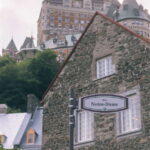

Inside the Walls of Old Quebec
Just off the notebook: recent Quebec City write-ups
- Quebec City: Historic District Walking Tour (2h)
★ 5.0 · 4 reviews - Quebec City: Fat Bike Guided Tour
★ 4.7 · 4 reviews - Quebec City Photo Tour
★ 5.0 · 5 reviews - Experience île d’Orléans and the falls with a local guide
★ 4.5 · 5 reviews - Private Québec City walking tour with Lenny.
★ 5.0 · 5 reviews - Heritage Upper Town E-Bike Tour
★ 5.0 · 6 reviews
Old Quebec City Walking Tours, compared.
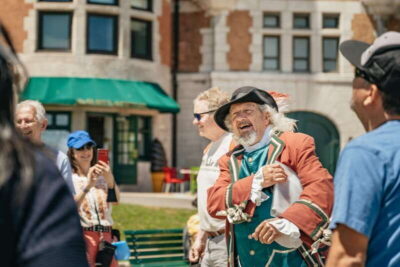 ★ 4.7Quebec City: Guided Tour of Fairmont Le Château FrontenacFrom $193,027 reviews
 ★ 4.4Québec City: Guided Sightseeing River CruiseFrom $473,000 reviews
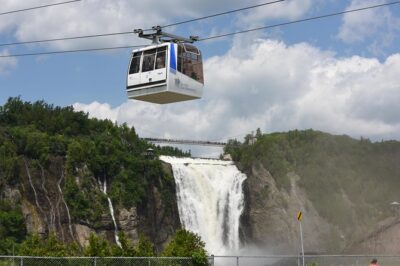 ★ 4.0Half-Day Trip to Montmorency Falls and Ste-Anne-de-Beaupré from Quebec cityFrom $702,718 reviews
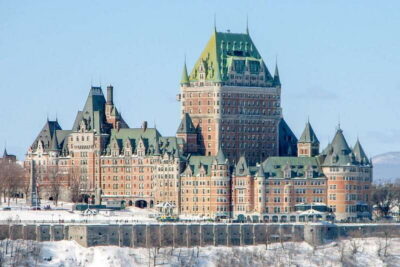 ★ 4.5From Montreal: Quebec City and Montmorency Falls Day TripFrom $362,669 reviews
 ★ 4.8Old Quebec City: Grand Walking Tour with Private OptionFrom $292,609 reviews
 ★ 4.0Quebec City and Montmorency Falls Day Trip from MontrealFrom $362,437 reviews
 ★ 4.6Quebec City: Montmorency Falls with Cable Car RideFrom $192,392 reviews
 ★ 4.3Quebec City: Montmorency Falls & Ile d’Orleans Half-Day TourFrom $682,144 reviews
Browse the lists this tour appears in