
REVIEW · OLD QUEBEC CITY WALKING TOURS
Quebec City Hop-On Hop-Off
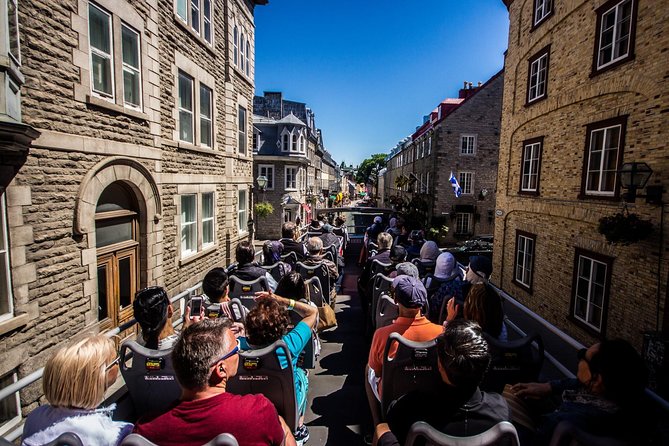
Quebec City, told from the top deck. This hop-on hop-off bus tour is a practical way to see Old Québec and the big landmarks beyond it, with open-top views and a steady stream of audio stories in 10 languages. You can hop off for a closer look, then jump back on when it suits your pace.
I like how well it covers the essentials for a first visit, including the fort area, Old Port, and the Parliament Hill side. I also like the simple onboard setup, audio earphones plus onboard Wi-Fi, so you are not fumbling with your phone the whole time.
The main thing to watch is the logistics on busy days. The bus can run packed, and waits can stretch long, especially when cruise ships and events hit the city.
In This Review
- Key things to know before you ride
- Why this hop-on hop-off loop fits Quebec City so well
- Price and time: what you really get for $46.93
- Boarding the red double-decker: audio earphones and onboard Wi-Fi
- How to hop on and off without getting trapped in crowds
- Stop-by-stop: where each part of the route shines
- Stop 1: Place d’Armes area for the fort zone
- Stop 2: de la Couronne, St-Roch for food and shopping
- Stop 3: Musée de la civilisation and the quai views
- Stop 4: Place Royale, Notre-Dame-des-Victoires, and the Old Town core
- Stop 5: Vieux-Port and Old Port Market
- Stop 6: Stationnement Indigo Québec, Place Québec as a transfer moment
- Stop 7: Observatoire de la Capitale and Parliament Hill views
- Stop 8: Gén.-De Montcalm for Plains of Abraham
- Stop 9: Monument Confucius near Citadelle and Parliament Hill
- Stop 10: 1 Av. du Cap Diamant for Citadelle viewpoints
- Stop 11: 290 Grande Allée O for the Museum of Fine Arts area
- Stop 12: Cinéma Cartier for shopping and Avenue Cartier
- Stop 13: 175 Rue Saint-Jean for Saint-Jean-Baptiste Church
- Stop 14: 931 Rue Saint-Jean for Palais Montcalm and Le Capitole area
- Stop 15: City Hall and Hotel de Ville zone
- What to watch for with buses, seating, and English narration
- So, should you book it?
- FAQ
- FAQ
- How long does the Quebec City hop-on hop-off bus tour take?
- Is there a 1-day or 2-day ticket option?
- What languages are available for the audio tour?
- Do the buses have Wi-Fi?
- Where can I board the bus?
- Does the tour include hotel pickup or drop-off?
- Is the tour only run on good weather days?
- What should I do if my audio or ticket access does not work?
- Is this a good option for cruise ship days?
- How much is the tour?
Key things to know before you ride
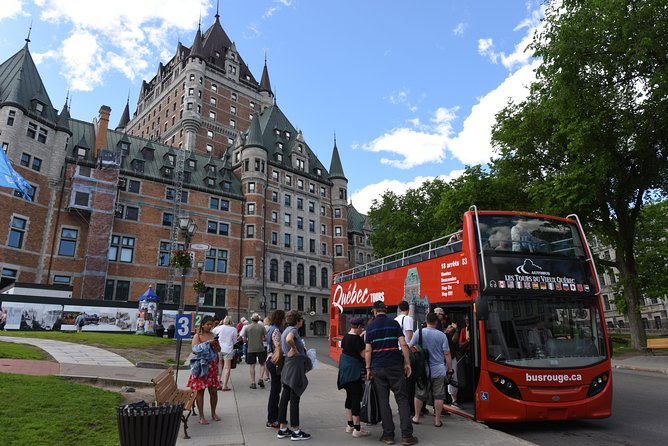
- Open-top double-decker views make it easy to spot landmarks as the bus rolls along
- Audio tour in 10 languages helps you understand what you are seeing at each stop
- 1-day or 2-day passes let you do a quick loop, then return for extra time
- Wi-Fi on board is a nice perk when you need to plan the next hop
- Crowding is the wildcard on peak cruise or festival days, with some buses filling up
- Some ticket and device quirks can pop up, so keep an eye on your mobile ticket
More walks inside the walls of Old Quebec
- Quebec City Walking Tour★ 5.0 · 4,716 reviews
- Quebec City: Guided Tour of Fairmont Le Château Frontenac★ 4.7 · 3,027 reviews
- Québec City: Guided Sightseeing River Cruise★ 4.4 · 3,000 reviews
- Half-Day Trip to Montmorency Falls and Ste-Anne-de-Beaupré from Quebec city★ 4.0 · 2,718 reviews
Why this hop-on hop-off loop fits Quebec City so well
Quebec City rewards slow wandering, but most trips are not slow. This tour is built for people who want a clean overview fast, without having to figure out a complicated transit plan. You get a guided ride through UNESCO World Heritage Site territory, then you can stop at the places that actually catch your eye.
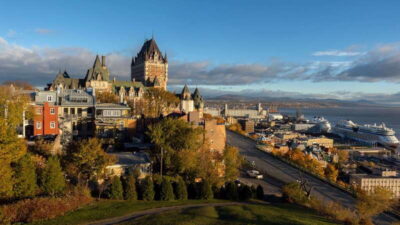
What makes it especially workable is the way the route stretches across different “worlds.” You start on the fort side, swing through the Old Port area, then move up toward the Parliament Hill and Plains of Abraham zones. Even if you only hop off a few times, the bus gives you the shape of the city.
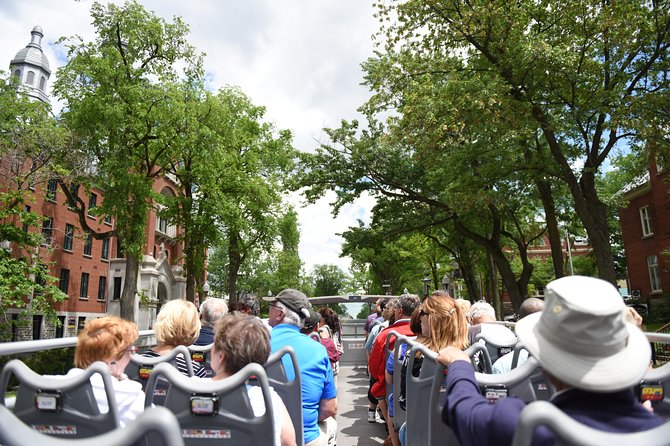
It also helps that the buses are double-decker and open-top. On a clear day, that is the easiest way to get unobstructed views over roofs and streets, and it cuts down on the “where is the landmark?” stress.
Price and time: what you really get for $46.93
At $46.93 per person, this is not a bargain bus ride, so I look at it like this: you are paying for three things at once. First, you are paying for transportation that links key neighborhoods. Second, you are paying for the onboard experience, the audio tour in 10 languages with earphones. Third, you are paying for convenience, especially if you do not have a car.
The tour is listed at about 2 hours for the main loop. The bigger value comes from the 1- and 2-day ticket options. If you do the loop once to learn the layout, then return for selected stops on day two, the cost starts to make more sense. A 2-day pass is especially useful if you plan to linger around Old Québec, then circle back for the Citadelle and Plains of Abraham areas.
One more planning detail: the experience is often booked about 22 days in advance. That does not mean you must book super early, but it is a hint to lock in your preferred date, especially during high season.
Boarding the red double-decker: audio earphones and onboard Wi-Fi
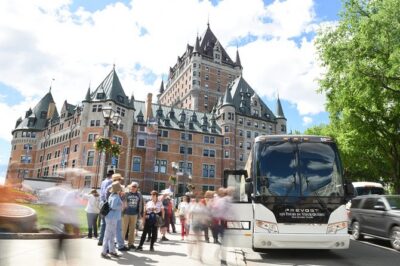
This is a modern hop-on hop-off format. You get a mobile ticket, board at stops along the route, and follow the audio on 10 language channels through earphones. Onboard Wi-Fi is included, which is handy for messaging, checking store hours, or pulling up a walking route when you are choosing between nearby stops.
A few practical notes make a difference:
- Sit on top when the weather cooperates. On cold or windy days, that open-top ride can feel chilly. Some people specifically mention the discomfort of sitting outside in colder weather.
- Test the audio right away. In most cases the narration works well, but there are also reports of audio units not working on certain days. If yours acts up, ask the driver or staff quickly while you are still getting settled.
- Keep your headphones charged or ready. The tour uses earphones for the audio experience, so it helps to have a comfortable setup from the start.
Also, this tour is offered in English, which matters if you want the narration to match your language preference while you ride.
More open-top loops around Quebec City
How to hop on and off without getting trapped in crowds
The hop-on hop-off promise is flexibility. But flexibility depends on bus availability, and that is where this tour can swing between easy and frustrating.
On good days, it is smooth. You hop off, look around, then re-board with a short wait. Several riders highlight convenient stops and an easy on-and-off flow.
On bad days, you might face long lines and full buses. There are reports of very crowded rides, buses arriving packed, and waits that stretch to an hour or more, sometimes longer. Cruise ship days are the common pressure point.
So here is my practical playbook for reducing stress:
- Do one full loop early if you can. One rider tip that keeps repeating is to ride the entire route once, then plan your stops for the second trip. That approach helps you avoid wandering around with no sense of distance.
- Build in time buffers. If your schedule is tight, treat hop-on hop-off as a planning tool, not a precise transport guarantee.
- Avoid the first rush when possible. If you are arriving with crowds (like cruise ship passengers or festival traffic), consider boarding after the initial surge rather than at the exact earliest moment.
- Have a backup option between nearby stops. If a bus is full, you may need to wait for the next one. In that case, you can sometimes just walk a segment rather than standing in line for another round.
There is no perfect way around crowding, but timing choices can make the difference between a relaxing ride and a stand-by marathon.
Stop-by-stop: where each part of the route shines
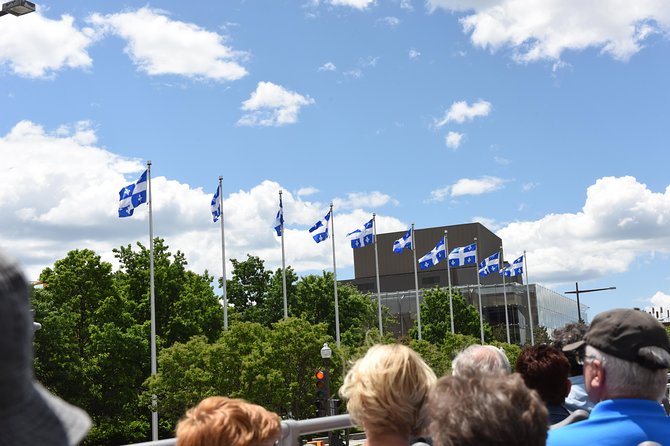
This tour uses a sequence of stops that all aim at big-picture landmarks, museums, viewpoints, and shopping streets. You do not need to stop at every location, but it helps to know what each stop is good for, and where you might run into crowds.
Stop 1: Place d’Armes area for the fort zone
This is your starting point at the Place d’Armes area, close to Musée du Fort and the Musée de l’Amérique francophone. It is a strong first stop because it sets you up for the defensive, historic side of Quebec City.
A practical upside: since you start here, it is easier to calibrate your day after you ride the first stretch. A practical downside: it can be a busy boarding moment, especially if you arrive right when other groups are starting.
Stop 2: de la Couronne, St-Roch for food and shopping
The de la Couronne stop sits in the Quartier St-Roch zone, known in the tour description for shopping and trendy restaurants. I treat this as a “reset stop.” You can hop off for a meal break, browse a little, then continue when you are ready.
If you want the tour to stay efficient, aim to use this stop for short, practical visits rather than long museum breaks, unless you are specifically targeting something there.
Stop 3: Musée de la civilisation and the quai views
At 85 Rue Dalhousie, you get access to Musée de la civilisation, Place de la FAO, and the Promenade sur les quais waterfront area. This is one of the best stops if you want both a museum option and a walk by the water.
It also works well as a mid-route pause. If you feel like you have been indoors too long (or you want a break from the bus), hop here, stretch your legs, then re-board.
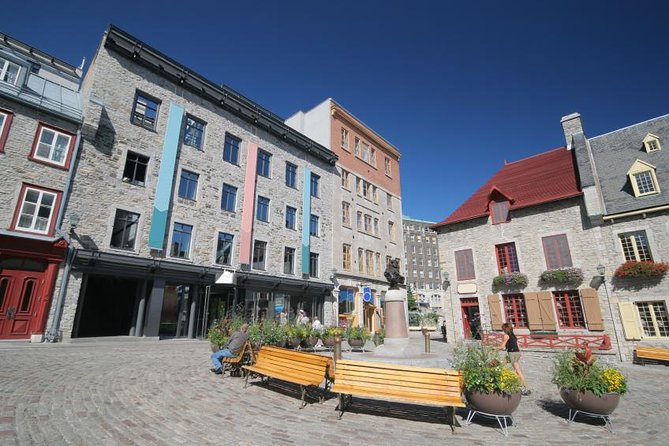
Stop 4: Place Royale, Notre-Dame-des-Victoires, and the Old Town core
This area uses the Trav. Qc-Lévis stop and points you toward Louis-Jolliet Boat, the Centre d’interprétation de la Place Royale, Notre-Dame des Victoires, plus shopping and restaurants. This is where the Old Town feel thickens.
One nice strategy is to spend your time here on a day when the weather is good. The stop clusters several key icons, so you do not need to hop constantly.
A downside to keep in mind: Old Town hotspots can feel crowded on popular days, and the bus schedule depends on crowds moving through the same streets.
Stop 5: Vieux-Port and Old Port Market
The 306 Rue Saint-Paul stop focuses on the Promenade au Vieux-Port and Old Port Market. This is ideal for photos, strolling, and easy browsing. If you want to spend real time in Quebec City’s waterfront area, this is your best “hop and wander” stop.
If the bus feels busy, you may still want to hop here because the walking reward is high relative to the time it takes.
Stop 6: Stationnement Indigo Québec, Place Québec as a transfer moment
The Stationnement Indigo Québec – Place Québec stop is less about a single headline landmark and more about route flow. In practice, I see these “transfer-ish” stops as places to re-position yourself.
Use it if you are trying to line up your next stop choice toward viewpoints or toward the Parliament and Plains area.
Stop 7: Observatoire de la Capitale and Parliament Hill views
At Observatoire de la Capitale, you are positioned near Colline Parlementaire, the Hôtel du Parlement, Fontaine de Tourny, and the Promenade des Premiers ministres. If you like your city sightseeing with viewpoint energy, this is where you aim.
This stop is also a logical point to take your time. Government hill and the surrounding promenades can be scenic, and it is a good area to pair with a longer rest on your schedule.
Stop 8: Gén.-De Montcalm for Plains of Abraham
The Gén.-De Montcalm stop is made for the Plains of Abraham and the Musée des plaines d’Abraham area, with restaurants nearby. This is a key stop if you want to connect the city’s story to the open spaces outside the densest Old Town streets.
In cold weather, remember you may be outside more here. Even if you sit inside later on the bus, you might want layers and gloves for comfort.
Stop 9: Monument Confucius near Citadelle and Parliament Hill
The Monument Confucius stop gives access to the Citadelle, the Plains of Abraham, and Parliament Hill again. It is a useful “bridge” stop because it sits in the same big landmark cluster.
If you are choosing between two nearby sights and you want one stop that keeps options open, this is the kind of stop that helps.
Stop 10: 1 Av. du Cap Diamant for Citadelle viewpoints
At 1 Av. du Cap Diamant, the tour highlights the Citadelle, Vestiges du Blockhaus, and the Promenade des Gouverneurs. This is the fort-and-walls energy part of the route.
If you want the Citadelle experience without stressing over routes, this stop is your simplest anchor.
Stop 11: 290 Grande Allée O for the Museum of Fine Arts area
The 290 Grande Allée O stop connects you with Musée national des beaux-arts du Québec (MNBAQ) and the Plaines d’Abraham zone. This gives you a museum-focused option while staying close to the open-space landmarks.
If you have only one free block of time and you want both a museum and a scenic area nearby, this is a good choice.
Stop 12: Cinéma Cartier for shopping and Avenue Cartier
The Cinéma Cartier stop is more about city walking and browsing, with shopping and restaurants near Avenue Cartier. I like this stop when I want a more local-feeling break away from the biggest postcard areas.
It can also be a relief valve if the bus is crowded and you want a neighborhood stop that feels productive rather than waiting.
Stop 13: 175 Rue Saint-Jean for Saint-Jean-Baptiste Church
At 175 Rue Saint-Jean, you get shopping and Saint-Jean-Baptiste Church. This is a strong stop if you are interested in historic architecture and want to explore a different slice of town than Old Port.
Plan for short-to-medium time on this stop, because it works well paired with nearby stops rather than being the only place you spend your day.
Stop 14: 931 Rue Saint-Jean for Palais Montcalm and Le Capitole area
The 931 Rue Saint-Jean stop points to Palais Montcalm, Le Capitole, and Faubourg St-Jean-Baptiste, plus Parc Canada and a restaurant area. This is another “more than one thing at once” stop, which is helpful if you like to keep options open.
It is also a good spot for a break. If you are tired from the walking and hopping, this is where you can slow down and choose a spot to relax or eat.
Stop 15: City Hall and Hotel de Ville zone
The Édifice Thaïs-Lacoste-Frémont stop covers City Hall / Hôtel de Ville. This is a fitting wrap-up point because it anchors your trip in a more civic, city-center finish.
If you still have energy, treat this as a final sightseeing moment. If you do not, it is a good stop to end at because it is tied into the urban core.
What to watch for with buses, seating, and English narration
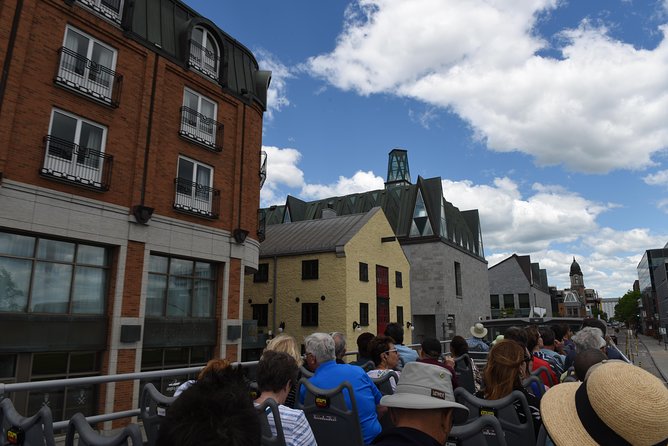
Even when the tour itself is strong, small details can shape your day.
One recurring theme is bus capacity. Some rides are described as standing-room only, and a few people report having difficulty getting back on after hopping off. That is the clearest reason to be strategic with your time, especially if you are on a tight itinerary.
Seating can also be a factor. There are reports of limited leg room for tall riders, with at least one situation where two tall people could not sit together comfortably due to seat layout.
Audio narration is another variable. Many people say the audio guide is excellent and the stops are covered well. But there are also reports of the English audio not working on certain days and a lack of live commentary. This does not mean every ride is like that, but it is worth knowing what to do if it happens: ask quickly, and do not assume the audio will fix itself mid-route.
Finally, ticket access can be an issue. Some groups describe digital ticket difficulties once on the bus, and at least one note that if you bought multiple tickets online, you may need to go to the information building at stop 1 to print separate tickets. If you are traveling as a group, it is smart to plan for that kind of friction.
So, should you book it?
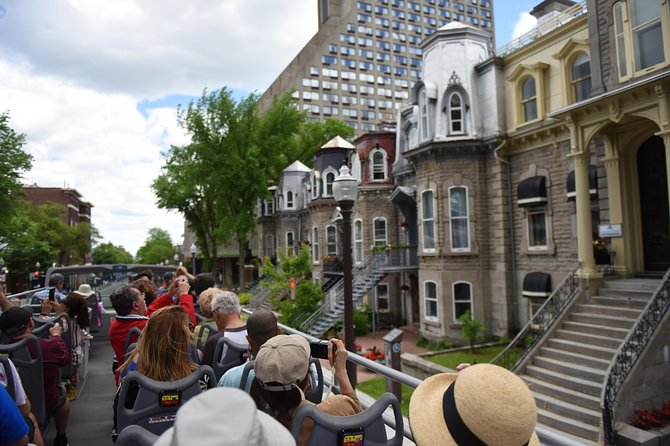
I think this tour is a good booking choice if you want an efficient first pass over Quebec City and you like guided context. The open-top views, the 10-language audio, and the hop-on hop-off freedom are a strong combo for planning your day without a car. The onboard experience is also a plus, especially with Wi-Fi.
I would hesitate or at least plan extra time if you are traveling during peak crowd periods like cruise ship days. In those moments, the tour can become a test of patience, with full buses and long waits. If you are very time-dependent, you may find walking segments and choosing specific stops beats relying on re-boarding repeatedly.
If you are deciding between the 1-day and 2-day options, I would lean toward 2 days when your schedule allows. It gives you room for a loop, a second look at favorites, and less pressure if one leg of the route gets crowded.
FAQ
FAQ
How long does the Quebec City hop-on hop-off bus tour take?
It runs for about 2 hours on the route.
Is there a 1-day or 2-day ticket option?
Yes. You can choose between 1-day and 2-day hop-on hop-off passes.
What languages are available for the audio tour?
The onboard audio tour is available in 10 languages, and the experience is offered in English.
Do the buses have Wi-Fi?
Yes. Onboard Wi-Fi is included.
Where can I board the bus?
You can hop on at any of the bus stops along the route.
Does the tour include hotel pickup or drop-off?
No. Hotel pickup and drop-off are not included.
Is the tour only run on good weather days?
Yes. The experience requires good weather. If it is canceled due to poor weather, you will be offered a different date or a full refund.
What should I do if my audio or ticket access does not work?
Keep your mobile ticket ready, and if the audio guide is not working, ask staff or the driver right away. There have been reports that some digital access issues and audio problems can occur on certain days.
Is this a good option for cruise ship days?
It can be risky on cruise ship days because buses may get crowded and waits can get long. If you are in port, plan extra time and be ready for buses to fill up.
How much is the tour?
The price is listed as $46.93 per person.
The Whole of Quebec City in a Day



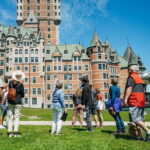
Open-Top Loops Around Quebec City



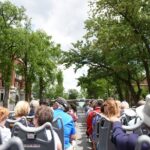
Inside the Walls of Old Quebec
Just off the notebook: recent Quebec City write-ups
- Quebec City: Historic District Walking Tour (2h)
★ 5.0 · 4 reviews - Quebec City: Fat Bike Guided Tour
★ 4.7 · 4 reviews - Quebec City Photo Tour
★ 5.0 · 5 reviews - Experience île d’Orléans and the falls with a local guide
★ 4.5 · 5 reviews - Private Québec City walking tour with Lenny.
★ 5.0 · 5 reviews - Heritage Upper Town E-Bike Tour
★ 5.0 · 6 reviews
Old Quebec City Walking Tours, compared.
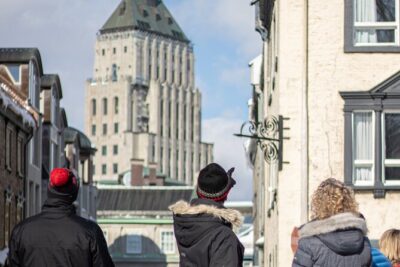 ★ 5.0Quebec City Walking TourFrom $304,716 reviews
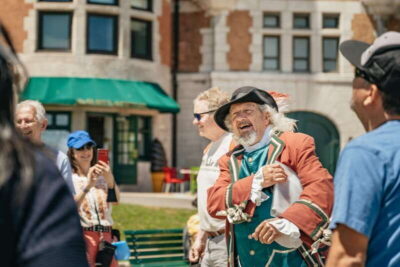 ★ 4.7Quebec City: Guided Tour of Fairmont Le Château FrontenacFrom $193,027 reviews
 ★ 4.4Québec City: Guided Sightseeing River CruiseFrom $473,000 reviews
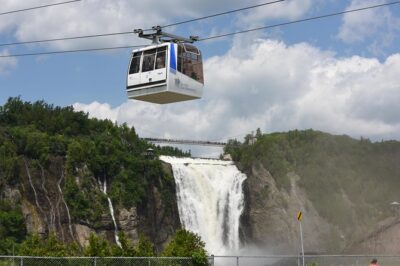 ★ 4.0Half-Day Trip to Montmorency Falls and Ste-Anne-de-Beaupré from Quebec cityFrom $702,718 reviews
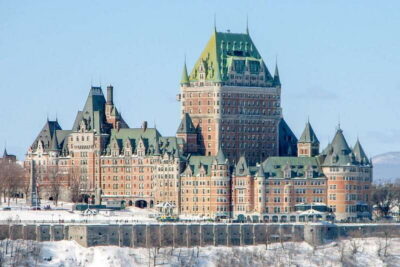 ★ 4.5From Montreal: Quebec City and Montmorency Falls Day TripFrom $362,669 reviews
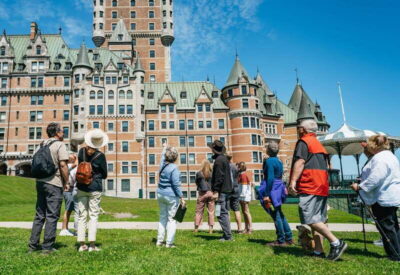 ★ 4.8Old Quebec City: Grand Walking Tour with Private OptionFrom $292,609 reviews
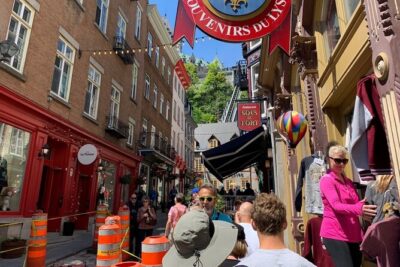 ★ 4.0Quebec City and Montmorency Falls Day Trip from MontrealFrom $362,437 reviews
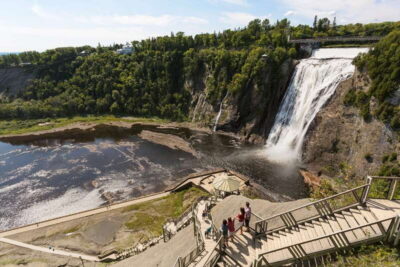 ★ 4.6Quebec City: Montmorency Falls with Cable Car RideFrom $192,392 reviews
Browse the lists this tour appears in