

REVIEW · AUDIO TOURS
Irish Loop Smartphone Audio Driving Tour
Few drives come with this much story power. This Irish Loop smartphone audio tour turns the Newfoundland road into a guided narration, with GPS routing and character-led tales tied to Irish roots, fishing towns, storms, pirates, and place names. You also get a built-in excuse to slow down for ocean views and wildlife like puffins, whales, and icebergs when conditions are right.
I especially like that the experience is easy to run in your own vehicle and you can take your time, not racing a group schedule. The audio also works offline after the download, so you are not stuck hunting for signal once you start moving. The only real catch is upfront: you need a good mobile or Wi-Fi connection for the initial download, so plan for that before you leave.
In This Review
- Quick hits before you drive the Irish Loop
- Price, time, and the value of audio storytelling in a car
- Where you start: Fort Amherst in St. John’s
- Phone setup that actually matters (and how to not ruin your day)
- How the GPS audio tour works while you drive
- Stop-by-stop: Irish Loop stories from Deadman’s Bay to St. John’s
- Kicking off the Irish Loop with ocean views and place-name hooks
- Deadman’s Bay and the Captain Morgan pirate thread
- Blackhead: a traditional fishing village with big ocean angles
- Cape Spear: standing at the edge of the Atlantic
- Maddox Cove: survival stories under calm water
- Petty Harbour: colorful shores and a local skipper’s angle
- The Pond parade: First Pond, Second Pond, Third Pond, and so on
- James Doyle: a firsthand explanation moment
- Bay Bulls: pirate raids, fairy legends, and puffins
- Witless Bay: the name sounds funny until it makes sense
- Mobile Bay: summer wildlife watching on the waterline
- Tors Cove: Nathaniel’s stormy night, cannons, and history colliding
- La Manche: suspension bridge views, hidden beaches, and a name with weight
- More ponds, fairies, and a spooky cemetery moment
- Calvert: a town name change and rock formations with a story
- Ferryland Lighthouse: Lady Sara Kirke enters the scene
- Avalon archaeological focus: a 17th-century colony and secrets still being uncovered
- Pirates in these parts: a hideaway story
- Aquaforte: strong water and a name tied to pirates and a waterfall
- Tommy Brophy at the waves: master storyteller energy
- Renews and the fun of figuring out names
- Chance Cove: shipwrecks and a detour worth it
- Cape Race: Titanic link and an evolution twist
- Cod stocks collapse: the overturned fishing boat lesson in resilience
- Biscayan fishers, Black Bart, and the wind carrying old stories
- Trepassey: aviation history twice
- Saint Vincent’s: ocean on one side, pond on the other
- Point La Haye: Irish heritage, ice age geology, and mummering
- St. Mary’s and the American Revolution cannon angle
- St. Catherine’s, Salmonier, Mount Carmel, and sorting out names
- Butter Pot: wild blueberries, ancient rocks, and freedom tales
- Ending at St. John’s: North America’s oldest city
- When and how to plan your day around stops and walks
- Who this Irish Loop audio tour suits best
- Should you book the Irish Loop Smartphone Audio Tour?
- FAQ
- How much does the Irish Loop Smartphone Audio Driving Tour cost?
- How long does the tour take?
- Do I need data or a signal during the tour?
- Do I need Wi-Fi to start?
- What device do I need?
- Where does the tour start and end?
- What language is the audio tour offered in?
- Can I cancel for a full refund?
Quick hits before you drive the Irish Loop
- Offline tour playback means no signal required during the drive once you download.
- One booking per vehicle lets up to 15 people share the same audio setup in a single group.
- Stops are story-first, with named narrators like Steve, Nathaniel, and Tommy Brophy guiding key moments.
- Wildlife spotting is part of the deal, especially around coastal viewpoints.
- Suggested walk breaks help you turn parking stops into short, worthwhile stretches.
- Flexible timing lets you spread the route across one long day or two easier days.
Still shortlisting? Here is how a few other St Johns bookings stack up.
- Newfoundland Puffin and Whale Watch Cruise★ 5.0 · 837 reviews
- 2 Hours Guided Whale and Bird Boat Tour in Bay Bulls★ 5.0 · 557 reviews
- 2 Hour Award-Winning Whale and Seabird Boat Tour from St. John’s★ 4.5 · 455 reviews
- Historic St. John’s Newfoundland and Cape Spear Tour★ 5.0 · 248 reviews
Price, time, and the value of audio storytelling in a car
This tour is priced at $11.20 per group (up to 15 people), and it is private for your group. That pricing matters because audio tours can be either per-person or hard to justify if you have a car full of people. Here, your vehicle gets the experience, so the per-person cost drops fast once more than one person is riding.
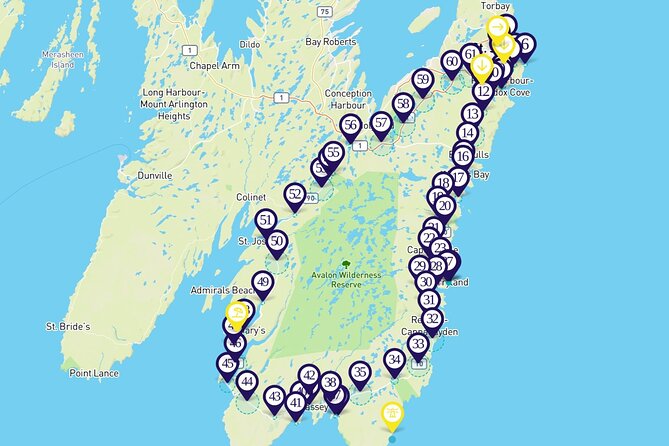
Duration is listed as about 4 to 8 hours, but the tour has no hard time constraints. In plain terms, you should treat it as a half-day to full-day drive with optional stops, not a strict checklist you must finish at speed. If you like photos, roadside viewpoints, and quick walks, plan closer to the top end. If you prefer driving and doing only the most obvious pull-offs, you can likely fit it into less time.
Where you start: Fort Amherst in St. John’s
The tour begins and ends at 3 Fort Amherst Rd, St. John’s, NL A0A 1J0. Starting from St. John’s is a plus because it keeps things simple if you are already staying in the city. It also means you can build your day around morning views, a midday break, and a relaxed return rather than juggling a separate pickup.
The activity window is 8:00 AM to 8:00 PM daily, which gives you plenty of daylight options. If you are trying to spot seabirds or bigger marine life, morning and late afternoon often feel more rewarding for viewing, even if you are not guaranteed anything specific.
Phone setup that actually matters (and how to not ruin your day)
You bring your own smartphone or tablet. The tour uses a mobile ticket in the Tripvia Tours app, so think of it as a self-guided experience you download, then run like GPS storytelling.
Here is the practical part: the instructions say you need a good mobile or Wi-Fi connection to download the audio first. Once downloaded, the tour is designed so no signal is required and no data is used during the tour. That is exactly what you want on Newfoundland roads, where reception can vary block to block.
My advice:
- Download before you start driving, ideally where Wi-Fi is reliable.
- Charge your device or bring a car charger. Not because the tour needs data, but because navigation and audio chew up battery.
- Use a windshield mount or dashboard mount if you have one. You will keep your eyes on the road, and your attention can go to listening when you park.



How the GPS audio tour works while you drive
This is a GPS-guided self-drive route, delivered through your phone. You will hear stories triggered as you reach places along the Irish Loop. The narration is built around scenes and themes, not just geography, so even if you have never heard of a village, you will get a reason to care.
That “why care” piece is the magic trick here. Road trips can feel like scenery boxes unless you connect the dots. This tour keeps those connections going with Irish-linked stories, coastal survival, pirate-era intrigue, Indigenous traditions referenced in the route themes, and a steady focus on how place names carry memory.
It is also a private tour/activity, so you are not sharing your schedule or stopping for someone else’s pace. That works well for couples, families, and small groups who want control.
Stop-by-stop: Irish Loop stories from Deadman’s Bay to St. John’s
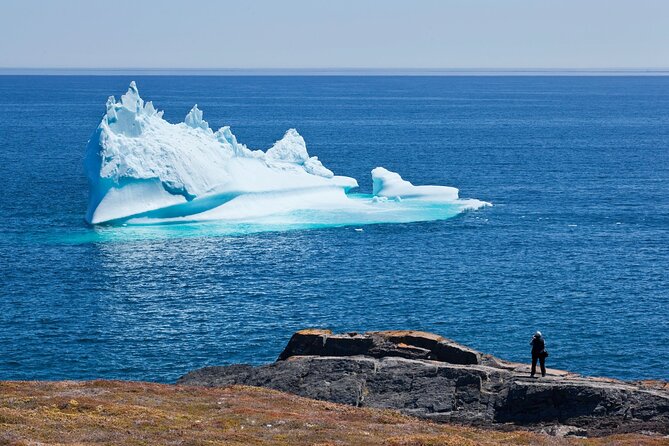
The route is packed with named stops, and each one is basically a chapter. Some places are about famous viewpoints, others are about the people who lived through storms, fishing booms and busts, raids, and hard change.
Below is how I would mentally break the drive into parts, so you know what kind of payoff each stop gives you.
Kicking off the Irish Loop with ocean views and place-name hooks
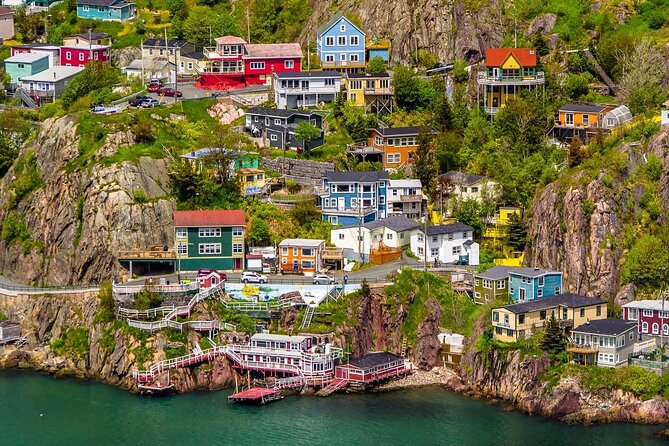
Your first stretch sets the tone. You are guided along rugged coast and historic fishing villages, with rolling green hills and dramatic cliffs. You get to expect wildlife mentions like puffins, whales, and even icebergs drifting past the coast, which is useful because it primes you to look up, not just down at the road.
This start is also where you learn how the tour connects themes like Irish heritage, early explorers, and Indigenous traditions to what you are seeing out the window. If you tend to get bored by long drives, this opening helps because it gives you a reason to keep moving.
Deadman’s Bay and the Captain Morgan pirate thread
Next up is Deadman’s Bay, named with an ominous story. The audio brings in Captain Morgan as the on-ramp to tales of pirates, peril, and Atlantic adventures.
The payoff here is twofold:
- You get a place name with actual drama, not just a label.
- You learn to read the coast as history, not only scenery.
Blackhead: a traditional fishing village with big ocean angles
At Blackhead, the tone shifts toward everyday seafaring life. It is described as a traditional fishing village where Newfoundland’s maritime story and ocean views come together.
This is a good spot if you like small-town energy. The coast is the star, but the audio gives it context so the views feel earned, not random.
Cape Spear: standing at the edge of the Atlantic
At Cape Spear, you stand at the edge of a continent and stare into the endless Atlantic. The narration focuses on courage, survival, and discovery.
This stop tends to work well even if weather is moody. Windy viewpoints can feel intense, but that is part of the point. Cape Spear is a place where the ocean dominates the whole frame.
Maddox Cove: survival stories under calm water
Maddox Cove may look peaceful, but the tour tells you that survival, tragedy, raids, legendary storms, and early innovation are hiding under that quiet surface.
This is the kind of stop where the audio changes your body language. You will likely stand longer and look differently, because you now know what kind of risk people once faced there.
Petty Harbour: colorful shores and a local skipper’s angle
Petty Harbour is presented as colorful, plus very tied to seafaring spirit. You will hear from a local skipper, which is a smart move because local voices carry an authenticity that generic narration sometimes misses.
This is also a good break spot if you want to walk, stretch legs, and watch boats moving. The story set-up makes the harbour feel lived-in.
The Pond parade: First Pond, Second Pond, Third Pond, and so on
Then comes the playful pattern: First Pond, Second Pond, Third Pond, and the audio teases the next one. The route explains why “pond” shows up everywhere, regardless of size.
I like this section because it makes you notice signage and small geographic quirks without turning the whole drive into a lecture. It is also a great moment for a quick stop because the audio is clearly themed and easy to follow.
James Doyle: a firsthand explanation moment
One segment invites you to understand part of the story from someone who lived it firsthand, James Doyle. Even when you do not know the details beforehand, hearing a named person take the role helps the story land.
This is a reminder that the audio is not only about landscapes. It is about voices and memory.
Bay Bulls: pirate raids, fairy legends, and puffins
At Bay Bulls, the audio mixes history and folklore. You get pirate raids, fairy legends, and puffins galore. It also adds a playful warning that you might have to dodge a mischievous fairy.
You can take the tone as fun, but the underlying value is that the harbour becomes more than a stop. It becomes a story engine for how communities explain the world around them.
Witless Bay: the name sounds funny until it makes sense
Witless Bay is described with charm and a name explanation you will get on the route. The tone is light, but it is still tied to local meaning.
This is a good spot when you want something less grim and more people-centered.
Mobile Bay: summer wildlife watching on the waterline
Mobile Bay comes alive in summer, with mentions of whales, puffins, and soaring eagles. The instruction is simple: keep your eyes on the waves.
Even if you do not spot wildlife, you still get a solid reminder to slow down and look outward. Audio tours that force you to scan the horizon are worth it.
Tors Cove: Nathaniel’s stormy night, cannons, and history colliding
At Tors Cove, you will hear from Nathaniel about a stormy night when fear and cannons collided with history.
This stop fits well if you like “moment in time” storytelling. Storms in Newfoundland are not vague drama, they are real. Knowing that before you arrive makes you more aware of how exposed the coast can be.
La Manche: suspension bridge views, hidden beaches, and a name with weight
The audio explains La Manche, along with coastal views, hidden beaches, and the chance to see Newfoundland’s most dramatic suspension bridges. Then it points to late January 1966, when a tiny fishing village faced an unthinkable fate, with the tour telling you what happened.
This is one of the emotionally heavier sections. The practical tip is to give yourself time to absorb the setting. Don’t rush it just because you are hungry or because you still have hours left.
More ponds, fairies, and a spooky cemetery moment
After La Manche, you get a sequence built around place-name play and folklore. You pass through sections where ponds appear and vanish, fairies toy with travelers, and a quiet cemetery with flickering lights sets a ghostly legend tone about glowing graves and folklore finding a modern twist.
This is fun storytelling, and it is also a useful reminder to stay curious even when the route becomes familiar. The audio keeps you listening.
Calvert: a town name change and rock formations with a story
Calvert is next, with a theme that it wasn’t always called Calvert. The tour tells why and ties it to stories involving silver fish and supernatural rock formations.
This stop is a good one for people who like wordplay and geology-anchored legends. It can also be a nice change of pace if you have been in heavier historical segments.
Ferryland Lighthouse: Lady Sara Kirke enters the scene
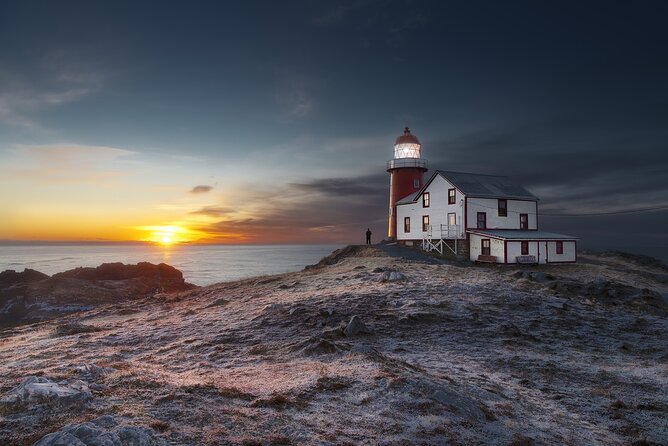
At Ferryland Lighthouse, the audio suggests more than ocean views, with Lady Sara Kirke possibly dropping in. It is framed as story presence, so take it as part of the narrative style, not as something you must witness.
If you like maritime landmarks, this is a satisfying anchor stop.
Avalon archaeological focus: a 17th-century colony and secrets still being uncovered
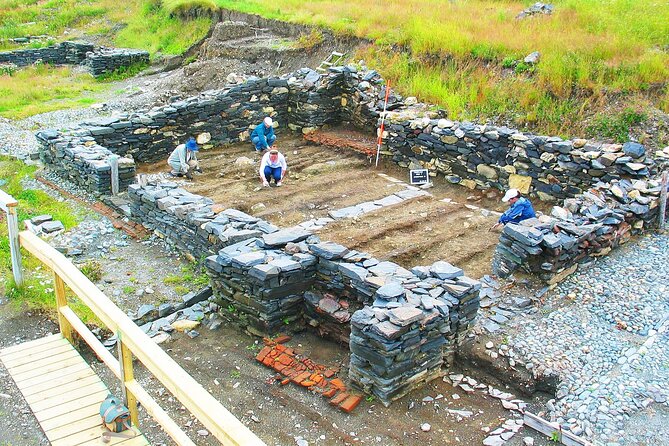
Then you hit the Avalon dig site with an emphasis on its importance as one of North America’s key archaeological treasures. The audio describes a 17th-century colony, how it challenged stereotypes, and how secrets are still being uncovered.
This part gives the tour more than pirate tales and storms. It adds a serious layer that makes the whole Irish Loop feel bigger than an easy scenic drive.
Pirates in these parts: a hideaway story
The audio reminds you that pirates were part of the area’s story world, with one pirate and a hideaway tale.
If you enjoy folklore, this segment keeps the tone lively. If you prefer strictly factual history, it still works because it is tied to how communities remembered danger and power along the coast.
Aquaforte: strong water and a name tied to pirates and a waterfall
Aquaforte is framed as strong water, not strong drink. You will hear how the harbour earned its name, including dodging pirates and how it ties to Canada’s first something, though the exact phrase is cut off in the provided outline.
Then you get a chance to get up close to the waterfall that gave Aquaforte its name. This is the kind of stop that helps you reset your senses. After lots of listening, you can walk and look at something real.
Tommy Brophy at the waves: master storyteller energy
Next, you hear from Tommy Brophy, described as a master storyteller who swears even the waves have tales to tell. That fits the overall tour style: coast plus characters plus memory.
Renews and the fun of figuring out names
The audio wonders about the quirky name Renews and explains how it came to be. This is another place-name stop that keeps the drive playful and curious.
Chance Cove: shipwrecks and a detour worth it
Chance Cove is worth a detour, with shipwrecks and stunning views as the hook. Since it is explicitly framed as optional detour territory, it is also a great place to decide what kind of day you want. Quick stop or extra time?
Cape Race: Titanic link and an evolution twist
At Cape Race, you hear about its link to the Titanic. Then the audio also explains how a rocky cliff changed what people thought about evolution.
That pairing is unusual, and it is exactly why this stop feels more interesting than a standard “look at the ocean” moment. The ocean is still the star, but the story connection feels unexpected.
Cod stocks collapse: the overturned fishing boat lesson in resilience
The tour points out an overturned fishing boat by the road and uses it to tell a story of cod stocks collapse, traditions halting, and a community choosing to endure. Loss gives way to resilience in the narration.
This section can be heavy, but it is also one of the most meaningful segments if you care about how people adapt, not just what they once celebrated.
Biscayan fishers, Black Bart, and the wind carrying old stories
Then comes a quiet stretch where the audio mentions Biscayan fishers, burning ships, and a pirate named Black Bart. It leans into the idea that even the wind carries wild stories.
If you like atmosphere, this is where it clicks. You get story momentum without constantly changing viewpoints.
Trepassey: aviation history twice
At Trepassey, the audio says aviation history happened there not once, but twice, and explains why. The key point for you is that this stop breaks the pattern. You go from seafaring and storms to technological change.
Saint Vincent’s: ocean on one side, pond on the other
Saint Vincent’s is described as a contrast, rugged and resilient, with the audio focused on a “pond” that is one of the strangest and richest you will ever encounter.
This section ties back to the “pond” theme earlier, but with a new twist.
Point La Haye: Irish heritage, ice age geology, and mummering
Point La Haye connects Irish heritage, ice age geology, and Newfoundland traditions like mummering. If you want the tour to feel more rooted in culture, this is a highlight.
St. Mary’s and the American Revolution cannon angle
At St. Mary’s, you hear from a British soldier stationed during the American Revolution, when cannons protected fishing riches and fired in battle.
This brings a broader world conflict into a place you might otherwise think of only as local.
St. Catherine’s, Salmonier, Mount Carmel, and sorting out names
The audio includes St. Catherine’s, Salmonier, Mount Carmel, Mitchell’s Brook, and back to St. Catherine’s, and it explicitly tells you not to worry because it will sort out the names.
This is useful because Newfoundland place names can be confusing on signs. Getting the story behind the naming helps you feel oriented.
Butter Pot: wild blueberries, ancient rocks, and freedom tales
Butter Pot is described with wild blueberries and ancient rocks, plus tales of fugitives, forest fires, and freedom. You also get a warning about guys with cap-guns, with an explanation of what that means in the story.
This section sounds like it keeps a playful tone while still covering real events.
Ending at St. John’s: North America’s oldest city
Finally, the tour ends back in St. John’s, described as North America’s oldest city. It is the perfect kind of finish because you start with coastal villages and end with a major hub where you can add a normal dinner and a city walk.
When and how to plan your day around stops and walks

This audio tour does not force you into a tight schedule. That freedom is great, but it also means you need a strategy.
My suggestion:
- Pick one “must-do” viewpoint stop and one “must-do” walk stop, then fit the rest around how you feel.
- If you like walking, follow the audio’s suggested walks, because that is part of how people get more value out of the day.
- If you are chasing wildlife, give yourself extra time near coastal viewpoints so you can pause and watch.
Also, keep in mind that many sections mention dramatic conditions: storms, sea danger, and a coastline that can feel exposed. Even if you are not hiking, dress for wind and salt air, not just sunshine.
Who this Irish Loop audio tour suits best

This is a strong fit if you want:
- A road-trip pace instead of a bus schedule
- A story thread running through small fishing communities and famous headlands
- A group-friendly option where the cost is per vehicle group (up to 15) rather than per person
- To learn place-name meaning, pirate and storm lore, and cultural connections to Irish heritage and local traditions
It is also a good choice if you already know you will want to drive your own route. Nothing here replaces a rental or your car habits. It just adds a narrated layer that makes your miles feel useful.
Should you book the Irish Loop Smartphone Audio Tour?
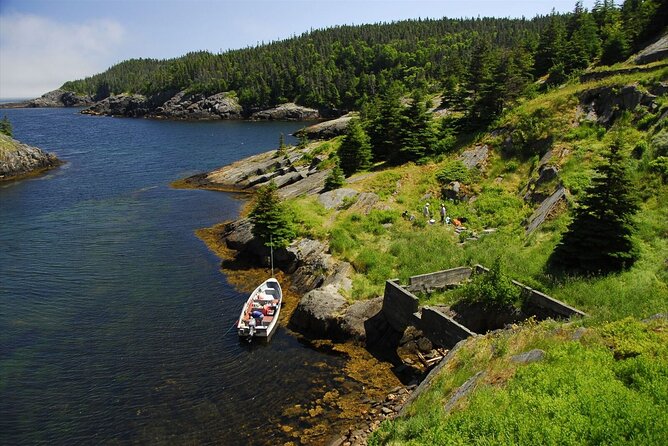
Yes, you should book it if you want a self-guided way to turn Newfoundland driving into something you remember for the stories, not just the photos. The best reason is the setup: offline GPS audio that works with your own timing, plus a long list of stops that includes named storytellers like Steve, Nathaniel, James Doyle, and Tommy Brophy.
Skip it or think twice if you do not want to manage smartphone tech at all, or if you are likely to have trouble getting an initial download with a decent Wi-Fi or mobile connection. If your phone battery is weak and you hate planning downloads, that could ruin the flow.
If you can handle that one early step, this tour is a great way to get real meaning from an Irish Loop road day, with lots of reasons to pull over and listen.
FAQ
How much does the Irish Loop Smartphone Audio Driving Tour cost?
It is $11.20 per group (up to 15 people).
How long does the tour take?
The duration is about 4 to 8 hours, and you can take as long as you like with no time constraints.
Do I need data or a signal during the tour?
No. The tour is designed so no signal is required and no data is used during the tour after download.
Do I need Wi-Fi to start?
You need a good mobile or Wi-Fi connection for the initial download.
What device do I need?
You need your own smartphone or tablet. They are not included.
Where does the tour start and end?
It starts at 3 Fort Amherst Rd, St. John’s, NL A0A 1J0, Canada, and ends back at the same meeting point.
What language is the audio tour offered in?
The tour is offered in English.
Can I cancel for a full refund?
Yes. Free cancellation is available, and you can cancel up to 24 hours in advance of the experience start time for a full refund.
Just off the notebook: recent St Johns write-ups
- The Best of St. John’s Private Walking Tour
★ 4.0 · 5 reviews - Irish Loop Smartphone Audio Driving Tour
★ 4.5 · 7 reviews - St. John’s Coastal Hike with Top Local Guide Deneen
★ 5.0 · 7 reviews - St. John’s Local Pub Tour & History Lesson
★ 5.0 · 11 reviews - 90 Minute Downtown St. John’s Walking Tour Walking on Water
★ 4.5 · 11 reviews - Irish Loop to Ferryland Tour
★ 5.0 · 17 reviews
Audio Tours, compared.
 ★ 4.0Icefields Parkway: a Smartphone Audio Driving TourFrom $9118 reviews
 ★ 4.5Cabot Trail: a Smartphone Audio Driving TourFrom $9118 reviews
 ★ 3.5Niagara: Behind The Falls, Skylon Tower Ticket & Tesla Audio TourFrom $3869 reviews
 ★ 4.0Sea to Sky Highway: a Smartphone Audio Driving TourFrom $832 reviews
 ★ 4.5A 7th-Gen Local’s View of Downtown Charlottetown: An Audio TourFrom $1127 reviews
 ★ 4.5Halifax Churches, Gardens & Graveyards: a Smartphone Audio Walking TourFrom $825 reviews
 ★ 4.0Smartphone Audio Driving Tour between Banff and CalgaryFrom $825 reviews
 ★ 4.0Self Guided Audio Driving Tour of the North Shore of PEIFrom $1324 reviews
Browse the lists this tour appears in