
REVIEW · WHISTLER & THE SEA TO SKY HIGHWAY
Sea to Sky Highway: a Smartphone Audio Driving Tour
Sea to Sky Highway is better with audio. I like the GPS-triggered commentary that plays automatically as you get close to each viewpoint, and I also like the lifetime access to the app and its data. The one real drawback is that you need a good mobile or WiFi connection at the start to download, and if your phone audio is quiet or glitchy, you may have to work a bit to keep it aligned.
This is a self-guided drive, so you control stops and timing, with no group schedule. At about 1 to 2 hours, it is a great way to turn a drive from Vancouver to Whistler into something you actually remember, not just something you pass through.
In This Review
- Key Things I’d Focus On Before You Go
- What This Smartphone Audio Tour Gets Right on the Sea to Sky Highway
- Price and Logistics: One Booking, Flexible Timing, Real Value
- Before You Roll: How to Set Up the App So It Doesn’t Fight You
- The Drive From Vancouver to Whistler, Explained in Audio Stops
- North Vancouver, the Salish Sea, and Why Names Matter
- Lions Bay and Porteau Cove Road Lookout for Quick Wow Views
- Anvil Island, Howe Sound, and the Fjord-Sound-Bight Moment
- Britannia Mine Museum Area and Murrin Provincial Park Stops
- Shannon Falls and the Kind of Stop That Works Even on a Short Timeline
- Stawamus Chief and the Outdoor Identity of Squamish
- Tantalus Lookout and a Walk View From a Volcanic Escarpment
- Whistler Mountain, Alta Creek, and the Snow-Making Moment
- Where the Sea to Sky Gondola Fits In
- How the GPS Audio and Quizzes Feel in Real Life
- What Stops Are Actually Worth Your Time
- Who This Tour Suits Best (and Who Might Skip It)
- Should You Book This Sea to Sky Highway Audio Tour?
- FAQ
- How long does the Sea to Sky Highway smartphone audio tour take?
- What is the price and who can use it?
- Do I need mobile data during the drive?
- Where does the tour start and end?
- Is this tour offered in English?
- Are attraction tickets included?
Key Things I’d Focus On Before You Go
- GPS audio points: about 28 audio moments that play as you approach each spot.
- Low-cost per vehicle: $8.22 per group, up to 15 people, with only one booking needed per vehicle.
- Lifetime access: you can keep using the app and downloaded data anytime on the Tripvia Tours mobile app.
- No data during the drive: once you download, the tour works without signal or data use.
- Real stop variety: waterfalls, lookouts, mountain names and local history, plus an option tied to Sea to Sky Gondola.
- Quizzes are optional to your enjoyment level: some people love them, others find them distracting.
The highway north, in more versions
- Zipline Adventure in Whistler★ 5.0 · 1,367 reviews
- Whistler Odyssey Tour: Off-Road Buggy Adventure★ 5.0 · 750 reviews
- Whistler Wilderness Run Snowmobile Tour★ 5.0 · 724 reviews
- 2 Hour Wilderness Adventure Snowmobile Tour in Whistler★ 5.0 · 610 reviews
What This Smartphone Audio Tour Gets Right on the Sea to Sky Highway
The best part here is simple: the drive is already scenic, so the tour just helps you notice it. The audio plays automatically with a live GPS map, which means you are not constantly hunting for the right moment or reading while driving.
Second, the pricing is unusually friendly for what you get. You pay per group (up to 15), and you only need one booking per vehicle. For families or friend groups sharing one car, it can feel like the cheapest upgrade you make all trip.
You should also know what this is and what it is not. This is not a guided bus tour with a stop-by-stop expert leading you around. It is you, your car, and a narrated route that is designed to work at highway speed, with short stops when it makes sense.
Price and Logistics: One Booking, Flexible Timing, Real Value
At $8.22 per group, this tour lands in the “why not” category for many people. The value comes from two things that matter on the Sea to Sky: you get a structured route with meaningful audio points, and you can keep the tour available later thanks to lifetime access.
Time-wise, plan for about 1 to 2 hours. That is long enough to do a few key pull-offs, but short enough that it does not swallow your whole day.
The practical setup is also clear. You need a smartphone or tablet, and you should confirm you have good mobile or WiFi connection for the initial download. Once downloaded, the tour says it does not require signal or data during the drive, which is exactly what you want on a road where coverage can vary.
Before You Roll: How to Set Up the App So It Doesn’t Fight You
Take 10 minutes before you leave to do the download with solid WiFi if possible. This tour explicitly calls out that you need good mobile or WiFi connection for the initial download, and that step is where some people got stuck. If you start the drive without everything loaded, you may waste time troubleshooting while you are trying to enjoy the scenery.
Also do a quick sound check. One review mentioned the volume could be hard to manage for multiple people in a car. If you are sharing the front seat, test whether you can hear clearly through your car speakers. If not, fix it before you reach the first audio point.
Last, expect the “self-guided” part to be interactive. The tour includes quiz-style prompts at some moments. Some people loved the fun break, and some people found it slows the flow. If you already know you hate quizzes, you might want to mentally treat those segments as skippable mood breaks rather than core content.

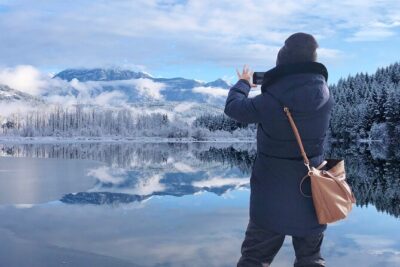
The Drive From Vancouver to Whistler, Explained in Audio Stops
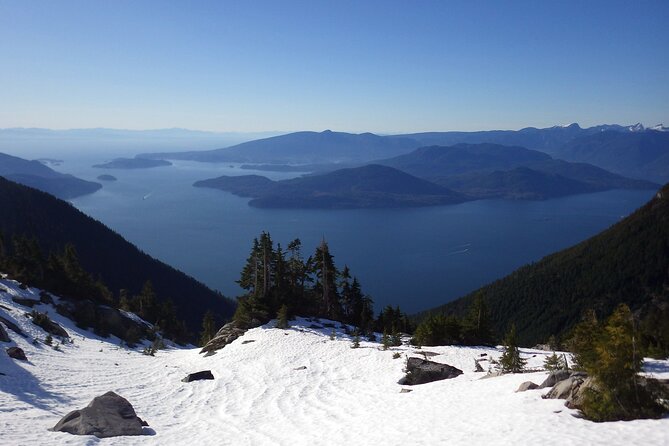
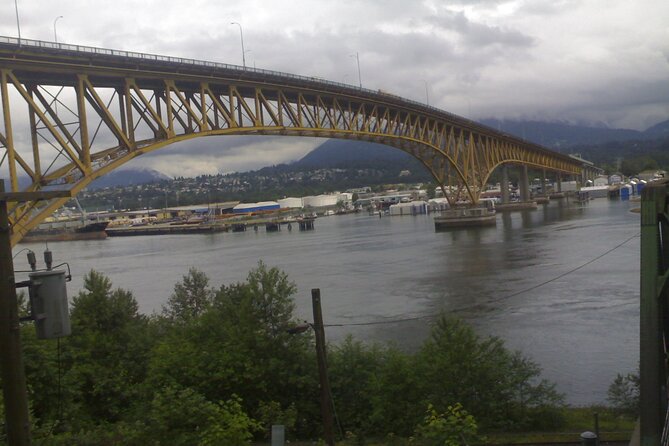
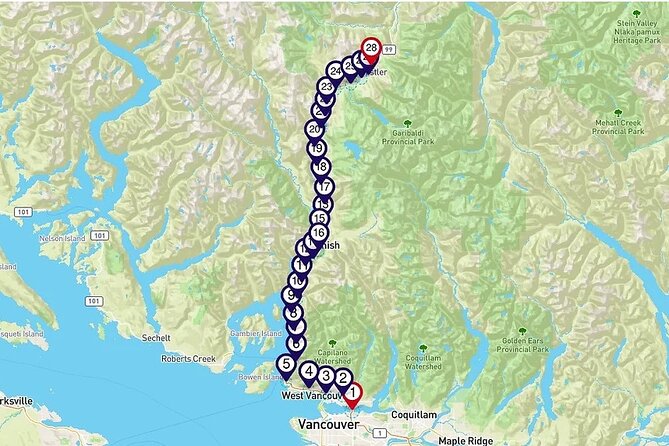
This route starts from Vancouver, heading north on Highway 1 over the Ironworkers Memorial Bridge. From there, the route merges into Highway 99 and continues all the way to Whistler. Along the way you will get narration tied to major landmarks and named features, with a total of 28 audio points.
Think of it like three layers: geography, local story, and a reason to pull over. The strongest moments tend to combine all three, like when a lookout is paired with a naming story, or when a stop is timed with a practical “if you want a viewpoint, here is where to look.”
North Vancouver, the Salish Sea, and Why Names Matter
Early on, you get oriented to the North Shore, meaning West and North Vancouver plus the North Shore Mountains. Then the narration shifts to water, including the Georgia Strait, described as an arm of the Salish Sea that separates Vancouver Island from the mainland.
You also get a naming thread with Cypress Mountain. The tour points out that two mountains are not named Cypress, yet the name came from a specific origin. This kind of audio detail helps you watch for clues instead of just passing by peaks.
If you have time, the tour also notes Cypress Provincial Park, including trail links such as parts of the Baden Powell Trail and the Howe Sound Crest Trail. On a clear day, the views are said to be magnificent. Even if you do not hike, the audio primes you to look for the terrain patterns and ridgelines you would otherwise miss.
Lions Bay and Porteau Cove Road Lookout for Quick Wow Views
Next up, the tour gives you a local human story with the Lions Bay Volunteer Search and Rescue Team. The narration says it was established after landslides in the early 1980s. It is brief, but it adds weight to what might otherwise feel like a simple highway stretch.
Then you get a clear pull-off recommendation: Porteau Cove Road Lookout, off the highway. The promise here is a bird’s-eye view of the next point of interest. This is one of the moments where the audio format makes sense, because you can listen while you approach and then visually confirm what the story is pointing to.
Anvil Island, Howe Sound, and the Fjord-Sound-Bight Moment
You will also hear how Anvil Island got its name, with a journal entry date tied to Captain George Vancouver (June 14, 1792). It is the kind of detail that makes you look at the island differently, even from a distance.
After that comes Howe Sound, described as a roughly triangular sound and noted as North America’s southernmost fjord. The tour also talks about the difference between a fjord, sound, and bight. Even if you do not memorize the definitions, you will start to notice how locals categorize water and why it matters.
Britannia Mine Museum Area and Murrin Provincial Park Stops
The tour suggests a stop connected to the Britannia Mine Museum. It tells you to look for a huge white building on the mountain side with a Britannia Mine Museum sign, then shares some history. If you are the type who likes mining-era context, this is a natural checkpoint, especially on a drive that otherwise feels mostly like views.
Then you hit Murrin Provincial Park, described as a good pit stop with lots of parking and public washrooms. It also mentions the Murrin Park Loop Trail, known for a pictograph. That is a useful combo: you can stretch your legs, handle logistics, and still get something cultural without needing tickets.
One audio section is described as a set of nested layers, like Russian dolls. This is exactly the kind of narration style that can work well on a drive, because it breaks big topics into short, understandable pieces.
Shannon Falls and the Kind of Stop That Works Even on a Short Timeline
Waterfalls are a classic Sea to Sky win, and the tour calls out Shannon Falls as a must-check if you are a fan of waterfalls. This is a spot that fits the self-guided format well, because the payoff is visible fast, and you can spend as much or as little time as you want.
One review also mentioned stopping at Shannon Falls and Brandywine Falls, both described as spectacular. Brandywine Falls is not listed in the provided stop text you gave me, so I cannot promise it is part of the same exact sequence, but it does align with the general pattern of “short drive, big view” the audio format is built for.
Stawamus Chief and the Outdoor Identity of Squamish
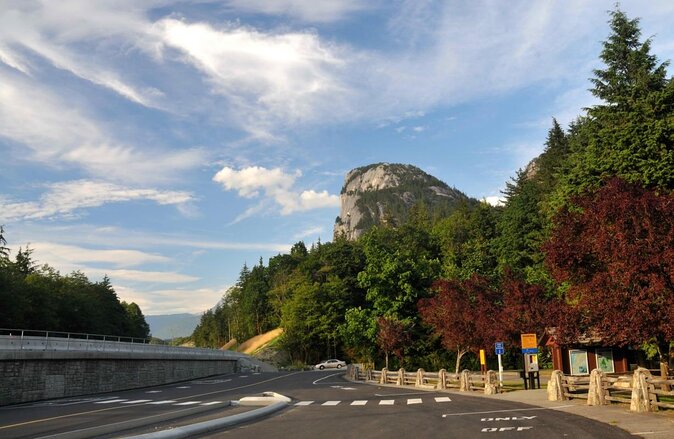
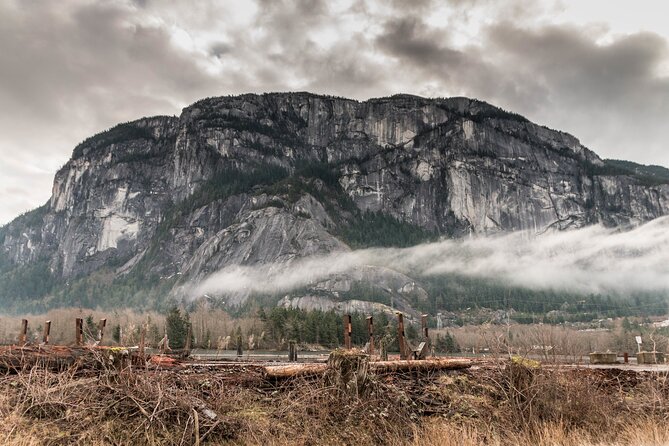
Stawamus Chief Mountain gets a full explanation, including what it is and how it got its name. This is a great moment to slow down your mindset. Before the audio, you might see a big granite wall. After, you notice how the story behind a name can make the whole cliff feel intentional, not just dramatic.
The tour also describes the area as the Outdoor Recreation Capital of Canada, including some past context. It then moves into specifics about a berm and a rail spur line built on the western and eastern sides of the central estuary, and how it has changed. The reason that sort of detail works is that it explains the modern shoreline shape, not just the natural features.
Then it connects geography to wildlife, highlighting a park as one of the most significant wintering bald eagle areas in North America. You might not time your drive to winter, but even listening out of season helps you understand what to look for and why people come looking at certain times.
Tantalus Lookout and a Walk View From a Volcanic Escarpment
Next you get another viewpoint: Tantalus Lookout. The audio frames it as a way to check out the mountains in front of you, which is a nice match to the GPS approach. You can follow the map, then step out and let the view do its job.
The tour then includes oral history tied to Squamish First-Nations. It presents stories passed down through oral tradition. For a self-guided drive, this is the part that feels most meaningful, because it nudges you away from “just scenery” into a fuller sense of place.
After that, there is a notable natural feature where the tour says a short 15-minute walk leads to a viewing platform perched high on the edge of a volcanic escarpment. This is one of your best “make the audio worth it” opportunities. You are not just looking from the road, you are getting a small hike payoff built into the narration.
Whistler Mountain, Alta Creek, and the Snow-Making Moment
Whistler Mountain appears near the end, with the tour explaining what it used to be called and why the name changed. It also connects the name to what it is associated with now.
Then the audio shifts to the opening day of the Winter Games and the effort of the organizing committee to ensure snow. It says it could have qualified as an Olympic event in its own right. It is a fun phrasing, and it gives you a human scale to what can otherwise feel like pure sports trivia.
From there, the tour explains that the ski area is technically called Alta Creek, but everyone knows it by a more idyllic name. That is the kind of local language detail that makes you sound smarter when you talk about Whistler after you get back home.
Finally, you get Whistler’s roots traced to a British Royal Navy survey in the 1860s. Even if you have visited before, it is the kind of story that gives the town a timeline beyond the present-day glow of mountain tourism.
Where the Sea to Sky Gondola Fits In
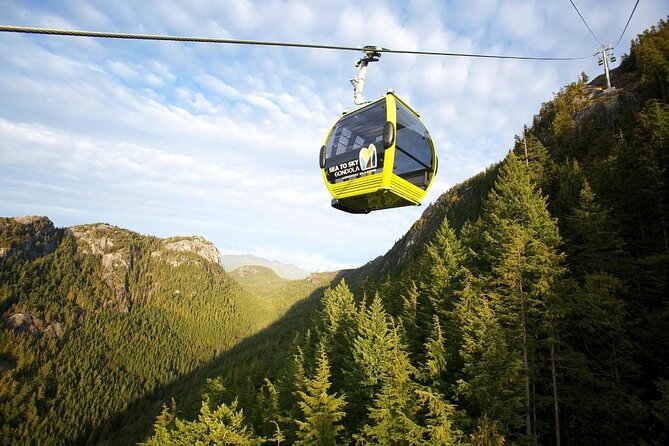
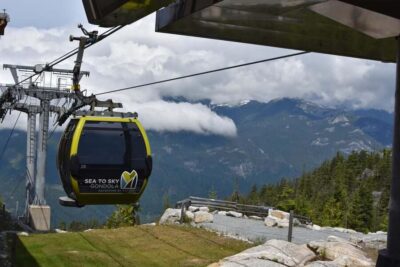
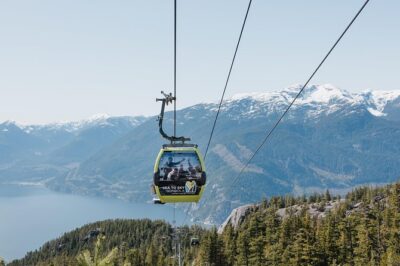
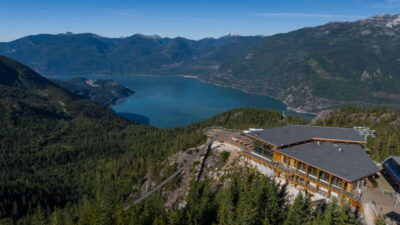
Your tour highlights mention the scenic Sea to Sky Gondola. Since your provided stop text does not lay out the exact audio trigger for it, I would treat this as a recommended viewpoint connection rather than a guaranteed timed segment you must do. Still, it makes sense as a “pause and level up your perspective” stop, especially if you want to see the region’s geometry from above instead of through a windshield view.
How the GPS Audio and Quizzes Feel in Real Life

The tour is designed around automatic audio playback with a live GPS map, so you are meant to listen while driving and pull over when something is worth it. In practice, the experience can vary depending on your phone and your patience.
Here is what tends to go well based on real feedback patterns: people like that it works for a Vancouver-to-Whistler drive, that it is easy to download, and that it can pair nicely with car GPS and speakers. One review described the app as GPS based so it knows exactly when you are about to arrive to a location for narration.
The pain points tend to be technical and content-style. Some people said the app could be glitchy when restarting after a stop, and a few mentioned that the GPS could not keep things aligned. A couple reviews complained the quizzes were unnecessary or distracted from the core facts. Others said the jokes were corny or the quiz flow was annoying.
So my practical advice is this: go in expecting short bursts of narration tied to points, not a smooth documentary. If you like playful narration, it will probably feel fun. If you want strict facts only, you can still use the tour for navigation and then ignore the quiz moments mentally.
Also check your environment. If your car’s audio is too quiet, the “set it and forget it” idea can fall apart. That is not a tour failure as much as a real-world setup issue.
What Stops Are Actually Worth Your Time
With any self-guided driving tour, your biggest decision is where to stop since you control your schedule. Based on the tour’s strongest described elements, I would prioritize these kinds of moments:
- Waterfalls like Shannon Falls, because the payoff is fast and visible.
- Viewpoints like Porteau Cove Road Lookout and Tantalus Lookout, because the narration gives you a reason to look up and scan.
- A walk with a platform, like the volcanic escarpment section with the 15-minute walk, because it turns the audio into an actual activity.
- A wildlife-season story like the bald eagle wintering area, because even if you cannot see eagles in summer, the context helps you notice what matters.
Also consider your energy level. If you have kids or you want a low-effort day, stick to lookouts and quick photo stops. If you want one small hike, save your legs for the 15-minute platform walk described in the tour.
Who This Tour Suits Best (and Who Might Skip It)
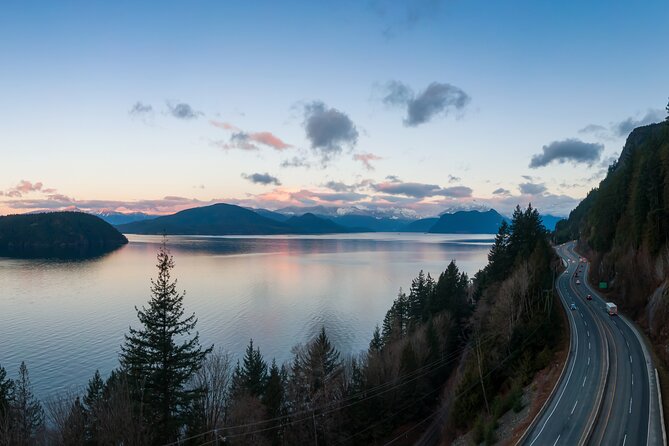
This tour is a strong match for:
- People driving their own car from Vancouver to Whistler and wanting more than just music.
- Families and friend groups who want one low-cost add-on and shared narration.
- History and name-meaning fans, because the route includes origins for places like Cypress Mountain and Anvil Island.
- Outdoor lovers who will appreciate Stawamus Chief and the framing of the region’s recreation identity.
It might be a less perfect match if:
- You hate any quizzes or interruptive prompts and you want pure narration only.
- You expect the audio to always be perfectly synced to where you are, regardless of your phone performance.
- You arrive with no way to download first. The tour explicitly requires good mobile or WiFi for the initial download.
Should You Book This Sea to Sky Highway Audio Tour?
Book it if you want a practical upgrade to an already stunning drive, and you are comfortable handling the app setup once. The value is real: $8.22 per group, up to 15 people, with one booking per vehicle, plus lifetime access and no data needed during the drive once downloaded.
I would not overthink it, but I would plan for one thing. Make sure you have the download ready before you start driving, and test your audio. If you do, you will likely enjoy the name stories, viewpoint stops, and the way the narration helps you watch the Sea to Sky route with new eyes.
FAQ
How long does the Sea to Sky Highway smartphone audio tour take?
The tour typically takes about 1 to 2 hours.
What is the price and who can use it?
It costs $8.22 per group, up to 15 people, and only one tour booking is needed per vehicle.
Do I need mobile data during the drive?
No. The tour does not require signal or data during the tour after the initial download.
Where does the tour start and end?
It starts from Vancouver and your activity ends in a different location. The exact ending location is not specified in the provided info.
Is this tour offered in English?
Yes, the tour is offered in English.
Are attraction tickets included?
No. Attraction tickets are not included, and recommended attractions may be closed or inaccessible due to season or reasons beyond the provider’s control.
The Road North to Whistler



Just off the notebook: recent Whistler write-ups
- Whistler: Guided Wilderness Hike
★ 5.0 · 4 reviews - Paradise Valley: Bee Adventure Tour!
★ 5.0 · 4 reviews - From Vancouver: Shannon Falls and Whistler Sightseeing Tour
★ 4.1 · 4 reviews - Whistler Helicopter Tour: Glaciers and Black Tusk
★ 4.8 · 5 reviews - Whistler Family Buggy Easy Tour
★ 5.0 · 5 reviews - Whistler: Axe Throwing Experience
★ 5.0 · 6 reviews
Whistler & the Sea to Sky Highway, compared.
 ★ 5.0From Vancouver: Whistler & Sea to Sky Gondola with Shannon FallsFrom $1731,640 reviews
 ★ 5.0Zipline Adventure in WhistlerFrom $1261,367 reviews
 ★ 4.8Whistler, Sea to Sky Gondola, and Shannon Falls Day TripFrom $1411,134 reviews
 ★ 5.0Whistler and Sea to Sky Gondola Tour + Shannon FallsFrom $161882 reviews
 ★ 5.0Whistler Odyssey Tour: Off-Road Buggy AdventureFrom $275750 reviews
 ★ 4.5Whistler & Sea to Sky Gondola Day Trip from VancouverFrom $185725 reviews
 ★ 5.0Whistler Wilderness Run Snowmobile TourFrom $236724 reviews
 ★ 4.7Vancouver: Sea to Sky Gondola and Whistler Day TripFrom $156636 reviews
Browse the lists this tour appears in