
REVIEW · WALKING TOURS
Vancouver Old Town Treasure Hunt: Self-Guided Walking Game
A phone turns downtown into a game. This self-guided Vancouver Old Town treasure hunt uses a smartphone puzzle format to guide you past major heritage sights at an easy walking pace. You get a story thread inspired by Gold Rush-era themes, and the challenge format nudges you to look up, not just ahead.
I especially like that it is budget-friendly at $7.20 per person and built for flexible pacing, since you can pause and resume whenever you want. A possible drawback is that the middle puzzles may feel a bit less strong, and if you want to run it on multiple phones you may need to troubleshoot app loading.
In This Review
- Key things that make this treasure hunt worth your time
- What you are really getting in 1 hour 30 minutes
- Price and value at $7.20 per person
- Starting at Burrard Street, then moving step by step
- Marine Building: Art Deco details you can actually spot
- Howe and Cordova customs warehouse: the city’s trade in stone
- Waterfront Station (CPR): terminals, trains, and downtown momentum
- The steam-powered clock: a fun mid-walk timing break
- Dominion Building: Beaux-Arts charm with concrete details
- Sun Tower: newspapers, a person, and the edge of expansion
- Sam Kee Building: Chinese community legacy you can’t ignore
- Gassy Jack statue in Gastown: a legend with uncomfortable context
- Gaoler’s Mews: Vancouver’s first jail and the Great Fire aftermath
- The Alibi: where the walk can end with food and beer
- How the Gold Rush-inspired storyline improves the experience
- Offline access and flexible pacing: the biggest real-world advantages
- Tips so the puzzles feel satisfying, not frustrating
- Who this self-guided treasure hunt is best for
- Should you book the Vancouver Old Town Treasure Hunt?
- FAQ
- How much does the Vancouver Old Town Treasure Hunt cost?
- How long is the experience?
- Is there a live tour guide?
- Is the tour available in English?
- How does the quest work if I lose signal?
- How many challenges are included?
- Can I pause and resume during the walk?
- Where does it start and end?
- Are service animals allowed?
- What are the opening hours?
- What is the cancellation policy?
Key things that make this treasure hunt worth your time
- 14 puzzle-based challenges that turn landmark spotting into a game you control
- Offline functionality, so you are not trapped by spotty downtown service
- A step-by-step route from Burrard Street toward Gastown’s Gassy Jack statue
- Hints and a skip option help you keep moving when a clue stalls you
- Self-guided pace, including the option to stop for nearby shops or photos
- A fun mix of architecture and city stories, from the Marine Building to Gaoler’s Mews and The Alibi
More puzzles played out on the street
- Foxtrail Scavenger Hunt – Amphibious Trail Vancouver★ 4.5 · 17 reviews
- Vancouver Old Town Treasure Hunt: Self-Guided Walking Game★ 4.5 · 12 reviews
- Vancouver Gastown Scavenger Hunt★ 5.0 · 7 reviews
What you are really getting in 1 hour 30 minutes

This is not a lecture. It is a walk-and-solve experience that uses your phone to deliver questions and answers as you go. Expect about 1 hour 30 minutes of active wandering, depending on how often you pause for hints, take photos, or double back to confirm a detail.
The route is designed to keep you outdoors and engaged. Instead of asking you to memorize facts, it pushes you to notice things on the buildings themselves. That is the core value: you get to practice “city seeing” while you work through the 14 challenges.
Price and value at $7.20 per person
At $7.20 this is a low-risk way to sample a self-guided activity. You are paying for the app access code, the puzzle questions, and the storyline delivery. Since there is no live guide included, the cost stays small, which makes it a good choice when you want something fun that does not blow up your budget.
It also works well for groups and families because it is privately run for your group only. If you like doing activities with friends and keeping control of your schedule, this kind of ticketed walk can be a better value than an expensive guided tour that forces everyone into the same tempo.
Starting at Burrard Street, then moving step by step
The tour starts at 1530-355 Burrard St, Vancouver, BC V6C 2G8. Your “host” is the Questo app, which provides step-by-step instructions and takes you toward the Gassy Jack statue.
That matters because Vancouver walking routes can be confusing if you only rely on your map app. Here, the app handles the “what next” part. When you reach each location, you will be prompted to look around for the clue answer. If you are the type who gets frustrated when a self-guided tour leaves you wandering, this structure helps.
End point: Maple Tree Squares, 1 Water St, Vancouver, BC V6B 2H9.
Vancouver at walking pace, a few more routes

Marine Building: Art Deco details you can actually spot
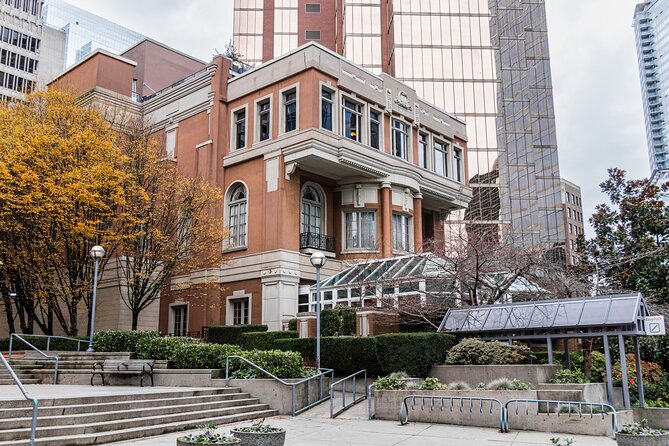
Your first stop is the Marine Building on Burrard Street, built in 1929-30 by the short-lived Stimson Developers for commercial shipping interests and the Vancouver Merchants’ Exchange. It is described as Vancouver’s best surviving example of Art Deco.
This is a strong early choice. Art Deco can feel “pretty” without being obvious. The treasure hunt angle makes you slow down and search for the answer to the challenge prompt. Even if you are not a design nerd, this kind of puzzle nudges you to notice ornament, shape, and style instead of just passing by.
Practical note: because the clue is about looking around, your phone battery and brightness matter. If you plan to take photos for later, do it quickly and keep the search moving.
Howe and Cordova customs warehouse: the city’s trade in stone
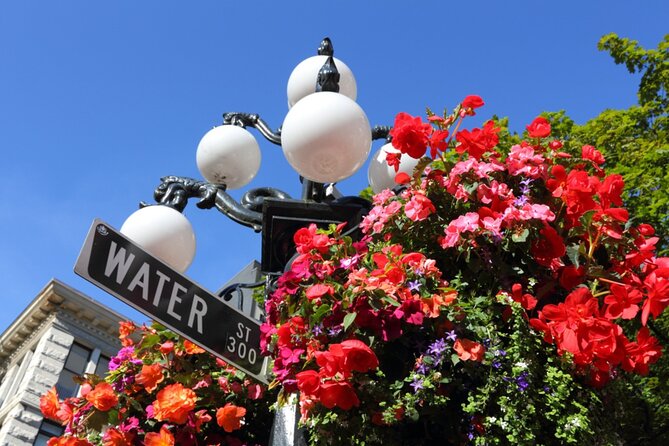
Next up is the building at the corner of Howe and Cordova Streets, construction begun in 1911 and completed in 1913. It was designed by David Ewart, built by the federal government as a warehouse for imported goods, and used by Customs until 1958.
This stop gives you a “why this city grew” feeling. Vancouver’s downtown heritage is tied to trade and shipping, and this building represents that function in a very literal way. The challenge format turns that into action: you look around the exterior details, then answer the question that moves you forward.
Consideration: if you hate clues that rely on fine reading, keep a zoomed-in photo ready. The best approach is to snap a quick wide shot, then zoom where the puzzle seems to point.
Waterfront Station (CPR): terminals, trains, and downtown momentum
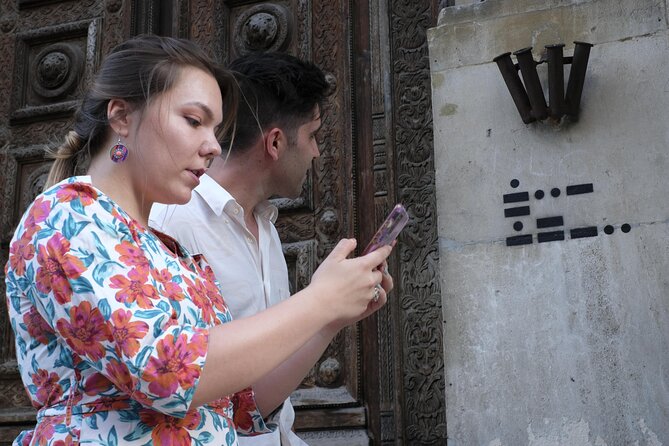
You then reach Waterfront Station, built by the Canadian Pacific Railway and opened on August 1, 1914. It was the Pacific terminus for transcontinental passenger trains heading toward Montreal and Toronto, and the station you see today is the third CPR station at this site.
This stop is where the story shifts from buildings to motion. The puzzle here helps you connect the station’s scale and purpose with how travel and commerce shaped the city. Even if you do not ride trains, you can feel the idea of a major rail endpoint.
If you are visiting during busy periods, plan for crowds and sidewalk congestion. You will still have time to look for the clue answer, but do not expect empty sidewalks right by a major station.
The steam-powered clock: a fun mid-walk timing break
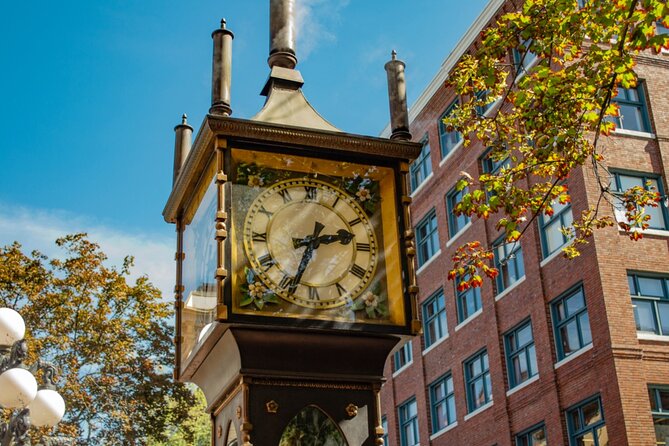
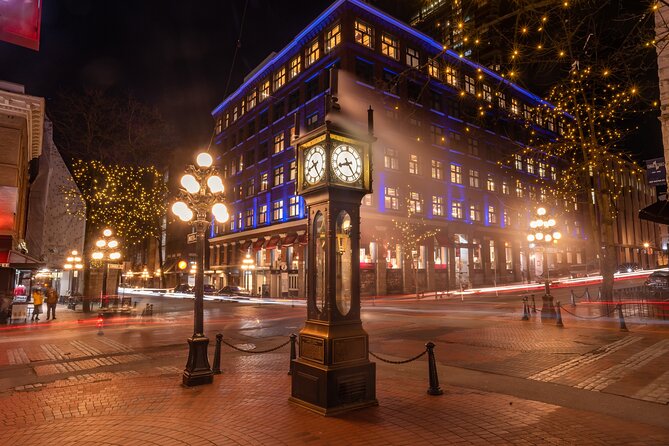
A few stops later, you encounter a well-known antique-style clock built in 1977. It is powered by steam and whistles to tell the time.
This is the kind of landmark puzzle that works because the environment does some of the “answering” for you. You might need to confirm what the app asks, but the clock is a natural pause point. If your group starts to feel a bit “puzzle fatigue,” this stop can reset the energy.
Tip: if the app cue feels vague, use the moment to orient. Check where you are standing, where you walked from, and which direction you need next.
Dominion Building: Beaux-Arts charm with concrete details
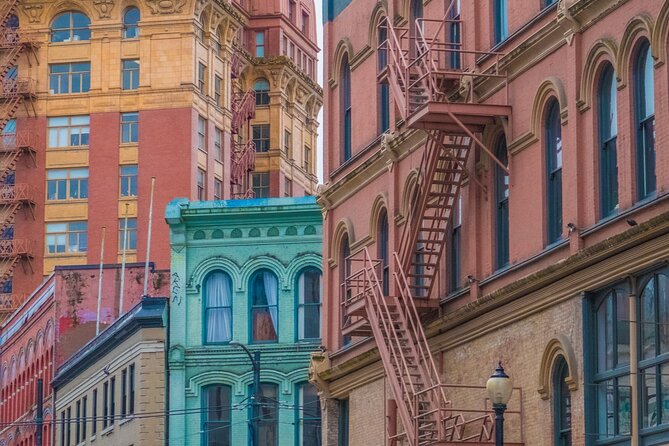
The Dominion Building, built from 1908-1910 by J.S. Heyler, is known for its Beaux-Arts style, terracotta spandrels, and Corinthian columns at the front entrance. This is one of those facades that photographs well, but you get more from it if you look at it with a question in mind.
The treasure hunt prompts you to search for an answer tied to this architecture. That makes the building feel less like background scenery and more like a visible clue. If you enjoy learning through observation, this is a highlight stop.
Potential drawback: if you are in a hurry or taking the route as a casual stroll with minimal attention, you may end up missing the exact details the clue is pointing toward. This is a walk where stopping for 20 to 40 seconds at each spot actually pays off.
Sun Tower: newspapers, a person, and the edge of expansion
Built 1911-1912, the Sun Tower has heritage value tied to its distinctive architecture, its association with Louis D. Taylor, and the Vancouver World and Sun newspapers. It is also linked to the expansion of the business district into what was once the eastern fringe of downtown.
This is a very “Vancouver” type of story: media, business, and growth pushed into space as the city expanded. The treasure hunt keeps you engaged by forcing you to look for the relevant answer rather than just reading a plaque and moving on.
My advice if you like city stories: pay attention to the names. They help your brain hold onto the location beyond the puzzle. Then when you see these institutions referenced later in your trip, it feels more connected.
Sam Kee Building: Chinese community legacy you can’t ignore
The Sam Kee Building at Pender and Carrall was built in 1913 and is celebrated for architectural ingenuity, cultural significance to Vancouver’s Chinese community, and the history of its namesake. In other words, this is not just decorative. It is cultural memory in brick and stone.
The treasure hunt keeps the focus on observation, which is useful at a heritage site like this. As you look for the answer, you will naturally slow down and take in more of the facade and setting around it.
Consideration: cultural heritage can include complex stories. This route includes at least one stop where the narrative is being reassessed in modern times, so go in ready for that kind of honesty.
Gassy Jack statue in Gastown: a legend with uncomfortable context
The statue is a monument to Gassy Jack Deighton, a Vancouver saloon owner in the 1860s. Gastown is named for Deighton. The story connected to the statue has been re-evaluated in recent years, including his marriage to Quahail-ya, a 12-year-old Squamish girl, whose English name was Madeline Deighton.
This is the stop that turns a playful walking game into a real city conversation. You get to engage with the symbolism of Gastown, but also with the fact that history has winners and losers, heroes and harms.
If you are traveling with kids, you might want to do this section with care. Keep the tone simple and focus on the idea that names and stories are part of how cities decide what to celebrate.
Gaoler’s Mews: Vancouver’s first jail and the Great Fire aftermath
In the heart of Gastown, Gaoler’s Mews sits where the first building on the site was built in the mid-1800s and housed Vancouver’s first jail. After it burned down in Vancouver’s Great Fire of 1886, it was replaced by a brick fire hall.
This stop gives you a dramatic shift from business and entertainment to punishment and public infrastructure. The treasure hunt prompt turns the site into a clue you work through instead of a quiet landmark you rush past.
If you like architectural layers, this location is a good example of how one spot can represent multiple eras. The app format helps you notice that shift while you search for the answer.
The Alibi: where the walk can end with food and beer
The last stop in your route is The Alibi. The building is a heritage site erected over 100 years ago, positioned along the railyard only a short distance from Vancouver’s trade and shipping ports. It is described as a place for neighbours and community to share in food, fantastic beer, and culture.
This is a smart ending. After 14 puzzle moments and a bunch of architectural reading, you get the option to reward the effort with a meal or drink. Even if you do not stop inside, it is a good place to take a breath and check your phone for the final instructions.
Practical tip: if you want to eat right away, plan your seating timing. Heritage places can have popular hours, and you may find yourself waiting longer if you try to do it at peak time.
How the Gold Rush-inspired storyline improves the experience
The quest includes storyline content inspired by Vancouver’s Gold Rush history. Even though this is a self-guided puzzle route through downtown heritage, that narrative thread helps unify the stops. Without that, you could end up treating each landmark like a standalone photo op.
What I like about story-led scavenger hunts is the way they reduce decision fatigue. You are not wondering what to do next. You are simply following the chain of clues and letting the story keep you oriented.
Offline access and flexible pacing: the biggest real-world advantages
This tour’s offline functionality is a big deal in a city like Vancouver, where cellular signals can vary block to block. It means you can keep going without constantly fighting loading issues.
Flexibility is another win. The tour is designed so you can pause and resume whenever you like. That is great for real travel life: a bathroom stop, a quick snack run, or a detour to browse a nearby store.
Just know that if you share the quest across multiple phones, you may need coordination. The experience is app-based with a mobile access code, and some groups reported download trouble when multiple people tried to load it at once. I suggest one phone in charge at the start, then add a second phone only if you really need it.
Tips so the puzzles feel satisfying, not frustrating
The overall feedback points to a fun experience with workable help when you get stuck. The system includes hints, and you can use a skip option if needed, which helps you keep momentum.
A few ways to set yourself up for success:
- Read the prompt, then look around for the specific architectural element it seems to imply.
- If a clue stalls, use a hint quickly. Do not spend 15 minutes stuck on one location unless you enjoy that.
- If the middle portion feels less sharp, treat it like a bridge. Keep solving, and trust the route to pick up again with more vivid landmarks.
- If you are with friends, rotate roles. One person can search, one can check the phone prompt, then swap.
And if you are the type who hates puzzles, you can still benefit from the route itself. Many clues reward simple observation, not trivia memorization.
Who this self-guided treasure hunt is best for
This works best if you want a safe, budget-friendly alternative to a classic guided sightseeing tour. It is also ideal when you do not want to stick to a rigid schedule.
It is a strong fit for:
- Couples who like walking at their own speed
- Families who enjoy games and learning through looking
- Small groups who want one activity that keeps everyone engaged
- Anyone who wants a compact downtown overview with heritage architecture stops
If your group is strongly dependent on a live guide for clarification, you might feel the absence here. There is no live tour guide included, so you will be relying on the app.
Should you book the Vancouver Old Town Treasure Hunt?
Book it if you want a light, fun way to see Gastown and downtown heritage while doing something interactive. The value at $7.20, the offline support, and the ability to pause and resume make it practical. You also get a route packed with recognizable stops, from the Marine Building’s Art Deco presence to the steam clock and the Gassy Jack statue.
Skip it if you know you dislike puzzle games, or if your group wants a live guide to explain every detail on the spot. And if you are planning to use several phones, test your plan early so you are not stuck figuring out app access mid-walk.
FAQ
How much does the Vancouver Old Town Treasure Hunt cost?
It costs $7.20 per person.
How long is the experience?
It takes about 1 hour 30 minutes.
Is there a live tour guide?
No. A live tour guide is not included.
Is the tour available in English?
Yes, it is offered in English.
How does the quest work if I lose signal?
The mobile tour has offline functionality, which helps make it accessible in areas with spotty service.
How many challenges are included?
The experience includes 14 puzzle-based challenges.
Can I pause and resume during the walk?
Yes. You can pause and resume whenever you like.
Where does it start and end?
It starts at 1530-355 Burrard St, Vancouver, BC V6C 2G8, Canada. It ends at Maple Tree Squares 1 Water St, Vancouver, BC V6B 2H9, Canada.
Are service animals allowed?
Yes, service animals are allowed.
What are the opening hours?
The experience is listed as running from 12:00 AM to 11:30 PM, Monday through Sunday.
What is the cancellation policy?
You can cancel for free up to 24 hours in advance for a full refund. If you cancel less than 24 hours before the experience start time, the amount paid will not be refunded.
Easier With a Guide



Vancouver on Foot


Puzzles Played on the Street



Just off the notebook: recent Vancouver write-ups
- Vancouver: Sunset Boat Cruise with Complementary Bubbly
★ 4.3 · 4 reviews - Vancouver: Personal Travel & Vacation Photographer
★ 4.7 · 4 reviews - Vancouver Private & Custom Tour with a Local: Icons & Gems
★ 3.6 · 4 reviews - Vancouver: Fraser Valley and White Rock Wine Tour
★ 5.0 · 4 reviews - Stanley Park EUC & E-scooters loop tour
★ 5.0 · 4 reviews - Capilano Suspension Br+Lake+Dam+Hachery/4in1/CAR/Small GROUP
★ 5.0 · 4 reviews
Walking Tours, compared.
 ★ 5.0Quebec City Walking TourFrom $304,716 reviews
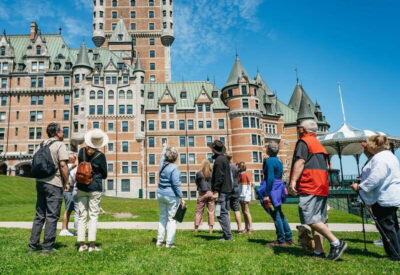 ★ 4.8Old Quebec City: Grand Walking Tour with Private OptionFrom $292,609 reviews
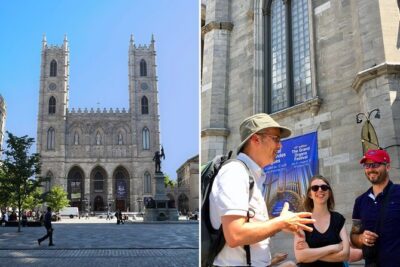 ★ 4.5The Original Old Montréal Walking Tour by GuidatourFrom $262,217 reviews
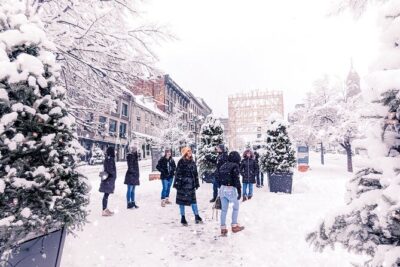 ★ 5.0Old Montreal Small-Group Walking Tour | Max 10 | by MTL DetoursFrom $442,088 reviews
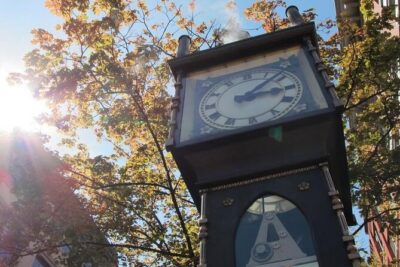 ★ 5.0Gastown Historic Walking Food TourFrom $1161,863 reviews
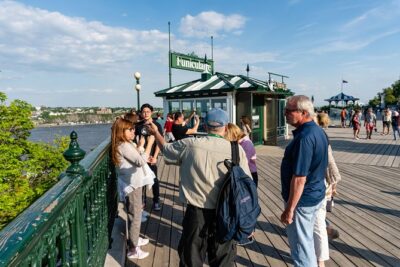 ★ 5.0Old Quebec Classique Walking Tour with FunicularFrom $421,317 reviews
 ★ 5.0Vancouver Lost Souls of Gastown Walking TourFrom $291,273 reviews
 ★ 4.6Quebec: Crimes of New France Animated Walking TourFrom $20926 reviews
Browse the lists this tour appears in