
REVIEW · CANADIAN GHOST WALKS & HAUNTED TOURS
Toronto Old Town: Self-Guided Dark History Walking Game
Dark clues start at City Hall. This self-guided Toronto Old Town dark history game is a phone-led walk where you can move at your own pace, and it uses 10 puzzle challenges to make you look closely at real places. One possible drawback, you are doing the searching yourself, so you need a charged phone and the patience to read the clues instead of just listening to a guide.
I like that it is built for friends and family, not just solo touring. You get a mobile access code, you can pause and resume anytime, and you do not need Wi-Fi after the initial download. The whole thing runs about 1 hour 30 minutes, and it is priced at $8.44 per person, which is a bargain if you want structure without paying for a full group tour.
In This Review
- Key things that make this game worth your time
- How the Questo walking game guides you, from phone to street
- Toronto City Hall start point, where the route makes sense fast
- Pan Am Toronto sign story, a temporary showpiece turned permanent clue
- Old City Hall, where civic power and court history meet
- TD Centre and Oscar Peterson Place, modern downtown with built-in pauses
- Fairmont Royal York, luxury’s long run through political and celebrity life
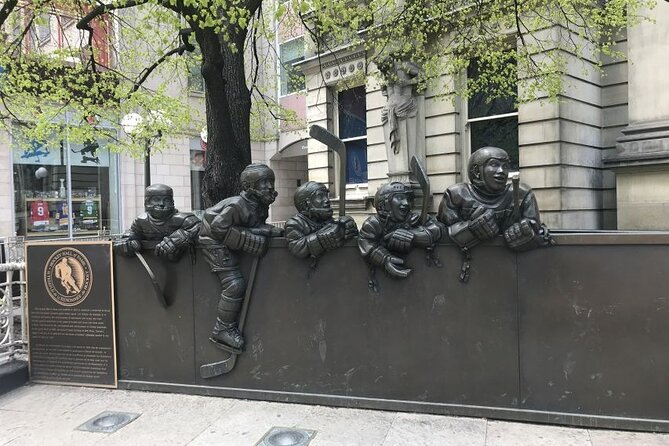
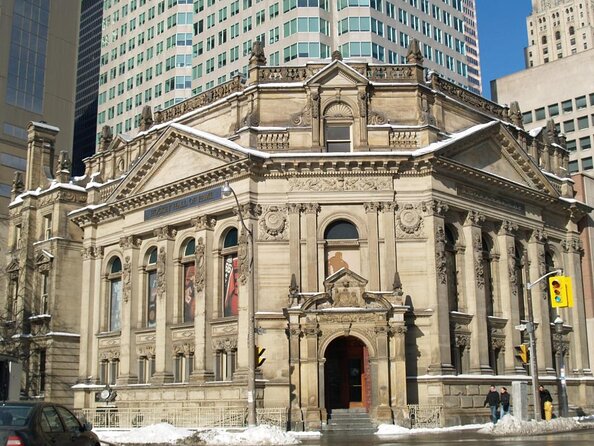
- Hockey Hall of Fame in Brookfield Place, sports history inside a moved building
- King Edward Hotel, fireproof claims and early 1900s design ambition
- St. James Cathedral and St. Lawrence Hall, two places that anchor old Toronto routines
- St. Lawrence Market South, finish strong at a real everyday destination
- Price and value: $8.44 for a 90-minute self-paced city story
- Timing, pacing, and phone habits that keep the game fun
- Who should book this Toronto Old Town dark history game
- Should you book this experience?
- FAQ
- How long is the Toronto Old Town self-guided game?
- Where do I start and where does the game end?
- Is there a physical tour guide with this activity?
- What do I need to access the game?
- Do I need Wi-Fi during the walk?
- How many puzzle challenges are included?
- Can I pause and resume during the experience?
- What language is the storyline available in?
- Is this a private group activity?
- What is the cancellation policy?
Key things that make this game worth your time
- Self-guided pace, pause and resume, so you can take breaks or slow down when something catches your eye
- 10 puzzle challenges that push you to spot details on the buildings, not just walk past them
- Mobile access code and step-by-step directions via the Questo app from City Hall to St Lawrence Market
- No Wi-Fi needed after download, which is handy once you are out on the route
- Private experience for your group, plus group discounts if you are traveling with others
- English storyline content, so you can follow the narrative without a language barrier
More lantern-lit stories after dark
- Ghost Tour of Toronto Original Haunted Walk★ 4.5 · 185 reviews
- Brothels of Old Toronto Walking Tour★ 4.9 · 71 reviews
- Spirits of the Distillery District Ghost Tour★ 4.5 · 56 reviews
- Historic Brothels of Old Toronto Walking Tour★ 5.0 · 23 reviews
How the Questo walking game guides you, from phone to street
This is not a live walking tour. There is no physical guide waiting for you, no microphone, and no forced schedule. Instead, the Questo app runs the experience like a choose-your-own-adventure for the city, using a mobile access code and 10 puzzle challenges tied to stops across downtown Toronto.
Here is the practical part: you start at Toronto City Hall, 100 Queen St W and end at St. Lawrence Market. The app guides you step by step to the finish, with instructions that tell you what to look for at each location. The stops work because each one is anchored by a real landmark, then the game asks you to find the answer by looking around.
And yes, it matters that it works after the initial download. That means your time on the route does not depend on cell signal being perfect the whole way, which can be a real stress reducer in a busy city center.
Toronto City Hall start point, where the route makes sense fast
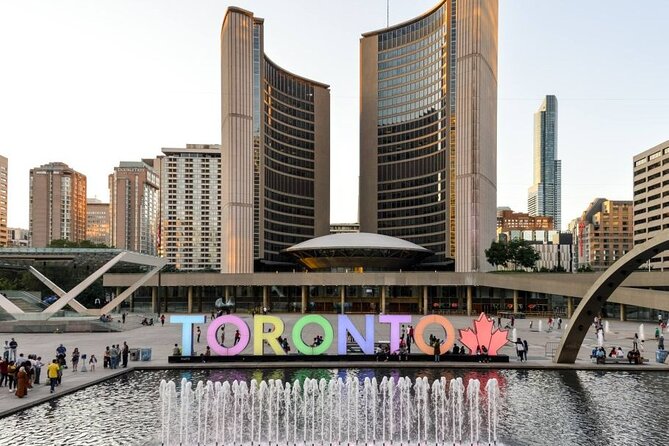
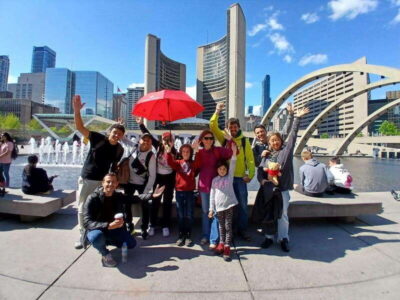
The experience starts at a place you cannot miss: Toronto City Hall (100 Queen St W). It is a solid “begin here” location because it is easy to orient around, and it sets you up for an Old Town-style route that feels like you are moving through layers of Toronto.
Even if you only have 90 minutes, this format helps you make the most of that time. A typical guided tour can feel rushed or too slow depending on your group. Here, you control the pace. If you want to scan faster and chase the puzzles, do it. If you want to slow down and read what you find, the game lets you.
The only catch is that you should be ready to look around. The challenges are built around finding answers on site, so you will spend some time standing still, comparing what the clue asks for with what is physically there.
Pan Am Toronto sign story, a temporary showpiece turned permanent clue
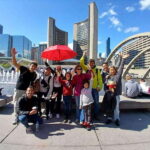
One of the first landmarks in the route is the Toronto sign. It has a cool origin story that fits the game style: it was originally installed for the 2015 Pan American Games as a temporary attraction. The sign was meant to be dismantled as early as November 2016, but Toronto decided to keep it because it became popular with tourists and residents.
For you, this stop is a good “warm-up” challenge. The sign itself is high visibility, which makes it easier to get your bearings. Then the game pushes you to find the answer for the next move using what you see around you.
If you like experiences where the city feels playful instead of solemn, this is one of the more fun moments. You get a quick history hook, plus the challenge makes you pay attention rather than just take a photo.
Toronto at walking pace, a few more routes
Old City Hall, where civic power and court history meet
Next up is Toronto’s Old City Hall. This building was one of the biggest in Toronto and the largest civic building in North America when it was completed in 1899. It was the city’s third city hall and it became the municipal government hub plus courts for York County and Toronto, taking over from the Adelaide Street Court House.
This is the kind of stop where the game format shines. When you have to answer a question by looking around, you naturally notice details you might otherwise skip. Even if you are not a “read every plaque” person, the puzzle gives you a reason to slow down and inspect the building.
A consideration here: this area can include busy streets and crowds at times, so if you are doing the game with kids or anyone who struggles with attention during urban walking, plan for small breaks. The app supports pausing and resuming, which helps you avoid rushing just to keep momentum.
TD Centre and Oscar Peterson Place, modern downtown with built-in pauses
The route then moves into the Financial District at the Toronto-Dominion Centre, also called the TD Centre. This office complex has six towers and a pavilion, owned by Cadillac Fairview. It is home to the Toronto-Dominion Bank as its global headquarters, and the design is unmistakable, with bronze-tinted glass and black painted steel. Around 21,000 people work in the complex.
If you associate Toronto history only with older stone buildings, this stop provides balance. It shows you how modern corporate Toronto shaped the skyline. In a dark history themed game, this matters too, because it keeps the story from feeling stuck in the past only.
Right between the towers is Oscar Peterson Place, split into two large outdoor expanses. The northern area has a more formal granite tract, while the southern space has a lawn and features The Pasture, a sculpture by Saskatchewan artist Joe Fafard. Fafard died in early 2019, which adds a more recent timeline layer to what you are seeing.
I like that the game does not just point you at buildings. It also steers you toward places like courtyards and open-air spaces where you can slow down, orient, and reset your eyes for the next clue.
Fairmont Royal York, luxury’s long run through political and celebrity life
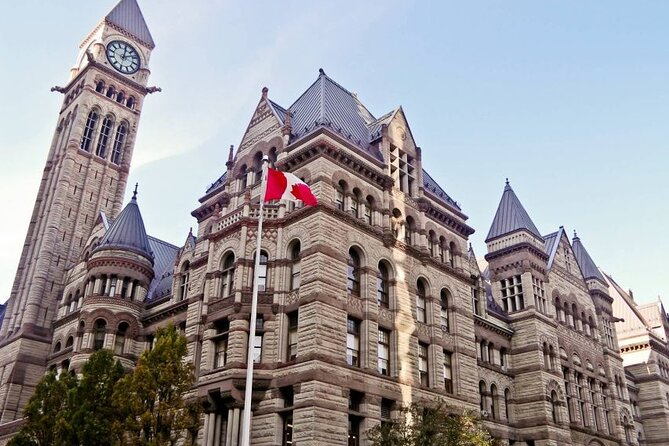
The next stop is the Fairmont Royal York, a hotel that has played host to royal guests, heads of state, celebrities, sport superstars, and millions of visitors over nearly 90 years. It is described as a crucial lynchpin in Toronto’s luxury story.
For this kind of location, the puzzle format helps because hotels can feel like they belong to someone else, not to you as a visitor. The game’s challenge-based approach makes you treat the hotel as a historical object you can study from the outside, without needing access to any private interior spaces.
One practical note: this stop is likely to involve photo points and slow walking. If your group enjoys architecture and atmosphere, you will probably want the extra seconds here. If your group is “let’s get it done” focused, you can still complete it, just expect that the setting invites linger time.
Hockey Hall of Fame in Brookfield Place, sports history inside a moved building
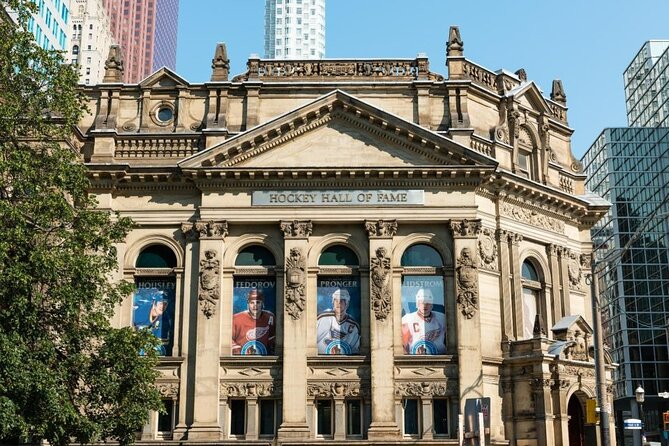
Then the game swings into sports memory with the Hockey Hall of Fame. The first permanent building opened at Exhibition Place in 1961. In 1993, the hall was relocated to downtown Toronto inside Brookfield Place, in a historic Bank of Montreal building. Since 1998, it has hosted IIHF exhibits and the IIHF Hall of Fame.
This stop adds an important contrast to the rest of the route. You get the feeling of Toronto as a city that stores national pride and entertainment in real, physical spaces.
Because the Hall of Fame is associated with museums and exhibits, you might assume the game would require lots of indoor time. The data you have here focuses on the outdoor, look-around challenge method, so treat this as a clue-finding stop first, and only add indoor exploring if you want to extend your day.
King Edward Hotel, fireproof claims and early 1900s design ambition
Another standout hotel on the route is the King Edward Hotel. It was designed by Chicago architect Henry Ives Cobb and Toronto architect E.J. Lennox for developer George Gooderham’s Toronto Hotel Company. The hotel’s name came from namesake King Edward VII. It opened in 1903 with 400 rooms and 300 baths, and it claimed to be entirely fireproof.
This is a great stop for anyone who likes to connect names and eras. The clue structure helps you connect those details to the building you are standing near. Instead of reading about the hotel in the abstract, you are turning it into a scavenger mission with specific answers.
Drawback to watch for: hotel architecture can be visually busy. If the clue expects a specific detail, be ready to take your time. If you are traveling with someone who hates puzzles, this is where you might split roles, one person focusing on the phone instructions, another doing the visual spotting.
St. James Cathedral and St. Lawrence Hall, two places that anchor old Toronto routines
The route then reaches Cathedral Church of St. James, an Anglican cathedral in downtown Toronto. It is the location of the oldest congregation in the city, with the parish established in 1797.
A cathedral stop can turn into a quiet pause, and the game format can help you approach it respectfully. Because your “job” is to find answers by looking around, you naturally pay attention to the building’s placement and features rather than just glancing and moving on.
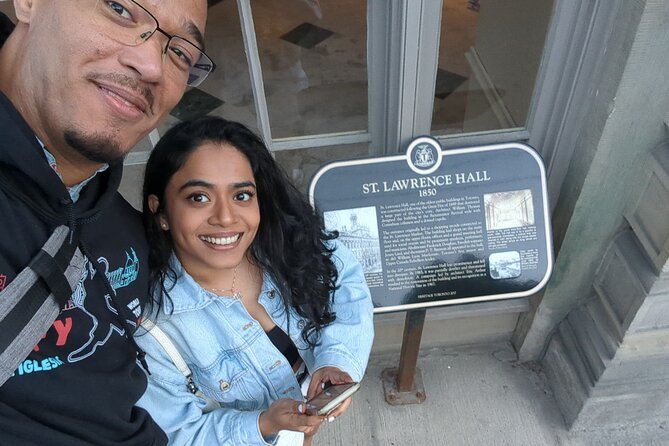
Close by is St. Lawrence Hall, which opened in 1850 and is described as Toronto’s first large meeting hall. Named for Canada’s patron saint, it was for many years the centre of cultural and political life in Toronto, hosting balls, receptions, concerts, exhibitions, and lectures.
What I like about placing St. Lawrence Hall after a cathedral is the contrast in community roles. One is long-standing religious life, the other is public civic gathering. Together they help you see how Toronto’s “old” identity is both spiritual and social.
St. Lawrence Market South, finish strong at a real everyday destination
The final stretch brings you to the St. Lawrence Market South building, on the southwest corner of Front and Lower Jarvis Streets. This is a major public market building in Toronto, and it is part of the larger market complex that includes the North building and St. Lawrence Hall.
This is a smart finish point. Market areas feel like the city after the story. You finish the puzzle game at a place where people come for food and everyday errands, which makes the whole experience feel less like an escape room and more like you just toured through real Toronto spaces.
If you want to turn the day into a longer outing, this is where you can naturally add time for snacks or browsing. The game ends here, but the area stays interesting.
Price and value: $8.44 for a 90-minute self-paced city story
At $8.44 per person, this is priced like entertainment and structured sightseeing combined. In practical terms, that makes it good value when you want a guided feel without paying guided-tour rates.
Here is what you are paying for:
- a mobile ticket experience with a mobile access code
- 10 puzzle challenges that create forward motion
- storyline content tied to Old Town locations
- flexibility to pause and resume
- a walk you can do at your tempo, with no physical tour guide required
So the value depends on your style. If you love puzzles and you enjoy learning by spotting details, this price feels very fair. If you would rather have a person explain the history out loud and keep you from reading instructions, then you might find the self-guided format less satisfying.
Timing, pacing, and phone habits that keep the game fun
The duration is about 1 hour 30 minutes. That is long enough to cover multiple major stops and solve 10 challenges, but short enough that you are not committing your whole day.
When you plan your timing, think about how you walk. If you take photos, stop to read everything, and talk with your group, it will likely drift closer to the upper end of that estimate. If your group is puzzle-focused, you can likely move through it faster.
Also plan your phone habits:
- start with a charged phone, since you are relying on the app
- download anything needed at the beginning, since you do not need Wi-Fi after that
- keep the instructions visible, especially when clues ask you to look around for a specific answer
This is a simple thing, but it is the difference between a smooth, satisfying walk and a frustrating “where is the answer” loop.
Who should book this Toronto Old Town dark history game
This is a strong fit if you are traveling with people who like doing things together without being forced into one pace. It works especially well for:
- families who want structured fun that still allows breaks
- friends who enjoy light competition, like chasing a timed goal
- budget-minded visitors who want a guided style route without a guided-tour price
It is less ideal for travelers who want purely interpretive history from a speaker. Since it is not a physical tour guide, you will be responsible for reading, interpreting, and moving through the storyline.
Should you book this experience?
I think you should book it if you want a low-cost, self-paced way to see a cluster of important downtown Toronto spots, while turning sightseeing into something interactive. The biggest selling points are the puzzle-driven look-around method, the flexibility to pause and resume, and the fact that it uses a phone experience instead of needing a guide.
Skip it if you dislike scavenger-style tasks, if your phone battery is unreliable, or if you prefer history explained by a person rather than by clues and on-site details. But if you are comfortable following directions and you enjoy a bit of detective work, this is an efficient, entertaining way to experience Old Town through real landmarks, from City Hall to St Lawrence Market.
FAQ
How long is the Toronto Old Town self-guided game?
The experience is approximately 1 hour 30 minutes.
Where do I start and where does the game end?
It starts at Toronto City Hall, 100 Queen St W, Toronto, ON M5H 2N2, and ends at St. Lawrence Market, Toronto, ON M5E 1C3.
Is there a physical tour guide with this activity?
No. You are guided step by step using the Questo app.
What do I need to access the game?
You’ll need a mobile access code. The experience is accessed through the Questo app.
Do I need Wi-Fi during the walk?
No. Wi-Fi is not needed after the initial download.
How many puzzle challenges are included?
There are 10 puzzle challenges.
Can I pause and resume during the experience?
Yes. You can pause and resume anytime.
What language is the storyline available in?
The experience is offered in English.
Is this a private group activity?
Yes. Only your group participates.
What is the cancellation policy?
Free cancellation is available up to 24 hours in advance for a full refund. If you cancel less than 24 hours before the start time, the amount paid is not refunded.
The Older Toronto




Toronto on Foot


After Dark in Toronto


Just off the notebook: recent Toronto write-ups
- From Toronto: Niagara Falls Guided Day Tour with Boat Cruise
★ 4.2 · 4 reviews - Toronto: Niagara Falls Day Tour with Niagara City Cruise
★ 4.5 · 4 reviews - Toronto Islands: Sunrise Breakfast Bicycle Tour
★ 5.0 · 4 reviews - Kensington Market ‘Taste the World’ Food Tour
★ 4.5 · 4 reviews - Toronto: Great White North Food Tour
★ 5.0 · 4 reviews - From Toronto: Customizable Guided Day Trip to Niagara Falls
★ 5.0 · 4 reviews
Canadian Ghost Walks & Haunted Tours, compared.
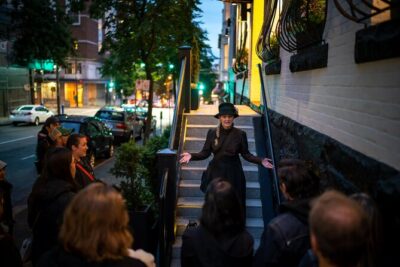 ★ 5.0Vancouver Lost Souls of Gastown Walking TourFrom $291,273 reviews
 ★ 4.6Quebec: Crimes of New France Animated Walking TourFrom $20926 reviews
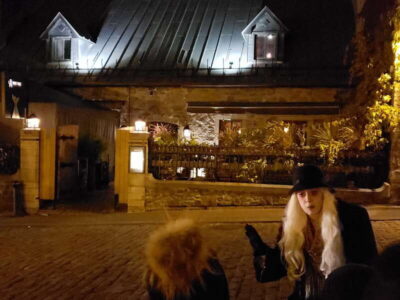 ★ 4.7Old Montreal: Traditional Ghost Walk of the Haunted CityFrom $24746 reviews
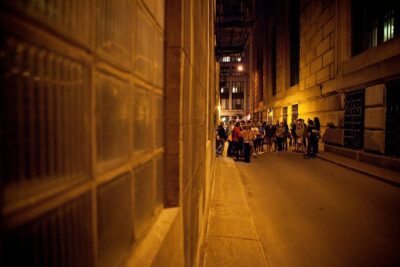 ★ 4.5Old Montreal Ghost Walking TourFrom $26726 reviews
 ★ 4.5Ottawa: Haunted Night Walking TourFrom $23341 reviews
 ★ 4.5Original Haunted Walk of OttawaFrom $25284 reviews
 ★ 4.7Vancouver: Lost Souls of Gastown TourFrom $28279 reviews
 ★ 4.7Toronto: Dark History Nighttime Walking TourFrom $20273 reviews
Browse the lists this tour appears in