
REVIEW · TORONTO WALKING & FOOD TOURS
Toronto: Distillery District Historic Walking Tour
Brick by brick, this walk tells a bigger story. The Distillery District Historic Walking Tour blends Victorian industrial architecture with the rise and fall of Gooderham and Worts, plus the city’s early wild years. I especially liked the inside access angle, where you get to see parts of buildings the general public usually misses, and I loved the way energetic guides like Erik, Devin, and Nicole turn history into something you can picture. One watch-out: it is only one hour, so you’ll likely want to linger afterward to explore on your own.
You’ll start at Go Tours Canada, then meander through the cobblestone streets and preserved brickwork that made this area one of North America’s best examples of Victorian industrial design. The walking level is easy, and it is wheelchair accessible, which makes it a solid pick for mixed groups.
In This Review
- Key highlights you will actually notice
- Entering Toronto’s Victorian industrial world, one cobblestone step at a time
- The one-hour format: fast, focused, and designed to leave you wanting more
- Go Tours Canada meeting point, then right into the district’s center of gravity
- What you see on the walk: Victorian industry, preserved on purpose
- Gooderham and Worts: the distillery story that turns industrial bricks into drama
- Stories that sound like you are standing in the past
- Architecture stops that help you understand how the district was built to work
- Optional add-ons: when you want spirits tasting, plan ahead
- Who should book this tour, and who might skip it
- Price and value: is $20 for an hour a good deal?
- Practical tips so you get more out of every minute
- Should you book the Toronto Distillery District Historic Walking Tour?
- FAQ
- How long is the Distillery District Historic Walking Tour?
- How much does the tour cost?
- Where do I meet the tour?
- What is included in the tour price?
- Is the tour suitable for kids and families?
- Is the tour wheelchair accessible?
- What language is the tour guide?
- What should I bring with me?
- Can I cancel or change my plans?
Key highlights you will actually notice
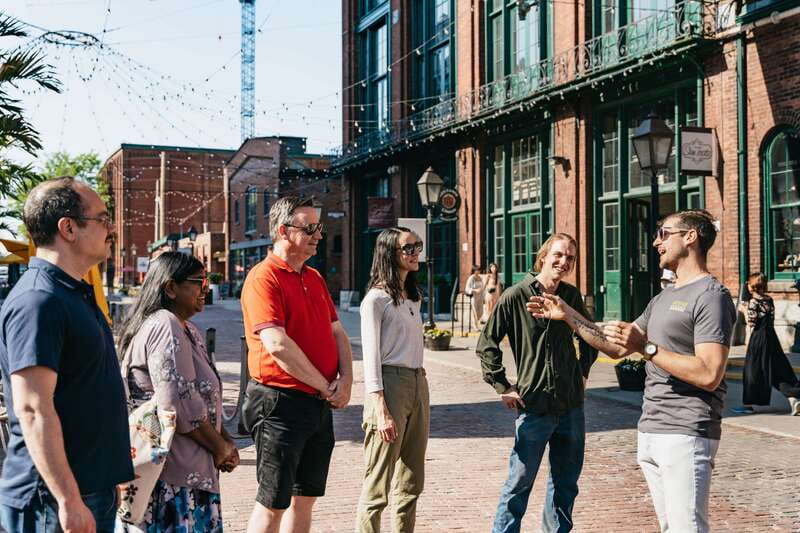
- Inside looks into buildings and spaces that are not always open to everyone
- Gooderham & Worts stories that track the business from glory to decline
- Early Toronto “wild years” told with humor and real atmosphere
- Guide energy and Q&A that keeps the pace lively, even for locals
- Photo-friendly architecture where small details matter (like thick walls)
More of Toronto covered on foot and by fork
- Toronto’s International Food Tour – Kensington Market★ 5.0 · 786 reviews
- Toronto: St Lawrence Market Food Tour with 6 Food Tastings★ 5.0 · 685 reviews
- Toronto’s First Food Tour: Taste the World in Kensington Market★ 5.0 · 526 reviews
- Downtown Toronto Bike Tour★ 5.0 · 336 reviews
Entering Toronto’s Victorian industrial world, one cobblestone step at a time

The Distillery District is the kind of place that looks charming from the outside, then gets better the moment someone explains why the buildings look the way they do. On this tour, you get a guided lens on the architecture, and you see the area as an industrial neighborhood first, not just as a shopping and dining spot. That shift is the magic trick.
What makes it work is the balance between buildings and stories. You walk, look, and listen, but the guide keeps tying each stop to what happened there, and who depended on it. It is not only dates and facts, it is the feel of a working district that shaped Toronto’s early economy.
And yes, the streets are pretty. Cobblestone lanes, brick facades, and Victorian-era proportions make it an easy place to take photos. Just remember the tour is short, so bring your camera, but stay present for the explanations.
The one-hour format: fast, focused, and designed to leave you wanting more
This is a one-hour walking tour. That sounds simple, but it affects your expectations in a good way. You get enough time to understand the big picture, then you can extend your visit with food, galleries, boutiques, and sculptures in the district afterward.
Because the pace is compact, the guide has to pick the most important structures and story beats. That means fewer wandering stops and more explanation per minute. If you like concise tours that still feel personal, this fits.
The main drawback is also the format: if you want a slow, deep architectural scan or long conversations, you may feel slightly rushed. The best approach is to plan a buffer after the hour. I would give yourself at least another hour to roam independently, grab a snack, and re-check the buildings you liked most.
Go Tours Canada meeting point, then right into the district’s center of gravity

The tour starts at the Go Tours Canada office located at 11 Gristmill Lane, Toronto. It is near the Red Heart at Parliament St. and Mill St., and you check in at that location before heading into the Distillery District.
Why this matters: the meeting point is inside the district, so you do not lose time commuting or playing “where do we begin?” right off the bat. You start walking immediately among the same streets and buildings you came to see.
Also, the tour is generally recommended for ages 10 and above, with an easy walking level. That makes it a practical choice if you are traveling with kids who can handle a short walk, or if you want something lighter than a full-day city slog.
Toronto at walking pace, a few more routes
What you see on the walk: Victorian industry, preserved on purpose
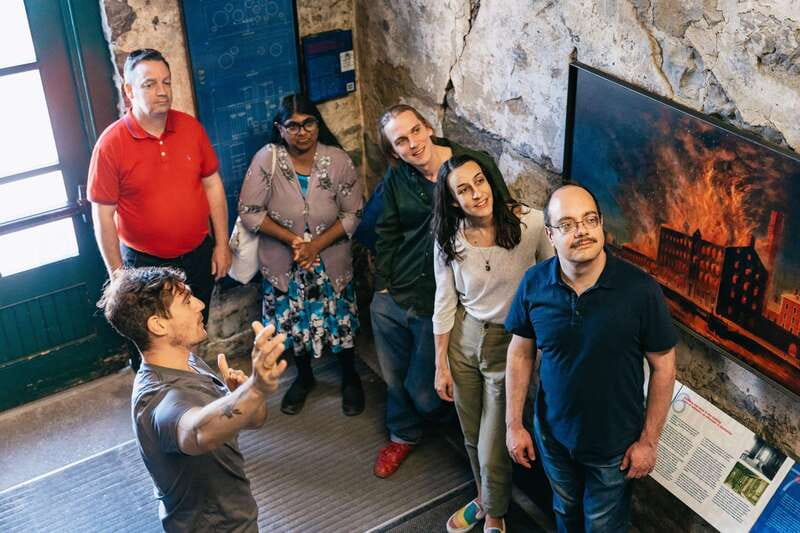
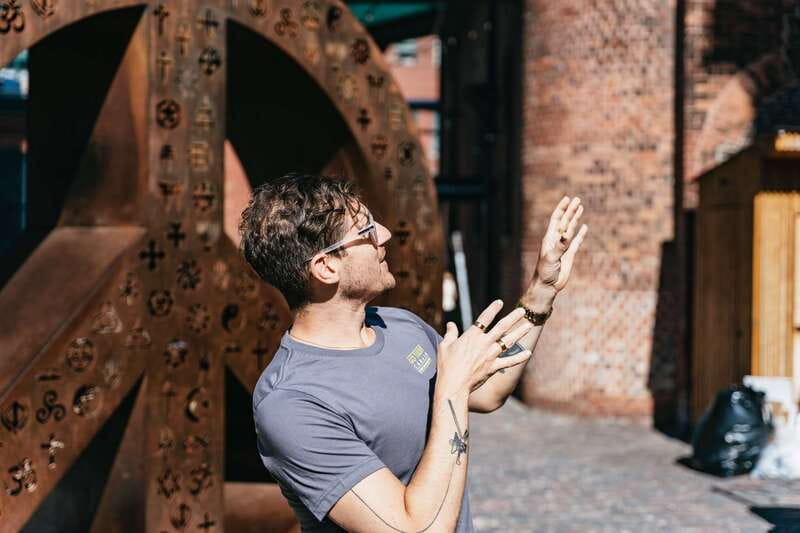
The Distillery District is famous today for its preserved streets and buildings, and this tour focuses on that preservation. You are walking through what is described as the largest and best preserved collection of Victorian industrial architecture in North America. In plain terms, it is the kind of area where the shapes, materials, and layout tell you how production worked back then.
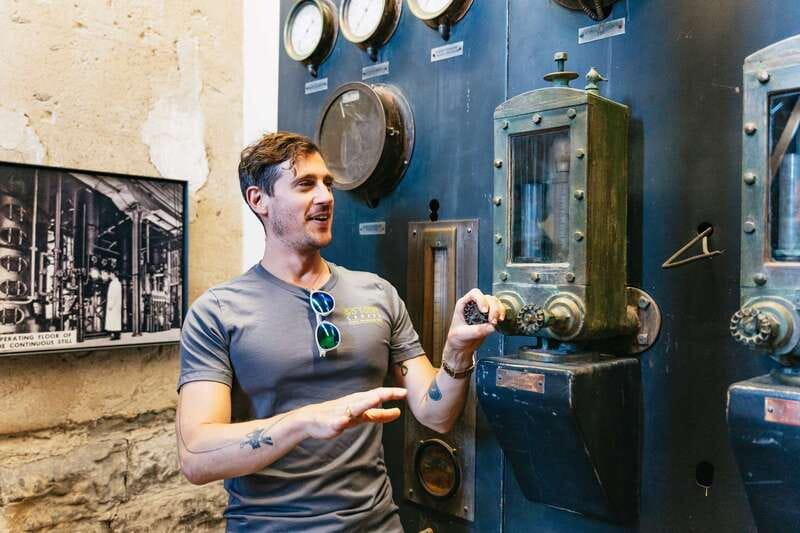
Expect the guide to point out architecture from the inside and out. Some participants even call out the thrill of getting a sneak peek inside buildings where the general public cannot go. That inside look is where the district becomes more than a postcard.
One detail that stood out in reviews was the mention of thick walls, which helps you visualize how industrial buildings were designed for safety, insulation, and the realities of production. You can usually “read” this kind of design once someone gives you a hook for it.
Gooderham and Worts: the distillery story that turns industrial bricks into drama

If there is a single thread that ties the tour together, it is the Gooderham and Worts distillery story. The narration connects the neighborhood’s early role to the distillery’s rise and its later fall from grace. That arc gives the buildings a plot.
The guide also frames the setting as a collision between a young, sometimes reckless city and a business that grew into a major distilling power. More than one person highlights the surprise factor here, especially if you do not expect Toronto to be tied to one of the world’s largest distilleries at one time.
You’ll also hear about the “early wild years” of the city, which helps explain why a place could be industrial, lively, and a bit chaotic all at once. That context matters because the distillery was not isolated. It was part of the city’s growth, labor needs, and risks.
Stories that sound like you are standing in the past
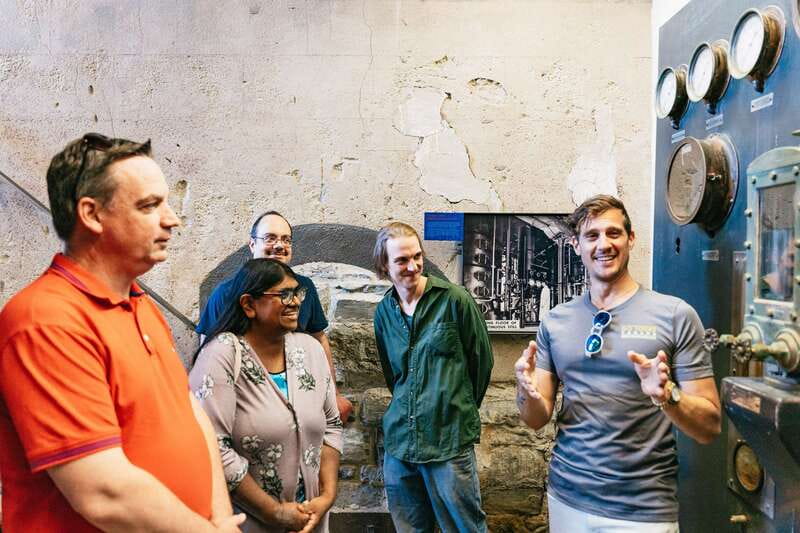
What I like most about this tour is how often it becomes storytelling instead of lecture. Reviews repeatedly mention guide energy, humor, and the way they answer questions on the spot.
Names that come up again and again include Eric, Erik, Devin, Nicole, Tom, and Milo, plus other guides like Michelle McLeod, Josh, David, Graham, and Kaylee. The specific names are useful because they signal that the operator tends to hire guides who can do more than recite. People also describe guides as fun, energetic, and willing to go beyond the basic script.
There is also a common theme: the guide takes what you see and connects it to what you already know, then builds from there. That is how the architecture stops being just “old buildings” and starts becoming evidence of how the city worked.
If you like history that has characters, conflict, and real workplace details, this is a strong match. If you prefer quiet, self-guided museum-style learning, you might find the storytelling style more lively than you expected. Still, because the tour is easy walking and short, it usually lands well.
Architecture stops that help you understand how the district was built to work
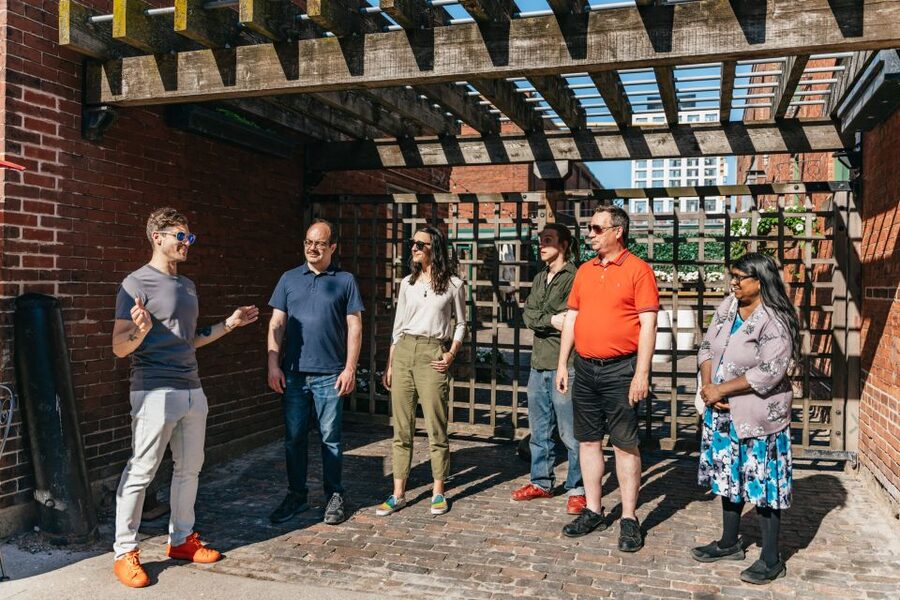
The Distillery District is not only attractive now, it was practical then. Even without getting too technical, you can learn a lot from how the buildings are laid out and preserved.
During the walk, the guide points you toward features you might otherwise skip, like thick construction, industrial proportions, and the way the site relates to the waterfront history (reviews note how close the lake was to the original property, compared with today’s shoreline). That kind of geography context makes the business story feel real, because distilling was tied to logistics, water, and transport.
Another practical benefit is that the tour gives you a mental map. Once you have that, roaming after the tour feels easier. You will start spotting which buildings are likely to matter most, and you can decide where to linger based on what you care about.
Optional add-ons: when you want spirits tasting, plan ahead
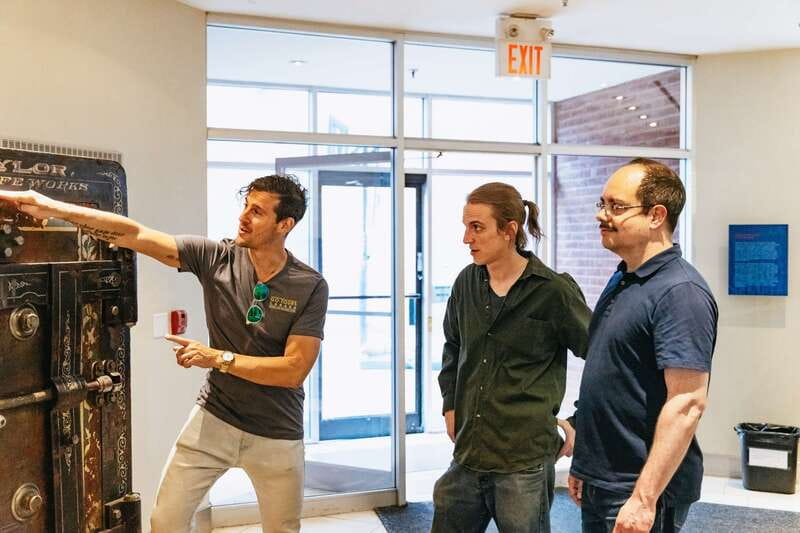
The historic walking tour description focuses on storytelling and architecture. If you want tasting as part of your experience, the operator offers a Prohibition and Spirits option that includes a spirits flight for tasting at the end.
A key nuance: some reviews mention treats like chocolate samples and even beer tasting as a finish. Because details like that can vary by departure or included extras, do not assume every schedule ends the exact same way. If tasting is your priority, I suggest you confirm what your exact booking includes before you go.
Still, even without alcohol, you get a solid hour of context that makes the district feel more meaningful once you are back among the shops and bars.
Who should book this tour, and who might skip it
This tour is great if you want:
- A short, easy walk that still gives real context
- Victorian industrial architecture that you can understand, not just admire
- A story-led tour that connects Toronto’s growth to a specific business
- A guide who works the group with questions and humor
It is also a good option if you are local or returning to Toronto. Multiple reviews mention people who knew the area but learned how little they truly understood before. That is a strong sign you will not feel like you already “got it” just by visiting the district once.
You might skip it if:
- You only want free time for food shopping and do not care about historical framing
- You dislike guided storytelling and prefer quiet exploration
- You have limited tolerance for short walking segments (even though the level is easy, it is still a walk)
Price and value: is $20 for an hour a good deal?
At $20 per person for a one-hour guided walking tour, value depends on what you want most. If you came for a quick overview with expert context, it is a fair price for what you get: professional guidance, a focused route, and a narrative that explains why these buildings exist.
A big part of the perceived value is the inside access. Even just a few moments where you can see what is usually closed to the public can turn a simple stroll into something memorable. And the consistent praise for guide storytelling suggests the operator’s biggest investment is your experience, not just a route.
Also, sales tax is included in the price as listed, so you do not get surprised later at checkout.
Think of it as an architectural primer plus a distillery drama in under two hours total, once you factor in a little time to wander after.
Practical tips so you get more out of every minute
Bring:
- A passport or ID card
- Comfortable shoes (cobblestones reward good footwear)
- A camera for the Victorian facades and industrial details
Wear layers. Toronto weather can shift quickly, and even on days that are mild, you will be outdoors and walking the whole time.
Finally, do not treat the tour like a checklist. Treat it like a guide that helps you choose what to look at later. If a building catches your attention, let the guide finish the thought, then go back for a closer look on your own after the group moves on.
Should you book the Toronto Distillery District Historic Walking Tour?
Book it if you want a short, high-impact way to understand Toronto’s industrial past, especially if the Gooderham and Worts story interests you. The combination of preserved Victorian architecture, insider-style moments, and guides who tell the story with energy makes it a strong use of an hour.
Skip it if your goal is mostly wandering for shops and drinks, with little interest in guided context. In that case, you can enjoy the district on your own, and spend that $20 on snacks and time.
If you are on the fence, a simple rule helps: if you like tours where a guide turns buildings into stories, this one is worth booking.
FAQ
How long is the Distillery District Historic Walking Tour?
It lasts 1 hour, with a guided walking portion through the Distillery District.
How much does the tour cost?
The price listed is $20 per person.
Where do I meet the tour?
You check in at the Go Tours Canada office at 11 Gristmill Lane, Toronto, ON M5A 3C4, which is in the Distillery District near the Red Heart at Parliament St. and Mill St.
What is included in the tour price?
The tour includes a 1-hour walking tour, a professional tour guide, and sales tax.
Is the tour suitable for kids and families?
It is generally recommended for ages 10 and above, and the walking level is easy.
Is the tour wheelchair accessible?
Yes, the tour is listed as wheelchair accessible.
What language is the tour guide?
The live tour guide is in English.
What should I bring with me?
Bring a passport or ID card, comfortable shoes, and a camera.
Can I cancel or change my plans?
Free cancellation is available up to 24 hours in advance for a full refund, and you can reserve now and pay later to keep your plans flexible.
The Older Toronto



Toronto on Foot




Toronto on Foot and by Fork




Just off the notebook: recent Toronto write-ups
- From Toronto: Niagara Falls Guided Day Tour with Boat Cruise
★ 4.2 · 4 reviews - Toronto: Niagara Falls Day Tour with Niagara City Cruise
★ 4.5 · 4 reviews - Toronto Islands: Sunrise Breakfast Bicycle Tour
★ 5.0 · 4 reviews - Kensington Market ‘Taste the World’ Food Tour
★ 4.5 · 4 reviews - Toronto: Great White North Food Tour
★ 5.0 · 4 reviews - From Toronto: Customizable Guided Day Trip to Niagara Falls
★ 5.0 · 4 reviews
Toronto Walking & Food Tours, compared.
 ★ 5.0Toronto’s International Food Tour – Kensington MarketFrom $82786 reviews
 ★ 5.0Toronto: St Lawrence Market Food Tour with 6 Food TastingsFrom $73685 reviews
 ★ 5.0Toronto’s First Food Tour: Taste the World in Kensington MarketFrom $74526 reviews
 ★ 5.0Downtown Toronto Bike TourFrom $93336 reviews
 ★ 5.0Toronto Distillery District Walking TourFrom $21327 reviews
 ★ 4.5Old Town Toronto Highlights 3 Hour Walking Tour | Gratuity-BasedFrom $5290 reviews
 ★ 5.030-Minute Distillery District Segway TourFrom $36214 reviews
 ★ 4.7Toronto: St Lawrence Market Food Tour with 6 TastingsFrom $78168 reviews
Browse the lists this tour appears in