
REVIEW · WALKING TOURS
Toronto Discovery District 2hr Walking Tour
One quick walk, and Toronto starts to make sense. This 2-hour small-group tour strings together the city’s big symbols and quieter stories, with photo tips and time-efficient stops that add up fast. You end at the Royal Ontario Museum area, after seeing how downtown, Queen’s Park, and the University of Toronto fit together.
What I like most is the way the guide turns famous places into something you can actually picture, including help snapping photos of the landmarks. I also appreciate the local recommendations you get at the end, so you can keep exploring right away instead of wandering in guess-and-check mode.
The only real drawback to keep in mind is logistics at the start. One guest had a tough time finding the meeting point and waited in snow, so give yourself extra buffer time and be ready to confirm you’re at the right spot.
In This Review
- Key things to know before you go
- Price and value: what $34.99 buys you in real time
- The route logic: downtown energy to campus memory to museum architecture
- Nathan Phillips Square: the Toronto sign selfie and square-life atmosphere
- College Place: hospital history and a building design with meaning
- Queen’s Park: Ontario’s story compressed into one park
- University of Toronto: war efforts, remembrance, and campus momentum
- Convocation Hall: rising from the ashes and honoring graduates
- Soldiers’ Tower: a focused World War remembrance stop
- Philosopher’s Walk: art, history, music, and how the campus connects people
- Koerner Hall: where you take a break and notice music architecture
- Royal Ontario Museum exterior: admiration only, no inside time
- Guide quality: the people factor that makes this tour worth it
- Photo and comfort tips so you enjoy every stop
- Who should book this Toronto Discovery District tour
- Should you book it?
Key things to know before you go
- Small group, up to 15 people, which makes it easier to ask questions without shouting over a crowd
- Guide-led photo moments at the Toronto sign and other landmark viewpoints
- A tight route that links Nathan Phillips Square to Queen’s Park and across to the University of Toronto
- Frequent short stops (about 10 minutes each), ideal if you want highlights without a long day
- Koerner Hall break point for a washroom and snack pause before the finish
- Royal Ontario Museum exterior only, so you’ll admire the building, not tour inside
Toronto at walking pace, a few more routes
- Show me the City! A Small Group Walking Tour of Toronto★ 5.0 · 621 reviews
- Toronto Distillery District Walking Tour★ 5.0 · 327 reviews
- Toronto: City Highlights Walking Tour | 3-Hour★ 4.6 · 306 reviews
- Old Town Toronto Highlights 3 Hour Walking Tour | Gratuity-Based★ 4.5 · 290 reviews
Price and value: what $34.99 buys you in real time
At $34.99 per person for about 2 hours, this is priced like a solid “orientation walk.” You are not paying for a museum ticket marathon. You’re paying for three things that are hard to replicate on your own: a clear route, context that changes how you look at each stop, and a guide who can answer your questions on the spot.
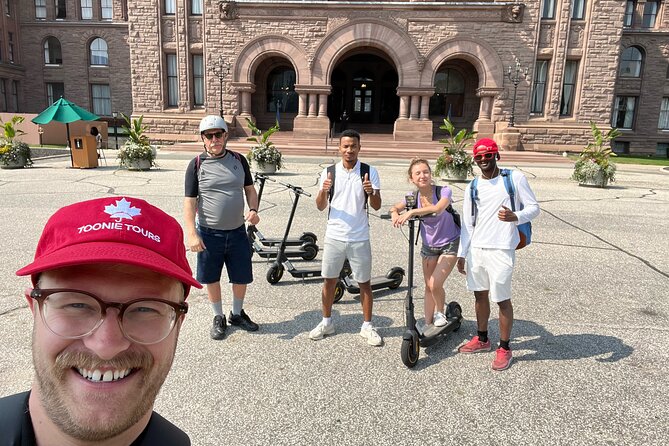
It also helps that this runs as a small group (maximum 15 travelers). With fewer people, you spend less time waiting and more time learning, plus the guide can actually notice if you’re missing a view or want a better photo angle.
One more value point: you get a local English-speaking guide, and the stops are set up so that most viewing is free. That keeps the tour feeling efficient, like you’re spending your money on people and storytelling, not on entry fees.
The route logic: downtown energy to campus memory to museum architecture
This tour is built like a guided line you can follow with your eyes. You start at Nathan Phillips Square, then move toward College Place and Queen’s Park, before crossing into the University of Toronto area. From there, you walk through a cluster of campus landmarks, with memorials and architecture woven in, and you finish near the Royal Ontario Museum.
Why that matters: Toronto can feel like separate worlds if you only jump between subway stops. Here, you get the connective tissue. You’ll notice how the city’s civic core, political heart, and major institutions sit close enough to link in one short stroll.
You will also cover a lot of ground in a time that’s manageable for jet lag. Two hours is short enough that you don’t need a full day plan, but long enough that the guide can explain patterns, not just point at buildings.
Nathan Phillips Square: the Toronto sign selfie and square-life atmosphere
Your first stop is Nathan Phillips Square at 100 Queen St W. This is the kind of Toronto scene that instantly helps you orient. The Toronto sign is the headline photo moment, perfect for a quick selfie before you start moving.
What makes this stop more than a photo spot is the vibe. The square is often filled with markets, festivals, or protests, so even if you don’t catch a live event, you get a sense of the city as a public stage. It’s a reminder that Toronto is not just a backdrop, it’s an active place.
Practical tip: if the sign is busy, ask your guide when to reposition for a cleaner shot. The tour highlights that your guide will help you snap photos of the most popular landmarks, and this is one of the best places to use that.


College Place: hospital history and a building design with meaning

Next is College Place, a stop that feels more specific and surprising than many downtown tours. This area ties to the early 20th century and Toronto’s General Hospital, including the idea that the building was the third iteration of the hospital and was described as the most complete and modern in the world at the time.
The standout here is how the tour frames architecture as a clue. You’ll hear about the reason for the unique building design and the meaning behind the artistic and cultural gardens around the building.
Why it’s valuable: it gives you a different way to look at city space. Instead of seeing buildings as objects, you start seeing them as solutions to real needs, plus expression for people who used the site.
What to watch for: this stop is only about 10 minutes, so keep your phone ready. You might not have time for long reading, but you will have time to get the big story and a few key photos.
Queen’s Park: Ontario’s story compressed into one park

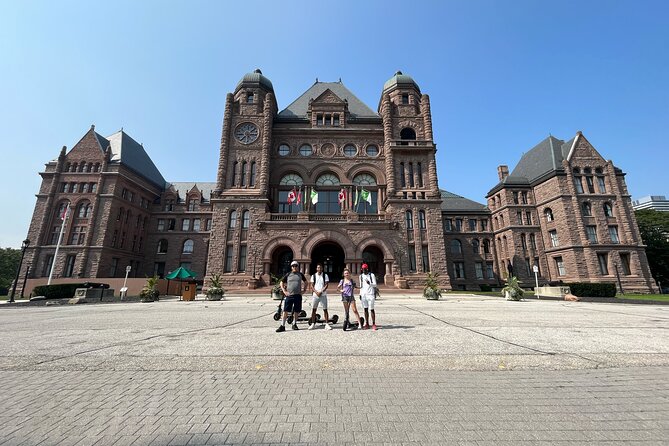
Then comes Queen’s Park, described as the history of Ontario and Canada condensed into one large park. This is another “short stop, big payoff” place because the park is filled with statues and a prominent architectural piece in the middle that’s made for photos.
This stop is also where the tour earns its keep for anyone who wants context fast. You’ll hear tales of how Ontario came to be, and the surrounding monuments help those stories stick.
Drawback to consider: because this is a park setting with multiple sightlines, it can be easy to focus on the pretty center structure and miss other details. If you want the full experience, keep your head up and follow what the guide is referencing, especially around the statues.
University of Toronto: war efforts, remembrance, and campus momentum

From Queen’s Park, the walk moves into University of Toronto territory. Expect a gorgeous campus feel as you cruise through. Even if you’ve never been to U of T before, the tour helps you understand the campus as a living city within the city.
A key theme here is memory. You’ll learn about U of T war efforts and how the university remembers those who paid the ultimate sacrifice. That gives the architecture and memorial spots a reason to exist beyond aesthetics.
How to get more out of this stop: the group moves quickly, but this is one of the best areas to ask a question. If you’re curious about why certain buildings or memorials appear in this part of campus, ask. With a small group, the guide can usually tailor answers to what you’re seeing.
Convocation Hall: rising from the ashes and honoring graduates

At Convocation Hall, you get a story built around resilience. The tour focuses on the origins and significance of the hall, including how it rose from the 1890 fire.
Then there’s the modern meaning: you’ll also see how the university honors its graduates with the beautiful Alumni Plaza.
Why this stop works: it connects past and present in a way that’s easy to feel. You can stand in the same place and understand both the destruction and the continuity. That’s the kind of connection a walking tour does well because you’re literally moving through layers of time.
Soldiers’ Tower: a focused World War remembrance stop
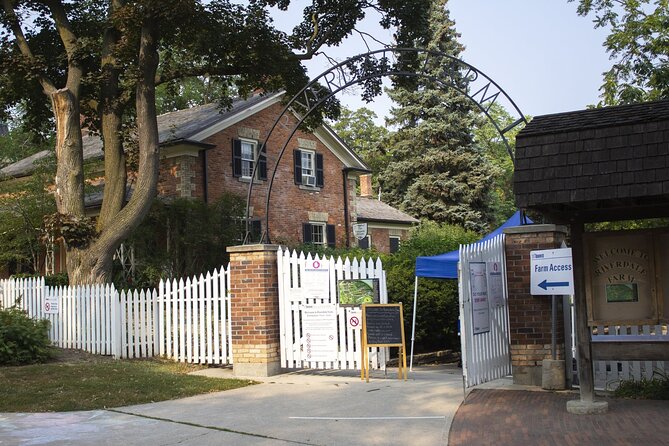
Next up is Soldiers’ Tower, a monument designed for those lost during the First and Second World War. It’s described as a war memorial that pays tribute to people who defended freedom.
This is the most emotionally straightforward stop on the route. It’s also short (about 10 minutes), which means you’ll get the purpose and the key meaning without getting stuck in a long formal visit.
If you’re the type who likes quiet time at memorials, use a moment here for that. Just don’t worry about doing it perfectly. Let the guide give you the context, then take your own breath for a minute before moving on.
Philosopher’s Walk: art, history, music, and how the campus connects people
After Soldiers’ Tower, you’ll step onto Philosopher’s Walk. This path winds through the heart of the University of Toronto campus, and the tour explains what it was built on and how it connects people to art, history, music, and culture.
This is where the tour becomes less about single monuments and more about how spaces guide behavior. Walkways like this create a rhythm for campus life. You feel that rhythm even if you only spend a short amount of time there.
Practical tip: Philosopher’s Walk is a great place for photos that are not just buildings. Look for lines of the path, framing through trees and structures, and the way people move along it. If your guide is helping with landmark shots earlier, ask for a quick suggestion here too.
Koerner Hall: where you take a break and notice music architecture
The tour then reaches Koerner Hall, located along Philosopher’s Walk. It’s described as the crown jewel of the Royal Conservatory of Music, and you’ll hear about its impact on culture and how new architecture was integrated while preserving classic elements.
The practical bonus: this is also where the tour includes a washroom and snack break. That’s not a small detail in a two-hour day. It keeps your energy up, so you can enjoy the final part instead of feeling rushed or tired.
What I like about adding a break at a cultural landmark: you’re not stopping at some random corner. You’re pausing in a place that fits the theme of the tour, music and architecture, and you can regroup naturally.
Royal Ontario Museum exterior: admiration only, no inside time
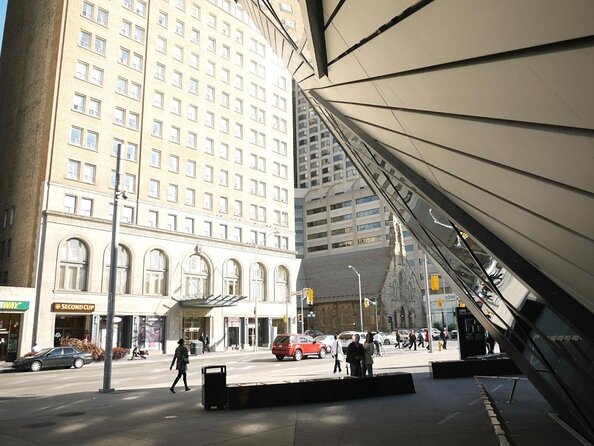
The walk ends near the Royal Ontario Museum, with the final stop described as outdoor only. You’ll focus on the building’s incredible architecture, admiring the structure rather than touring galleries.
This is an important “expectations” moment. If your dream is to see specific exhibitions inside the ROM, you’ll need to plan that separately. The tour does the perfect thing as a sampler: it gets you excited about the building, then sends you off with ideas for what to do next.
If you want a fast next step after the tour: use what you learn about the city’s institutions and look for nearby opportunities that match your interests. The tour also includes local tips, which should help you decide whether you want more museums, a neighborhood walk, or food nearby.
Guide quality: the people factor that makes this tour worth it
A lot of walking tours are just dates and photos. This one stands out because the guide actively manages the experience, not just the facts.
In particular, I noticed a strong pattern in guide feedback. Names like Joel, Tai, Wei-Ting, and Joshua show up with praise for being funny, kind, and able to adapt to what people care about. Even when language is not your native match, the best guides still try to connect the story to what you’re seeing in front of you.
One thing to consider: one review noted a language barrier issue at times. Since the tour is offered in English, you’ll likely be fine, but if you’re very strict about accents or fast explanations, be aware you might need to pause and ask your guide to repeat or rephrase.
Photo and comfort tips so you enjoy every stop
This is a walking tour with multiple photo points, so treat it like a mini city shoot day.
- Wear comfortable shoes you can stand in for short stints, especially around civic squares and campus paths
- Have your phone charged. The Toronto sign is an early win, and the rest of the stops offer plenty of landmark angles
- If you’re traveling with kids or you just need a slower pace, tell your guide early. With up to 15 people, the guide may be able to adjust
- Use Koerner Hall’s washroom and snack break strategically. Don’t wait until you feel hungry or drained
Who should book this Toronto Discovery District tour
I’d book this if you want:
- A short, high-impact way to see major Toronto landmarks in one loop
- A guide to explain the meaning behind places like Queen’s Park, Convocation Hall, and Soldiers’ Tower
- Help with photos and a plan for what to do after you finish
You might skip it if:
- You want a deep museum visit at the Royal Ontario Museum, since the stop is outdoor only
- You dislike walking in winter conditions, because meeting point visibility and snow can turn a simple start into an unpleasant wait if you arrive late
Should you book it?
Yes, I think this is a strong pick for first-time visitors and busy travelers who want orientation without spending an entire day in transit. The small-group format, the guide’s help with photo moments, and the blend of civic space, campus storytelling, and war remembrance make it feel more personal than a basic highlights route.
Just arrive early at Nathan Phillips Square and be ready for a brisk two hours. If you’re excited to see the Royal Ontario Museum from the outside and then plan your own interior time later, this tour sets you up nicely.
Toronto on Foot



Just off the notebook: recent Toronto write-ups
- From Toronto: Niagara Falls Guided Day Tour with Boat Cruise
★ 4.2 · 4 reviews - Toronto: Niagara Falls Day Tour with Niagara City Cruise
★ 4.5 · 4 reviews - Toronto Islands: Sunrise Breakfast Bicycle Tour
★ 5.0 · 4 reviews - Kensington Market ‘Taste the World’ Food Tour
★ 4.5 · 4 reviews - Toronto: Great White North Food Tour
★ 5.0 · 4 reviews - From Toronto: Customizable Guided Day Trip to Niagara Falls
★ 5.0 · 4 reviews
Walking Tours, compared.
 ★ 5.0Quebec City Walking TourFrom $304,716 reviews
 ★ 4.8Old Quebec City: Grand Walking Tour with Private OptionFrom $292,609 reviews
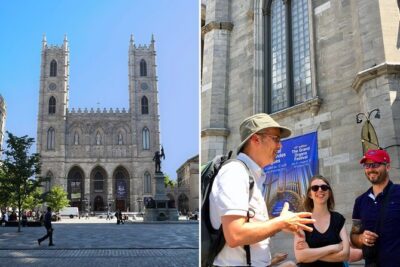 ★ 4.5The Original Old Montréal Walking Tour by GuidatourFrom $262,217 reviews
 ★ 5.0Old Montreal Small-Group Walking Tour | Max 10 | by MTL DetoursFrom $442,088 reviews
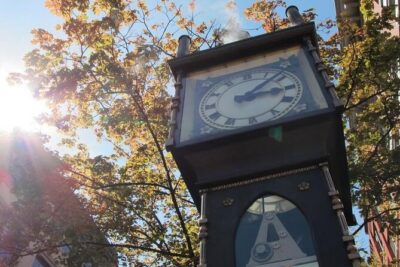 ★ 5.0Gastown Historic Walking Food TourFrom $1161,863 reviews
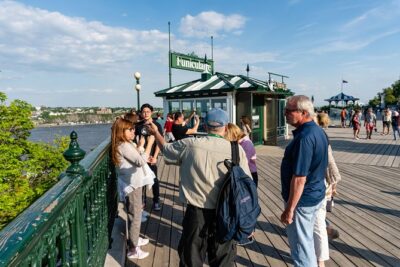 ★ 5.0Old Quebec Classique Walking Tour with FunicularFrom $421,317 reviews
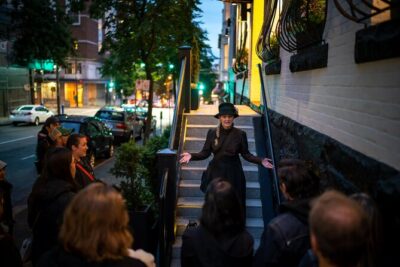 ★ 5.0Vancouver Lost Souls of Gastown Walking TourFrom $291,273 reviews
 ★ 4.6Quebec: Crimes of New France Animated Walking TourFrom $20926 reviews
Browse the lists this tour appears in