
REVIEW · WALKING TOURS
Private Jewish Walking Tours in Toronto
Toronto’s Jewish story lives in plain sight. This private walk turns street-level history into something you can picture fast, linking immigration-era Toronto to today’s Kensington Market neighborhood. I like that the route starts with context and then lands on the exact addresses tied to real institutions, and I also like how synagogue architecture and community leaders are treated as practical local history, not trivia. One thing to plan for: it’s a lot of walking in real weather, so wind or rain may slow your pace.
You begin at the Art Gallery of Ontario on Dundas Street West, then trace the story through Beverley Street, Henry Street, Cecil Street, and Spadina Avenue before finishing near Kensington Ave and St Andrew St. It’s a true private format, so your guide can keep the pace tight for your group and spend extra time where you’re most curious.
In This Review
- Key things you’ll notice on this Toronto Jewish walking tour
- How this walk turns Toronto corners into a community story
- Art Gallery of Ontario: setting the stage before you hit the sidewalks
- Beverley Street: immigration impact, institutions, and policy reactions
- Eitz Chaim school and the school-age side of community life
- George Brown House and the Canadian public school context
- The Henry Street synagogue to Holy Trinity Russian Orthodox Church
- Cecil Street: the institutional hub, Labour Zionism, and a community centre legacy
- Spadina Avenue: cowboys, music nights, and the market’s role
- Minsker Synagogue and St Andrew Street: Kensington in miniature
- Price, private format, and why 2 hours works
- Where this tour starts and where you end, so you can plan your day
- Who should book this Private Jewish Walking Tour in Toronto
- Should you book this tour?
- FAQ
- How long is the Private Jewish Walking Tour in Toronto?
- What is the price per person?
- Where does the tour start and end?
- Is this a private tour?
- What language is the tour offered in?
- Are admission tickets included?
Key things you’ll notice on this Toronto Jewish walking tour
- A route designed around addresses, so each stop has a specific reason to be there.
- Context first, then streets, starting at the Art Gallery of Ontario before you head into the neighborhood.
- Synagogue stories you can actually see, including the former Henry Street synagogue building.
- Institution hubs on Cecil Street, including Labour Zionist life and a community centre with a long past.
- Kensington Market as a finale, so you finish where many people want to explore anyway.
- Short stop times with a steady walk, which helps if you prefer history without museum-length sessions.
Toronto at walking pace, a few more routes
- Show me the City! A Small Group Walking Tour of Toronto★ 5.0 · 621 reviews
- Toronto Distillery District Walking Tour★ 5.0 · 327 reviews
- Toronto: City Highlights Walking Tour | 3-Hour★ 4.6 · 306 reviews
- Old Town Toronto Highlights 3 Hour Walking Tour | Gratuity-Based★ 4.5 · 290 reviews
How this walk turns Toronto corners into a community story
A good walking tour does two things. It gives you a timeline you can hold in your head, and it shows you why the buildings mattered to the people who built and used them. This one focuses on Toronto’s Jewish community from the big wave of immigration in the late 1800s and early 1900s, then shows how those communities took root street by street.
What makes the experience feel coherent is the sequencing. You start with background, then move outward into the “how” of community life: schools, synagogues, immigration reactions, and the institutions that shaped day to day routines. The tour also nudges you to look sideways. Some stops are purely Jewish community landmarks, while others are about the wider Canadian context, because community history never happened in a vacuum.
You’ll also get a practical geography lesson. Toronto has neighborhoods that evolved fast, and this route uses the changing streets to explain why the area became what it is. By the end, Kensington Market feels less like a foodie detour and more like the latest chapter in a much longer story.
Art Gallery of Ontario: setting the stage before you hit the sidewalks
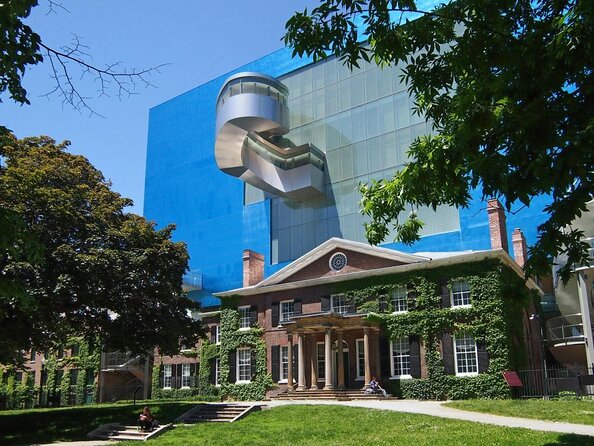
Your morning or afternoon begins at the Art Gallery of Ontario (317 Dundas St W). The big benefit of starting here is that you get early history of Toronto’s Jewish community framed around the mass immigration period from the late 19th century into the early 20th century. That timing matters, because the rest of the walk builds on what those newcomers needed, what they feared, and how they organized.
This stop is also a simple logistics check. Admission is not included here, so if you plan to go inside the gallery, budget for that separately. If you prefer to stay outside, you can still get the narrative that ties the collection of street stops together.
I like that the tour doesn’t jump straight into plaques and names. It gives you a mental map first, so when you later see school and synagogue locations, you can connect them to immigration patterns and community response.
Beverley Street: immigration impact, institutions, and policy reactions
From there, the walk goes into Beverley Street, where you start seeing the old neighborhood character show up in the details. Two of the stops are about how Jewish institutions formed and how immigrant communities absorbed and adapted over time.
At 136 Beverley St, you’re pointed toward the original character of the neighbourhood, and how Jewish institutions emerged as people arrived, settled, and built organizations that could survive the hard years. This is the kind of stop that can sound abstract until your guide ties it to real community needs, like education and religious life.
Next comes 147 Beverley St. Here the focus shifts to government immigration policies and the Jewish reaction to them. This is one of those moments where the tour does something useful: it reminds you that policy shapes people before they ever see a church, school, or shop on the next block. Even though you’re outside, you get a sense of how pressure and hope could coexist in the same streetscape.
The tour moves quickly, with short viewing times, but that’s part of the value. You get just enough time at each address to register the story, then keep walking so the narrative stays connected.
More options where it is just your group

Eitz Chaim school and the school-age side of community life
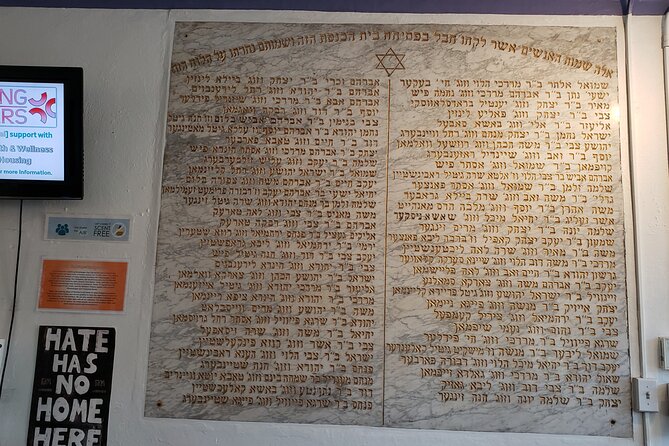
At 70 D’Arcy St, the stop spotlights a former Eitz Chaim school. Schools do a lot of heavy lifting in immigrant community history. They teach language and religion, but they also signal stability. A school says: we plan to stay.
This particular stop is described through the idea of colourful characters in the school’s history. Even if you don’t know the name yet, you’ll likely come away understanding that education in the Jewish community was both cultural and practical. It wasn’t only about keeping traditions alive, it was also a way to prepare young people to function in the city around them.
One caution: school buildings can look like “just another old structure” if you only skim. The tour’s benefit here is that your guide points you to what to notice, so you’re not left guessing what makes the place important.
George Brown House and the Canadian public school context
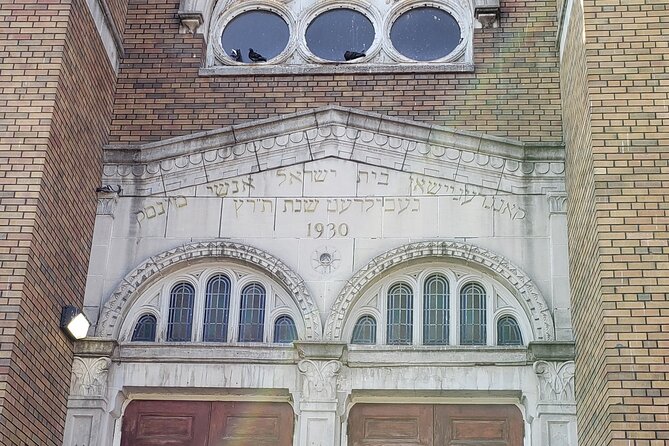
At 186 Beverley St, you’ll be at the George Brown House. This stop adds a layer that I appreciate: it brings in some non-Jewish Canadian context. Next door, the tour points to the Jewish history tied to the public school in the area.
Why this matters: it helps you understand what “integration” meant on the ground. Instead of imagining separate worlds, you see overlapping systems, including schooling. If you like history that connects to civic structures, this stop is a good one to pay close attention to.
The duration here is short, but the framing is useful. It keeps the story from becoming only a closed loop of community institutions. It also makes it easier to understand how Jewish families fit into Toronto’s broader growth.
The Henry Street synagogue to Holy Trinity Russian Orthodox Church
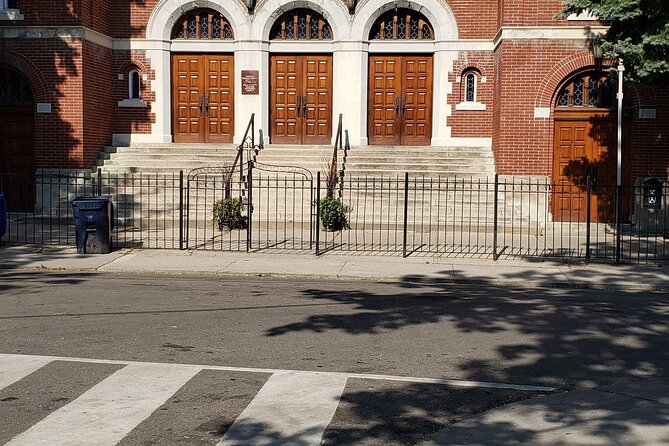
The most visually striking stop is 23 Henry St, where you’ll visit Holy Trinity Russian Orthodox Church, formerly the Henry Street synagogue. This is one of the best places to practice “reading” architecture.
The tour calls out synagogue architecture and the early synagogues in Toronto, including Toronto’s first Jewish architects. That means you’re not just seeing a building. You’re learning to recognize how places of worship expressed identity, community status, and craftsmanship in the early days.
If you care about how design carries meaning, don’t rush this stop. Give yourself time to look at the exterior, and listen closely to what the guide highlights. Architectural details can be subtle, and the guide’s story helps you see them without needing a history degree.
You’ll also feel the neighborhood’s changing patterns here, because the building’s identity shifted over time. That’s an important theme of the whole walk: the street stays, but communities and uses can change.
Cecil Street: the institutional hub, Labour Zionism, and a community centre legacy
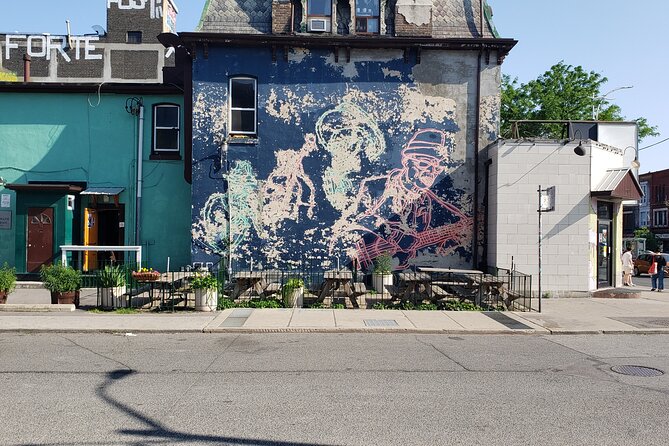
Next you move to Cecil Street, where the tour becomes more structured around community institutions. The story starts with the Rabbi of the Henry Street Synagogue, then transitions to 206 and 207 Beverley, as an introduction to Cecil Street as an institutional hub of the older Jewish community.
From there, 24 Cecil Street brings in Labour Zionist HQ and school, plus later political history. This is a major value point for anyone who wants more than religious history. Labour Zionism represents political and social organization, and on Cecil Street you can connect the idea to real spaces that once housed education, organizing, and community activities.
The tour then covers a run of addresses, 33 to 58 Cecil Street, focusing on an overview of the Jewish organizations and institutions that were once there. This kind of “institution cluster” walk is great because it shows you that community life wasn’t only happening in one place. It was spread out, with different groups serving different functions.
Finally, you’re directed toward the Cecil Street Community Centre and its past as a synagogue and centre of traditional entertainment. That last piece is a reminder that community buildings were not only religious or educational. They were also social and cultural anchors.
The main consideration here is pacing. Cecil Street includes a longer segment, about 24 minutes, so it can feel like a concentrated history stop. If you love organization and political details, you’ll like this part a lot. If you prefer lighter narrative, ask the guide to focus on the parts that connect most directly to daily life.
Spadina Avenue: cowboys, music nights, and the market’s role
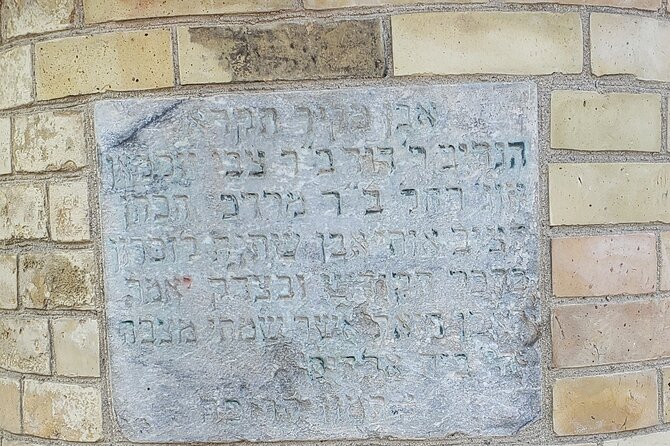
After Cecil Street, you head to Spadina Avenue, where the tour splits direction. It covers the northbound route toward the El Mocambo, and then loops back south toward Cecil Street.
The northbound story leans into a less traditional side of the neighborhood, including references to Spadina cowboys of the 1930s and 1940s. That’s a fun contrast to synagogue and school stops, because it reminds you that immigrant neighborhoods developed their own entertainment and local colour.
As you move south, you’ll hear about Grossman’s Tavern and the commercial development on the street and the Spadina music scene. Then you’ll get a specific street-corner discussion at the west side of Spadina at Baldwin Street, about how Kensington became a market.
The tour also highlights Yiddish theatre, delicatessens, dairy restaurants, and the history of the hat trick on Spadina between Dundas and St Andrew. Even if you’ve visited Kensington Market before, this framing helps you see it as more than a set of shops. It becomes a cultural corridor, tied to language, performance, food habits, and the trade skills that supported daily life.
Because this part includes a longer walk segment (about 26 minutes), it’s the easiest time to let your eyes roam. You’re going to understand the story faster if you treat it like a neighborhood stroll with a guided script rather than a list of stops.
Minsker Synagogue and St Andrew Street: Kensington in miniature
The last anchor stop is at 10 St Andrew St, the Minsker Synagogue. This is the tour’s neat finale because it ties the idea of a neighborhood in miniature to a specific landmark.
The tour also frames St Andrew Street as Kensington’s microcosm. You’ll hear about the history of the synagogue and the idea that it was the first in the Kensington area. Across the street, the Labour Lyceum is mentioned, which strengthens the connection between community institutions and public life.
This is a good moment to slow down and absorb. You’ve covered immigration, policy response, education, worship spaces, political organization, entertainment, and commerce. Finishing here makes those pieces feel like they belong together.
Price, private format, and why 2 hours works
At $41.16 per person for about 2 hours, this tour sits in a friendly range for a private city experience. The value comes from how much narrative you can fit into street stops without feeling rushed like a bus tour.
A private format also changes the feel. Instead of sticking to a rigid script, your guide can point out what you care about most, like architecture, political history, or how institutions worked. It also tends to make pacing smoother, since your group can move as a unit and your guide can adjust for questions.
Booking about 21 days in advance on average is a useful hint. If you’re traveling in busy seasons or on weekends, earlier booking gives you better schedule options.
One more practical thing: you should expect a walking route that requires reasonable stamina. Most stops are short, but you’ll be out for roughly 2 hours, and the tour notes good weather needs. Plan to dress for the conditions, and bring water if it’s hot.
Where this tour starts and where you end, so you can plan your day
You meet at Art Gallery of Ontario, 317 Dundas St W and end at 57 Kensington Ave in the heart of Kensington Market, near the corner of Kensington Ave and St Andrew St.
That ending point is practical. After the tour, you’re already in the right zone for a snack, lunch, or browsing before heading to your next stop. It also makes the route feel like it has a natural ending, rather than abruptly dumping you on a random street corner.
Since it’s near public transportation and allows service animals, it’s designed to be workable for many visitors, as long as you’re comfortable walking outdoors.
Who should book this Private Jewish Walking Tour in Toronto
This is a strong pick if you want Jewish Toronto history grounded in real places, not only in museum halls. It suits you if you like learning through streets and buildings, especially when synagogue architecture, school histories, and institutional hubs are part of the story.
I’d also recommend it if you’re traveling with people who learn best with concrete details. The tour uses short stop times and specific addresses, so it’s easier to stay engaged, even if your group has mixed interests.
If your group mainly wants the newest Jewish community scene today, this may feel more focused on earlier eras and the old institutional landscape, since the route emphasizes the late 19th and early 20th century immigration wave and what followed.
Should you book this tour?
I’d book it if you want a guided walk that makes Toronto’s Jewish past feel geographic and real. The route connects context at the Art Gallery to the places that shaped community life, including a key former synagogue building and the institutional stretch on Cecil Street. It also ends in Kensington Market, which gives you an easy place to keep exploring after the tour.
Skip it or rethink it only if you dislike walking in outdoor conditions or you need a tour that prioritizes present-day community information over the older neighborhood framework.
FAQ
How long is the Private Jewish Walking Tour in Toronto?
It runs for about 2 hours.
What is the price per person?
The price is $41.16 per person.
Where does the tour start and end?
It starts at the Art Gallery of Ontario, 317 Dundas St W, Toronto, and ends in Kensington Market at 57 Kensington Ave near the corner with St Andrew St.
Is this a private tour?
Yes. It is private, and only your group participates.
What language is the tour offered in?
The tour is offered in English.
Are admission tickets included?
Admission is not included at the Art Gallery of Ontario. Other stops listed are free admission.
Just Your Group




Toronto on Foot

Just off the notebook: recent Toronto write-ups
- From Toronto: Niagara Falls Guided Day Tour with Boat Cruise
★ 4.2 · 4 reviews - Toronto: Niagara Falls Day Tour with Niagara City Cruise
★ 4.5 · 4 reviews - Toronto Islands: Sunrise Breakfast Bicycle Tour
★ 5.0 · 4 reviews - Kensington Market ‘Taste the World’ Food Tour
★ 4.5 · 4 reviews - Toronto: Great White North Food Tour
★ 5.0 · 4 reviews - From Toronto: Customizable Guided Day Trip to Niagara Falls
★ 5.0 · 4 reviews
Walking Tours, compared.
 ★ 5.0Quebec City Walking TourFrom $304,716 reviews
 ★ 4.8Old Quebec City: Grand Walking Tour with Private OptionFrom $292,609 reviews
 ★ 4.5The Original Old Montréal Walking Tour by GuidatourFrom $262,217 reviews
 ★ 5.0Old Montreal Small-Group Walking Tour | Max 10 | by MTL DetoursFrom $442,088 reviews
 ★ 5.0Gastown Historic Walking Food TourFrom $1161,863 reviews
 ★ 5.0Old Quebec Classique Walking Tour with FunicularFrom $421,317 reviews
 ★ 5.0Vancouver Lost Souls of Gastown Walking TourFrom $291,273 reviews
 ★ 4.6Quebec: Crimes of New France Animated Walking TourFrom $20926 reviews
Browse the lists this tour appears in