
REVIEW · WALKING TOURS
Private 2-Hour Walking Crime Tour in Toronto
One dark street story can change how you see a city. This private Toronto crime walking tour uses former detective perspectives to connect criminal cases with daily life and public rules, from the 1800s to today. I like the fact that it is customizable for your group, so you can lean more history, more law, or more spine-tingling. One drawback to consider is that the topics get seriously heavy, and you should be ready for a brisk walk.
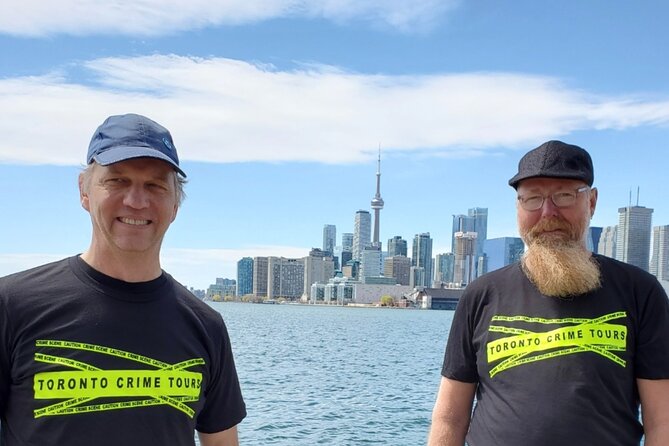
What I really love is the guide team, with retired detectives like Phil, Bob, and Dave sharing what they learned from Toronto Police Services, not just names and dates. The pace also feels realistic for a walking tour, with enough stops to rest your legs and enough story time to make each place matter.
The other practical consideration is simple: there is no bottled water included. Bring your own drink, wear comfy shoes, and you will enjoy the day more, especially if it is warm out.
In This Review
- Key Highlights You Will Actually Care About
- Meeting the Detectives and Getting Your Bearings on 250 Yonge
- How the Tour Stays Private and Customizable
- Stop by Stop: Toronto’s Crime, Justice, and Public Fear in Motion
- CF Toronto Eaton Centre, and a 12-Year-Old Murder That Shocked Downtown
- Yonge Street, Year of the Gun, and Boxing Day Crossfire
- Yonge Street Again, From Rebellion Riots to G20 Tension
- The Path, Mental Illness in the Criminal Justice System
- Downtown, the Disappearance of Ambrose Small in 1919
- Courthouse Square, Canada’s Last Public Gallows and Absurd Crimes
- Courthouse-Era Murder: Bert Massey, the Trial of the Century in 1915
- The Boyd Gang, Bank Heists and Two Escapes from The Don Jail
- St. Lawrence Market, the Jarvis Duel of 1817
- The Corner at Dundas and Jarvis, and Canada’s First Gangland Slaying in 1939
- Circus Clowns vs. Hook and Ladder, and a Police Structure That Lasted
- The Village, a Serial Killer Targeting Gay Men and Eight Victims in a Ravine
- A Park Stop on Topless Sunbathing, and the Question of Morals
- Distillery Historic District, Gooderham and Worts, and a Possible Ghost
- Distillery Part Two, Bootlegging in 1922
- The Walking Pace: Brisk, Manageable, and Built for 2+ Hours
- What You Learn, Beyond the Headlines
- Value for $28.21 and How to Get the Most From It
- Who This Tour Suits Best
- Should You Book This Toronto Crime Tour?
- FAQ
- Where does the tour start and where does it end?
- What time does the tour begin?
- How long is the walking tour?
- Is this a private tour?
- What is included in the price?
- Is bottled water included?
- Do I need a printed ticket?
- Is the tour customizable?
- What kind of footwear should I wear?
- What weather conditions are required?
- What is the cancellation window?
Key Highlights You Will Actually Care About
- Private tour, just your group, with room for customization to your interests
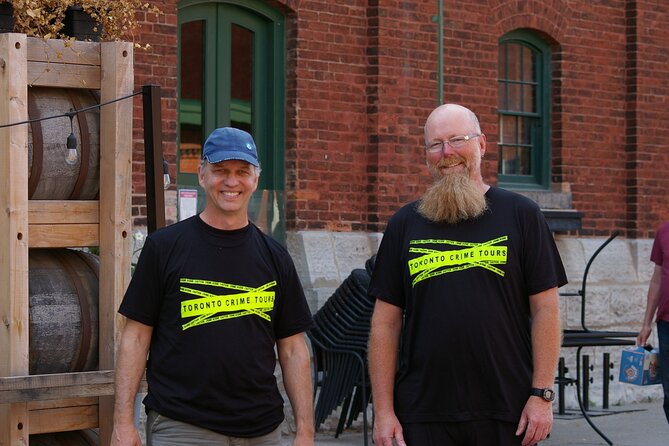
- A former detective guide angle, including real-life policing context from Toronto Police Services
- A walk that stays moving but not sprinting, about 2 hours 15 minutes on foot
- Stop-by-stop Toronto case stories, from famous disappearances to riots to the criminal justice system
- Macabre meets social history, including how the law handled mental illness and public morality
- Mobile ticket format, plus a finish near the Distillery Historic District
Toronto at walking pace, a few more routes
- Show me the City! A Small Group Walking Tour of Toronto★ 5.0 · 621 reviews
- Toronto Distillery District Walking Tour★ 5.0 · 327 reviews
- Toronto: City Highlights Walking Tour | 3-Hour★ 4.6 · 306 reviews
- Old Town Toronto Highlights 3 Hour Walking Tour | Gratuity-Based★ 4.5 · 290 reviews
Meeting the Detectives and Getting Your Bearings on 250 Yonge
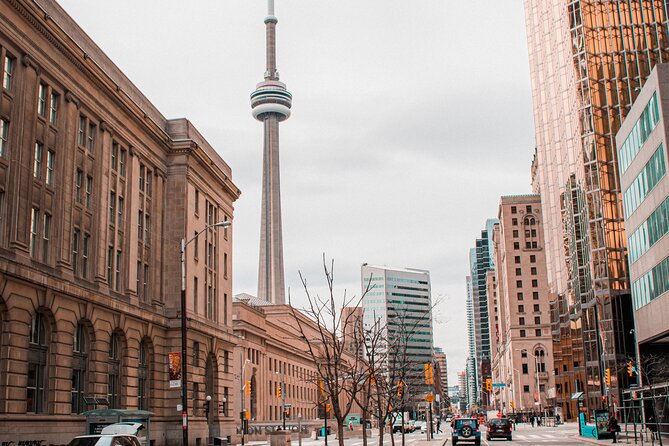
This tour starts at 250 Yonge St, right where Toronto’s energy is easy to feel, and it ends at 55 Mill St near the Distillery Historic District. The meeting time is 1:00 pm, and the tour runs about 2 hours 15 minutes, so you get a focused loop rather than an all-day commitment. Since it is a walking tour, you will want shoes that can handle city sidewalks without complaint.
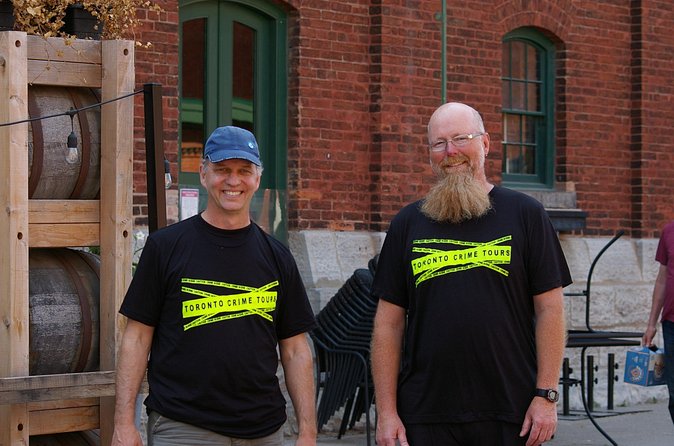
The biggest first impression is the guide setup. You are not getting a lecture. You are getting stories from retired detective professionals who know how investigations, courts, and public reaction can collide. That difference shows up fast, because they explain what made cases controversial, not just what happened.
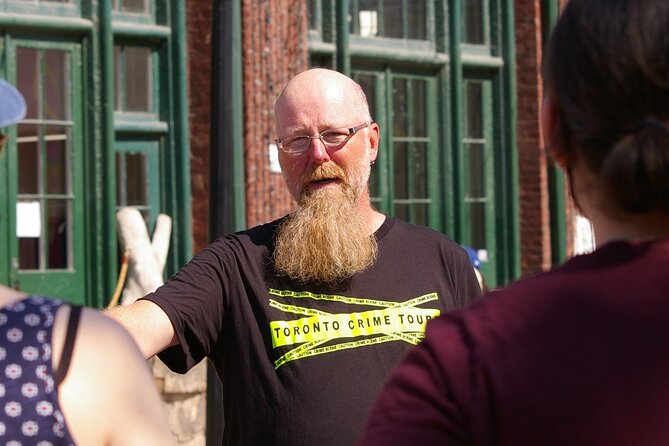
Phil, Bob, and Dave are the names that show up in the guide experience, and that matters. When your guide has a policing background, they tend to fill in the gaps that most tours skip, like why a case might have turned out the way it did, or how the system handled people when the evidence was thin.
How the Tour Stays Private and Customizable
A private tour is more than a marketing label here. You can tailor what you focus on, which is helpful when your group has mixed interests. Maybe one person wants more about riots and public unrest, while another cares about criminal justice and how society labeled people.
This also changes the feeling of the walk. Instead of watching other groups file past a corner, you are in a tighter circle that can ask questions as you go. That makes the stories land better because you are not just absorbing facts, you are sorting out what they mean.
Price is $28.21 per person. That is a small chunk for Toronto, and the value improves when you consider that you are paying for a guided, multi-stop route with a specialty theme. You are also getting all fees and taxes included, so you are not surprised later.
Stop by Stop: Toronto’s Crime, Justice, and Public Fear in Motion
The tour is structured as quick hits at each location, with time to hear the core story and move on. Most stops feel like they were designed to keep the pace friendly while still letting each case take up space in your mind.
More options where it is just your group

CF Toronto Eaton Centre, and a 12-Year-Old Murder That Shocked Downtown
Your first stop is the CF Toronto Eaton Centre, where the story opens with the shocking murder of a 12-year-old shoeshine boy in 1977. The point of the story is not only the tragedy, it is the ripple effect on the downtown core, including how attention and pressure can lead to cleanup efforts.
This start works well because it frames a familiar Toronto landmark, then flips the lens into something grim and real. You also get a quick lesson in how crime stories can shape the way a city manages public spaces.
Yonge Street, Year of the Gun, and Boxing Day Crossfire
Next up is Yonge Street, where the tour points to 2005, the Year of the Gun. Here you hear about the tragic murder of a 15-year-old girl caught in the crossfire during a streetgang shootout on Boxing Day.
This is where the tour shifts from older cases to modern patterns of violence. It also helps you understand why some places and time periods get remembered the way they do, even when the city keeps moving.
Yonge Street Again, From Rebellion Riots to G20 Tension
The tour uses Yonge Street a second time, this time to talk about riots across Toronto’s history, from the Upper Canada Rebellion in 1837 to the G20 riots in 2010. That range is useful because it shows unrest is not a one-era problem.
You start noticing a theme: conflict is often political, social, and economic, not just individual. The stories help you see riots as a citywide mirror, not random chaos.
The Path, Mental Illness in the Criminal Justice System
At The Path, the focus turns to how mentally ill people are treated in the criminal justice system. This stop is important because it reframes crime in a broader way, linking fear, labels, and institutional responses.
If you care about the human side of law, this is one of the most meaningful segments. It also serves as a reminder that punishment and care can get tangled when systems are strained.
Downtown, the Disappearance of Ambrose Small in 1919
Downtown, you hear about Toronto’s greatest unsolved mystery: the disappearance of wealthy theatre owner Ambrose Small in 1919. Unsolved cases stick with people because there is no clean closure, just unanswered questions.
This stop also teaches you something about how cities hold onto mysteries. Even if you never see a resolution, the story can still influence how people think about safety, power, and trust.
Courthouse Square, Canada’s Last Public Gallows and Absurd Crimes
At Courthouse Square in Old Toronto, the tour takes you to the last public gallows in Canada. The story also includes a bizarre list of crimes that could bring capital punishment, including stealing turnips and stealing cattle.
It is a sharp reminder that laws change. What seems ridiculous now is what once counted as serious enough for the harshest penalty available. This stop can feel darkly funny, but the humor lands in the wrong place, which is kind of the point.
Courthouse-Era Murder: Bert Massey, the Trial of the Century in 1915
Still in Old Toronto, you move into the trial of the century in 1915, the murder of Bert Massey. He was tied to the wealthy Massey Ferguson empire, and that connection matters because wealth often shapes attention, process, and public interest.
This stop is good if you like crime stories that explain the politics around a case, not only the crime itself. It also highlights that class can affect how the public reads events.
The Boyd Gang, Bank Heists and Two Escapes from The Don Jail
The tour continues with the infamous Boyd Gang, known for numerous bank heists and a high-profile escape twice from The Don Jail. The presence of a correctional escape story in a walking tour is a reminder that crime history is also full of bold, practical reality, not just tragedy.
What you get here is more than a list of criminal acts. You also get a sense of how institutions can fail, even when they seem built to stop exactly this.
St. Lawrence Market, the Jarvis Duel of 1817
At St. Lawrence Market, you hear about the Jarvis Duel in 1817, described as the last such duel once common in Toronto. This stop is a good contrast to the gun and gang stories, because it shows earlier ideas of honor and conflict.
It helps you see how violence morphs with time. Different tools, different reasons, different social rules.
The Corner at Dundas and Jarvis, and Canada’s First Gangland Slaying in 1939
In Old Town, the tour turns to Canada’s first gangland slaying in 1939. You also hear about the sordid state of The Corner at Dundas and Jarvis.
This is a stop where you will probably look around and think about how much the streets have changed. Yet the story makes it clear that the tension between commerce, crowds, and criminal opportunity is not new.
Circus Clowns vs. Hook and Ladder, and a Police Structure That Lasted
One of the more surprising segments happens in Old Toronto, where a riot between circus clowns and the Hook and Ladder fire company in 1855 led to revamping the structure of the Toronto Police. The tour notes that the effect is still in place 166 years later.
Even if you are not a police-organization nerd, you will likely enjoy this one because it uses a goofy premise to explain real institutional change. It also makes a point that public order systems often evolve out of chaos.
The Village, a Serial Killer Targeting Gay Men and Eight Victims in a Ravine
In Old Toronto again, the tour addresses a serial killer targeting gay men in The Village. The story includes that police initially said there was no proof or links among victims, then later found 8 victims buried in a ravine.
This stop is intense. It matters because it connects policing gaps with the cost to real people. It is also a reminder that social stigma can affect how evidence is understood and how quickly patterns are recognized.
A Park Stop on Topless Sunbathing, and the Question of Morals
Next you get a short but memorable stop about topless sunbathing in the park, and whether it was illegal or immoral. This is the tour’s social rules angle in action, showing that crime culture is not only about courts, guns, and prisons.
It is also a useful reminder that laws and community standards often overlap, even when the public argues about the line.
Distillery Historic District, Gooderham and Worts, and a Possible Ghost
At the Distillery Historic District, you shift from streets and courts to whiskey making history. The story starts in 1832 with rapid growth of whiskey production at Gooderham and Worts, and then asks whether Wort’s ghost still lingers.
This is one of the smarter pacing choices in the route. After heavy crime stories, you get atmosphere, folklore, and the sense that old industries leave behind more than buildings.
Distillery Part Two, Bootlegging in 1922
The final stop returns to Distillery history with a rougher past and bootlegging in 1922. This ending ties back into the crime theme, but with a different flavor, since it is about illegal trade and enforcement during a period when legal alcohol rules were in flux.
Ending near 55 Mill St lets you finish in an area that is easy to keep exploring on your own, which is helpful when you want dinner plans that are not a long trek away.
The Walking Pace: Brisk, Manageable, and Built for 2+ Hours
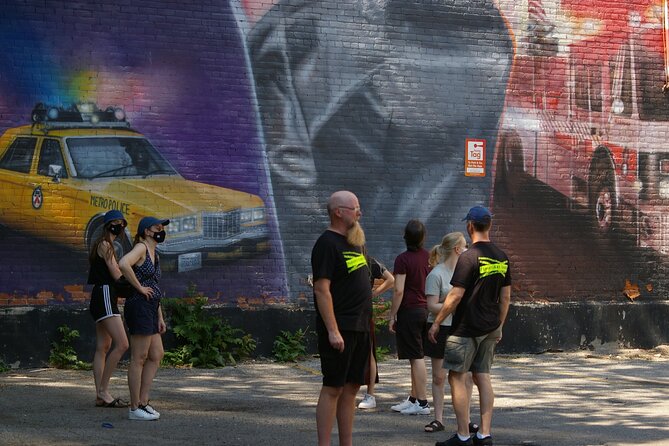
This tour requires you to be able to walk for about 2 hours. That is not a loose suggestion. The stop style is quick, and you keep moving between points.
In practice, guides tend to keep it brisk, but it is not designed to burn your legs. One review noted around 6,500 steps, which lines up with a 2-hour walking experience plus stops. If you pace yourself on the way between locations, you should be fine.
If you have mobility limits, it is worth thinking carefully. The tour is not listed as wheelchair friendly in the provided details, so plan based on your own ability to do continuous city walking.
What You Learn, Beyond the Headlines
This is a Toronto crime tour with a social lens. The goal is not only to scare you. It is to explain how criminal stories link to behavior, institutions, and public debate.
You see that in how the tour covers:
- how downtown crime can trigger cleanup efforts
- how gang violence and street shootings shape a year’s reputation
- how the justice system treats mental illness
- how unsolved disappearances become part of city myth
- how punishment once looked wildly different from now
- how riots can reflect political tensions
- how policing responses can change after patterns become clear
The former detective angle matters because it keeps the focus on systems. You are not just learning that something happened. You are learning why it got handled the way it did, and what people believed at the time.
Value for $28.21 and How to Get the Most From It
At $28.21 per person, this tour can be a bargain if you want guided context instead of just self-led reading. You are paying for a private group format, detective-style storytelling, and a route that touches a lot of recognizable places.
To get the most value, show up ready to ask questions. This kind of tour turns better when you use your curiosity. If you care most about the legal side, lean into questions about how cases were handled. If you want darker human stories, ask about the investigations and the gaps the system faced.
Also, bring your own beverage. Bottled water is not included, and you will walk about two-plus hours. In warm weather, that little detail can make or break your comfort.
Who This Tour Suits Best

This fits best if you like:
- history tied to real crime and court systems
- social questions about what was legal versus what was considered acceptable
- a tour that mixes famous stories with overlooked angles
It is also a good option for locals who want a different way to see the city. When you walk through central Toronto with a detective guide mindset, you tend to notice how streets and institutions connect.
If your group dislikes heavy topics, you might want to choose a more lighthearted theme tour. The subject matter includes murder, mental health and justice, and a serial killer case.
Should You Book This Toronto Crime Tour?

I think you should book it if you want a private, detective-led walking tour that explains how Toronto’s rules, fears, and institutions evolved over time. The value is strongest when you are the type of traveler who enjoys asking, what was going on behind the scenes, not just what the headlines say.
You should skip it or approach with care if you are sensitive to graphic crime themes, or if you do not feel confident with a brisk 2-plus hour walk. If you can handle dark history and you like your sightseeing with a side of investigation, this is a smart pick for Toronto.
FAQ
Where does the tour start and where does it end?
The tour starts at 250 Yonge St, Toronto, ON M5B 2L7, Canada, and it ends at 55 Mill St, Toronto, ON M5A 3C4, Canada, near the Distillery District.
What time does the tour begin?
The start time is 1:00 pm.
How long is the walking tour?
It runs about 2 hours 15 minutes.
Is this a private tour?
Yes. It is a private tour/activity, and only your group participates.
What is included in the price?
All fees and taxes are included.
Is bottled water included?
No. Bottled water is not included, so bring your own beverage, especially on warm days.
Do I need a printed ticket?
No. The tour uses a mobile ticket.
Is the tour customizable?
Yes, this private tour can be customized to suit your needs.
What kind of footwear should I wear?
Wear comfy shoes because this is a walking tour.
What weather conditions are required?
The tour requires good weather. If it is canceled due to poor weather, you will be offered a different date or a full refund.
What is the cancellation window?
You can cancel for a full refund up to 24 hours in advance of the experience start time.
Just Your Group





Toronto on Foot

Just off the notebook: recent Toronto write-ups
- From Toronto: Niagara Falls Guided Day Tour with Boat Cruise
★ 4.2 · 4 reviews - Toronto: Niagara Falls Day Tour with Niagara City Cruise
★ 4.5 · 4 reviews - Toronto Islands: Sunrise Breakfast Bicycle Tour
★ 5.0 · 4 reviews - Kensington Market ‘Taste the World’ Food Tour
★ 4.5 · 4 reviews - Toronto: Great White North Food Tour
★ 5.0 · 4 reviews - From Toronto: Customizable Guided Day Trip to Niagara Falls
★ 5.0 · 4 reviews
Walking Tours, compared.
 ★ 5.0Quebec City Walking TourFrom $304,716 reviews
 ★ 4.8Old Quebec City: Grand Walking Tour with Private OptionFrom $292,609 reviews
 ★ 4.5The Original Old Montréal Walking Tour by GuidatourFrom $262,217 reviews
 ★ 5.0Old Montreal Small-Group Walking Tour | Max 10 | by MTL DetoursFrom $442,088 reviews
 ★ 5.0Gastown Historic Walking Food TourFrom $1161,863 reviews
 ★ 5.0Old Quebec Classique Walking Tour with FunicularFrom $421,317 reviews
 ★ 5.0Vancouver Lost Souls of Gastown Walking TourFrom $291,273 reviews
 ★ 4.6Quebec: Crimes of New France Animated Walking TourFrom $20926 reviews
Browse the lists this tour appears in