
REVIEW · MUSEUMS
Oshawa: Canadian Tank Museum Admission
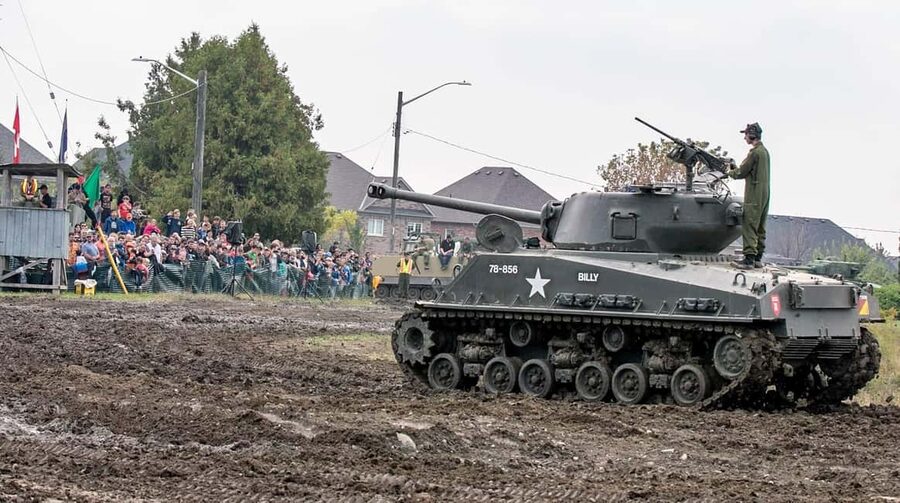
Tanks move even in museums. At the Canadian Tank Museum in Oshawa, you get a real-scale look at Canada’s tank forces through operational military vehicles and stories shared by veterans. The only real drawback is that you will cover ground, and some displays are outdoors, so comfy shoes matter.
I love that this isn’t just a static lineup. The museum has over 170 military vehicles, plus you can see active restorations happening, which makes the place feel alive. For $10 per person, it is a solid value day trip if you want hands-on history that still has moving parts.
In This Review
- Key things I’d circle before you go
- Why Oshawa is the right stop for tank-curious minds
- Inside the museum: 170+ operational vehicles you can actually read
- The Royal Canadian Armoured Corps story, told through equipment
- Restoration areas: watching history being repaired
- Veteran-guided conversations: the human layer you cannot get elsewhere
- If you catch motion, know what that means
- Price and value: $10 for a full day with real-world context
- How I’d plan your one-day visit without rushing
- Who should book this admission (and who might not)
- Should you book the Canadian Tank Museum admission?
- FAQ
- Where is the Canadian Tank Museum?
- How much is admission?
- How long is the experience?
- How many vehicles are in the collection?
- What is included with admission?
- Are food or drinks included?
- Will I be able to see restoration work?
- Who provides the stories during the visit?
- Is it possible to see a historical vehicle on the move?
- How flexible is booking if my plans change?
Key things I’d circle before you go
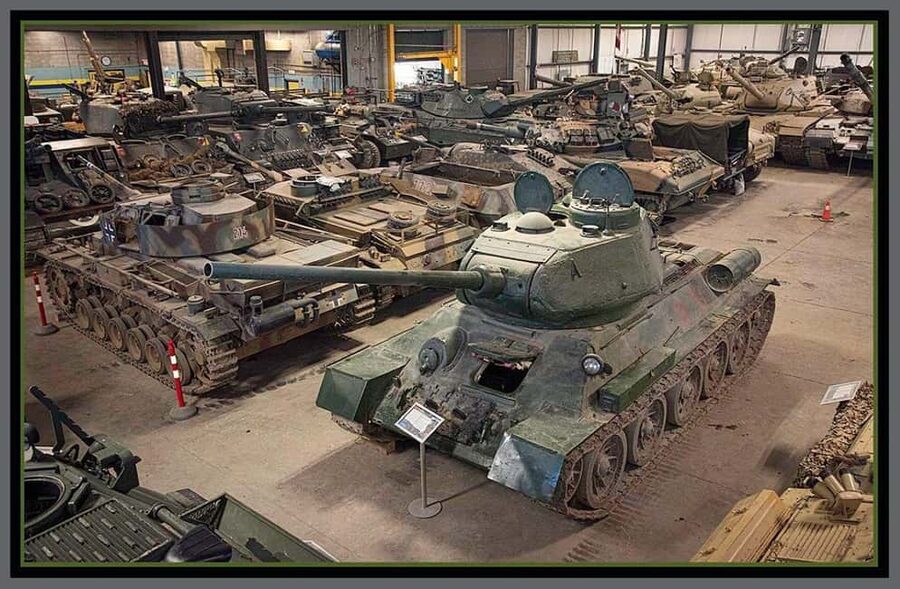
- Over 170 operational vehicles: a collection size you simply cannot fake with photos.
- Royal Canadian Armoured Corps focus: you learn the tank story, not just random hardware.
- Active restorations to watch: history in progress, not history behind glass.
- Veterans as tour guides: you get context, not just captions.
- Maybe a vehicle on the move: you might catch motion if timing lines up.
Why Oshawa is the right stop for tank-curious minds
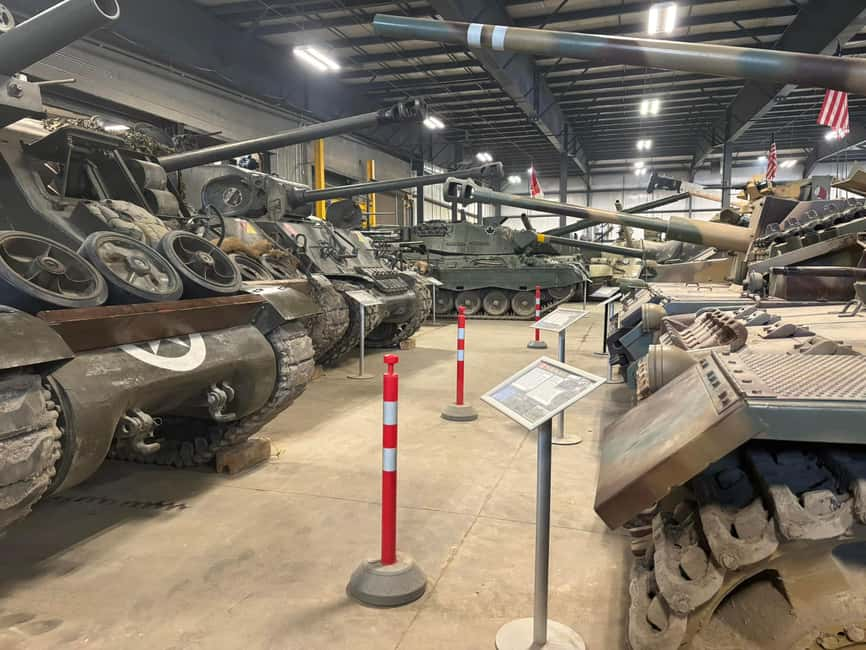
If you only think of tanks as movie props, this is where that changes fast. The Canadian Tank Museum in Oshawa is built around real operational vehicles, so you see scale, design choices, and how machines like these actually work in the world.
I like that the museum is local and mission-driven. It is the official unit museum for Durham Region’s Ontario Regiment RCAC, and that matters because you are not just reading history, you are hearing the people tied to it. You also get the sense that the collection is cared for with purpose, not maintained as a one-and-done display.
One note before you set expectations: this is a vehicle-focused day. It is not trying to be a polished, shopping-mall type experience. If you like military equipment, hands-on restorations, and patient explanations, you will feel right at home.
Inside the museum: 170+ operational vehicles you can actually read
The headline is the collection size: the museum is home to over 170 operational military vehicles. That is what makes it different from many military museums where the number sounds impressive but most items are still, static, and closed to real inspection.
In practice, the size means you will have options. You can spend a slow hour studying one vehicle closely, then jump to another vehicle that answers a different question, like what changed over time or what a particular unit needed in the field. It also means the museum is better for repeat interest. Even if you think you are only doing a quick visit, you may end up staying longer because there is always something new to notice.
Do not worry about being a hardcore expert either. The museum is designed for public education, and that show-up-and-learn vibe is reinforced by the restorations and veteran-led conversations. You come in with questions, and the place meets you there.
The Royal Canadian Armoured Corps story, told through equipment
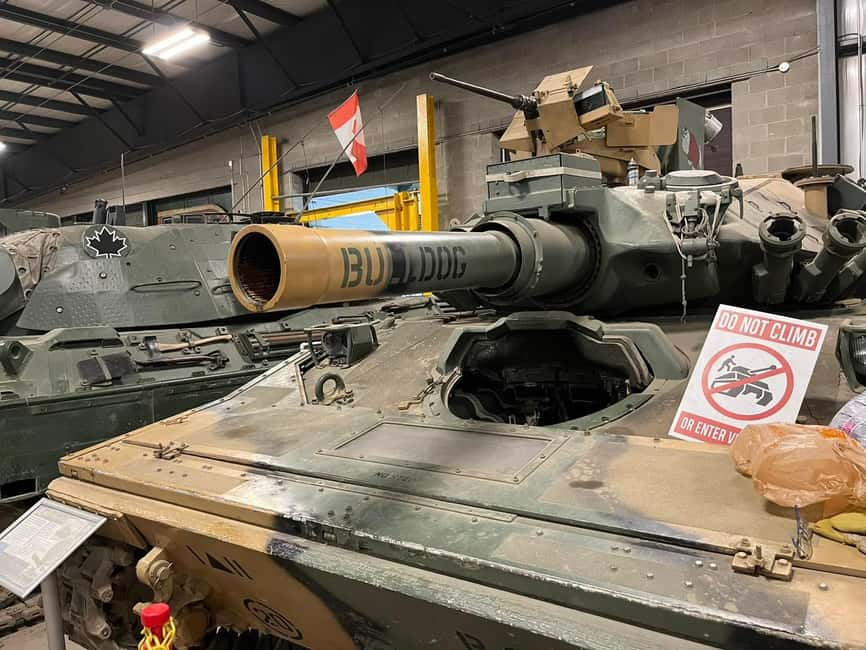
This museum centers on Canada’s military tank forces, specifically the Royal Canadian Armoured Corps. That focus is useful because it keeps the experience coherent. Instead of bouncing between unrelated artifacts, you get a clearer through-line for why tanks mattered, how the forces developed, and how Canada’s armoured story fits together.
The collection also covers both large and small artifacts, so you can switch between big-picture viewing and the details that explain how things were built and used. You will also see the story tied back to the regiment and militia units dating to 1866. That longer timeline matters because it turns tanks from a standalone topic into part of a broader Canadian military evolution.
If you like learning by looking at objects, you will appreciate that the museum does not treat the vehicles like trophies. It uses them as teaching tools. That is exactly what makes the day feel meaningful rather than just a walk through metal.
Restoration areas: watching history being repaired
One of the best reasons to visit is that you are not only looking at finished displays. The museum features active vehicle restorations, so you might see crews working, parts being handled, and the careful, hands-on work that keeps old machines operational.
This changes how you experience the collection. When you watch restoration, you gain an instant appreciation for what it takes to maintain equipment that was built for a totally different era. You also start noticing the differences between a machine that has been preserved and a machine that is truly ready to operate.
Even if you only catch part of the restoration process, it adds texture. Instead of history feeling frozen, it feels ongoing. That is a big deal in military museums, where so much of what you see is inevitably the aftermath of time.
Veteran-guided conversations: the human layer you cannot get elsewhere
The museum’s tour guidance is a major draw: Veterans serve as tour guides and share their stories. This is not just a bonus. It is the thing that turns a vehicle display into a living lesson.
I love the way this kind of guidance reframes what you are looking at. A vehicle can look like a layout of parts, but a veteran can explain how equipment related to training, readiness, or real-world needs. That kind of context is hard to replicate with signs and brochures.
It also helps if you are visiting with someone who is not deeply into tanks. The educational approach is friendly, and the conversation style makes it easier to ask basic questions without feeling out of place. If you are the type who likes to talk things through, you will probably end up lingering, because people are willing to spend time with you.
If you catch motion, know what that means
The museum highlights a chance to see a historical vehicle on the move. That does not mean it is guaranteed every day, but it is worth being aware of the possibility.
When a historical vehicle moves, the experience upgrades quickly. Suddenly, you understand how big it is, how it sounds, and how it behaves in motion. A stationary display gives you shape and details. Motion gives you scale and realism.
My practical advice: stay flexible in your schedule while you are there. If you hear that something might run, it is worth positioning yourself for a good view. Not every visit will have motion, but when it happens, it feels like the museum’s mission clicks into place.
Price and value: $10 for a full day with real-world context
At $10 per person, this is one of those prices that makes the day feel easier to justify. You are not paying for a single highlight. You are paying for a whole museum built around a very large operational vehicle collection, permanent exhibitions, active restorations, and educational talks.
That value shows up in the way you can pace yourself. Because there is so much to see, it is not like you will burn through the visit in 20 minutes. A one-day pass makes sense here because you can spread your attention across vehicles, artifacts, and the restoration areas.
Two practical considerations for value:
- Food and drinks are not included, so plan to eat outside the museum if you are there long enough for lunch.
- Since much of what you will explore involves being around vehicles and equipment, bring the mindset of an outdoorsy museum day, even if you do not spend all your time outside.
How I’d plan your one-day visit without rushing
You are visiting for a 1 day experience, and the museum provides access to permanent exhibitions. So think of it as a day of moving between three zones: permanent displays, vehicle areas with operational equipment, and restoration areas where you may catch work happening.
Start by taking in the permanent exhibitions first. Even a quick loop helps you understand what you are looking at when you move to the vehicles. Then switch to the operational vehicle areas so the objects start making more sense. If you do it the other way around, you may enjoy the sightline first, then feel like you want more context later.
Finally, make time for veteran-led conversations. If you can, do not treat that as a quick stop. Ask a few questions and let the conversation steer you. That is where you often learn the details that connect one vehicle to a broader story of the Royal Canadian Armoured Corps.
Timing tip: the experience notes that you should check availability to see starting times. Because your visit depends on what is running or accessible during that window, pick a start time that gives you enough daylight and a full day pace rather than a tight schedule.
Who should book this admission (and who might not)
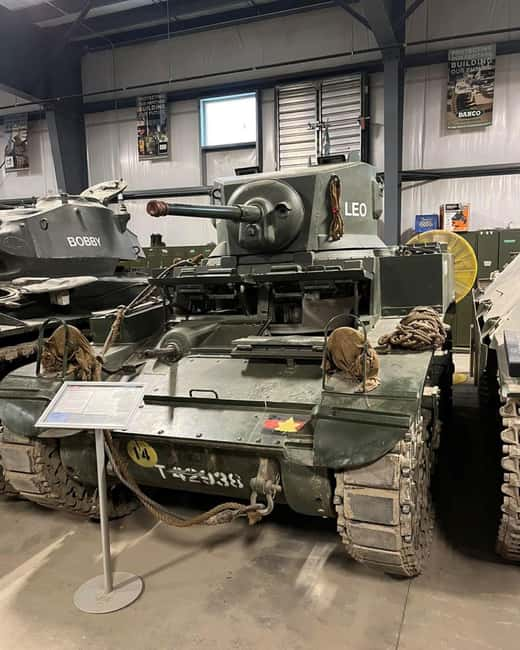
Book this if you want authentic, object-based learning with real operational vehicles. It is ideal for anyone interested in Canada’s armoured forces, military equipment, restoration work, or simply learning through stories told by Veterans.
It also works well for mixed groups. Even if one person is passionate about tanks and another is more casual, the museum’s education-first approach and the veteran conversations can make the experience land for more than just the hardware crowd.
You might want to skip or rethink if you are looking for a purely indoor museum with quick exhibits and minimal walking. This place is built around vehicles and demonstrations, and the experience rewards time and curiosity, not speed.
Should you book the Canadian Tank Museum admission?
Yes, if you want a value-priced day that mixes big operational vehicles, permanent exhibitions, active restorations, and veteran-guided context. The $10 per person price is especially easy to swallow when you consider you are getting a full-day museum format with meaningful explanations, not just a quick look around.
If you do not love history told through machines, you might feel it more as a niche interest. But if you are curious at all, go in with an open mind and ask questions. The museum is set up for that, and the people running the place clearly enjoy sharing what they know.
FAQ
Where is the Canadian Tank Museum?
The Canadian Tank Museum is in Oshawa, Ontario, Canada.
How much is admission?
Admission is listed at $10 per person.
How long is the experience?
The activity is valid for 1 day.
How many vehicles are in the collection?
The museum states it has over 170 operational military vehicles.
What is included with admission?
Admission to the Canadian Tank Museum and access to the permanent exhibitions are included.
Are food or drinks included?
No. Food or drinks are not included.
Will I be able to see restoration work?
Yes. The museum highlights active vehicle restorations.
Who provides the stories during the visit?
Veterans serve as tour guides and share their stories.
Is it possible to see a historical vehicle on the move?
Maybe. The experience notes you might even see a historical vehicle on the move.
How flexible is booking if my plans change?
You can reserve now and pay later, and you can cancel up to 24 hours in advance for a full refund. Starting times are based on availability.
Museums, compared.
 ★ 4.6Toronto: Royal Ontario Museum Admission TicketFrom $191,237 reviews
 ★ 4.5Royal Ontario Museum AdmissionFrom $19411 reviews
 ★ 4.6Toronto: Art Gallery of Ontario General Admission TicketFrom $21251 reviews
 ★ 5.0Britannia Mine Museum General AdmissionFrom $32233 reviews
 ★ 4.7Ottawa: Canadian War Museum AdmissionFrom $18232 reviews
 ★ 4.8Gatineau: Canadian Museum of History AdmissionFrom $20230 reviews
 ★ 4.6Ottawa: Canadian Museum of Nature AdmissionFrom $19226 reviews
 ★ 3.5Museum of Illusions Admission in TorontoFrom $26214 reviews
Browse the lists this tour appears in