
REVIEW · OLD QUEBEC CITY WALKING TOURS
Old Québec & French Canada Private History Walking Tour
Old Quebec gets personal fast. This private 2.5-hour walking tour connects the city’s most important French and British moments, and it does it by pointing out what you can actually see in the streets and buildings. You’ll move through Upper Town and Lower Town, then stop at sites tied to wars that shaped both Canada and the United States.
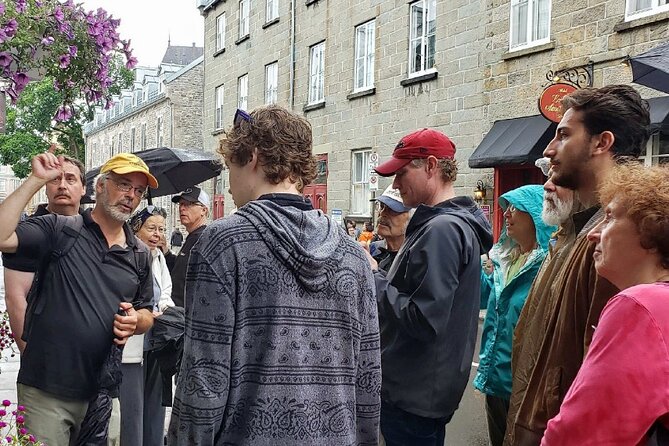
I really like how the guides bring the timeline to life. Guides such as Michel Perron are described as prepared with maps and materials, and the walk can get shaped around what your group cares about. I also love the fact it is private for up to 10 people, so you can ask questions and keep your pace.
One thing to plan for: this is still a walk with moderate fitness needs, and you will feel it if you are not used to hills, cobblestones, and stair connections between areas.
In This Review
- Key highlights worth prioritizing
- Old Quebec’s 400-year story in one walk
- Stop-by-stop: where French and British history collide, plus the 1775 turning point
- Military history museum as your warm-up
- The Fairmont landmark and the shift from fort town to iconic city
- The boardwalk, and forts remembered under it
- War monument, then the long memory of British Quebec
- Strongholds after the War of 1812, and cannon logic
- The ramparts and the city that controlled a route
- Legislature of the Province of Quebec: language and governance
- First school for girls and the education pathway for French Catholic missions
- The first hospital in North America, now linked to wellness and a museum
- Upper Town UNESCO core and Lower Town historic density
- Founding cathedral of Catholicism in French America
- Pulp and paper headquarters in 1929, and a symbol of resilience
- A Jamestown-and-Williamsburg type of site: Champlain’s founding spot
- Artisan shopping street design and the Old Port makeover vision
- Failed 1775 American invasion sites, featuring Arnold and Montgomery
- Rampart gate rebuilding and Lord Dufferin’s 1875 improvement plan
- Stairs linking Petit-Champlain and the Upper Town
- What makes the guide approach work: pacing, context, and real Q and A
- Price and value for a private group up to 10
- Who this tour fits best, and who might prefer a different plan
- Should you book this Old Quebec history walking tour?
- FAQ
- How long is the Old Québec & French Canada private history walking tour?
- What is the tour price and group size?
- Is pickup available?
- What language is the tour offered in?
- Is this a walking tour with physical demands?
- Do I need to print anything, or is there a mobile ticket?
- Is this a private experience?
Key highlights worth prioritizing
- Private group up to 10 means you get a slower, question-friendly pace.
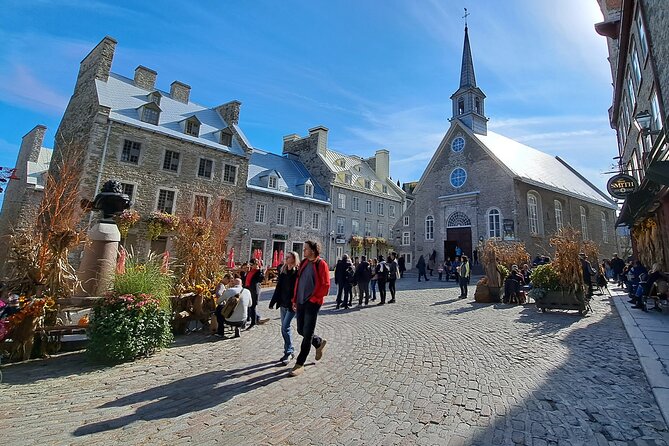
- Upper Town plus Lower Town covers both the UNESCO core and the historic port area.
- War-driven storytelling links architecture to real events, from King William’s War to 1775.
- Guides show their work with maps, timelines, and on-the-spot explanations (Michel Perron is a common name here).
- Hidden history underfoot is a theme, including forts and structures remembered through later rebuilding.
More walks inside the walls of Old Quebec
- Quebec City Walking Tour★ 5.0 · 4,716 reviews
- Quebec City: Guided Tour of Fairmont Le Château Frontenac★ 4.7 · 3,027 reviews
- Québec City: Guided Sightseeing River Cruise★ 4.4 · 3,000 reviews
- Half-Day Trip to Montmorency Falls and Ste-Anne-de-Beaupré from Quebec city★ 4.0 · 2,718 reviews
Old Quebec’s 400-year story in one walk
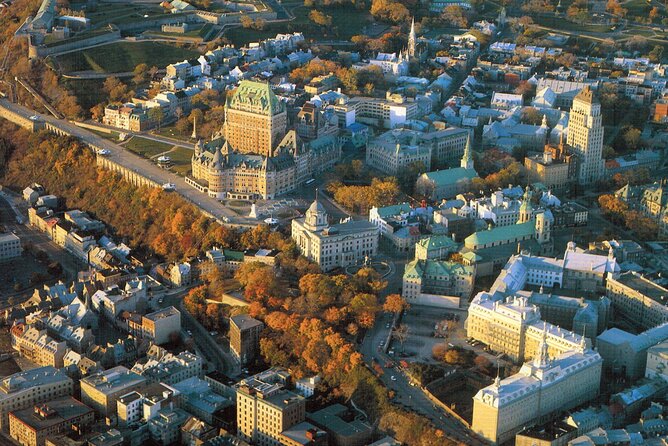
Old Quebec is one of those places where the streets feel like they’re still doing their job. In a short time, you can move from the era of French settlement into British rule, then connect both to the conflict history that spilled across the border. This tour keeps that thread tight by using landmark stops as checkpoints, not random photo ops.
You start in the military-history zone of Quebec City, then work toward the city’s famous icons and fortifications. Along the way, you get repeated reminders that power here was practical. Who controlled the St. Lawrence seaway controlled movement, trade, and reinforcements, and Quebec City kept being the hinge point.
Because it’s a private format, you can benefit in a very real way: if something sounds dry on paper, the guide can steer the story into what matters. Families in particular seem to like the approach because it stays grounded in what you are standing next to, not just names you have to memorize.
Stop-by-stop: where French and British history collide, plus the 1775 turning point
The itinerary is built like a timeline you can walk. Here is how the stops fit together, and what you should watch for at each one.
Military history museum as your warm-up
The first stop focuses on Canada’s military story and the major battles tied to Quebec City, reaching from early French settlers through 1776. This matters because it gives you a framework before you start seeing walls, towers, and monuments. Without that start, you can still enjoy the scenery, but you might miss the “why” behind the fortifications.
What to watch for: how the guide connects people, dates, and places. If you like context, ask how one battle changed what came next.
Quebec City at walking pace, a few more routes

The Fairmont landmark and the shift from fort town to iconic city
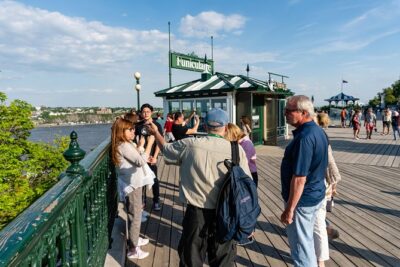
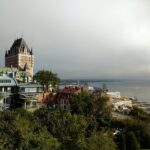
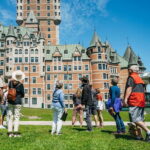
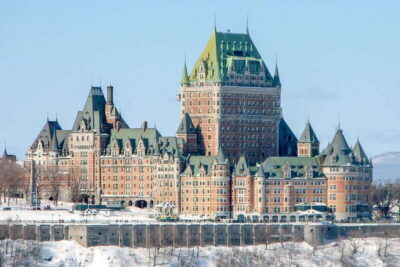
Next comes an icon of modern Canada, the 1893 Canadian Pacific Railway hotel building now known as the Fairmont. Even though it is not a battlefield, it is a reminder that Quebec City kept evolving. Canada’s national story is not only war and politics. It is also how the country presented itself, attracted visitors, and built a sense of national identity.
Practical tip: snap photos outside, then keep moving. This is one of those stops that is visually strong but best as a quick marker.
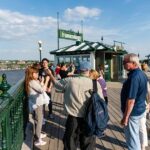
The boardwalk, and forts remembered under it
One of the more intriguing stops is the boardwalk area built after the creation of modern Canada. The key detail is that forts and the former Chateaux St-Louis National Park structures, including the castle of the French governors until the French and Indian War, are located under the boardwalk.
This is a powerful “wait, what?” moment. You are walking above layers of earlier city life. It helps explain why Quebec City feels like it has more than one city at a time.
What to watch for: the contrast between a clean modern walkway and the deeper fort logic underneath.
War monument, then the long memory of British Quebec
After that, you’ll hit a war monument tied to the French and Indian War. Then you move into a memory marker for British Quebec City, built around the Louisiana Purchase era, and described as 20 years after U.S. independence.
These stops are good for understanding cause and effect. The tour keeps pointing out that North American history is intertwined. What happened in Quebec City mattered to what happened in the British world, and it also mattered to the young United States looking north.
If you like the US connection: this is where the tour usually makes that relationship feel concrete.
Strongholds after the War of 1812, and cannon logic
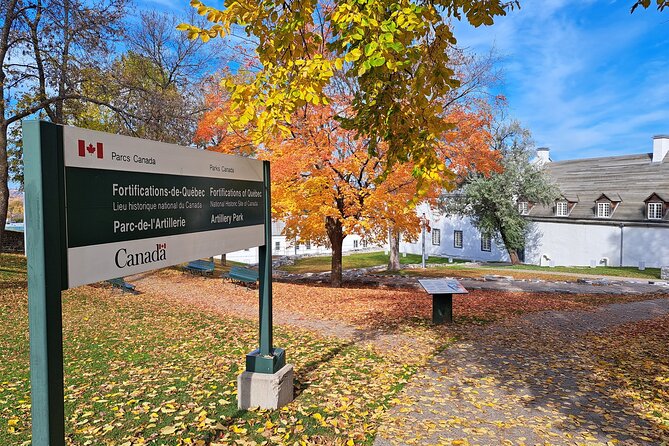
The itinerary then shifts forward to a stronghold added after the War of 1812, facing the American threat. Later, you get the iconic French and Indian War battlefield reminder, plus ramparts built to control the St. Lawrence seaway up to the center of the continent.
Finally, you visit a cannon platform added during King William’s War, when Frontenac defeated invaders led by William Phips.
What to watch for: the way the guide links geography to defense. Quebec City’s rules were set by water routes and high ground. When you stand near these points, the logic feels obvious.
The ramparts and the city that controlled a route
The tour includes stops tied to French and British ramparts meant to protect the strategic outpost. This section is not just about “old walls.” It is about how fort design reflects what the city needed to defend, and how long-term control of a waterway can shape centuries.
If you enjoy architecture, take your time here. You are looking at defensive strategy written into stone.
Legislature of the Province of Quebec: language and governance
One of the most important civic stops is the Legislature of the Province of Quebec, described as the only French-speaking province in Canada. Even with Montreal as the most populated city, Quebec City still holds the role of provincial capital.
This stop is a nice reset after all the military focus. It grounds you in how the French identity survived and re-emerged as an institutional reality.
First school for girls and the education pathway for French Catholic missions
Then the tour brings in education and faith institutions: a first school for girls in North America, and a museum focused on French art and Catholic education.
The story continues with a school for French Catholic missionaries sent across the continent. The present-day School of Architecture of University Laval and a high school are tied to this legacy.
Why this is valuable: it shows how culture traveled. The tour is not only about battles and treaties. It is also about how institutions shaped language, belief, and education far beyond Quebec City.
The first hospital in North America, now linked to wellness and a museum
Next you visit a first hospital in North America, now presented as a modern wellness center plus a museum. The emotional tone here is different from the war stops. It helps you understand that the city kept functioning, treating people, and learning even during intense periods.
What to pay attention to: the guide’s explanation of how long-lasting institutions evolve rather than disappear.
Upper Town UNESCO core and Lower Town historic density
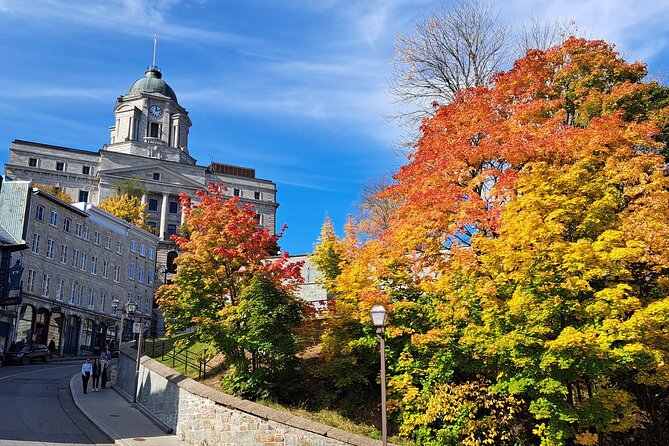
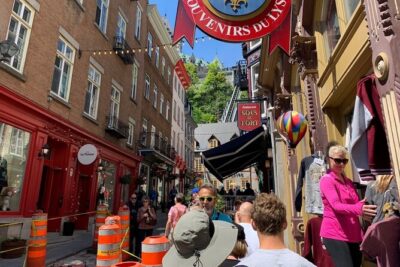
Mid-tour, you get two quick geographic anchors. “Upper Town” refers to the UNESCO world heritage zone within the walls of Old Quebec, with a high density of historical sites spanning about 400 years. “Lower Town” is linked to Place Royale, Petit-Champlain, and the Old Port district, also described with a 400-year concentration of sites.
This part matters because it gives you a mental map. Once you understand what “Upper” and “Lower” mean here, you can revisit the area later without getting lost.
Practical note: if you are prone to fatigue, consider pausing when you can. Cobblestones and elevation add up.
Founding cathedral of Catholicism in French America
A stop at the founding cathedral of Catholicism in French America and head of a diocese as large as French Louisiana, from Quebec City to New Orleans, ties religion back to North American scope.
It is one of the best reminders that Quebec City was not just a regional player. It influenced a huge space.
Pulp and paper headquarters in 1929, and a symbol of resilience
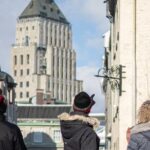
Later, the tour includes an iconic monument built in 1929 as a pulp and paper company headquarters. It is described as a symbol of the Great Depression and resilience of a 6-generation Welsh family now involved in high-end tourism.
Even if you are not into business history, this stop is a good reminder of Quebec City’s later layers. Old Quebec is not frozen. It rebuilt, rebranded, and found new roles.
A Jamestown-and-Williamsburg type of site: Champlain’s founding spot
Next comes a birthplace-focused stop: Quebec City’s founding site associated with Samuel de Champlain, described as Canada’s “Jamestown” and “Williamsburg” in one location. In 1608, Champlain founded Quebec City here, and the site has been continuously occupied since then.
This is a strong stop if you like early-settlement stories. It helps you picture the city as a living project from the start, not a sudden burst of history.
What to look for: how the guide ties that founding moment to later conflicts you’ve just been hearing about.
Artisan shopping street design and the Old Port makeover vision
The tour also visits shopping areas in Old Quebec, created with a vision to open high-end artisan shops in a devitalized Old Port area. This is a real clue that cities change even when they keep their historic “shell.”
You also stop at a museum with history exhibitions about Canada and Native Americans. This rounds out the story beyond European power struggles, and it is a good place to slow down.
Failed 1775 American invasion sites, featuring Arnold and Montgomery
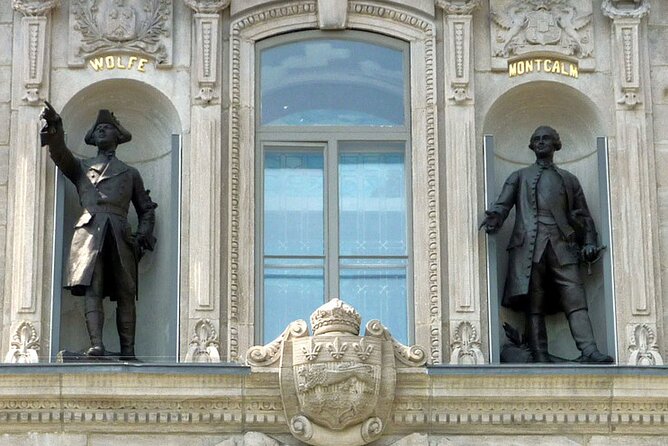
One of the most dramatic historical clusters in the walk is the area tied to the failed 1775 “American” invasion of Canada, where Benedict Arnold and Richard Montgomery were defeated. It is described as a man-made zone reclaimed from water across French, British, and Canadian periods, and it is also connected to an old financial district now known for art and antique shops.
Why it hits: you are standing in a place that literally changed physical use over time. The tour makes the past feel operational, not museum-only.
Rampart gate rebuilding and Lord Dufferin’s 1875 improvement plan
Then you see one of the three gates on the French rampart. The original military structures with narrow openings and doors were removed and later rebuilt to look medieval, influenced by Lord Dufferin’s 1875 Quebec Improvement plan and European historicist trends.
This stop is great if you like the idea that “historic” can be an intentional later design. It also helps explain why parts of Old Quebec can feel medieval even when some elements are much newer than they appear.
What to watch for: how the guide explains the difference between function and later appearance.
Stairs linking Petit-Champlain and the Upper Town
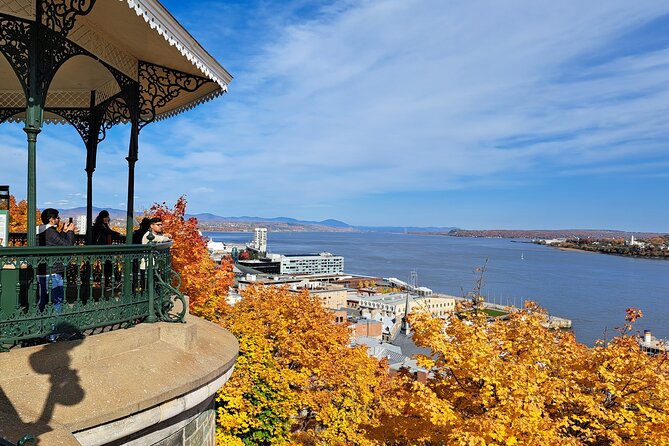
Finally, you’ll notice stairs linking Petit-Champlain and Upper Town. These are not just convenient. They’re part of why people experience Old Quebec in layers, with the Lower Town street life below and the Upper Town authority above.
If it is hot or icy, you will feel the climb. Take it slow, especially on cobbles.
What makes the guide approach work: pacing, context, and real Q and A
I like that the tour is designed to help you follow cause and effect. In this route, war and governance keep returning, but the guide also makes space for culture through education and faith institutions, then brings you back to the city’s lived spaces through shopping areas and museums.
The best version of this tour is when you treat it like a guided conversation. If you enjoy asking questions, this private setup makes it easier to steer. People who want an easy entry to Old Quebec usually like the quick orientation, and history buffs get enough detail to feel satisfied.
Guides such as Michel Perron are described as enthusiastic and flexible, with materials carried in a backpack and explanations supported by maps and timelines. That kind of preparation is a big deal because Quebec City’s story is layered. A good map can save you from feeling overwhelmed.
Price and value for a private group up to 10
The price is $213.92 per group for up to 10 people, for about 2 hours 30 minutes. That sounds like a lot if you travel solo, but it flips quickly when you split the cost among friends or family.
Here is how I think about value:
- Private routing beats “sit and wait” tours. You’re not trapped with a fixed bus schedule or stuck with a large group pace.
- You are paying for interpretation, not just walking. The guide turns walls, gates, and buildings into a readable story.
- Small group size protects your attention. You are more likely to get your questions answered, which makes the history stick.
If you are a couple, the total price may feel “premium,” but it can still be worth it if you want a guided orientation that helps you explore the rest of Old Quebec on your own afterward. If you are traveling with kids, a private format can also be a practical win because the pacing can bend to your group.
Who this tour fits best, and who might prefer a different plan
This tour is ideal if you want:
- a first visit to Quebec City where you want the story connected across French, British, and US-linked events
- a guide who can explain the city’s defensive logic and also its cultural institutions
- a manageable walking route that still covers a lot of key areas in Upper Town and Lower Town
It may be less ideal if:
- you want mostly indoor stops or mostly flat strolling
- you have very limited mobility or you struggle with stairs and cobblestones, since the route includes a stair link between Petit-Champlain and the Upper Town and also keeps you moving between distinct areas
The tour includes pickup if your hotel is in Old Quebec, with the guide meeting you 5 minutes before. If your hotel is not in Old Quebec, you’ll be helped with an easy meeting point.
Should you book this Old Quebec history walking tour?
Yes, I’d book it if you want a high-impact first pass through Quebec City that connects what you see with why it mattered. The strongest reason is the structure: you keep getting anchored to real places tied to events, from Champlain’s founding era to the 1775 invasion failure and the fortifications that followed.
I would also book it if you care about the cultural side, since the walk includes education and Catholic institutions like the first school for girls and the first hospital in North America, not just monuments.
The one caution is your comfort with walking and uneven historic streets. If that part is manageable for you, this tour is an efficient way to turn Old Quebec from a pretty postcard into a story you actually understand.
FAQ
How long is the Old Québec & French Canada private history walking tour?
It runs about 2 hours 30 minutes.
What is the tour price and group size?
The price is $213.92 per group, up to 10 people.
Is pickup available?
Yes. If your hotel is in Old Quebec, the guide meets you in the hotel lobby 5 minutes before tour time. If your hotel is not in Old Quebec, the operator will suggest an easy-to-find meeting point.
What language is the tour offered in?
It is offered in English.
Is this a walking tour with physical demands?
It’s listed as suitable for travelers with a moderate physical fitness level. The route includes movement between Upper Town and Lower Town areas.
Do I need to print anything, or is there a mobile ticket?
A mobile ticket is included.
Is this a private experience?
Yes. Only your group participates.
The Older Quebec City


Quebec City on Foot

Inside the Walls of Old Quebec

Just off the notebook: recent Quebec City write-ups
- Quebec City: Historic District Walking Tour (2h)
★ 5.0 · 4 reviews - Quebec City: Fat Bike Guided Tour
★ 4.7 · 4 reviews - Quebec City Photo Tour
★ 5.0 · 5 reviews - Experience île d’Orléans and the falls with a local guide
★ 4.5 · 5 reviews - Private Québec City walking tour with Lenny.
★ 5.0 · 5 reviews - Heritage Upper Town E-Bike Tour
★ 5.0 · 6 reviews
Old Quebec City Walking Tours, compared.
 ★ 5.0Quebec City Walking TourFrom $304,716 reviews
 ★ 4.7Quebec City: Guided Tour of Fairmont Le Château FrontenacFrom $193,027 reviews
 ★ 4.4Québec City: Guided Sightseeing River CruiseFrom $473,000 reviews
 ★ 4.0Half-Day Trip to Montmorency Falls and Ste-Anne-de-Beaupré from Quebec cityFrom $702,718 reviews
 ★ 4.5From Montreal: Quebec City and Montmorency Falls Day TripFrom $362,669 reviews
 ★ 4.8Old Quebec City: Grand Walking Tour with Private OptionFrom $292,609 reviews
 ★ 4.0Quebec City and Montmorency Falls Day Trip from MontrealFrom $362,437 reviews
 ★ 4.6Quebec City: Montmorency Falls with Cable Car RideFrom $192,392 reviews
Browse the lists this tour appears in