
REVIEW · WALKING TOURS
Montreal City Highlights 3 Hour Walking Tour | Gratuity-Based
Montreal looks different at walking speed. This 3-hour, gratuity-based highlights tour strings together downtown sights and Old Montreal classics with a personable English-speaking guide who shares history, architecture notes, and local tips as you go. One thing to plan for: the walk is on the brisk side, so you may want to stay close to the guide to catch every detail.
I like how much ground you cover for the money. At $5 per person (your payment here is a booking fee, not the whole guide cost), you get an organized route, a compact mix of neighborhoods, and a big menu of stops you can revisit later on your own.
In This Review
- Key highlights to look for
- Getting oriented in Montreal on foot
- Price and time, and what $5 plus tips really means
- Where you start and how the route strings together
- Dorchester Square to Victoria Square: parks, skyline landmarks, and quick breaks
- Place Ville-Marie to the World Trade Centre: business architecture in short doses
- Pointe-à-Callière: Montreal’s origins in a tight museum stop
- Old Montreal squares: d’Youville, Place d’Armes, and Place Jacques-Cartier
- Notre-Dame Basilica in 15 minutes: what to prioritize
- City Hall and Place des Montréalaises: civic Montreal and people stories
- Chinatown and the Underground City: two different ways to explore Montreal
- Complexe Desjardins to Place des Arts: modern downtown culture and momentum
- How to turn this highlights tour into a smart Montreal plan
- Who this tour suits best (and who should pick something else)
- Final thoughts: should you book this Montreal walking tour?
- FAQ
- How long is the Montreal City Highlights walking tour?
- How much does the tour cost?
- Are tips included in the $5 price?
- What language is the tour offered in?
- Where does the tour start?
- Where does the tour end?
- What is the maximum group size?
- Is admission included for the stops?
- What happens if the weather is bad?
- Can I cancel for a full refund?
Key highlights to look for
- A fast, efficient route that covers downtown, Old Montreal, and Chinatown in one go
- Personable guide energy, with lots of architecture and history pointers
- Icon stop pairs (squares plus skyline views, churches plus civic buildings)
- Affordable entry for first-time visitors, since you are paying a booking fee here
- Real neighborhood variety, from Place Ville-Marie to RÉSO (the Underground City)
Montreal at walking pace, a few more routes
- The Original Old Montréal Walking Tour by Guidatour★ 4.5 · 2,217 reviews
- Old Montreal Small-Group Walking Tour | Max 10 | by MTL Detours★ 5.0 · 2,088 reviews
- Montréal: The Original Old Montréal Walking Tour★ 4.8 · 911 reviews
- Old Montreal: Traditional Ghost Walk of the Haunted City★ 4.7 · 746 reviews
Getting oriented in Montreal on foot
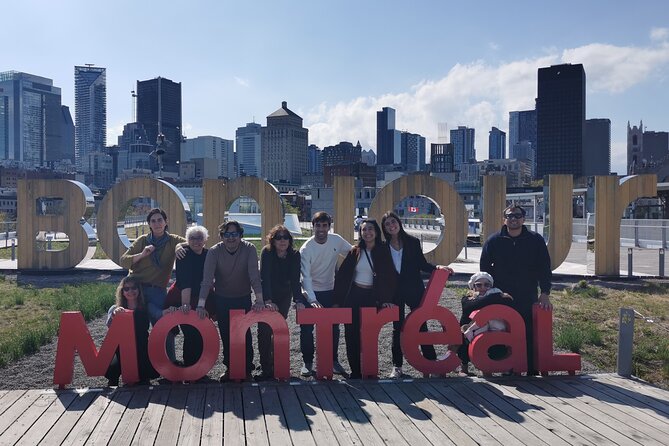
If this is your first time in Montreal, this tour is a practical way to get your bearings fast. You start downtown, fan into Old Montreal, then end back toward a performing arts area. By the time you finish, you should be able to picture how neighborhoods connect, where the action clusters, and what you want to see longer.
I also like the structure. You are not wandering randomly, and you are not stuck in one single area either. Each stop is short, but the guide’s job is to give you enough context to make your own follow-up choices later.
One more benefit: the group size max is 32, so it still feels like a shared walk instead of a huge crowd shuffle. Reviews also hint that solo travelers often enjoy the social rhythm of moving together.
Price and time, and what $5 plus tips really means
Let’s talk value without the fluff. Paying $5 for a 3-hour guided walk is a bargain, especially because you are also getting free admission listed for multiple stops. The catch is that gratuities are not included, and the guide work runs on tips.
So here is the smart way to think about it: your payment buys the organized experience, and tips are how you show appreciation for the guiding. If you care about great storytelling, you will likely want to budget for that.
Time-wise, plan for about 3 hours and expect it to feel active. Past feedback mentions a fast pace, and that matches the itinerary style: quick orientation stops, photo breaks, and short explanations.
Where you start and how the route strings together
The tour starts at Dorchester Square, at 2903 Rue Peel in downtown Montreal. The end point is Place des Arts, at 175 Rue Sainte-Catherine O. You will also be near public transportation, which matters because you can easily hop on and off for dinner afterward.
The route is basically a line across the city’s core. Early stops set the scene in downtown parks and landmark squares. Midway, you switch gears into Old Montreal atmosphere and church-and-civic landmarks. Then you move toward the Underground City concept and modern downtown complexes, finishing at a cultural hub.
For me, the payoff of a route like this is simple: you stop guessing. Montreal has layers, and this walk gives you a guided way to notice them.
Wider sweeps across Montreal
Dorchester Square to Victoria Square: parks, skyline landmarks, and quick breaks
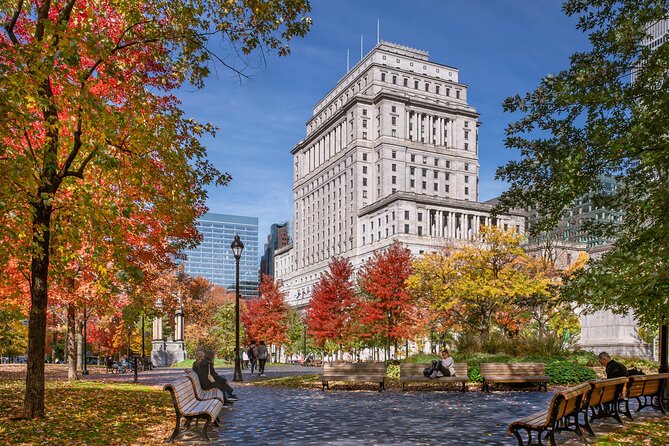
You begin at Dorchester Square, 1555 Rue Peel, a historic downtown urban park. The nice part here is the contrast, green space inside a dense city core. The square has roots tied to the late 19th century, and your guide uses that kind of detail to show how Montreal grew over older ground.
Next is Place Ville-Marie. This is where the city’s modern downtown energy is easy to read in one glance, including that cruciform skyscraper look. You also get a feel for the area as a hub for shopping, dining, and cultural options.
Then you step into Victoria Square, another central square packed with public-space calm. Even with only a few minutes, it works because you are learning what Montreal does well: turning traffic and concrete into places where people linger.
Possible consideration here: because these are outdoor stops, weather matters. If it is hot or rainy, keep water handy and plan for quick movement between points.
Place Ville-Marie to the World Trade Centre: business architecture in short doses
After you settle into the downtown square rhythm, you head to Montreal World Trade Centre. This part of the tour is about modern city identity and how business space shapes the streets around it. The stop is brief, so treat it like an orientation checkpoint, not a deep architecture lecture.
Then you move to Royal Bank Tower, an Art Deco icon that helped define Montreal’s skyline story. The value of a stop like this, even in 15 minutes, is that you start noticing design choices. You learn how to spot the look of an era, and you can carry that skill to other buildings you see later.
If you love photography, these are good moments to frame buildings with squares and street geometry. If you do not, just use the time to lock in names and locations.
Pointe-à-Callière: Montreal’s origins in a tight museum stop
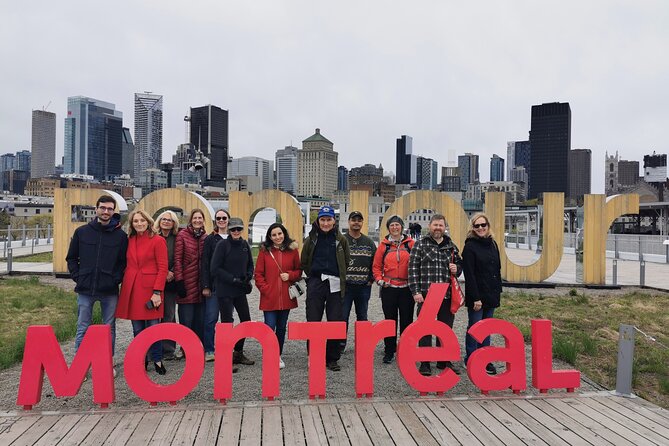
Next comes Pointe-à-Callière, Montreal Archaeology and History Complex. This is a top reason to do the tour early or mid-itinerary: it gives you a birthplace perspective on the city. Since the stop lists free admission, you have a rare chance to connect stories you heard outdoors with artifacts and interpretive exhibits.
The museum focus is broad, covering from Indigenous roots through later Montreal development. Even if you only skim in the time given, you are walking away with a more grounded sense of what you are looking at across the city.
The tradeoff is time. A 5-minute museum stop is not meant to replace a full visit. It is meant to act like a spark, so you know where to return if something truly grabs you.
Old Montreal squares: d’Youville, Place d’Armes, and Place Jacques-Cartier
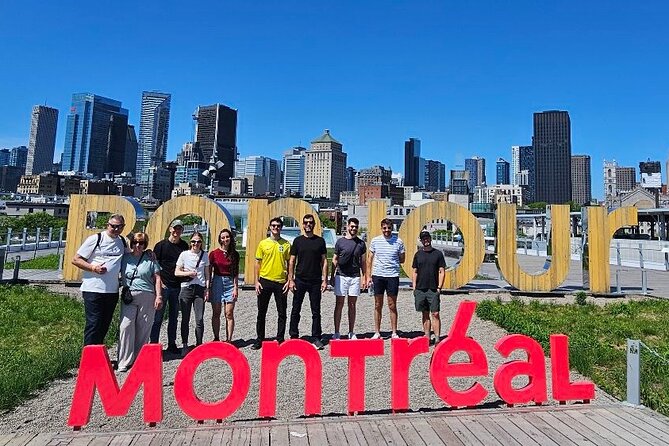
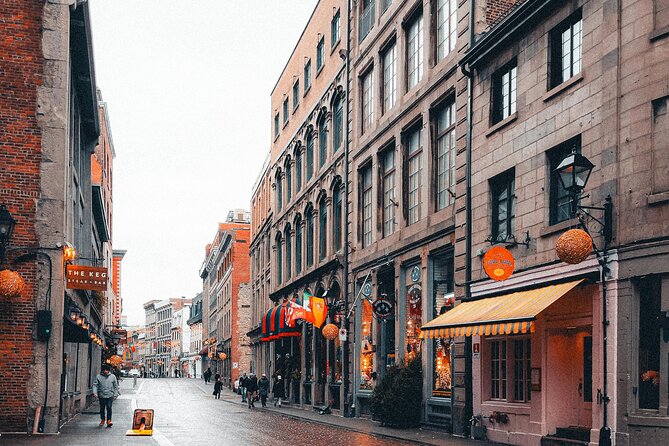
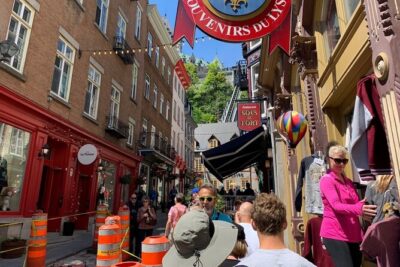
Old Montreal is where you feel Montreal slow down. The tour hits three major square-style stops in this stretch, and each one helps you understand the neighborhood layout.
First is Place d’Youville. This historic square is linked to the charm of cobblestone streets and heritage buildings nearby. In a short stop, you get the right vibe: a place people use, not just a place to look at.
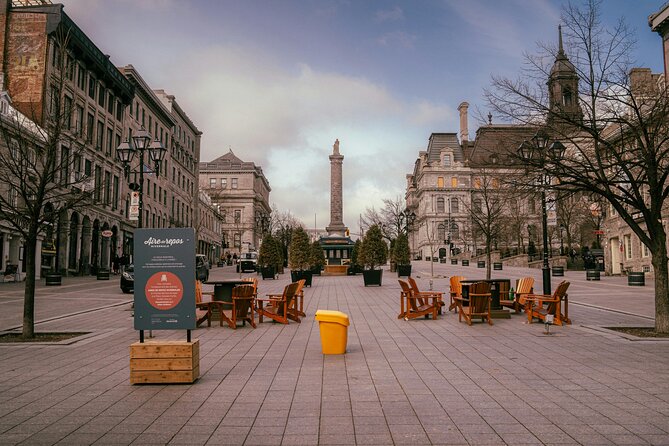
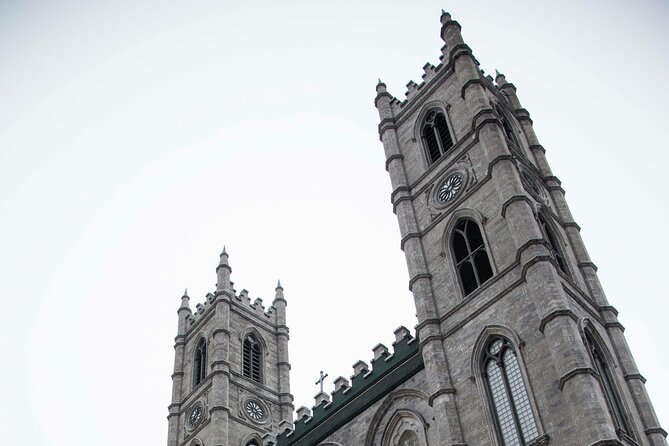
Then you reach Place d’Armes, another central square surrounded by famous architecture, including the prominent area around Notre-Dame Basilica. Even if you do not go inside yet, the square sets the stage for the religious and civic blend that defines this part of town.
Finally, Place Jacques-Cartier brings you to a lively cafe-and-street-performances feel. It is a good spot to notice how Montreal uses public squares as social rooms. If you are hungry or tired, this is also the kind of stop where you can naturally pause and plan your next meal.
Notre-Dame Basilica in 15 minutes: what to prioritize
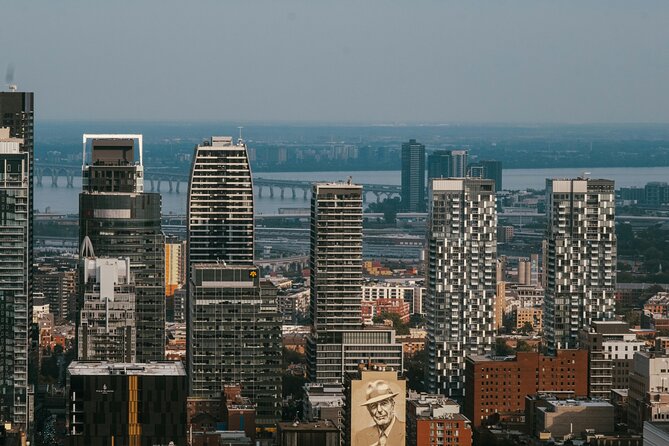
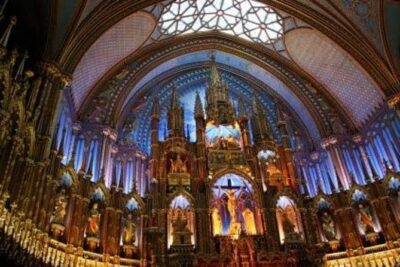
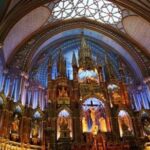
The tour includes a stop at Notre-Dame Basilica with listed free admission time. This is one of those landmarks where the outside is already famous, but the inside is where the big wow factor usually lands.
With limited time, I suggest focusing on three things as you enter:
- Stained-glass light effects
- Woodwork details
- The overall scale and layout
Even if you cannot see everything, getting those key visual impressions will make the building stick in your memory. Also, since your guide’s explanations are part of the stop, you should come away with names and context you might miss if you just walked in on your own.
One practical note: churches can mean lines, quiet rules, and people moving slowly. You will likely feel the time pressure here, so keep your expectations realistic.
City Hall and Place des Montréalaises: civic Montreal and people stories
After the basilica area, the tour shifts back to civic identity with Montreal City Hall. You get an exterior look at the Second Empire style architecture, and it functions as a reminder that Old Montreal is not only about churches. It is also about government, public life, and how the city presents itself.
Then you head to Place des Montréalaises, a modern square celebrating the contributions of women to Montreal’s history and culture. Even in a short stop, this is valuable because it broadens the story beyond the usual architecture-and-conquest narrative. It is a reminder that cities evolve through people in all sorts of roles.
If you like public art and thoughtful design in outdoor spaces, this is a nice palate cleanser after the intensity of the church stop.
Chinatown and the Underground City: two different ways to explore Montreal
The next stretch adds cultural texture. Chinatown is a bustling neighborhood with colorful streets and plenty of Asian shops and food options. With only about 15 minutes, you will not fully explore, but you can still learn what to target later. Look for the kinds of storefronts and menu styles that match your tastes.
Then the tour shifts to the Underground City (RÉSO). This network is useful for a practical reason: it helps you get around downtown without fighting winter weather. The stop is short, but it is a strong introduction to how Montreal’s underground routes connect shopping centers, passageways, and everyday life.
This is one of those stops I especially like if you are traveling in shoulder season or winter. It gives you options, so you do not feel locked into a single street-level plan.
Complexe Desjardins to Place des Arts: modern downtown culture and momentum
The final leg heads to Complexe Desjardins, a big mixed-use complex in downtown Montreal. This stop works as a bridge between sightseeing and real life. You see how offices, shopping, and cultural spaces stack together in one location, which can help you map where to eat or rest between activities.
Then you finish at Place des Arts, the city’s performing arts complex. Even if you are not attending a show, it is a fitting ending because it is a known cultural landmark. Plus, ending here puts you near a lively area where you can easily keep exploring after the tour.
How to turn this highlights tour into a smart Montreal plan
The best way to use a tour like this is not to treat it as the whole trip. Treat it as your routing tool.
Here is how I would do it:
- After the walk, return to whatever stop you found most compelling. If the basilica grabbed you, plan a longer visit. If Pointe-à-Callière sparked questions, schedule proper museum time.
- Use the square stops to choose dinner zones. Squares like Place d’Armes or Jacques-Cartier often cluster restaurants and cafes nearby.
- If weather is iffy, keep one flexible indoor plan ready. The Underground City stop makes that easier to do.
Also, pay attention to pace. If you tend to miss details when you are walking fast, position yourself closer to the guide. That simple move helps you hear better and catch the stories that make landmarks more meaningful.
Who this tour suits best (and who should pick something else)
This walking tour is ideal if you want a first-pass overview of Montreal’s main sights in a short time. It is great for:
- First-timers who want a structured route
- People who like architecture and city storytelling
- Solo travelers who enjoy meeting others and keeping the day moving
- Travelers who want ideas for return visits without committing to a full museum day
It might be less ideal if you prefer slow, sit-down sightseeing or if you need a lot of time at each major attraction. The itinerary is built for quick, organized stops, so you should be comfortable with a brisk walk and brief looks.
Final thoughts: should you book this Montreal walking tour?
Yes, I think you should book it if you want an efficient way to get oriented and you like your sightseeing with context. The route covers the big-name contrasts Montreal is known for, downtown to Old Montreal to Chinatown and the Underground City idea, all in about three hours.
Just go in with the right expectations. Bring comfy shoes, plan to move at a good pace, and budget for tips since the guide work runs on gratuities. If you do that, you will likely leave with a clear mental map and a short list of places you want to return to longer.
FAQ
How long is the Montreal City Highlights walking tour?
It runs for about 3 hours.
How much does the tour cost?
The price is $5.00 per person, and it is gratuity-based.
Are tips included in the $5 price?
No. Gratuities are not included, and the fees paid here are booking fees.
What language is the tour offered in?
The tour is offered in English.
Where does the tour start?
It starts at Dorchester Square, 2903 Rue Peel, Montréal, QC H3B 4P2.
Where does the tour end?
It ends at Place des Arts, 175 Rue Sainte-Catherine O, Montréal, QC H2X 3X5.
What is the maximum group size?
The maximum group size is 32 travelers.
Is admission included for the stops?
The stop details list admission as free for each listed location.
What happens if the weather is bad?
This experience requires good weather. If it is canceled due to poor weather, you will be offered a different date or a full refund.
Can I cancel for a full refund?
Yes. You can cancel up to 24 hours in advance for a full refund.
The Whole of Montreal in a Day



Montreal on Foot


Just off the notebook: recent Montreal write-ups
- Secret Food Tours: Montreal – Jean-Talon & Little Italy
★ 4.0 · 4 reviews - Montreal to Quebec City Tour with Private Transportation
★ 5.0 · 4 reviews - Montreal: Iconic Landmarks All-Inclusive VIP Experience
★ 4.7 · 4 reviews - A Walking Tour of Old Montreal
★ 3.8 · 4 reviews - Day at Mont-Tremblant National Park
★ 4.0 · 5 reviews - Old Montreal: Self-Guided Tour from Place D‘Armes to Old Port
★ 5.0 · 5 reviews
Walking Tours, compared.
 ★ 5.0Quebec City Walking TourFrom $304,716 reviews
 ★ 4.8Old Quebec City: Grand Walking Tour with Private OptionFrom $292,609 reviews
 ★ 4.5The Original Old Montréal Walking Tour by GuidatourFrom $262,217 reviews
 ★ 5.0Old Montreal Small-Group Walking Tour | Max 10 | by MTL DetoursFrom $442,088 reviews
 ★ 5.0Gastown Historic Walking Food TourFrom $1161,863 reviews
 ★ 5.0Old Quebec Classique Walking Tour with FunicularFrom $421,317 reviews
 ★ 5.0Vancouver Lost Souls of Gastown Walking TourFrom $291,273 reviews
 ★ 4.6Quebec: Crimes of New France Animated Walking TourFrom $20926 reviews
Browse the lists this tour appears in