
REVIEW · TORONTO WALKING & FOOD TOURS
Kensington Market and Chinatown: A Self-Guided Tour
Audio walks make street stories easy to follow. This self-guided smartphone tour takes you through Kensington Market and Toronto Chinatown while the narration explains what you are seeing. I like that it uses a lifetime access format, so you can replay it later without rushing.
Two big wins here: you can beat the crowds at your own pace, and you get guided stories right on the sidewalk, not in a stuffy group setting. The main thing to watch is simple, but important: you have to bring your own smartphone and headphones, and museum entry is not included.
In This Review
- Key highlights worth your time
- Why this Kensington Market and Chinatown audio route works
- Getting oriented at Grange Park (your start point)
- Art Gallery of Ontario area: big museum presence without committing to a ticket
- Kensington Market: why the neighborhood feels like a living neighborhood, not a theme park
- Toronto Chinatown sidewalk life: herbs, dried seafood, and street markets
- Grange Park again, plus the Denison family story you can actually picture
- OCAD University area: art education as part of the downtown flow
- Kiever Synagogue: how one building connects to a wider neighborhood story
- How to use the VoiceMap app smoothly (so you do not get stuck)
- Timing, comfort, and the walking reality
- Price and value: $9.99 for stories you can replay
- Who should book this audio tour, and who should skip it
- Should you book the Kensington Market and Chinatown self-guided tour?
- FAQ
- How much does the Kensington Market and Chinatown audio tour cost?
- How long is the tour?
- Is the tour available in English?
- Can I listen to the tour without cell service?
- What do I need to bring?
- Where does the tour start and end?
- Do I need to buy museum tickets along the route?
- What if I cancel?
- Is this tour private?
Key highlights worth your time
- Lifetime access, so the tour never expires in the VoiceMap app
- Accurate step-by-step navigation with GPS tracking and easy directions
- Offline audio and maps, useful when cellular service gets spotty downtown
- Two signature neighborhoods on one route, Kensington Market and Chinatown
- Stops that add context, from the Art Gallery of Ontario area to OCAD University and Kiever Synagogue
More of Toronto covered on foot and by fork
- Toronto’s International Food Tour – Kensington Market★ 5.0 · 786 reviews
- Toronto: St Lawrence Market Food Tour with 6 Food Tastings★ 5.0 · 685 reviews
- Toronto’s First Food Tour: Taste the World in Kensington Market★ 5.0 · 526 reviews
- Downtown Toronto Bike Tour★ 5.0 · 336 reviews
Why this Kensington Market and Chinatown audio route works
Toronto street life is best when you can slow down. This tour is designed for that. You walk for about 1 hour 15 minutes, and you get an audio guide that keeps moving you from sight to sight without forcing you into a group pace.
At $9.99 per person, the value is the ability to learn while you stroll. Instead of paying for separate guided services, you get one affordable pass that covers stories across two major neighborhoods, plus key nearby landmarks. And because it is self-guided, you can spend a little longer where you are drawn in, then catch up with the route when you are ready.
The other reason I like this format is practical. You will often find the best context for Kensington and Chinatown when you can stop right where the action is. The narration meets you on the sidewalk, as produce piles up outside storefronts and historic buildings shape the street corners.
Getting oriented at Grange Park (your start point)
The walk begins at the Grange Park Dog Off Leash Area on Beverly Street and McCaul Street. If you have never been in this part of downtown, this is a smart starting zone. It is a recognizable public space, and it helps you get your bearings before the route turns into denser neighborhood streets.
Grange Park itself is more than a break in the city grid. The park lends its name to the nearby Grange Park area, and it connects to the wider story of how this part of Toronto changed over time. Even if you do not stop for long, you will feel the transition as the route shifts from open space into commercial streets and cultural blocks.
Tip that saves time: stand still for a moment at the start point and confirm your phone audio is playing and your map is locked in. Once you are moving, you do not want to be troubleshooting controls while shops and sidewalks are busy.
Art Gallery of Ontario area: big museum presence without committing to a ticket
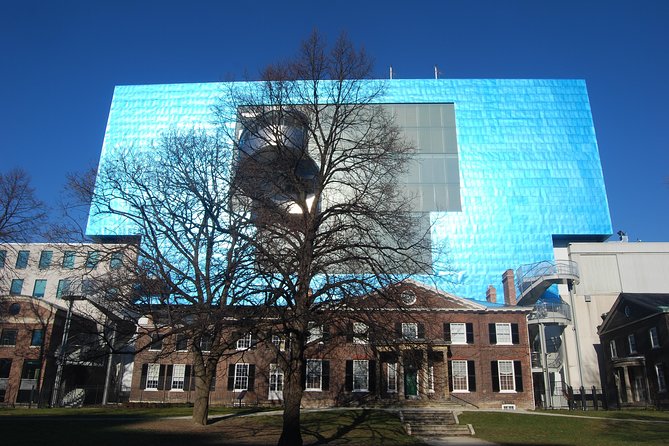
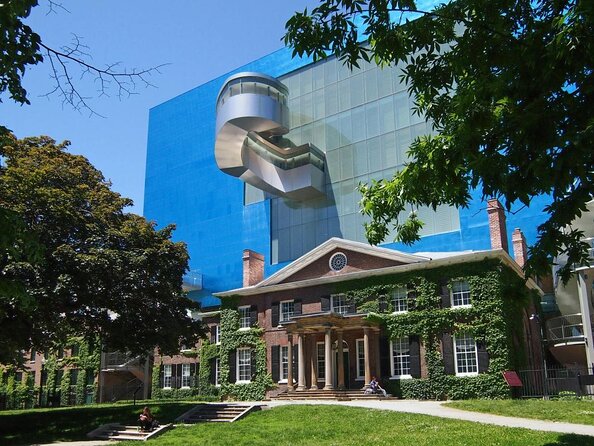
One of the first major landmarks on the route is the Art Gallery of Ontario. The narration gives you a sense of scale: the museum holds close to 95,000 works, with collections spanning from the first century to the present day. It also has a huge physical footprint, with 45,000 square metres of space, making it one of the largest galleries in North America.
Here is the key value for your walk: you get the museum story without needing to plan a museum visit. Tickets are not included, so this is about understanding the place as part of the neighborhood, then continuing onward.
If you enjoy art but your schedule is tight, this is a nice compromise. You are not locked into an entrance time. You can look at the setting, absorb the background, then move into the streets where the city’s day-to-day energy shows up.
More market mornings around Toronto



Kensington Market: why the neighborhood feels like a living neighborhood, not a theme park
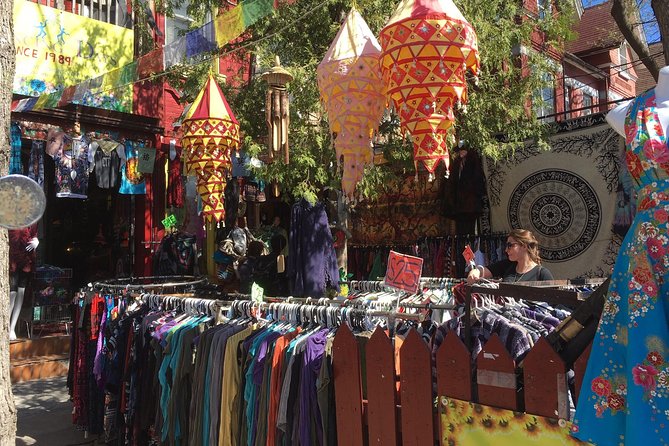
Kensington Market is where the route turns from landmarks into daily life. The narration points out that the area is known for its historic multicultural character and a dense mix of over 240 shops, restaurants, bars, and cafes.
What makes this stop especially worthwhile is the detail about the people behind the scene. Kensington has a large community of writers, artists, and musicians living alongside an immigrant community. That matters because it explains why the market does not feel like a one-note shopping street. You are walking through a place with creativity layered into everyday routines.
As you move through the market zone, look for small cues. Shopfront signage, the mix of product types, and the way streets tighten or open up all affect how the neighborhood reads. This is also where you are most likely to find snackable options, but the tour itself does not include food. Plan to pause only when something genuinely catches your eye.
A practical note: Kensington streets can feel longer than you expect, mainly because there are plenty of tempting side stops. Build in a little buffer so you can enjoy without worrying you are falling behind.
Toronto Chinatown sidewalk life: herbs, dried seafood, and street markets
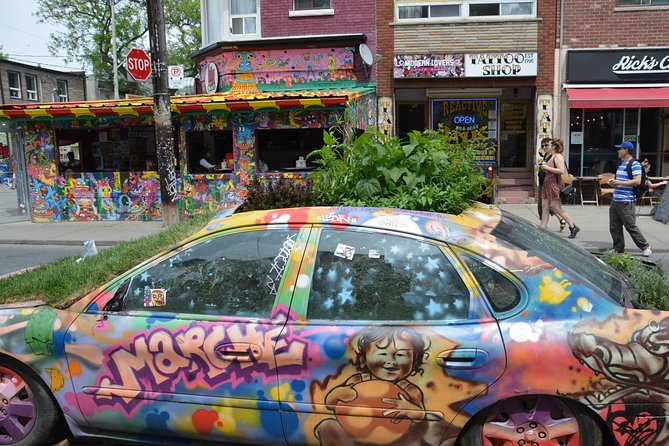
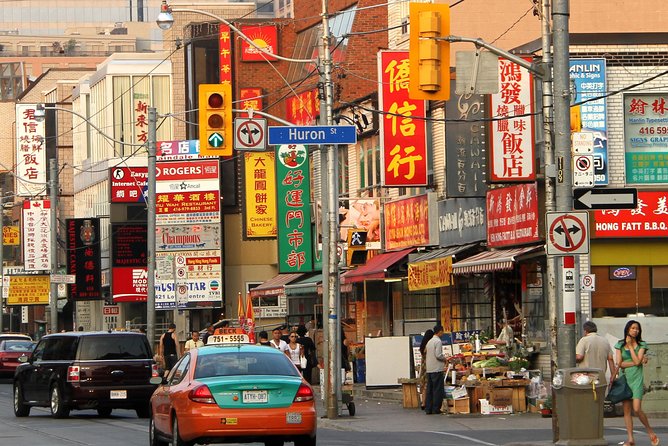
Then the route shifts into Chinatown. On most days, the story here is not just what is inside shops, it is what spills onto the sidewalk. You will pass produce markets and grocers with piles of herbs, fruits, vegetables, and dried seafood.
This is where I think an audio tour beats a quick photo stop. The narration helps you notice patterns you might otherwise skim over. For example, markets in Chinatown often signal seasonal rhythms through what is stacked outside. Dried seafood displays also give you a sense of how ingredients travel from shop shelves into home kitchens.
You should also expect that some vendors sell from grocery carts or pop-up tables. That changes the feel of the street. It can get crowded at peak moments, but it also creates a vivid sense of commerce and community.
If you are planning to take photos, give yourself time to wait for gaps in pedestrian traffic. And if you want to sample something, keep it simple. You are on a walking route, and long food breaks can eat up the timing.
Grange Park again, plus the Denison family story you can actually picture
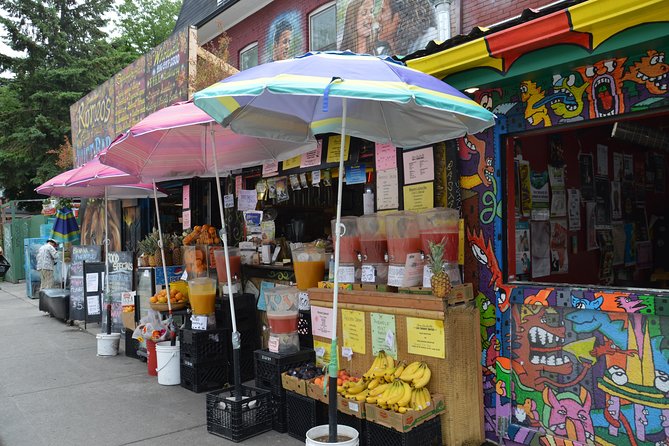
A nice twist of the route is how it reconnects with Grange Park themes while you learn the land’s past. The narration ties Grange Park to The Grange, a manor that was expanded and eventually became part of the Art Gallery of Ontario story.
It also includes a historical detail that makes the geography feel tangible. The land that Kensington and this park area sit on was originally owned by the Denison family. George Taylor Denison used the area now associated with the park as a parade ground for his volunteer cavalry troop during the Rebellion of 1837.
This is the kind of fact that is easy to forget in a museum brochure. On a walk, it sticks because you are looking at the exact setting as the story plays. Even if you are not a history buff, you will likely find yourself looking at the park and nearby streets as if they had a different job back then.
OCAD University area: art education as part of the downtown flow
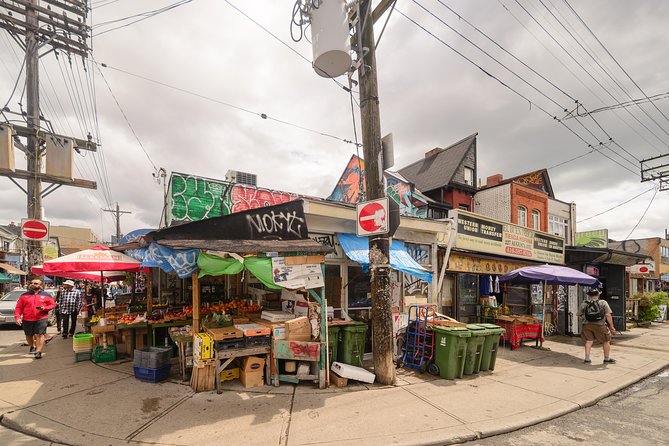
Next, the route heads toward OCAD University. The narration highlights that it is the largest and oldest educational institution for art and design in Canada. You also learn that the school offers courses through faculties including Art, Design, Liberal Arts and Sciences, plus alternative programs.
Why this matters on your walk: it gives the neighborhood a reason for its creative tone beyond just markets and murals. When an art school anchors an area, you often see the connection between students, studios, events, and everyday street life.
This is also where the route helps you read the city as a whole. You are moving from major museum presence into a market district, then into a strong cultural neighborhood, and then into a modern education hub. That flow is one of the route’s strongest points, because it shows how different pieces of Toronto overlap in real space.
If you are the type who likes to learn how cities function, take a few extra minutes here. Even without stepping inside any building, you can catch the shift from commercial storefront energy to campus-adjacent rhythm.
Kiever Synagogue: how one building connects to a wider neighborhood story
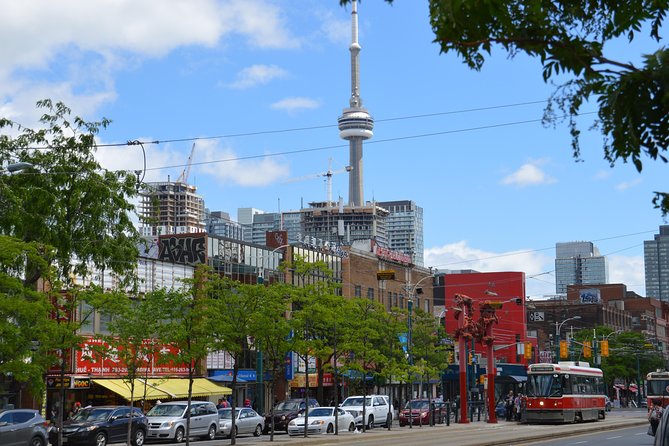
The walk includes the Kiever Synagogue. The narration explains that the congregation originally resided in the Ward, then purchased the property in 1914 from the Denison family estate. They built a new synagogue there.
This stop gives balance to the route. Kensington and Chinatown can dominate your attention, but this religious landmark adds depth. It reminds you that cultural neighborhoods are not only about markets and food, they are also about long-term community roots, building decisions, and identity.
As you pass by, look at the building in its street context. The way a synagogue sits among surrounding structures helps you understand how Toronto grew and rearranged itself over time. You do not need an interior visit to get value, since the tour is about storytelling while you walk.
How to use the VoiceMap app smoothly (so you do not get stuck)
This tour runs through the VoiceMap app on both Android and iOS, and you get offline access to audio, maps, and geodata. That is useful because downtown can sometimes be spotty, especially if you are hopping between market lanes.
Before you start, do this once:
- Download the tour audio and offline maps in advance.
- Plug in headphones, or at least ensure your phone volume is up.
- Check that you have enough battery for about 90 minutes, plus any extra wandering time.
A standout point from the experience is the way navigation feels dependable. The GPS tracking is described as accurate, and the directions are easy to follow. That combination makes the walk less stressful, particularly if you are alone or you do not love figuring out routes on the fly.
Also, remember that this is a self-guided experience. There is no ticket line for you to manage and no group to wait for. You can pause when a sidewalk display catches your attention, then resume when you are ready.
Timing, comfort, and the walking reality
The route clocks in at about 1 hour 15 minutes. That said, this kind of neighborhood walk tends to stretch when you stop for photos, reading storefronts, or grabbing a snack. That is normal. The best mindset is to treat the route like a guided outline, not a strict race.
Start at Grange Park, then follow the flow through Kensington Market and Chinatown, and finish near College Street and Augusta Avenue. That end point is convenient if you plan to connect to transit or keep walking into other nearby neighborhoods afterward.
Wear comfortable shoes. Sidewalks are uneven in older parts of Toronto, and you will be moving through areas where people line up at shops. If you are sensitive to crowds, consider starting earlier in the day or during calmer hours.
Language support is English, and service animals are allowed. Most travelers can participate, which matters if you are deciding whether this will feel manageable day-to-day.
Price and value: $9.99 for stories you can replay
At $9.99 per person, the big value is that you get lifetime access. Many guided options are time-specific. This one can stick around in your app, so you can revisit it the next time you are in Toronto.
You are also paying for something practical, not just entertainment. Offline audio means you can focus on the streets, not your data plan. And because it covers two big areas plus key nearby landmarks, it can feel like you are stitching together multiple mini tours into one walk.
What is not included is also important for value comparison. Smartphone and headphones are not included, transportation is not included, and food and drink are not included. Tickets or entrance fees to museums or attractions along the way are also not included.
To me, this means you should budget a small amount for snacks if you want them, but keep the rest simple. This is a walk-first tour, and your main cost is the audio.
Who should book this audio tour, and who should skip it
You should book this tour if:
- You want a low-cost way to understand Kensington Market and Chinatown without committing to a pricey guided group.
- You like learning while you walk, using turn-by-turn directions.
- You want the flexibility to stop when you find something interesting.
You might skip it if:
- You do not like self-guided routes and prefer a person to manage timing.
- You are expecting museum entry included. The route highlights landmarks and stories, but tickets are not included.
- You do not have headphones available, since you will need your own.
Should you book the Kensington Market and Chinatown self-guided tour?
Yes, I think this is a strong pick if you want Toronto culture in a walkable format and you like using your phone as a guide. The standout reasons are the lifetime access, the offline audio, and the way navigation is described as accurate and easy.
If you are visiting for a short time and want to cover two major neighborhoods without paying for multiple tours, this is the kind of practical add-on that can make your day feel fuller.
FAQ
How much does the Kensington Market and Chinatown audio tour cost?
It costs $9.99 per person.
How long is the tour?
The tour takes about 1 hour 15 minutes.
Is the tour available in English?
Yes, the tour is offered in English.
Can I listen to the tour without cell service?
Yes. It includes offline access to the audio, maps, and geodata in the VoiceMap app.
What do I need to bring?
You need your own smartphone and headphones. Transportation and food or drink are not included.
Where does the tour start and end?
It starts at the Grange Park Dog Off Leash Area at Beverly Street and McCaul St, and it ends at College St and Augusta Ave.
Do I need to buy museum tickets along the route?
No. Tickets or entrance fees to museums or other attractions are not included.
What if I cancel?
The experience is non-refundable and cannot be changed for any reason.
Is this tour private?
Yes. It is a private activity, and only your group participates.
Easier With a Guide





Toronto Market Mornings



Toronto on Foot and by Fork

Just off the notebook: recent Toronto write-ups
- From Toronto: Niagara Falls Guided Day Tour with Boat Cruise
★ 4.2 · 4 reviews - Toronto: Niagara Falls Day Tour with Niagara City Cruise
★ 4.5 · 4 reviews - Toronto Islands: Sunrise Breakfast Bicycle Tour
★ 5.0 · 4 reviews - Kensington Market ‘Taste the World’ Food Tour
★ 4.5 · 4 reviews - Toronto: Great White North Food Tour
★ 5.0 · 4 reviews - From Toronto: Customizable Guided Day Trip to Niagara Falls
★ 5.0 · 4 reviews
Toronto Walking & Food Tours, compared.
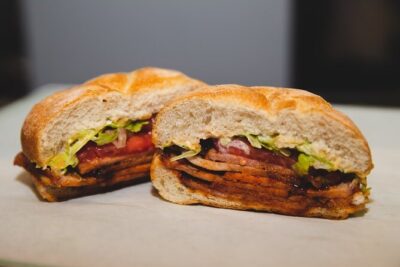
 ★ 5.0Toronto’s International Food Tour – Kensington MarketFrom $82786 reviews
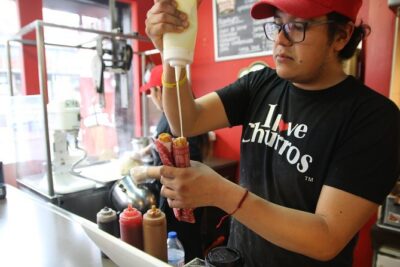
 ★ 5.0Toronto: St Lawrence Market Food Tour with 6 Food TastingsFrom $73685 reviews
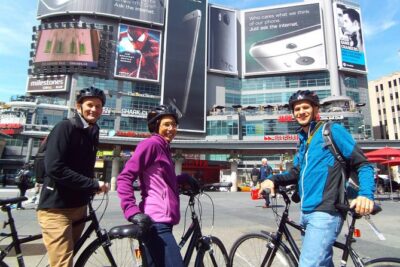
 ★ 5.0Toronto’s First Food Tour: Taste the World in Kensington MarketFrom $74526 reviews
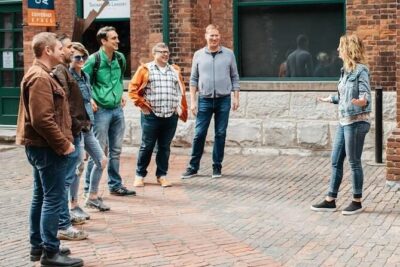
 ★ 5.0Downtown Toronto Bike TourFrom $93336 reviews
 ★ 5.0Toronto Distillery District Walking TourFrom $21327 reviews
 ★ 4.5Old Town Toronto Highlights 3 Hour Walking Tour | Gratuity-BasedFrom $5290 reviews
 ★ 4.8Toronto: Distillery District Historic Walking TourFrom $20267 reviews
 ★ 5.030-Minute Distillery District Segway TourFrom $36214 reviews
Browse the lists this tour appears in