
REVIEW · ICEFIELDS PARKWAY & GLACIER TOURS
Icefields Parkway Self-Guided Driving Audio Tour
That road comes with a smart soundtrack. The Icefields Parkway audio tour guides you stop by stop between Jasper and Banff with hands-free narration triggered by where you are.
I love the price per group (up to 4 people), which makes sense if you are driving in one car. I also like that you can start when you want, pause freely, and keep going at your own pace. One possible drawback, the audio depends on a proper setup, so you should download with strong Wi-Fi or cellular before you head out, and playback can be a little tricky the first time.
In This Review
- Key highlights you will feel right away
- Icefields Parkway with location-based stories: how the tour flows
- Price per group, lifetime access, and value for a rental car
- Getting started with Action’s Tour Guide App: password, offline audio, and car setup
- Jasper SkyTram tease and the Jasper-to-Banff vibe check
- Five Lakes Trailhead and Athabasca Pass Lookout: setting the “why” behind the views
- Athabasca Falls, Horseshoe Lake, and the glacier-fed detail that makes it click
- Goats and glaciers, Honeymoon Lake, and Sunwapta Falls: short stops that reward attention
- Columbia Icefield area: Skywalk, Athabasca Glacier hikes, and the glacier hazards explained
- Waterfalls and cliffside moments: Panther Falls, Weeping Wall, and the “part-time waterfall” idea
- From tunnels of time to the Banff side: Saskatchewan River Crossing, Mistaya Canyon, and the lakes
- Should you book this self-guided audio tour?
- FAQ
- How much does the Icefields Parkway self-guided audio tour cost?
- How long does the tour take?
- Where does the tour start and end?
- Does the tour work offline?
- Do I need tickets or reservations for the tour stops?
- Do I need a guide or a scheduled meeting time?
- What devices can I use and how do I play it in the car?
Key highlights you will feel right away
- Offline audio and maps, so you can keep listening when there is no signal
- Location-triggered stories, meaning you do not have to tap your phone at every viewpoint
- Lifetime access, no expiry, so you can use it again on later trips
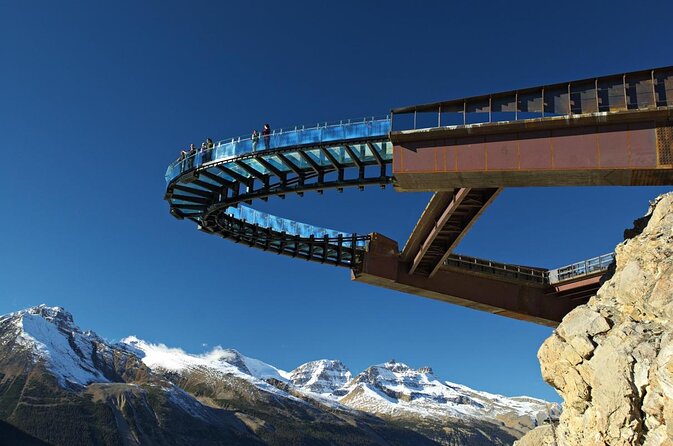
- Columbia Icefield Skywalk is built into the experience, with a real sense of height from the narration
- Flexible timing, most stops are short pull-offs but several hikes are optional if you want more legs
- One purchase per car/group, often better value than paying per person
More of the Parkway, glacier by glacier
- Columbia Icefield Tour with Glacier Skywalk from Jasper★ 4.5 · 184 reviews
- Columbia Icefield Skywalk Admission★ 4.0 · 142 reviews
- Athabasca Falls/Abraham,Sunwapta Falls, Icefield, Peyto Lake★ 5.0 · 39 reviews
- Jasper: Transfer to Banff/Lake Louise w/ Columbia Icefields★ 4.7 · 34 reviews
Icefields Parkway with location-based stories: how the tour flows

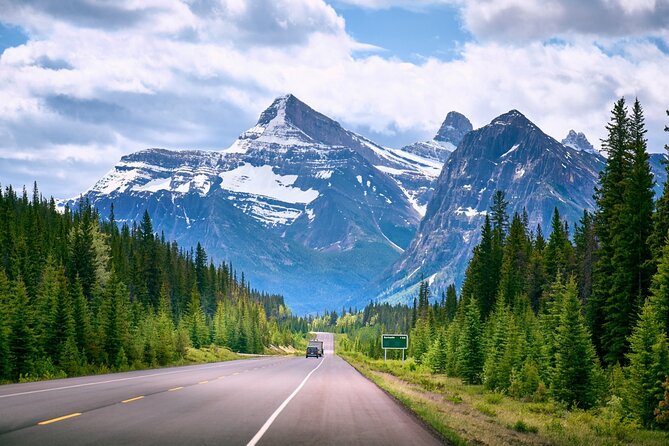
This is a self-guided driving audio tour for the Icefields Parkway, the classic connector between Jasper and Banff. What makes it more than “random audio” is the way the stories line up with the road. As you reach each story point, the narration plays automatically, so you can focus on driving first, then pull over and enjoy.
You are not locked into a strict schedule either. The tour is designed so you can start at any time onsite, pause whenever you want, and resume later. That matters on the Icefields Parkway, because conditions and your energy level can change fast, and the best experience is usually the one where you stop for the right things, not the things you were told to see.
Also, this is meant to be group-friendly. The price is per group up to 4, so one car can handle the audio without multiplying the cost by the number of people inside. If you are traveling with family, friends, or older relatives who would rather not sit through a rigid guided loop, that pricing structure is a quiet win.
Price per group, lifetime access, and value for a rental car
At $16.99 per group (up to 4 people), this is priced like a “car add-on,” not like a per-person attraction. In practice, that can be the difference between doing a low-cost planning boost versus skipping audio altogether.
You also get lifetime access with no expiry, meaning you do not have to “use it now or lose it.” If you are planning a single big road trip, that feature does not change the day you drive, but it helps you justify the purchase if your plans shift. It also means if you take another trip later and want the same stories again, you can reuse the tour.
One more value point: many of the stops are described as admission ticket free, and the tour keeps directing you to free pull-offs and short walks. That does not mean every attraction is free, because some experiences like the Columbia Icefield Skywalk are still part of your real-world itinerary and can require separate access. But the audio portion helps you get more meaning from every turn.
Getting started with Action’s Tour Guide App: password, offline audio, and car setup
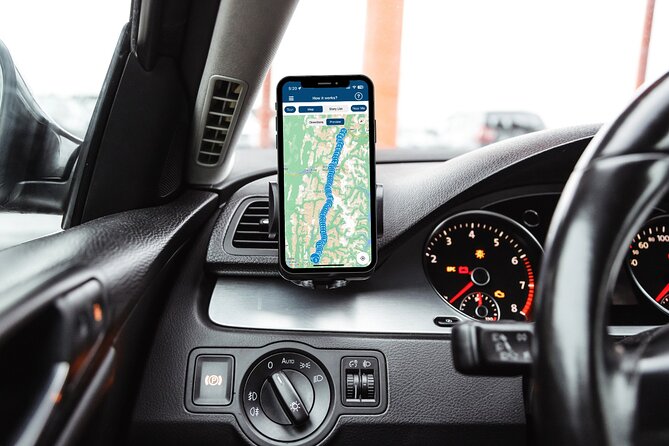
You need the Action’s Tour Guide App on your phone. After booking, you receive email and text instructions, including a password. Then you download the audio tour while you are in strong Wi-Fi or cellular, because it is built to work offline after that.
When you arrive, no guide meets you. You open the app at the starting point, pick the correct tour version for your direction, and the first story should start automatically when you are in the right spot. If you face audio issues, the support guidance is to contact them, but the practical fix is usually to re-check the app launch and that you started at the correct location point.
For audio in the car, you can connect your phone to the stereo using Bluetooth, USB, or AUX. If you use Apple CarPlay, audio playback is compatible, and Android Auto is on the way. For walking bits, headphones can help because the sound stays clear even when you get out of the car.
If this is your first time with an audio app like this, I suggest you do a quick test before you pull out of the parking area. Some people find the initial play step a little challenging, and once it is working, the tour becomes very smooth.
Longer runs through the Rockies, compared
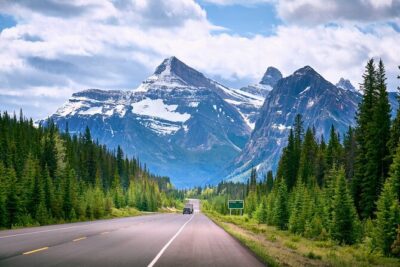
Jasper SkyTram tease and the Jasper-to-Banff vibe check
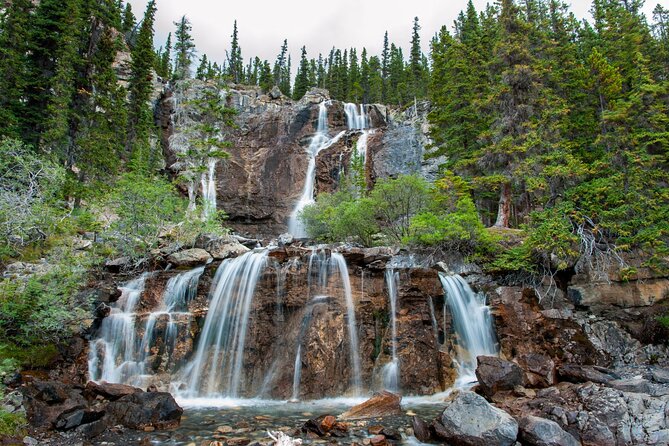
This driving tour is narrated with a Jasper start option. The text also notes that if you want to start from Lake Louise, you should switch to the Lake Louise version in the app. In other words, you want to launch the direction that matches where you parked.
Early on, the narration warms you up for the Icefields Parkway feeling. You hear about the road’s role connecting two of Canada’s big parks, and you get brief “what is coming next” previews. One example is the Jasper SkyTram. The audio sets up the idea of one of Canada’s highest and longest aerial tramways, but attraction passes are not included, so treat that as something you might add on your own if you want the aerial viewpoint.
Then the tour shifts into quick stop mode. The stories work like a sequence of pull-offs: a viewpoint, a short walk, or a roadside subject where the audio gives you a reason to care. That is the best way to experience this part of the world, because the road itself is stunning, but the narration helps you understand why the scenery looks the way it does.
The whole drive is estimated at about 3 to 4 hours, and it is over 140 miles long with more than 76 audio stories. That length is why having an audio guide that paces you by location is useful. You get structure without losing freedom.
Five Lakes Trailhead and Athabasca Pass Lookout: setting the “why” behind the views
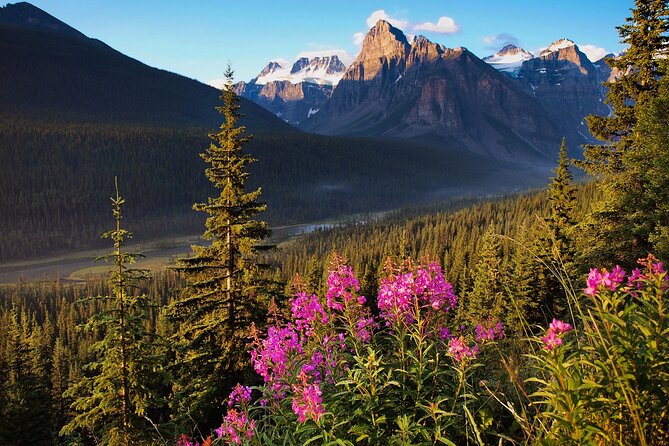
The first hiking teaser is the Valley of the Five Lakes Trailhead. The audio describes it as a 3-mile hike with moderate effort, about 1.5 hours, and it says the trail passes five lakes and ponds with those famous turquoise and blue tones. The narration ties that color to glaciers, which is a simple explanation you can keep in your head the rest of the day: glacier-fed water tends to look like it has been “edited,” but it is real.
Not every stop is built for a long walk. Shortly after, the Athabasca Pass Lookout is one of those quick pull-over moments where you do a short stop and get a big view. The story centers on the South Jasper Mountain Range, and it points out Mount Edith Cavell as the prominent peak you can spot straight ahead from the lookout.
This pairing, hike plus lookout, is a good way to start. You get one taste of what “walking in this region” feels like, and then you zoom back out to see how the mountains sit in layers. Even if you do not hike later, you still come away with better spatial understanding, which makes the next stops easier to enjoy.
Athabasca Falls, Horseshoe Lake, and the glacier-fed detail that makes it click
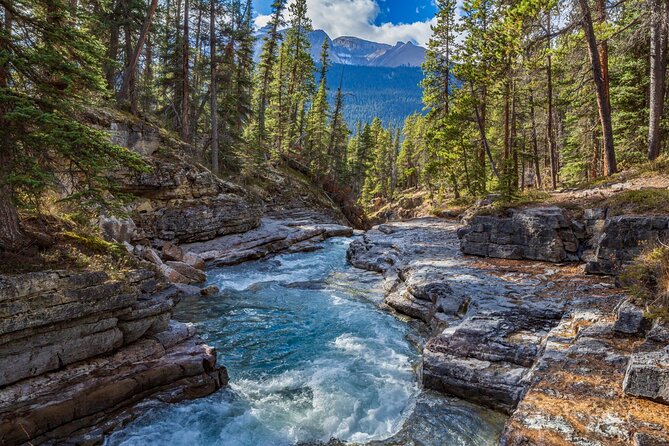
Some roads give you pretty views. The Icefields Parkway gives you changing views that all feel connected to the same big story of ice, melt, and uplift. The audio does a good job keeping you oriented.
At Horseshoe Lake, the narration focuses on the dramatic U-shaped water and the thrill-seeker jump culture, including the “75 feet down” visual described in the story. It is a short stop, but it adds energy because you are not just looking at scenery, you are seeing why people stop, gawk, and sometimes jump.
Then you hit Athabasca Falls, a 75-foot waterfall plunging into a canyon. The audio explains how glacial retreat during the last Ice Age opened the pass for the Athabasca River, then the pass deepened and widened into the canyon you see now. This is the kind of detail that makes a waterfall feel like it belongs to a timeline, not just a snapshot.
From there, the narration keeps the focus on peaks and viewpoints. It calls out Mount Kerkeslin as the highest peak in the Maligne Range, and then moves through more “look right, look left” peaks like Mount Christie. There is also a naming story about James Hector and William Joseph Christie, which is a fun twist because it turns a random peak label into a human connection.
Goats and glaciers, Honeymoon Lake, and Sunwapta Falls: short stops that reward attention
The Goats and Glacier Lookout is a clever story because it explains the goats in the most practical way possible, minerals. The narration says the cliff is dense with minerals including salt, and mountain goats come up to lick them. That turns a “cute wildlife moment” into something you can predict by understanding the geology.
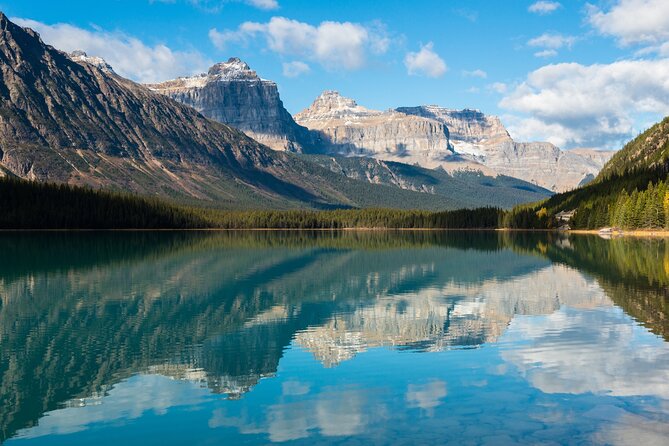
Honeymoon Lake follows, with the narration emphasizing reflected mountains and even hints that you might spot people paddling canoes. It is a mostly visual stop, but it gives you an easy “what to watch for” checklist.
Sunwapta Falls is different because it adds walking options. The audio describes an easy 2-mile trail that takes a little over an hour, with a view of a wilderness waterfall fed by the Athabasca Glacier. It describes a 60-foot plummet and translates the Stoney-Nakoda word “Sunwapta” to mean turbulent water, which fits the look you get when you arrive.
This section works well for people who want a mix. If you do not want to hike, you can still enjoy it. If you do want to stretch your legs, the tour has you covered with an easy walk that is not too long.
Columbia Icefield area: Skywalk, Athabasca Glacier hikes, and the glacier hazards explained
This is the heart of the Icefields Parkway for many people, and the narration treats it that way.
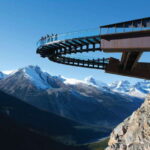
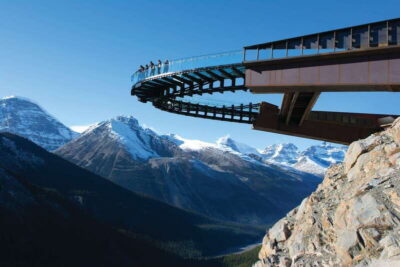
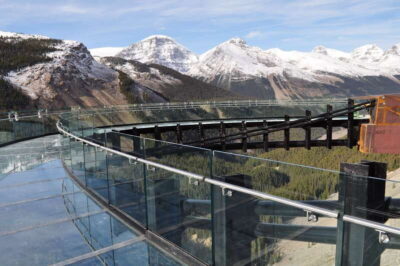
First, the audio introduces the Columbia Icefield Skywalk, described as a glass floor walk that snakes along a cliffside and juts out across the Sunwapta Valley, with views down more than 900 feet. If you are nervous around heights, this is where the narration gives you enough context to decide if it is a yes or a no.
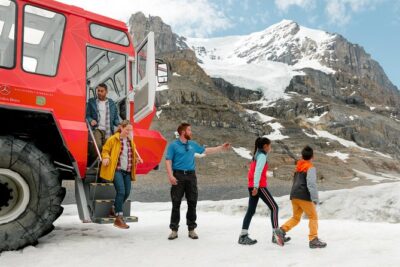
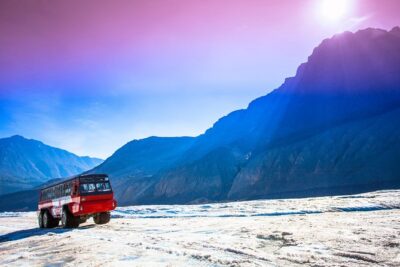
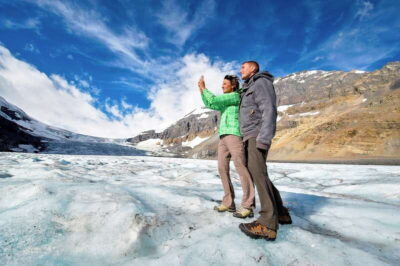
Next, the tour shifts to a more grounded glacier experience with the Toe of the Athabasca Glacier Trailhead. The audio calls it a moderate hike of just over one mile, framed as a close-up option for glacier views. This is the kind of stop that upgrades your understanding. You see ice directly instead of only hearing about it in a waterfall or lake story.
The narration also points you toward several trailheads and hiking options with different effort levels, including Wilcox Pass Trail, described as a challenging 7-mile route with a common strategy of turning back after about a mile for a viewpoint. It also points to Parker Ridge Trail as a 4-mile hike with alpine meadows and panoramic views, with time guidance of a little over two hours.
Then, it adds one more level of respect with the Stutfield Glacier Viewpoint and its described hazards. The narration notes double icefalls and says the steepening glacier creates crevasses that are major hazards for climbers. Even if you never climb, it helps you understand why glaciers are not just scenic, they are active and risky.
Waterfalls and cliffside moments: Panther Falls, Weeping Wall, and the “part-time waterfall” idea
After the big glacier focus, the tour shifts into a rhythm that feels like nature shows. Panther Falls is one of the easier hike entries described, an easy 1.5-mile forest walk to a 210-foot cascade in about 30 minutes. The narration also suggests a nearby follow-up to Bridal Veil, described as five times the size of Panther Falls, making it a convenient “two-for-one” if you have the energy.
Then comes the Weeping Wall viewpoint, a set of 900-foot cliffs. The tour description makes it sound like a mystery until you see it. The narration says it can behave like a part-time waterfall when springs at the top swell or trickle depending on the time of year. That is a great example of how this audio tour adds meaning, it explains why a place might look different from day to day.
The audio also keeps naming peaks as you drive, like Mount Coleman. It is a small storytelling habit, but it helps you feel like the scenery has a map in your head.
If you like the “story first, then photo” style, this section delivers. Each stop gives you a concept to look for, not just a view to snap.
From tunnels of time to the Banff side: Saskatchewan River Crossing, Mistaya Canyon, and the lakes
The tour does not only stay in glaciers and cliffs. It threads in human history along the route.
It mentions HI Rampart Creek Wilderness Hostel as a marker of a tourism shift that began unfolding almost 100 years ago. It also tells the story behind Saskatchewan River Crossing, describing a crossing operation in 1882 where a plank of wood drifted and a horse and carriage waited to be directed across, with John Walter as the well-liked man behind it.
Then you get Howse Pass Viewpoint at the Howse Pass parking area, positioned as a must-see with views of the river and mountains beyond.
On the Banff edge, Mistaya Canyon Trailhead appears with a moderate 1.5-mile hike to the bottom of a deep gorge with water, with about 40 minutes called out in the narration.
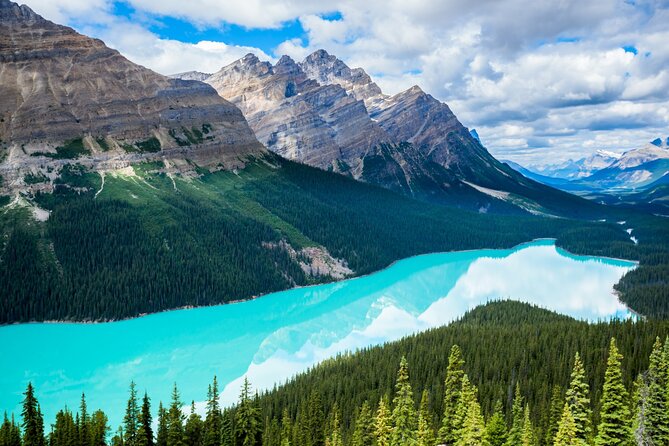
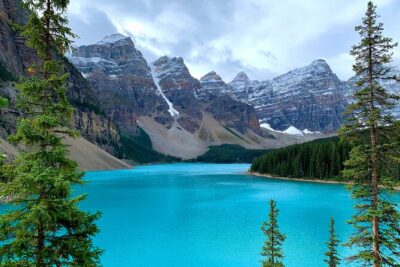
After that, the lakes start to take over. Waterfowl Lake is described right from the parkway with a viewpoint, plus an interesting cultural note about the 1960s and hippies as a countercultural movement drawn to lakes. Next comes Peyto Lake with its turquoise glacier-fed color, plus a side road for an overlook and a 2-mile trail around the lake’s circumference.
Then it keeps going through Bow Lake, Crowfoot Glacier viewpoint, and Hector Lake viewpoint, before finishing at Lake Louise. The audio wraps the drive by urging you to keep driving straight for another 5 to 10 minutes to reach Lake Louise after the final story.
This ending section matters because it brings the day full circle. After geology, waterfalls, and glacier detail, the lakes are where your senses slow down and absorb color again.
Should you book this self-guided audio tour?
Book it if you want a structured drive without the pressure of a group schedule. It is especially worth it when you are splitting cost across up to 4 people, because the per-group pricing fits a rental car plan.
Skip it or think twice if you know you struggle with app downloads and first-time setup. The tour is easy once it plays, but the audio experience depends on downloading and launching the right version, then starting at the correct story point.
If you love geology turned into human-scale stories, this is a strong choice. If you only want the “walk to one viewpoint and go,” you might find the dense sequence of stories more than you need. For most road-trip styles, though, this audio tour hits the sweet spot: it turns a famous drive into a meaningful one, one stop at a time.
FAQ
How much does the Icefields Parkway self-guided audio tour cost?
It is priced at $16.99 per group, for up to 4 people.
How long does the tour take?
Plan for about 3 to 4 hours.
Where does the tour start and end?
The tour is listed to start and end at Lake Louise, AB T0L 1E0, Canada. The app also notes that this version begins in Jasper, and you can switch to the Lake Louise version if you want to start near Banff.
Does the tour work offline?
Yes. You download and it works offline after the download, including offline maps, so you can listen even when there is no cellular or Wi-Fi signal.
Do I need tickets or reservations for the tour stops?
Attraction passes, entry tickets, or reservations are not included. The audio includes many free pull-offs and viewpoints, but you should expect to handle ticketed attractions separately.
Do I need a guide or a scheduled meeting time?
No. There is no one meeting you at the start. You start the audio at the first story point onsite, then follow the location cues to the next story.
What devices can I use and how do I play it in the car?
You can connect your phone to your car’s stereo using Bluetooth, USB, or AUX. Audio playback is compatible with Apple CarPlay, and Android Auto is stated as on the way. The recommended devices include iPhones running iOS 15 or later, Android devices version 9 or later, or an iPad/tablet with GPS and cellular connectivity.
Easier With a Guide

The Long Way Through the Rockies
Keep Driving the Parkway

Just off the notebook: recent Jasper write-ups
- Wildfire Peak Nic
★ 5.0 · 5 reviews - E-Bike Rental
★ 5.0 · 5 reviews - Jasper: Planetarium Indoor Dome Experience
★ 3.9 · 8 reviews - Columbia Icefield Adventure, Bow Lake & Peyto Lake Tour
★ 5.0 · 8 reviews - Canadian Rockies: Abraham Lake Ice Bubbles Helicopter Tour
★ 4.8 · 8 reviews - Ultimate Jasper Nature Walk
★ 4.5 · 9 reviews
Icefields Parkway & Glacier Tours, compared.
 ★ 4.6Jasper: Columbia Icefield Skywalk and Ice Explorer TicketFrom $962,444 reviews
 ★ 4.5Columbia Icefield Tour with Glacier SkywalkFrom $991,860 reviews
 ★ 4.3Jasper: Columbia Icefield SkywalkFrom $37916 reviews
 ★ 5.0Lake Louise, Moraine Lake and the Icefields Parkway Full-Day TourFrom $165836 reviews
 ★ 5.0Columbia Icefield Tour with Glacier Skywalk from BanffFrom $302649 reviews
 ★ 4.8Columbia Icefield, Skywalk, Crowfoot Glacier, and Lakes TourFrom $50475 reviews
 ★ 4.8From Banff: Athabasca Glacier and Columbia Icefield Day TripFrom $276408 reviews
 ★ 5.0Athabasca Glacier Snow Trip from BanffFrom $291394 reviews
Browse the lists this tour appears in