
REVIEW · WALKING TOURS
A Taste of History Walking Tour
Old Quebec has a way of slipping under your skin. This walk pairs storied landmarks with three tastings that actually taste like the region.
I especially like how the tour blends New-France storytelling with clear, human details at each stop. I also love that you end at Terrasse Dufferin, where the St. Lawrence and Château Frontenac make the history feel real.
One thing to consider: it is still a walking tour. You will cover hills and cobblestones, so plan comfortable shoes and be ready for all-weather conditions.
In This Review
- Key highlights
- A 3-hour Old Quebec storyline, from New France to later chapters
- Meeting at 12 Rue Sainte-Anne, then walking to Terrasse Dufferin
- Stop 1: Place d’Armes and the “flavors of Quebec’s terroir” hook
- Stop 2: The Hébert family at Parc-Montmorency’s national historic site
- Stop 3: The Seminary courtyard takes you back to the 17th century
- Stop 4: Notre-Dame de Québec Basilica Cathedral, a quick but meaningful stop
- Stop 5: Bistro Hortus tasting, where the tour starts feeding you
- Stop 6: Maison de la littérature and the literary Quebec connection
- Stop 7: Morrin Centre and Quebec City’s French and English chapters
- Stop 8: Cathedral of the Holy Trinity, an Anglican milestone outside the Isles
- Stop 9: Restaurant Le Clan tasting, second course and the drink factor
- Stop 10: Ursulines cultural pole, the first school for girls in New France
- Stop 11: La Buchette tasting, the third flavor moment
- Stop 12: Terrasse Dufferin views, the photo payoff
- Stop 13: Au 1884 sweet finish, and a good ending point
- What you actually get: tastings, snacks, and drinks with real pacing
- Guide energy matters: period character, period clothing, and Q-and-A style
- Price and value for $71.35 with alcohol included
- Outdoor walking reality in Old Quebec: shoes, hills, and weather
- Who should book this, and who might want a different plan
- Should you book this Taste of History walking tour?
Key highlights
- Period character storytelling at Place d’Armes sets the tone fast
- Three restaurant tastings plus a sweet stop at Au 1884
- Historic stops that connect New France to later British-era buildings
- Small group size (max 15) for questions and pacing that feels personal
- Alcoholic beverages and snacks included, so it is not just samples
- End point at Dufferin Terrace gives you a scenic landing after eating
Quebec City at walking pace, a few more routes
- Quebec City Walking Tour★ 5.0 · 4,716 reviews
- Old Quebec City: Grand Walking Tour with Private Option★ 4.8 · 2,609 reviews
- Old Quebec Classique Walking Tour with Funicular★ 5.0 · 1,317 reviews
- Quebec: Crimes of New France Animated Walking Tour★ 4.6 · 926 reviews
A 3-hour Old Quebec storyline, from New France to later chapters
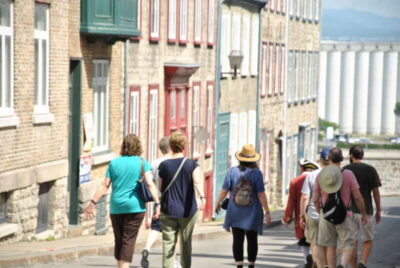
This tour is built like a walkable timeline. You start near Place d’Armes and move through a tight loop of landmarks that show how Quebec City’s identity changed over centuries, without turning it into a museum shuffle.
The format is simple: walk, stop, listen, eat. You get short history scenes at major sites, then you break up the story with tastings at three well-chosen restaurants and a final sweet moment.
A small group size matters here. With a maximum of 15 people, the guide can keep you moving without rushing the conversation too hard, and you should feel comfortable asking questions.
Meeting at 12 Rue Sainte-Anne, then walking to Terrasse Dufferin
The tour meets at 12 Rue Sainte-Anne, in the Old City area, and it starts at 3:00 pm. It ends at Dufferin Terrace, on Rue des Carrières, which is a smart finish if you still want to stroll afterward.
You are not dealing with hotel pickup or complicated transfers. That makes the whole thing feel more flexible, especially if you are already sightseeing on your own before 3:00 pm.
Fitness-wise, the tour asks for moderate physical fitness. Expect some uphill walking and uneven ground. If you tire easily on stone streets, bring breaks into your plan, even though the official timing keeps you on schedule.
Stop 1: Place d’Armes and the “flavors of Quebec’s terroir” hook
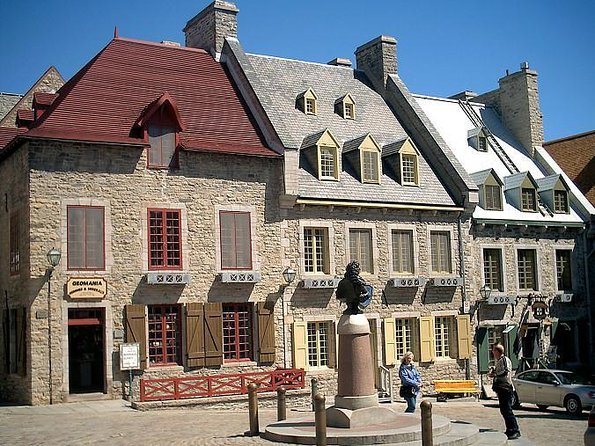
The first stop is Place d’Armes, where you meet a period character who guides you through the tour’s “flavors” theme. You learn how his story in New France began, setting up why the food and history connect.
This opening works because it gives you a mental map quickly. Instead of tasting randomly, you start understanding what kind of ingredients, cultural influences, and daily life shaped what Quebecers ate then and now.
It is also a good checkpoint stop. Even if you are arriving from another part of town, you can get oriented in minutes because Place d’Armes is one of the most central Old Quebec squares.
More routes into older Quebec City
Stop 2: The Hébert family at Parc-Montmorency’s national historic site
Next you head to the National Historic Site of Canada at Parc-Montmorency. Here, the focus shifts to the Hébert family in New France, with the guide tying what you see around you to the people who lived through that era.
This is the kind of stop that changes the way you look at the city. A building or street is one thing, but hearing how a family’s story fit into the larger settlement picture makes it stick.
You should expect a short, focused stop here, about 10 minutes. That brevity keeps you moving, but it also means you cannot rely on one stop to answer every historical question you have. Save your bigger questions for when the guide opens the floor.
Stop 3: The Seminary courtyard takes you back to the 17th century
At the Séminaire du Québec, you enter the courtyard and step into a 17th-century mood. Even with only a 5-minute window, the setting helps you picture daily rhythms from early settlement life.
Courtyards are underrated for this kind of tour. They feel enclosed and grounded, so the guide’s storytelling has a place to land.
If you love architecture or religious-era buildings, this stop is a solid quick win. If you prefer big photo moments, you may want to linger just a bit, but remember the group timing will move on.
Stop 4: Notre-Dame de Québec Basilica Cathedral, a quick but meaningful stop
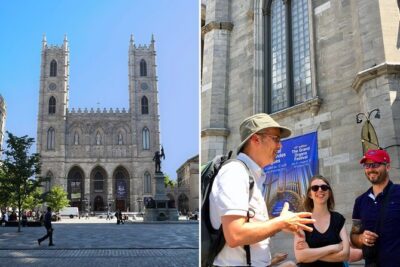
The tour then stops at Notre-Dame de Québec Basilica Cathedral. It connects the founding of the parish by Monseigneur de Laval to how Catholic religion shaped settlers’ everyday life.
This stop is short, around 5 minutes, and admission is not included. That means you might just get the exterior or the immediate area, not a full inside visit.
If you care about cathedral interiors, consider pairing this tour with a separate time slot for a deeper visit. The walking tour gives you context, not a full sightseeing pass.
Stop 5: Bistro Hortus tasting, where the tour starts feeding you
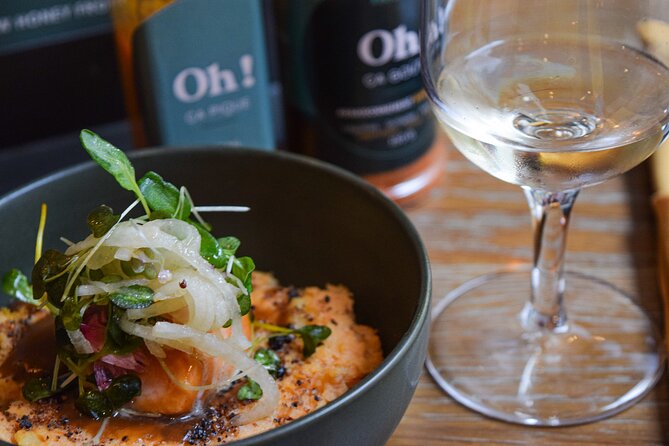
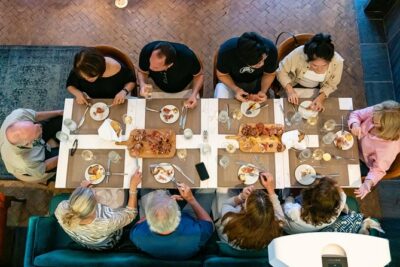
Now comes the first food break at Bistro Hortus. You get a tasting, and this is where the day stops being purely educational and starts being practical.
Timing helps you feel the pacing: you spend about 25 minutes here. That is long enough to eat without feeling like you were just handed a sample on the go.
Based on past experiences with this concept, guides often tie the dish to the broader story, like ingredients used in the region or how culinary traditions evolved. You should come with an appetite, and do not plan on eating a full dinner right before this tour.
Stop 6: Maison de la littérature and the literary Quebec connection
After the first tasting, you move to Maison de la littérature. You learn about the Institut Canadien de Québec and the Maison’s mission to highlight Quebec’s literary heritage and support current writing.
This is one of the more unique stops in the route. A lot of food-and-history tours lean hard on politics and food only. Here, literature gets treated as part of Quebec’s identity, which makes the whole afternoon feel more human.
This is also a short stop, about 5 minutes. If you want details, you might want to jot down questions for your guide so you can follow up later.
Stop 7: Morrin Centre and Quebec City’s French and English chapters
Next is the Morrin Centre, where you learn about four major periods of Quebec City history. The guide connects the site to both French and English language communities and how they shaped Quebec City’s heritage.
The Morrin Centre stop is valuable because it helps you avoid the single-story version of Quebec history. Instead of only seeing one era, you see how different communities layered into the city over time.
It is about a 10-minute visit. If you are a detail person, this is a stop where you may wish you had more time inside. But the tradeoff is that the tour keeps its rhythm and gets you to the next tasting.
Stop 8: Cathedral of the Holy Trinity, an Anglican milestone outside the Isles
Then you reach the Cathedral of the Holy Trinity, explained as the first Anglican cathedral built outside the British Isles after New France became a British colony.
This is the point where your history “timeline” starts to feel like a living contrast. You are no longer just talking about settlement origins. You are seeing how religious architecture reflected shifts in power and culture.
Like some other landmark stops, this one is not a long linger, about 10 minutes. It is still enough time to understand the why, even if you do not have time for a full inside visit.
Stop 9: Restaurant Le Clan tasting, second course and the drink factor
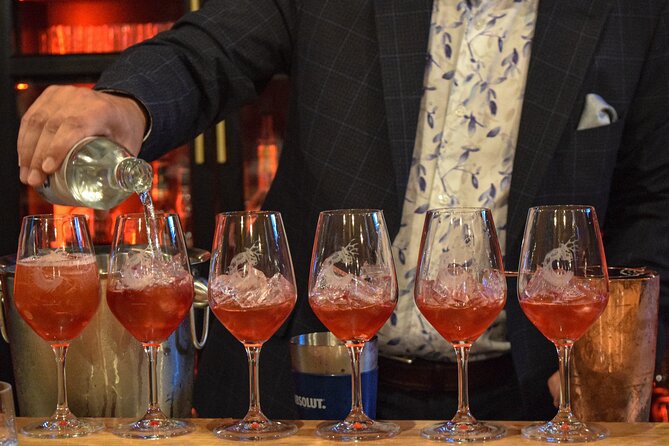
The second tasting comes at Restaurant Le Clan, again about 25 minutes. Since alcoholic beverages and snacks are included overall, this is typically where the tour’s dining aspect feels most rounded, not just quick bites.
Even if you are not a wine person, plan to try what is offered. Past experiences with this tour format often include good pairing guidance, and it tends to make the tasting more fun than a random meal stop.
This is also where group chemistry shows. With a small group, conversations tend to start blending with the history talk. You get to compare what each person is tasting while the guide keeps the story thread going.
Stop 10: Ursulines cultural pole, the first school for girls in New France
At the Pole Culturel du Monastere des Ursulines, the tour focuses on the Ursulines of Québec and their role in founding the first school for girls in New France.
This stop adds real depth because education is one of the quiet ways societies change. It is also a nice reset from religious architecture elsewhere on the route, because it reframes institutions as places shaping people’s futures.
It is timed around 10 minutes. If education history is your thing, take advantage of any question time. This is the kind of story you will want to understand more than the one-minute summary most tours give.
Stop 11: La Buchette tasting, the third flavor moment
Now you hit La Buchette, the third tasting stop, also around 25 minutes. This is another full tasting window, which is key for a food tour experience. You are not just eating a single bite and moving on.
If you enjoy regional ingredients, this is a good place to pay attention to how Quebec flavors show up in different forms across the three restaurants. Even when the dishes vary, the shared local identity comes through.
This also helps you avoid food fatigue. Three separated tastings spread out over the walk feel more satisfying than stuffing everything into one meal slot.
Stop 12: Terrasse Dufferin views, the photo payoff
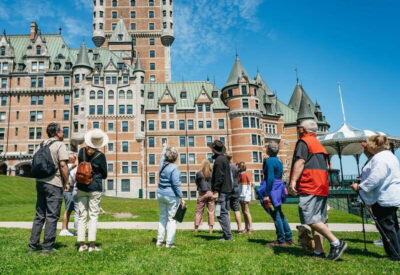
Next is Terrasse Dufferin. The tour makes the view part of the experience, highlighting the St. Lawrence River and Château Frontenac, a place visited by thousands in all seasons.
This is not just a scenic pause. It is a moment where your brain connects “then and now.” Seeing the postcard view after hearing centuries of stories makes the city feel less abstract.
It is brief, about 5 minutes, so do your photos quickly and smart. If the sun angle is harsh, keep an eye on your camera settings because the river light can be bright.
Stop 13: Au 1884 sweet finish, and a good ending point
The tour ends at Au 1884 with a sweet note, included in the tour. You get about 10 minutes here, so it is a quick finish rather than a linger.
A sweet ending is practical on a walking schedule. It tells your body you are done with the hard part, and it also gives you a natural conclusion point before you go back out exploring on your own.
If you want a longer food follow-up after the tour, this ending spot is also convenient. You can keep strolling along the terrace area without immediately feeling like you must find a new transit plan.
What you actually get: tastings, snacks, and drinks with real pacing
The tour includes food tastings, plus snacks, and alcoholic beverages. That combo is a big value lever because you are not paying extra at every stop, and the restaurants are integrated into the story rather than tacked on.
You should expect three main restaurant tastings and then the sweet stop at the end. Some past guides have also added small extras, like a short gelato swing, but do not count on bonus time.
The pacing is a balancing act. In the best cases, you get enough time to taste and ask questions without feeling rushed. In a slower group or a busy day, the timing might feel tight, especially if you want long conversations inside the restaurants.
Either way, the structure is built to keep you fed throughout the afternoon. You will likely want to treat dinner plans lightly afterward.
Guide energy matters: period character, period clothing, and Q-and-A style
This tour leans hard on storytelling. The guide starts with a period-costumed character and continues with site-specific context, including ties from New France to later British-era changes.
In past runs, guides have been especially memorable for style details like dressing in period clothing and even using a period-like accent. Others, like Jonathan and Yves, have impressed people with lots of facts and frequent questions throughout the tour.
If you get a guide like Louis (described as Christian in real life), you might also get a strong sense of character-driven storytelling, which helps the history feel less like a lecture.
Here is the practical tip: if history is your main reason for booking, come prepared with questions. The tour is designed to answer them as you go, not only at the end.
Price and value for $71.35 with alcohol included
At $71.35 per person for about 3 hours, the best way to judge value is not the ticket price alone. It is what you get for that price: multiple guided history stops, three restaurant tastings, snacks, and alcoholic beverages.
Many stand-alone food tastings charge you for each meal stop. Here, the price bundles the restaurants and the guide experience into one package, with the guide walking you between historic sites.
There is also risk-reduction built in. You are traveling with a planned route and a guide who keeps the connections tight. That matters in a city like Quebec City, where it is easy to spend energy hopping between attractions without context.
If you are mainly chasing big cathedral interiors or deep museum time, this might not be enough on its own. But for a history-and-food afternoon, the value math is pretty strong.
Outdoor walking reality in Old Quebec: shoes, hills, and weather
This tour operates in all weather conditions, so you should dress for rain, cold, or heat. You do not want to show up in shoes that hate wet cobblestones or that pinch on hills.
You also should be ready for moderate walking. Even though you stop often, the route still includes uphill stretches and uneven ground typical of Old Quebec streets.
If you are visiting in winter or during a rainy spell, bring a waterproof layer. A light rain jacket is usually more useful than an umbrella once you start moving.
Who should book this, and who might want a different plan
This is a great fit if you want Old Quebec history with taste stops built in. It is also ideal for first-time visitors who need a storyline to connect what they are seeing.
It is especially good for couples and small groups who enjoy questions and conversation while walking. The max 15 group size keeps things friendly and helps the guide adapt to the pace.
If you are a hardcore foodie who wants only large portions or lots of culinary depth, you may find the history takes a bigger share of the experience than expected. This is a historical walking tour that happens to include tastings, not the other way around.
If Lower Town or the funicular are on your must-do list, keep in mind this walk route does not include the funicular. You may want to save those for separate time blocks.
Should you book this Taste of History walking tour?
Book it if you want a guided afternoon that ties Quebec City’s landmarks to the people who shaped them, and you want the fun part too, tasting at several restaurants with included snacks and drinks. The ending at Terrasse Dufferin is also a smart closer for photos and post-tour wandering.
Skip or swap it if your priority is long museum time, big indoor cathedral visits, or a food tour where tasting is the only goal. This one is built around story first, with food as an essential companion.
One last practical note: no tour is immune to last-minute disruptions due to unforeseen circumstances. I would still book it, but I would not place it as the single fixed anchor of a day with zero backup options.
Overall, if you like history that feels tied to specific places, and you want to eat your way through Old Quebec while you learn, this is a strong afternoon bet.
The Older Quebec City


Quebec City on Foot

Just off the notebook: recent Quebec City write-ups
- Quebec City: Historic District Walking Tour (2h)
★ 5.0 · 4 reviews - Quebec City: Fat Bike Guided Tour
★ 4.7 · 4 reviews - Quebec City Photo Tour
★ 5.0 · 5 reviews - Experience île d’Orléans and the falls with a local guide
★ 4.5 · 5 reviews - Private Québec City walking tour with Lenny.
★ 5.0 · 5 reviews - Heritage Upper Town E-Bike Tour
★ 5.0 · 6 reviews
Walking Tours, compared.
 ★ 5.0Quebec City Walking TourFrom $304,716 reviews
 ★ 4.8Old Quebec City: Grand Walking Tour with Private OptionFrom $292,609 reviews
 ★ 4.5The Original Old Montréal Walking Tour by GuidatourFrom $262,217 reviews
 ★ 5.0Old Montreal Small-Group Walking Tour | Max 10 | by MTL DetoursFrom $442,088 reviews
 ★ 5.0Gastown Historic Walking Food TourFrom $1161,863 reviews
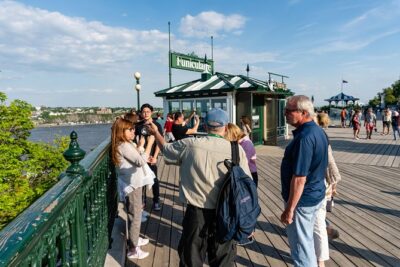 ★ 5.0Old Quebec Classique Walking Tour with FunicularFrom $421,317 reviews
 ★ 5.0Vancouver Lost Souls of Gastown Walking TourFrom $291,273 reviews
 ★ 4.6Quebec: Crimes of New France Animated Walking TourFrom $20926 reviews
Browse the lists this tour appears in