
REVIEW · HISTORICAL TOURS
Vancouver: LGBTQ2+ History Tour in the West End
Davie Street has stories you can’t ignore. This 2-hour LGBTQ2+ history tour with Glenn Tkach takes you from downtown Vancouver to the Davie Street Gay Village with real names, real stakes, and real courage.
I especially love how the tour turns a neighborhood walk into storytelling with structure, not random facts. And I like that you’re guided by the tour’s creator, Glenn Tkach, who brings the kind of professional, human narration that keeps you listening even when the topics get heavy.
One consideration: it runs rain or shine and includes adult themes, so it’s best for people who are comfortable with that tone and who wear comfortable shoes.
In This Review
- Key points at a glance
- Start at Trees Organic Coffee, Meet the Man In Pink
- A two-hour walk from downtown to Davie Street’s Gay Village
- Imperial Court coronations, drag kings at the Quadra, and gay ministers
- Patient Zero and the GRID crisis, stories of courage and survival
- Jim Deva Plaza, bookstore bombings, and how memory sits in public space
- Nelson Park pause, and the tree-lined West End context
- The transgender campaigner story, and the idea of speaking up
- Finishing in Davie Street Village for a post-walk drink
- Price and value: what you get for $28
- What to bring, and how to prepare for the tone
- Who this tour suits best (and who might want another option)
- Should you book this Vancouver LGBTQ2+ West End tour?
- FAQ
- Where do I meet the guide?
- How long is the tour?
- What language is the tour in?
- Is the tour wheelchair accessible?
- Does the tour run in bad weather?
- What should I bring?
- Is the tour suitable for children?
- Are food and drinks included?
Key points at a glance
- Glenn Tkach is the guide and the storyteller, a queer historian with a clear, guided flow
- Davie Street focus as you move through Vancouver’s West End and the Gay Village
- Major LGBTQ2+ topics in one walk, including drag, church life, and resistance during the GRID crisis
- Landmarks you can revisit later, like Jim Deva Plaza and Nelson Park
- Adult-focused content, with guidance built in for who this is meant for
More routes into older Vancouver
- Gastown Historic Walking Food Tour★ 5.0 · 1,863 reviews
- The Really Gay History Tour in Vancouver, Canada★ 5.0 · 357 reviews
- Vancouver: Guided Food and City History Tour★ 4.5 · 53 reviews
- Vancouver Holiday History and Hot Chocolate Tour★ 5.0 · 15 reviews
Start at Trees Organic Coffee, Meet the Man In Pink
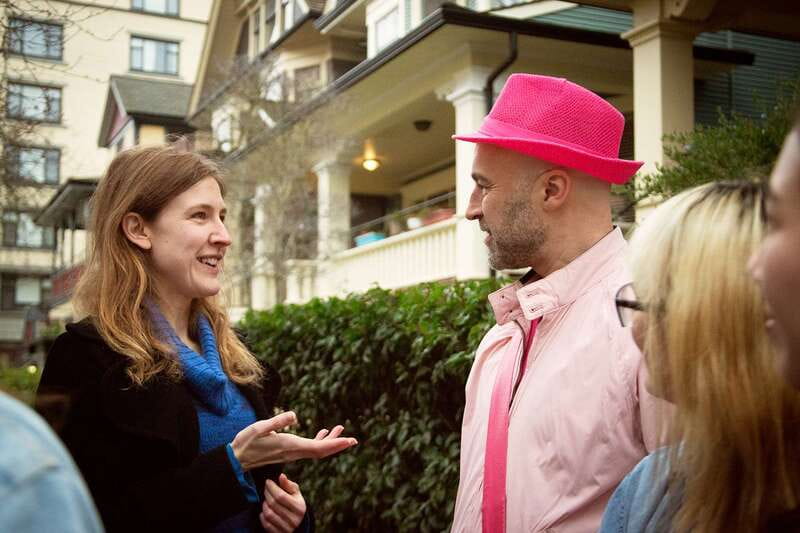
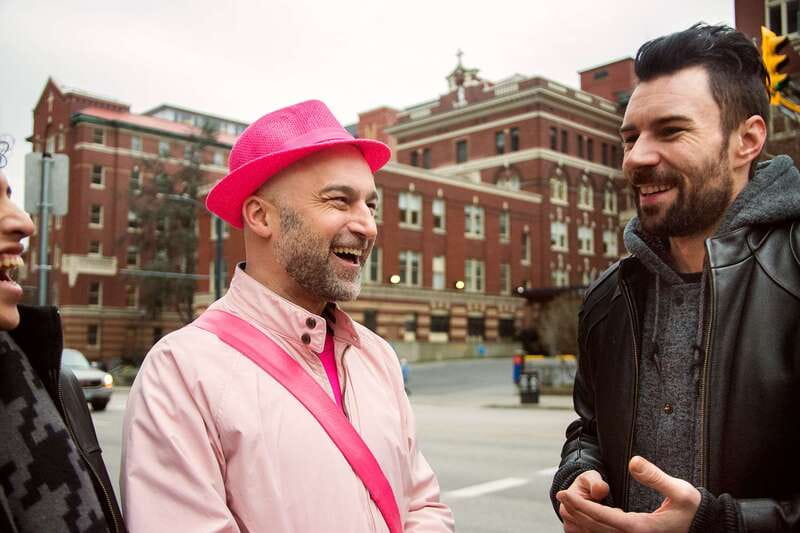
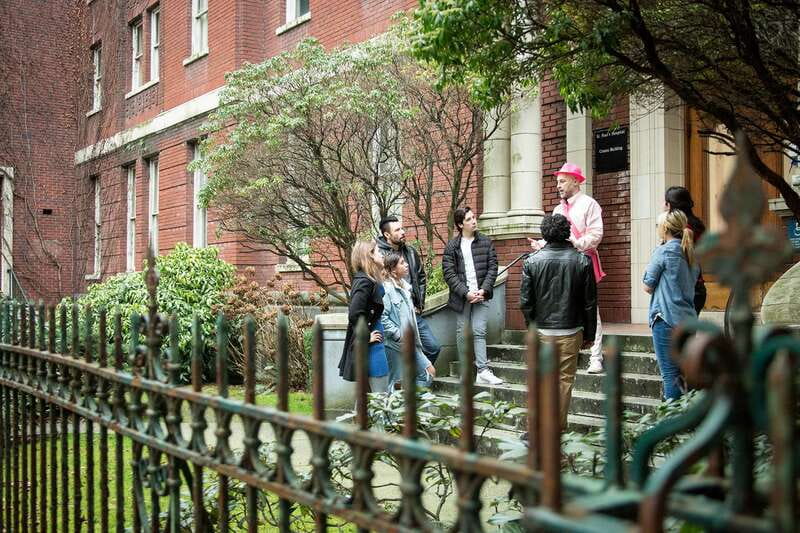
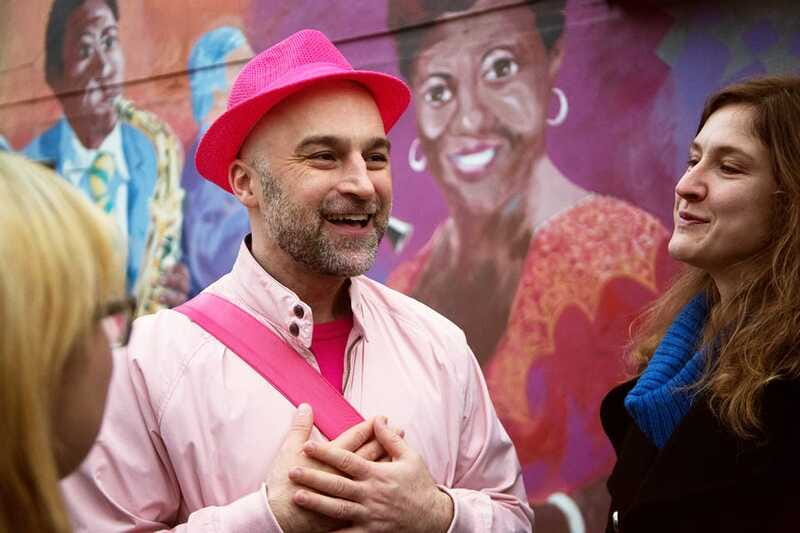
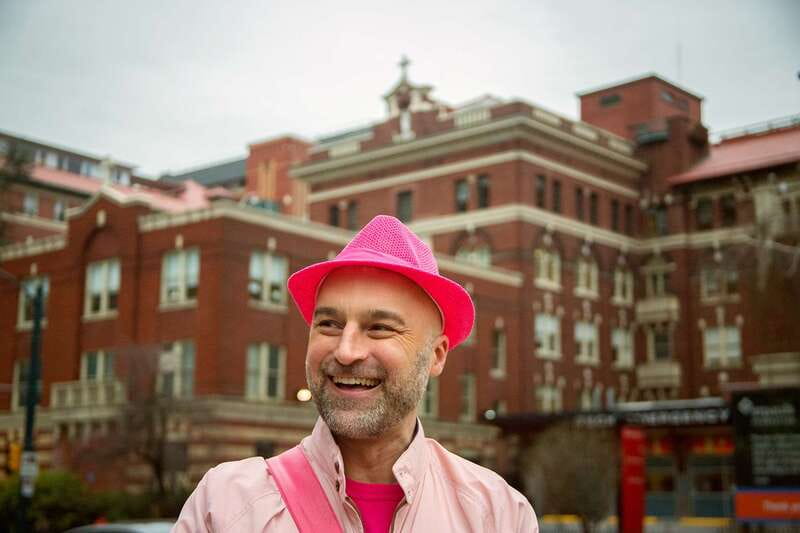
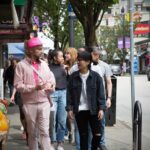
The tour meets outside Trees Organic Coffee Shop at 930 Burrard St, right where downtown starts to feel like it has multiple lives. Your guide shows up as the Man In Pink, which is a fun, easy way to spot him when you are working against the Vancouver weather and morning schedules.
What matters more than the nickname is the person behind it. Glenn Tkach is the creator of this walking tour and a queer historian plus professional storyteller. That combination matters because it changes the whole experience. You are not just walking between points on a map. You’re being led through a chain of connected stories, the kind that explains why certain places in the West End became gathering points in the first place.
And yes, you’ll want to dress for the outdoors. This is a rain-or-shine walk, so you’ll either be comfortable in weather gear or thinking about how slippery sidewalks are. Bring the right shoes, and you will enjoy the pace.
A two-hour walk from downtown to Davie Street’s Gay Village
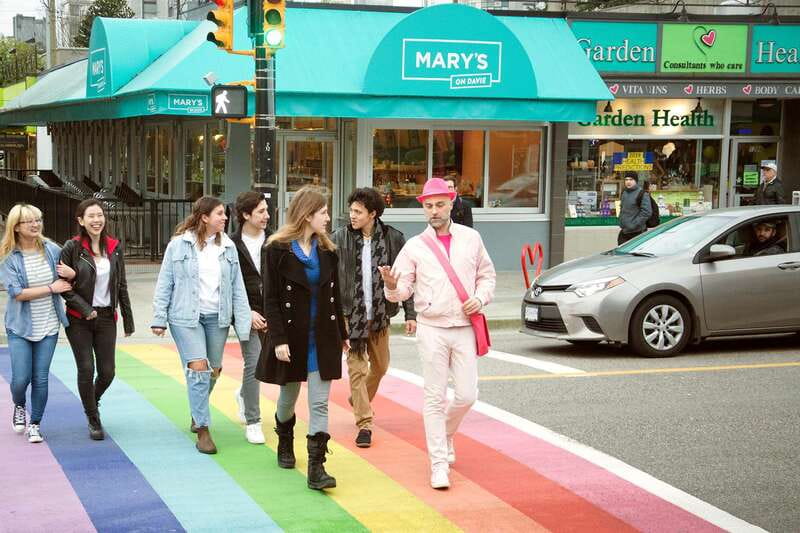
The route moves you from the heart of downtown into the West End, then straight into Davie Street Village. That shift is the point. It’s one thing to read about LGBTQ2+ Vancouver, and it’s another to see how the city’s geography shapes community life.
Along the way, Glenn weaves in big moments and specific cultural threads so the neighborhood doesn’t feel generic. You’ll hear about imperial-style pageantry with Imperial Court coronations, performance life with drag kings at the Quadra, faith and leadership with gay ministers at the United Church, and the broader public health crisis linked to Patient Zero and the GRID crisis.
A good guide doesn’t just list names, they connect themes. Here, the throughline is the push and pull between visibility and backlash. You keep getting told, in story form, how people fought back, how some things broke open publicly, and how the community rebuilt itself when it was under pressure.
If you’re expecting a casual stroll, you might find yourself paying close attention. This isn’t light comedy the whole way. It’s warm, but it’s also honest.
Imperial Court coronations, drag kings at the Quadra, and gay ministers
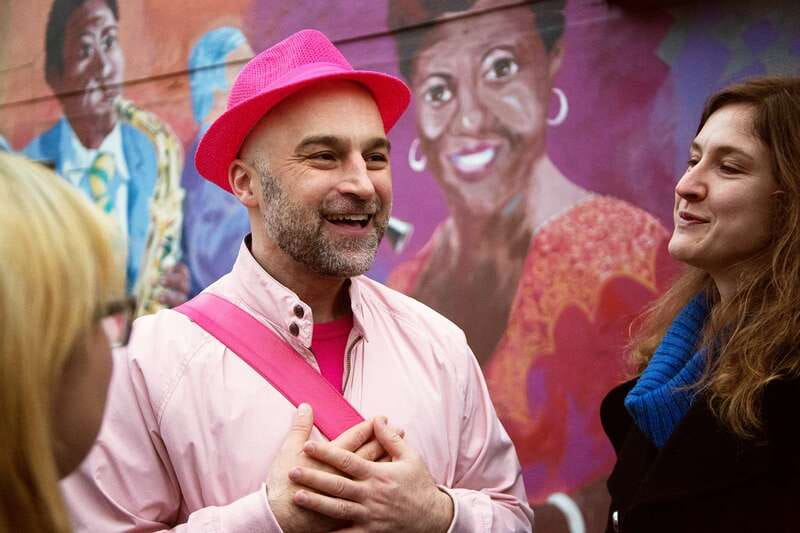
One of the best parts is how it broadens what LGBTQ2+ history can look like. You might assume the story is only about protests and politics. You do hear about that, but you also learn how community pride and identity were expressed through entertainment, ceremony, and church life.
Imperial Court coronations show you a side of LGBTQ2+ culture that blends glamour with community organizing. Drag kings at the Quadra add another layer, reminding you that gender performance was not only a fringe idea. It was part of local culture and a way for people to claim space.
Then comes faith, which can surprise people when they think LGBTQ2+ history is only secular activism. You’ll hear about gay ministers at the United Church, and that detail does real work. It expands the story beyond street-level conflict and into how people navigated belonging, morality, and leadership within institutions that didn’t always welcome them.
These stops also help you understand something practical: why the West End became a magnet. When you have venues, leaders, and performers, you get more than nightlife. You get networks. And networks are what let people survive hard times and still build joy.

Patient Zero and the GRID crisis, stories of courage and survival
The tour includes the names Patient Zero and the GRID crisis, which signal that this walk doesn’t stop at culture and celebration. It moves into the era when fear spread fast, stigma was intense, and people needed information and solidarity in real time.
Glenn’s approach here is key. Instead of treating these topics like distant textbook terms, the tour frames them around what people had to do day to day. That is where you feel the theme repeated again and again: people had the courage to fight back.
You might notice how the pacing shifts when the stories turn darker. The best part is that you are not left hanging with tragedy alone. Even when the material is heartbreaking, you come away with a sense of resilience, and you understand that community survival was also work, planning, and mutual care.
If you prefer only upbeat tours, this section may feel like a lot. But if you want LGBTQ2+ history that respects the full emotional range, this is one of the tour’s strongest reasons to exist.
Jim Deva Plaza, bookstore bombings, and how memory sits in public space
The walk brings you past Jim Deva Plaza, and that stop is built for meaning, not sightseeing. Plazas are where people cross paths, where messages get noticed, and where community life becomes visible.
You’ll also hear about bookstore bombings. That kind of detail changes how you look at a city block. It’s no longer just a place where people walk to dinner or catch a bus. It becomes a location tied to conflict over ideas, identity, and who gets to speak publicly.
This is where Glenn’s storytelling pays off in a very practical way: you leave with a new lens for the places you already pass all the time. Even if you’ve visited Vancouver before, the West End can feel different once you know that public culture had to be defended.
Also, the tone stays grounded. You are not forced into doom. The tour keeps emphasizing the struggle and the triumph, which is exactly what this topic needs. It’s not just a list of harm. It’s a map of how people pushed back and made community anyway.
Nelson Park pause, and the tree-lined West End context
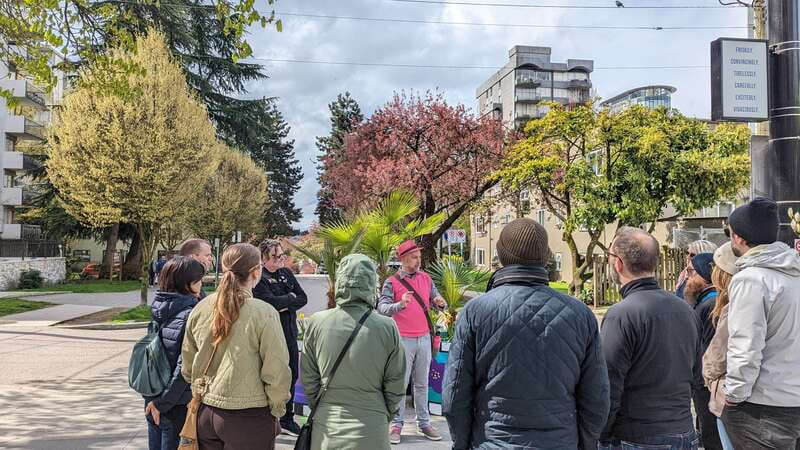
Midway through, you get a stroll that includes Nelson Park, an urban oasis that gives your feet and brain a break. That matters more than you might think. When the subject matter is intense, a quiet pause helps the stories settle so they stick.
The tour also highlights the tree-lined West End feel, which gives the walking pace a natural rhythm. You’re not sprinting from point to point. You’re moving through a neighborhood that shows how comfort and community can grow in the same streets where people once faced threats.
Nelson Park works as a moment to breathe, reflect, and then keep going. If you’re someone who likes to process information as you walk, this stop hits right. If you prefer constant motion, you may find a park pause a little slower, but it’s the kind of stop that makes the rest of the tour land.
The transgender campaigner story, and the idea of speaking up
Another standout topic involves a transgender campaigner who blew the whistle on the biggest crime in Vancouver history. Even without extra details, the inclusion of that story matters because it reinforces the tour’s theme: LGBTQ2+ history is also about advocacy, truth-telling, and taking risks for accountability.
This is also a reminder that not all activism looks the same. Sometimes it’s marches. Sometimes it’s performance and culture. Sometimes it’s faith leadership. And sometimes it’s whistleblowing when silence would be easier.
That combination makes the tour feel human. It avoids turning people into symbols only. You get the sense that real individuals made real choices, and those choices had consequences.
Finishing in Davie Street Village for a post-walk drink
The tour ends in the middle of the Davie Street village action. That’s a smart design choice. By the time the walk finishes, you are likely thinking about what you heard, and having bars and restaurants right there makes it easier to decompress without planning a whole second leg of your day.
I like that the ending isn’t a remote meeting spot where you immediately feel done. You can grab a post-walk cocktail, a coffee, or a meal nearby and let the stories settle. Since food and drinks are not included in the tour price, this also lets you choose what fits your budget and appetite.
It’s one more example of practical value. The guide teaches you how to see the neighborhood, and then you get to live in it for a while afterward.
Price and value: what you get for $28
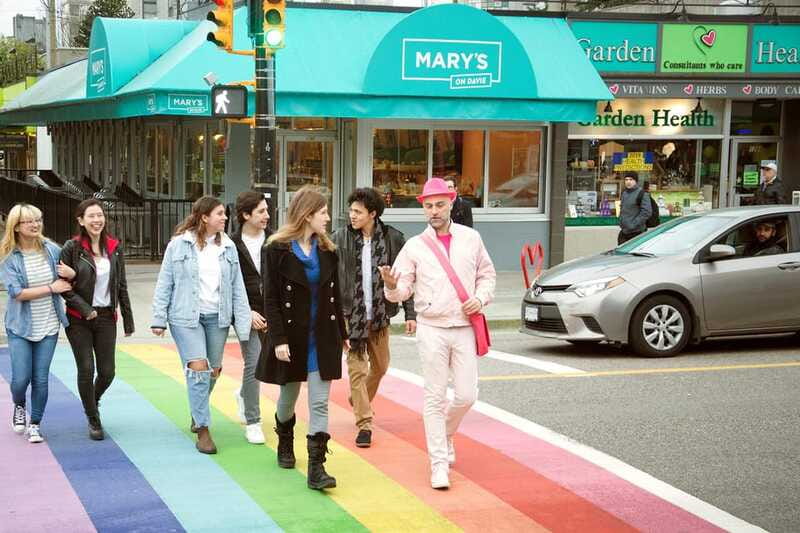
At $28 per person for a 2-hour guided walk, this is a straightforward value proposition if you care about local context. You’re paying for a local expert, a creator-guide, and professional storytelling that turns a neighborhood into a lesson you can feel underfoot.
What’s included is simple: the guided tour in English with Glenn Tkach as a local expert. What’s not included is also simple: food and drinks. That’s normal for walking tours, but it’s worth planning for so you don’t end up hungry at the finish.
In my view, the value comes from three places:
- A guide who teaches by connecting scenes and themes, not by reciting a timeline
- A topic focus that matches the geography, Davie Street and the West End rather than scattered stops
- A compact duration that fits into a half-morning or early afternoon without eating your whole day
If you only want a general overview, this might feel concentrated. If you want the West End to make sense as more than a nightlife strip, it’s a very solid spend.
What to bring, and how to prepare for the tone
Bring comfortable shoes. That’s the one item you can control, and it makes the biggest difference because you’ll be walking through the tree-lined West End and along city blocks.
Dress for the weather. Vancouver rain is the obvious risk, and the tour runs rain or shine. Layering helps too, since you might start cooler near downtown and then warm up as you keep moving.
One more practical preparation note: the tour is designed for adults and contains some references to adult themes. The local partner’s age recommendation is 14+, and children aged 10+ can attend if parents are comfortable with mature subject matter. If you are bringing a younger teen, it’s worth checking that your family is aligned on what the stories may include.
Glenn’s style is warm and welcoming, so the experience does not feel hostile. It’s also not sanitized. That honesty is part of why it works.
Who this tour suits best (and who might want another option)
You’ll likely love this tour if you want:
- LGBTQ2+ history anchored in real Vancouver neighborhoods, not a generic slideshow
- A guide who can handle emotional topics while keeping the tour paced
- Specific cultural references like Imperial Court coronations, drag kings at the Quadra, and gay ministers at the United Church
You might think about another option if you:
- Prefer purely upbeat content with no heavy public health or crime-related material
- Need a very short, light walk with minimal emotional intensity
- Have trouble with outdoor walking in typical weather
If you’re visiting Vancouver for the first time, this tour can also work as a strong “orientation.” It doesn’t just show you where to go, it explains why the West End matters and how people fought back and built community.
Should you book this Vancouver LGBTQ2+ West End tour?
Book it if you want a guided walk that treats LGBTQ2+ history like something lived, not something frozen in the past. Glenn Tkach’s mix of queer historian knowledge and professional storytelling seems to be the main reason people leave feeling informed and moved, not just entertained.
Skip it or consider alternatives if you know adult themes will be tough for your group or if rainy outdoor walking is a dealbreaker. The tour runs outdoors and it does handle heavier subject matter, even while staying human and accessible.
If you’re good with that, this is a smart use of a couple hours. You’ll finish in Davie Street Village with a new way to read the city, and you’ll have a natural place to unwind right after.
FAQ
Where do I meet the guide?
Meet outside the Trees Organic Coffee Shop at 930 Burrard St.
How long is the tour?
The tour lasts 2 hours.
What language is the tour in?
The tour is guided in English.
Is the tour wheelchair accessible?
Yes, the tour is wheelchair accessible.
Does the tour run in bad weather?
The tour operates rain or shine, so dress for the weather.
What should I bring?
Wear comfortable shoes.
Is the tour suitable for children?
It is designed for adult audiences and includes references to adult themes. The age recommendation is 14+, and children aged 10+ can attend if parents are comfortable with them hearing mature subject matter.
Are food and drinks included?
No, food and drinks are not included.
The Older Vancouver
Just off the notebook: recent Vancouver write-ups
- Vancouver: Sunset Boat Cruise with Complementary Bubbly
★ 4.3 · 4 reviews - Vancouver: Personal Travel & Vacation Photographer
★ 4.7 · 4 reviews - Vancouver Private & Custom Tour with a Local: Icons & Gems
★ 3.6 · 4 reviews - Vancouver: Fraser Valley and White Rock Wine Tour
★ 5.0 · 4 reviews - Stanley Park EUC & E-scooters loop tour
★ 5.0 · 4 reviews - Capilano Suspension Br+Lake+Dam+Hachery/4in1/CAR/Small GROUP
★ 5.0 · 4 reviews
Historical Tours, compared.
 ★ 5.0Victoria Guided Food and History TourFrom $822,015 reviews
 ★ 5.0Gastown Historic Walking Food TourFrom $1161,863 reviews
 ★ 4.8Vancouver: Gastown Historical Walking Food TourFrom $113539 reviews
 ★ 5.0Evening Gourmet Tour 5 Course Dinner – History and Food in Old Quebec CityFrom $224496 reviews
 ★ 4.8Quebec City: Old Quebec Historical Walking TourFrom $24409 reviews
 ★ 4.5Peggy’s Cove & Halifax Historic Tour375 reviews
 ★ 3.5Montreal History Guided Sightseeing CruiseFrom $37363 reviews
 ★ 5.0Combo Historical and Food Tour of Old QuebecFrom $224360 reviews
Browse the lists this tour appears in