
REVIEW · OLD MONTREAL WALKING & HISTORY TOURS
Underground city & Downtown. Great way to stay warm!
Montreal has a city beneath the city. This tour strings together the Underground City with top downtown landmarks, so you get instant orientation plus a warm-weather plan for cold days.
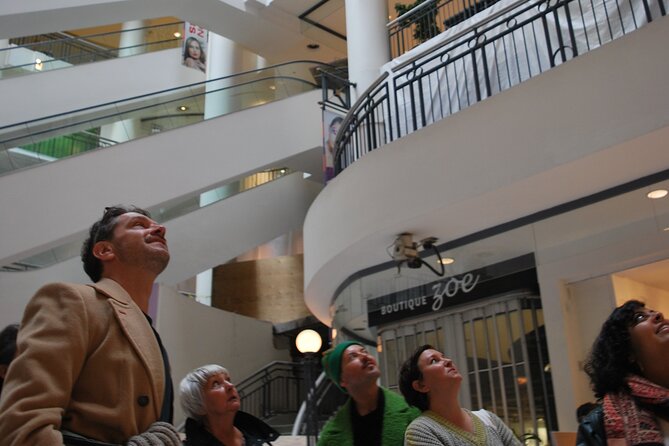
What I like most is the way your guide, Thom, makes the whole system feel easy to use, not confusing. You also get smart photo stops and big architectural moments, from modern art to mid-century design.
One heads-up: it is lots of walking, plus escalators and stairs. If you use a walker, crutches, or canes, this route may not work well.
In This Review
- Key highlights you should care about
- Montreal’s Underground City: the real reason you should do this tour
- Where the tour starts and how the route sets you up for easy exploring
- Stop 1: The Ring photo moment before you go underground
- Stop 2: Underground City tunnels, pathways, and how Montreal stays connected
- Stop 3: Place Ville-Marie and I.M. Pei’s mid-century modern look
- Stop 4: Downtown Montreal’s key neighborhoods in a tight, guided sweep
- Stop 5: Place des Arts for the cultural heartbeat
- Stop 6: Montreal World Trade Centre, indoors meets outdoors, and the Berlin Wall piece
- Price and value: what you get for $66.69 and why it can be worth it
- What your guide does that makes the difference
- Practical tips so you get the most out of your Underground City walk
- Who this tour is for, and who might want to skip it
- Should you book this Underground City and Downtown tour?
- FAQ
- How long is the tour?
- Where does the tour start and end?
- What time does it run?
- What language is the tour offered in?
- Is admission included for the stops?
- Is the tour suitable for limited mobility or people using walkers or canes?
- Does the tour include alcohol?
- What is the cancellation policy?
Key highlights you should care about
- A small group (max 10) keeps things conversational and question-friendly
- Thom’s guiding style helps you feel comfortable using the Underground City on your own
- Warm route when it is cold outside, since much of the tour is indoors
- Downtown orientation fast, from entertainment and Chinatown to key business blocks
- Practical navigation mindset, not just sightseeing, so you can go back later confidently
More cobblestone hours in Old Montreal
- Montreal Mile End Authentic Food Tour with 7 Delicacies Tastings★ 5.0 · 2,598 reviews
- The Original Old Montréal Walking Tour by Guidatour★ 4.5 · 2,217 reviews
- Old Montreal Small-Group Walking Tour | Max 10 | by MTL Detours★ 5.0 · 2,088 reviews
- Montréal: The Original Old Montréal Walking Tour★ 4.8 · 911 reviews
Montreal’s Underground City: the real reason you should do this tour
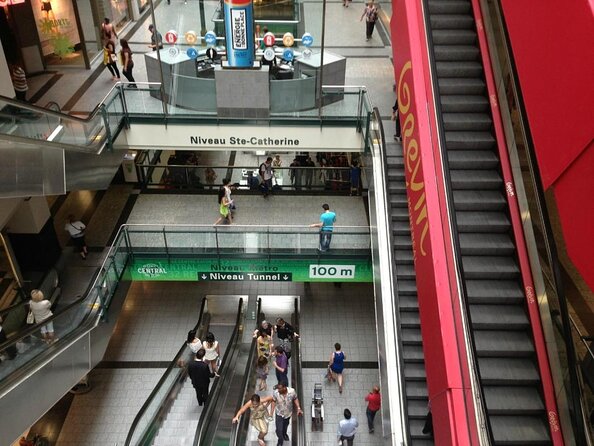
The Underground City is one of those Montreal ideas that sounds strange until you see it. Instead of a few tunnels, you get an interconnected pedestrian world that links malls, office districts, transit stops, and major buildings. It is also one of the best ways to cope with winter temperatures, because you can keep moving without getting stuck outside.
The best part of doing it with a guide is that you are not just walking corridors. You learn how the system works, which routes matter most, and how the “city within the city” connects to the street-level downtown you see from above. By the end, you should feel like you could navigate it without panic.
And yes, this is also a fun tour if you care about design. You will mix underground passages with highly visible downtown architecture, so your brain gets both context and contrast. That combo is what makes it feel more useful than a standard sightseeing loop.
Where the tour starts and how the route sets you up for easy exploring
You meet at 1000 Rue De la Gauchetière O, in a central downtown location that is close to transit and easy to reach. The tour runs about 2 hours, starting at 10:30 am, and it is built for an efficient overview, not a slow museum-style day.
The pacing matters because the Underground City is large. A fixed route helps you avoid wandering in circles, especially on your first morning in Montreal. And since the tour ends near 747 Rue du Square-Victoria suite 700, you finish in an area that works well for continuing your own day, with access to downtown and older neighborhoods nearby.
I also like the group size. With a maximum of 10 travelers, you get a lot more interaction than on bigger bus tours. It is easier to ask questions about routes, landmarks, and how to plan the rest of your itinerary.
Stop 1: The Ring photo moment before you go underground
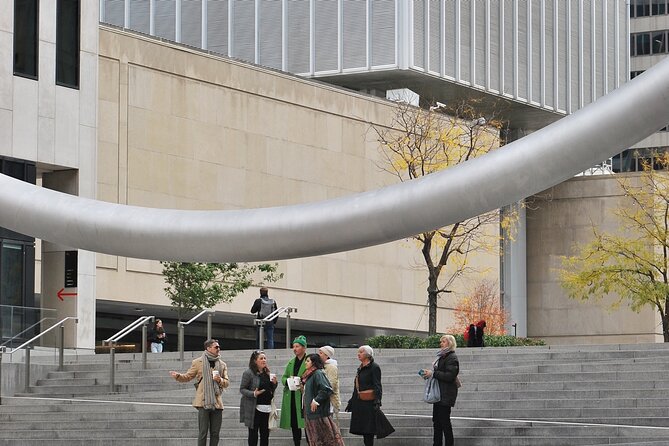
The tour opens with The Ring, a large modern installation meant for pictures. It is a quick stop, about 5 minutes, but it serves a real purpose. You get an easy first anchor for your visit, so you are not immediately thrown into underground hallways.
This is also your mental shift point. The moment you stop here, then move toward the connected downtown network below, it clicks that Montreal is doing something unusual on purpose. Even if you are not obsessed with art installations, you will appreciate that the tour starts with something eye-catching and then follows through with city planning and architecture.
Wider sweeps across Montreal
Stop 2: Underground City tunnels, pathways, and how Montreal stays connected
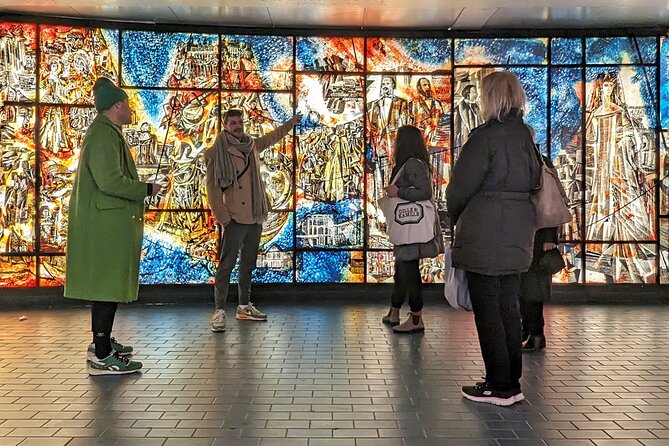
This is the heart of the experience. You spend about 45 minutes in the Underground City, guided through tunnels and pedestrian pathways that connect to metros and key downtown buildings. This network is often described as the world’s largest underground pedestrian system, and the scale is hard to grasp until you are walking it.
Your guide explains why it works. That part is important because it is not just a convenience hack, it is an urban planning solution. Montreal’s system links so many destinations that people can keep their daily routines moving even when weather turns harsh.
In practical terms, you will learn how to think like a local once you go off-script. You will also see that the Underground City is not one straight line or one mall corridor. It is a web, and knowing the way “major nodes” connect helps you navigate faster on your own later.
This is exactly why the guide matters. In multiple moments, Thom’s approach comes up as a big reason people felt comfortable afterward. It is one thing to see the map, it is another to understand how your walk choices translate into real-time orientation when you are inside.
Stop 3: Place Ville-Marie and I.M. Pei’s mid-century modern look
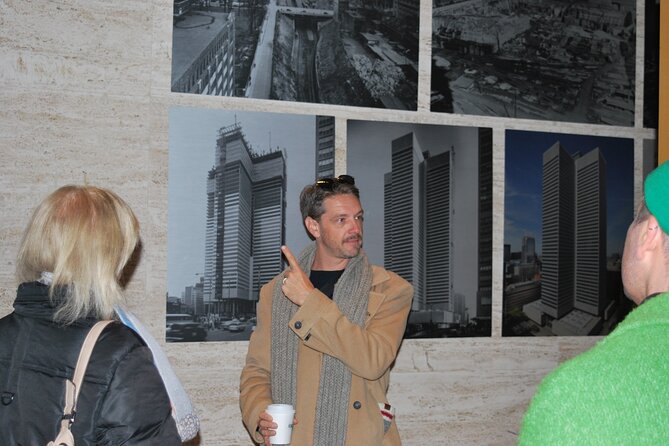
After underground orientation, you pop up to Place Ville-Marie, about 10 minutes. This stop is a quick lesson in how Montreal’s downtown identity is tied to major architecture, not only historic streets.
The building here is a mid-century modern landmark by starchitect I.M. Pei. That matters because it gives you a visual marker for the downtown grid. When you later recognize the surrounding streets and buildings from above, you will remember what you learned inside the Underground City below.
Even if architecture is not your main interest, this stop helps you build a mental map. Montreal becomes easier to read when you can connect the underground corridors to a recognizable, well-known anchor.
Stop 4: Downtown Montreal’s key neighborhoods in a tight, guided sweep
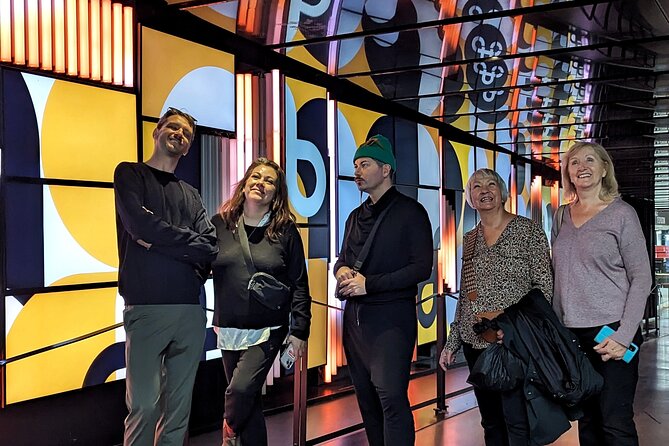
Next comes Centre-Ville (Downtown), about 15 minutes. This portion is your “how Montreal runs” overview, and it is where you get the big-city feel quickly.
You see or pass through areas tied to:
- the Quartier des spectacles entertainment district
- Chinatown
- the International Quarter
- the Financial District
- the Golden Square Mile
And you get the interesting contrast Montreal is famous for: neo-gothic cathedrals and older-style landmarks sitting near modern skyscrapers. The stop also touches on lively downtown rhythms, including museum zones, festivals, universities, and hockey arenas.
The value here is that it helps you choose what to do next. After this tour, you can decide if your energy goes toward nightlife areas, cultural stops, shopping streets, or simply returning to the Underground City to move efficiently between places.
Stop 5: Place des Arts for the cultural heartbeat
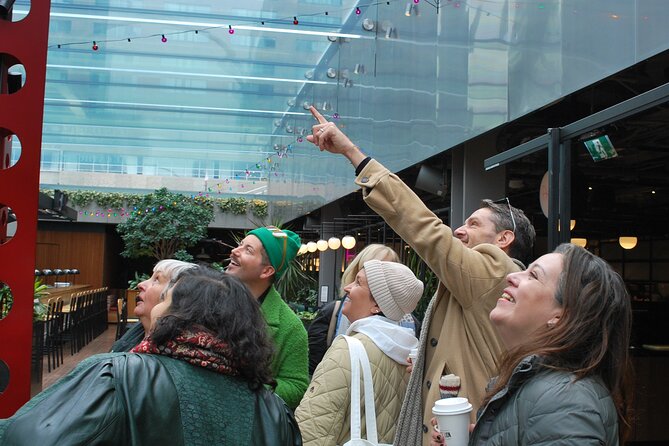
You then head to Place des Arts, about 10 minutes. This is a modern performing arts center linked to major names like the Grand Ballets Canadiens, Opéra de Montréal, and the Orchestre Symphonique de Montréal.
This stop works because it ties the Underground City to what Montreal is doing at street level culturally. It also gives you a reason to care about the route beyond practicality. If you like music, dance, or theater, seeing where those big institutions sit makes it easier to plan an evening while you are in town.
Stop 6: Montreal World Trade Centre, indoors meets outdoors, and the Berlin Wall piece
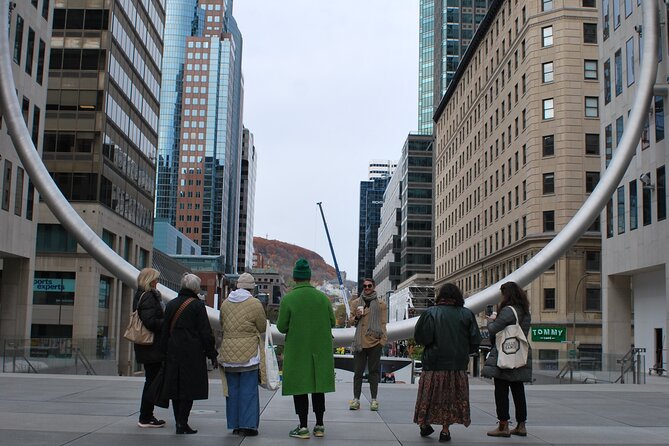
The last stop is Montreal World Trade Centre, about 10 minutes. This is where the tour turns from “walk underground” to “see what Montreal borrowed and repurposed.”
You will notice the indoor-outdoor feel, including fountains and a slab of the Berlin Wall. That wall piece is one of those city signals that tells you Montreal is international in its references and willing to integrate world history into public spaces.
It is also a fitting end point because it brings you back to the idea that the Underground City is more than just tunnels. It is a living system of buildings, public spaces, and gateways between “indoors” and “outdoors.”
Price and value: what you get for $66.69 and why it can be worth it
At $66.69 per person for about 2 hours, this is not a free walking tour. But it is also not priced like a half-day private experience. What makes it feel fair is the combination of things you cannot easily replicate on your own your first morning.
You are paying for:
- A guided map of the Underground City in real time, including how it connects to metros and downtown anchors
- Multiple major stops you can only fully understand when someone explains how they connect
- A small group, so you can ask questions instead of listening to a lecture from a bus
Then there is a practical bonus you should plan around: you get a 24-hour metro card to keep exploring after the tour. People often mention this perk because it turns the tour into a launchpad. You walk the system with help, then use that learning immediately when you are out on your own.
Depending on the day, there may also be an end-of-tour treat like a drink at Time Out Market, plus a small gift-card type perk mentioned in feedback. Even without those extras, the metro card alone strengthens the value.
What your guide does that makes the difference
A lot of tours list stops. This one earns its five-star reputation because Thom focuses on how Montreal functions, not just what it looks like.
Based on what people loved, the pattern is consistent:
- clear explanations of how the Underground City works
- time for questions
- a friendly, engaging style that helps you feel comfortable afterward
That last part is key. If you are arriving from a long flight or you are unsure about navigation, a good guide turns the Underground City from intimidating into manageable. And once you feel that shift, you are more likely to reuse what you learned.
Practical tips so you get the most out of your Underground City walk
Wear comfortable shoes. Even though this tour is designed around indoors, it still adds up to real walking time.
Expect escalators and stairs. The route may be tiring if you are not used to moving through multi-level complexes.
Bring a camera, and plan to use your phone for photos at the ring installation. The tour gives you a quick chance to make images early, then you spend the rest of the experience in transit-rich spaces.
Finally, treat this tour as day one strategy. If your goal is to see more without wasting time, doing this early helps you plan the rest of your stay with less guesswork.
Who this tour is for, and who might want to skip it
This works best for you if you:
- want fast orientation in downtown Montreal
- are traveling in winter or any season when you prefer staying indoors part of the day
- like architecture, city planning, and practical “how to move around” tips
- want confidence using transit and pedestrian networks quickly
You might want to skip it if you:
- need a step-free route. This tour is not listed as accessible for limited mobility, and it is not recommended if you use walkers, crutches, or canes.
- are looking for a low-walking, minimal-stairs experience
If you are mostly sightseeing on your own, the metro card perk can still help, but the guided orientation is what makes this more than just another downtown walk.
Should you book this Underground City and Downtown tour?
Yes, book it if you want a smart start. This is one of the clearest ways to learn Montreal’s underground network and then connect it to downtown landmarks you will recognize later.
It is also a great choice for a first visit because the tour gives you both practical navigation and a set of downtown anchors. You will leave with a better sense of where things are, how to move between them, and which neighborhoods match your mood for the rest of your trip.
If you are comfortable walking on escalators and stairs, and you want the warm indoor advantage, this is an excellent value.
FAQ
How long is the tour?
The tour is approximately 2 hours.
Where does the tour start and end?
You start at 1000 Rue De la Gauchetière O, Montréal, QC H3B 4W5, and it ends at 747 Rue du Square-Victoria suite 700, Montréal, QC H2Y 3Y9.
What time does it run?
The start time listed is 10:30 am.
What language is the tour offered in?
The tour is offered in English.
Is admission included for the stops?
Admission tickets are listed as free for each of the featured stops.
Is the tour suitable for limited mobility or people using walkers or canes?
No, it is not accessible for people with limited mobility, and it is not recommended for travelers using walkers, crutches, or canes. The tour includes lots of walking, escalators, and stairs.
Does the tour include alcohol?
Alcoholic beverages are offered for ages 18 and above.
What is the cancellation policy?
You can cancel for a full refund if you cancel at least 24 hours before the start time. If you cancel less than 24 hours before, the amount paid is not refunded.
The Whole of Montreal in a Day




More Cobblestone Hours



Just off the notebook: recent Montreal write-ups
- Secret Food Tours: Montreal – Jean-Talon & Little Italy
★ 4.0 · 4 reviews - Montreal to Quebec City Tour with Private Transportation
★ 5.0 · 4 reviews - Montreal: Iconic Landmarks All-Inclusive VIP Experience
★ 4.7 · 4 reviews - A Walking Tour of Old Montreal
★ 3.8 · 4 reviews - Day at Mont-Tremblant National Park
★ 4.0 · 5 reviews - Old Montreal: Self-Guided Tour from Place D‘Armes to Old Port
★ 5.0 · 5 reviews
Old Montreal Walking & History Tours, compared.
 ★ 5.0Montreal Mile End Authentic Food Tour with 7 Delicacies TastingsFrom $942,598 reviews
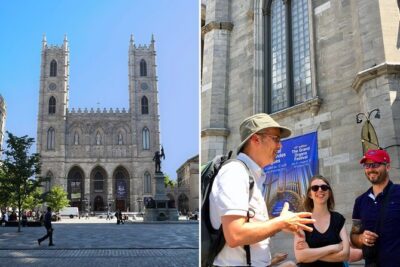 ★ 4.5The Original Old Montréal Walking Tour by GuidatourFrom $262,217 reviews
 ★ 5.0Old Montreal Small-Group Walking Tour | Max 10 | by MTL DetoursFrom $442,088 reviews
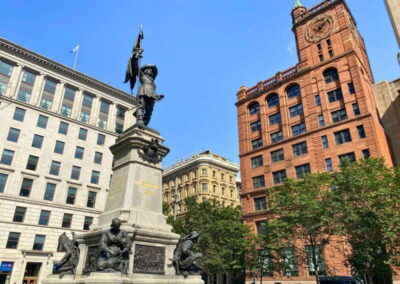 ★ 4.8Montréal: The Original Old Montréal Walking TourFrom $25911 reviews
 ★ 4.7Old Montreal: Traditional Ghost Walk of the Haunted CityFrom $24746 reviews
 ★ 4.5Old Montreal Ghost Walking TourFrom $26726 reviews
 ★ 4.9Montreal: Top Rated Small Group Old Montreal Walking TourFrom $46611 reviews
 ★ 5.0Walking tour of Old Montreal – 16/42 ToursFrom $27592 reviews
Browse the lists this tour appears in