
REVIEW · TOURS
Toronto Essentials Tour: Old Town & Downtown Highlights (PWYC)
Toronto gets confusing fast. This tour turns the chaos into a route.
I love how much you pack into a short walk, and how fast you start feeling oriented in downtown. You get CN Tower sightlines from prime angles, plus a guide who keeps the group moving so you do not waste time hunting for street corners.
My favorite part is the way the tour handles the underground section. I also appreciate one possible drawback up front: because it is a tight, time-boxed route, a few major sights are only teased here, not fully covered, and you must be ready to move when the guide says move.
Key points to know before you go
- CN Tower views without a big detour, timed for the walk so you keep momentum.
- Union Station meeting point is inside the Great Hall, near the info booth under a clock.
- A practical PATH mini-walk with real direction tips, so you do not get turned around.
- Brookfield Place’s Calatrava design shows you why Toronto feels modern below the surface.
- City Hall and Nathan Philips Square land you right where the city actually gathers.
In This Review
- Getting Oriented Fast at Union Station’s Great Hall
- CN Tower Views From the Right Angles, Not Random Passing Glances
- The Royal York Hotel and the Story of Railway Money
- PATH Underground Without Getting Lost (Yes, This Matters)
- Brookfield Place’s Calatrava Public Space
- Hockey Mention You Can Actually Use, Market Tips Included
- Berczy Park and Stopping for the Dog Fountain Photo
- St. James Cathedral, Where Muddy York Meets Gothic Revival
- Financial District Walk: Banks, the 1904 Fire, and the Commute Mood
- City Hall and the Old Versus New Toronto Contrast
- Price, Group Size, and Why This Is Such a Bargain Tour
- Who Should Book This Walking Tour
- Should You Book the Toronto Essentials Old Town and Downtown Highlights?
- FAQ
- What is the duration of the tour?
- How much does it cost?
- Where does the tour start?
- Where does the tour end?
- What time does it start?
- What language is the tour offered in?
- What kinds of places will we see?
- Do we walk through the PATH underground network?
- How big is the group?
- Is the tour designed for most travelers?
- What is the cancellation policy?
Getting Oriented Fast at Union Station’s Great Hall
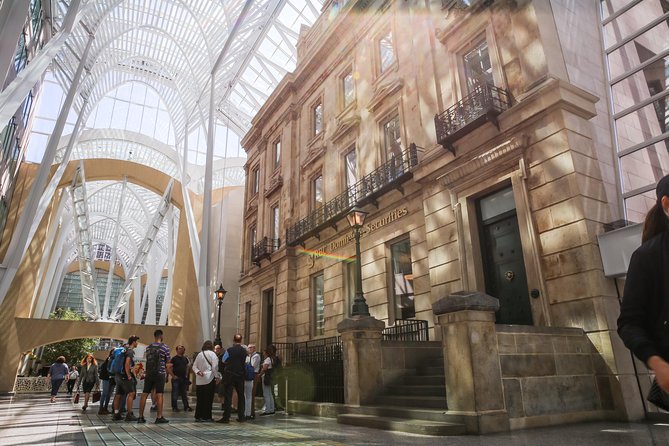
If you only have a little time in Toronto, starting at Union Station makes sense. It is a transport hub, yes, but it is also a big, readable landmark. You will meet inside the station, in the Great Hall, not out on Front Street. The space is above ground with huge windows and a high ceiling, and there is a tourist info booth sitting under a clock in the center.
Here is the practical reason this detail matters: Union Station has several look-alike “destination” areas. There’s the big station hall vibe, plus there are other visitor and food spots elsewhere that can tempt you to linger or wander. The guide is near the booth under the clock, so you can find the group quickly.
You should also plan for an on-time start. The tour leaves on time, and if you are late, the guide cannot wait. This is one of those tours where punctuality protects the whole group.
Still shortlisting? Here is how a few other Toronto bookings stack up.
- Toronto: Niagara Falls Day Tour with Optional Boat Cruise★ 4.6 · 3,178 reviews
- Niagara Falls Day Tour from Toronto★ 5.0 · 2,889 reviews
- Toronto: Casa Loma Entry Ticket★ 4.7 · 2,705 reviews
- Niagara Falls Canada Day Tour From Toronto + Boat Cruise Option★ 5.0 · 2,576 reviews
CN Tower Views From the Right Angles, Not Random Passing Glances
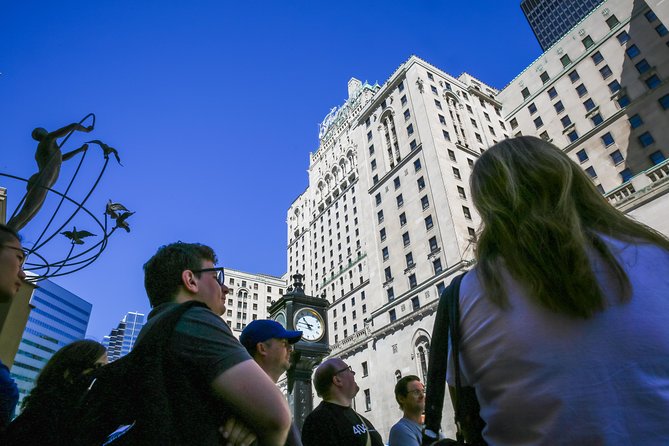
Once you start walking, the tour leans into what most first-timers want: a clean understanding of where the city’s icons sit. The CN Tower is the centerpiece for that feeling. You will get a “there it is” view that matches how Toronto talks about the skyline, and your guide ties it to the tower’s surprising practical side.
You are not just seeing the postcard. You learn why the height mattered for radio and TV reception back in the 1970s, and why the city still talks about it with pride. Even if you already know the tower’s name, this is where it starts to feel like part of a real place instead of a distant image.
Tip for your photos: keep your eyes up as you walk, but also glance at the tower’s presence relative to surrounding streets and buildings. The guide’s positioning helps you avoid the typical angle where everything looks flat.
The Royal York Hotel and the Story of Railway Money
Next comes a contrast that makes Toronto’s growth feel logical. The route points out how expensive and slow it was to build the railroad across Canada, and how rail companies financed the journey with luxury hotels near major stations. In Toronto, that flagship is the Royal York Hotel, opened in 1929.
The timing matters. It opened just as the global economy collapsed. That gives the building a deeper layer than glam headlines. You also learn that even with competition and the Great Depression, the Royal York stayed a landmark and a symbol of prosperity.
One practical note: the lobby itself is not the focus. Instead, you get the best value from the outside. That works for this tour because it is about orientation and key visuals, not sitting and waiting inside.
PATH Underground Without Getting Lost (Yes, This Matters)
Then you get one of the tour’s best value moments: a guided walk through part of Toronto’s PATH, the underground network of corridors and food spaces.
If you have ever stepped into a maze of connected buildings and thought, I can navigate this, then lost track of your way back to daylight, you understand why this stop is worth paying for. PATH is not simple, and the tour keeps you close to the guide so the group does not fragment into a “where did we go” situation.
You also learn why it exists and what it means for downtown life. In winter it becomes a survival tool, and even outside winter it changes how people move between offices, subway stations, and food courts. The guide talks about private-public space in Toronto too, so you start noticing the subtle design choices that let these places feel both communal and controlled.
And a small word of humor aside, the tour makes a clear point: do not get so distracted by the food courts that you lose the thread of the tour.
Brookfield Place’s Calatrava Public Space
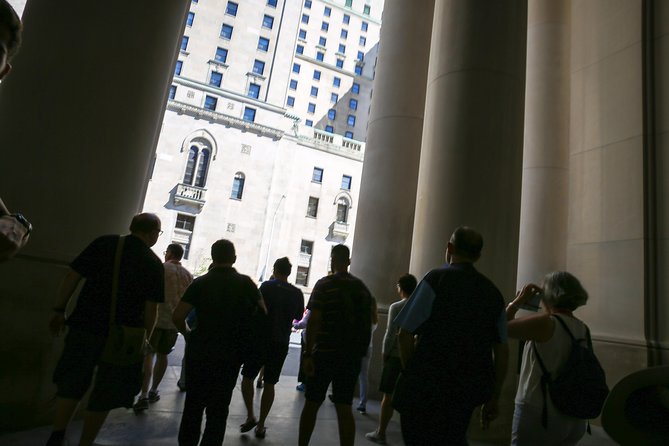
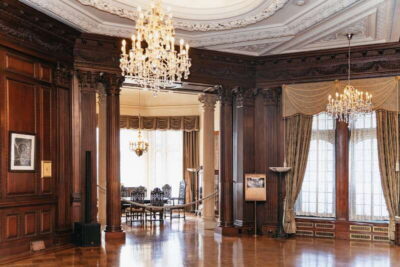
After the underground section, the tour surfaces at Brookfield Place, designed by Santiago Calatrava. Even if you do not care about architecture, you will feel what makes this place special. The space has high vaulted ceilings made of white steel and glass, and it has that otherworldly “this is downtown, but also kind of futuristic” effect.
This stop is also about how Toronto uses public space. The guide gives you context for private-public design and how large modern buildings can create indoor squares people actually want to enter. It is a good mental shift from street-level Toronto, where the city can feel all angles and traffic.
Because the tour is short, you do not get endless time here. You do get enough to see what makes it distinctive and enough explanation to notice it later when you pass again on your own.
Hockey Mention You Can Actually Use, Market Tips Included
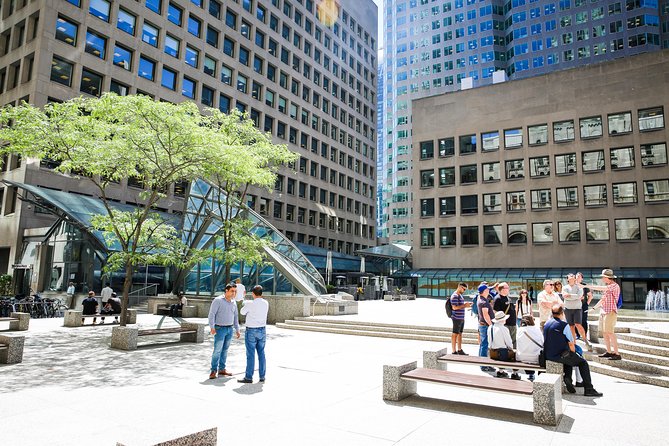
From there, the tour pivots into a sports and neighborhood rhythm, the kind that helps you plan future walks without needing another full tour.
You will hear a bit about Canada’s official winter sport and your guide may connect it to the Toronto Maple Leafs story. You also get pointers about where to find an attraction entrance for hockey, described as difficult to locate. The important thing is that you are not just left with facts. The guide sets you up to return on your own and find it without asking for directions.
Then you get practical advice for visiting the market afterward. You learn its role in city development, and you get tips on timing and what to look for once the tour ends. That matters because a market visit without guidance can turn into a quick skim, and you might miss what makes it meaningful.
Berczy Park and Stopping for the Dog Fountain Photo
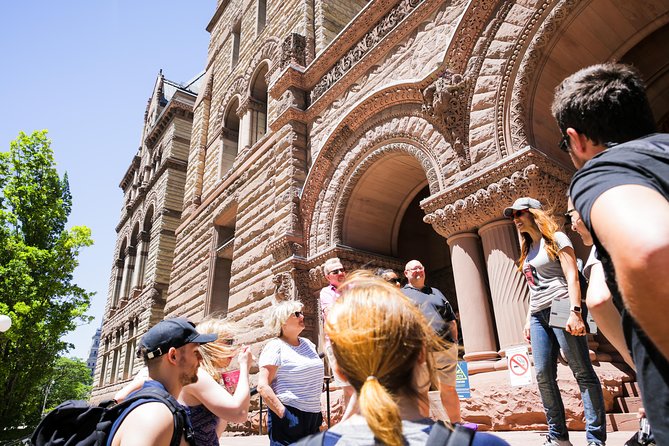
This part is simple and fun: Berczy Park and the famous dog fountain. It is one of those Toronto landmarks that is playful on purpose, and it works well in a walking tour because it gives you a reset.
You get a few minutes to look, take a photo, and hear why Toronto does things like this, not as random kitsch but as a city habit. If you like street-level charm, this stop is a good reward for the earlier walking.
St. James Cathedral, Where Muddy York Meets Gothic Revival
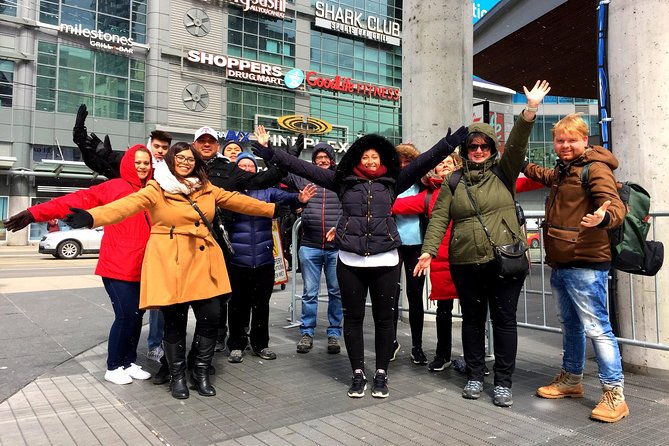
Next up is the spiritual and political core you do not get from a skyline photo. The tour stops at the Cathedral Church of St. James, described as the spiritual centre of Old Toronto and the seat of power in the 19th century.
The guide connects religion and politics in a place that once felt like a frontier story. You also get a Gothic-Revival cathedral context, so it is not only about what happened, it is about how the building signals authority and permanence.
This stop tends to be a favorite because it gives you a slow, human sense of what power looked like before downtown turned into pure skyscraper math.
Financial District Walk: Banks, the 1904 Fire, and the Commute Mood
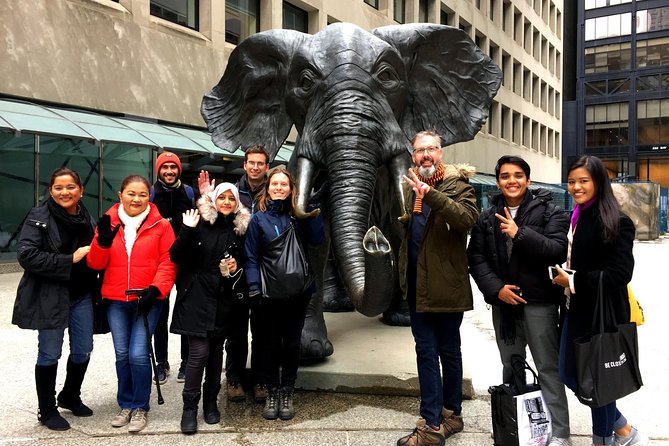
Now you get the downtown “you are in business country” stretch. The tour moves through the Financial District, walking between major skyscrapers and using those buildings to explain the systems that shaped Toronto.
Your guide talks about big Canadian banks and includes a memorable story about the Great Fire of 1904, with a reference to John Croft. It is the kind of story that makes a city feel like it has a pulse, not just a skyline.
There’s also a word picture about commuting: the goal of buying low and selling high. You might even hear a hint of money talk that fits the area’s vibe.
This portion feels especially worth it if you are the kind of traveler who likes practical city understanding. You learn why the district looks the way it does, and why the bank buildings feel like cathedrals. You can see that detail on your own later.
One small limitation: one major building gets only a tease here, with the idea that a different tour covers it in full. That is not a problem, it is just the trade-off for finishing the route and still covering enough ground.
City Hall and the Old Versus New Toronto Contrast
The tour ends at Toronto City Hall, one of the recognizable modern landmarks in the city. It is featured in Toronto’s logo, and you get the classic photo setup with the Toronto sign out front at the beginning of Nathan Philips Square.
What I like about this ending is that it is both civic and celebratory. The guide frames City Hall as a symbol of Toronto’s aspirations of becoming a modern metropolis, and it even connects the building’s look to concrete and the era’s attitude.
Then you stand in the space where the city actually gathers for public moments. Nathan Philips Square is where events happen like New Year’s Eve, farmers markets, and protests, so you finish the tour with a feeling for how the city uses its most famous public plaza.
If you want a smooth wrap-up: take the selfie or group photo, then use the nearby public washrooms before you head off to explore farther. You will feel more relaxed afterward.
Price, Group Size, and Why This Is Such a Bargain Tour
This tour runs on a pay-what-you-want basis, shown here at $4.50 per person, and it lasts about 2 hours. That price level changes the math. When a guided walk costs next to nothing, it becomes less about “Is this worth it?” and more about “Do I want the structure?”
And this one has real structure. It covers key Toronto anchors in a way that helps you avoid wasting time in the wrong places. It also includes free sightseeing-style stops (the listed admission tickets for stops are free), and you get an English-speaking guide throughout.
Group size matters too. The tour caps at 30 travelers, so you typically get the benefits of a guided route without feeling trapped in a huge herd. That makes a difference especially for the PATH segment, where staying close to the guide is part of the plan.
Who Should Book This Walking Tour
I think this is a strong fit if:
- You want a fast overview of downtown and Old Toronto-style landmarks
- You are curious about how Toronto connects above-ground and underground life
- You want CN Tower sightlines and a tour ending at the city’s civic center
It may be less ideal if:
- You want long stops or museum-style pacing
- You want a full, stop-by-stop deep dive into every landmark instead of quick orientation
- You dislike walking at a steady pace for about 90 minutes to 2 hours
Should You Book the Toronto Essentials Old Town and Downtown Highlights?
I would book it if you are doing a first trip or you want a guide to do the heavy lifting of route planning. The value is in the combo: skyline views, civic landmarks, and that practical PATH guidance that saves you from getting tangled in downtown corridors.
I would skip it only if you already know downtown well and you want a slower, more detailed day that spends extra time inside major sites. For everyone else, this tour is a smart way to get your bearings fast and leave with a mental map you can use for the rest of your Toronto days.
FAQ
What is the duration of the tour?
The tour runs about 2 hours.
How much does it cost?
It is pay-what-you-want, shown here at $4.50 per person.
Where does the tour start?
The tour starts inside Union Station, in the Great Hall. The address given is 55 Front St W, Toronto.
Where does the tour end?
The tour ends at Nathan Phillips Square, in front of Toronto City Hall near the TORONTO sign, at 100 Queen St W.
What time does it start?
The start time is 10:00 am.
What language is the tour offered in?
The tour is offered in English.
What kinds of places will we see?
You will see highlights including Union Station, views related to the CN Tower, Brookfield Place, Berczy Park, St. James Cathedral, the Financial District, and Toronto City Hall.
Do we walk through the PATH underground network?
Yes. The tour includes a walk through part of the PATH. The guide helps you stay oriented because it can be confusing.
How big is the group?
The maximum group size is 30 travelers.
Is the tour designed for most travelers?
Most travelers can participate.
What is the cancellation policy?
Free cancellation is available. You can cancel up to 24 hours in advance for a full refund. If you cancel less than 24 hours before the start, the amount paid will not be refunded.
Just off the notebook: recent Toronto write-ups
- From Toronto: Niagara Falls Guided Day Tour with Boat Cruise
★ 4.2 · 4 reviews - Toronto: Niagara Falls Day Tour with Niagara City Cruise
★ 4.5 · 4 reviews - Toronto Islands: Sunrise Breakfast Bicycle Tour
★ 5.0 · 4 reviews - Kensington Market ‘Taste the World’ Food Tour
★ 4.5 · 4 reviews - Toronto: Great White North Food Tour
★ 5.0 · 4 reviews - From Toronto: Customizable Guided Day Trip to Niagara Falls
★ 5.0 · 4 reviews
Tours, compared.
 ★ 5.0Quebec City Walking TourFrom $304,716 reviews
 ★ 4.8Niagara Falls: Premium Tour, Boat & Journey Behind the FallsFrom $1524,207 reviews
 ★ 4.6Toronto: Niagara Falls Day Tour with Optional Boat CruiseFrom $533,178 reviews
 ★ 5.0Best of Niagara Falls Canada Premium Tour: Behind Falls and BoatFrom $1473,139 reviews
 ★ 4.4Montreal: Guided Bus TourFrom $263,064 reviews
 ★ 3.5Big Bus Vancouver Hop-On Hop-Off Sightseeing TourFrom $483,028 reviews
 ★ 4.7Quebec City: Guided Tour of Fairmont Le Château FrontenacFrom $193,027 reviews
 ★ 5.0Niagara Falls Day Tour from TorontoFrom $702,889 reviews