

REVIEW · GRIZZLY BEARS & WILDLIFE SAFARIS
Sights of Moose Jaw Smartphone Audio Walking Tour
Your phone turns downtown into a story. This Moose Jaw smartphone audio walking tour uses live GPS and turn-by-turn audio so you can explore the historic core at your speed, with commentary triggered as you get close to each stop. You’ll cover more than 30 sites, including notable buildings, churches, murals, and the famous tunnels.
I especially like two things about this format. First, you can skip the crowd and still get a guided experience, since the narration runs on your device instead of in a bus or van. Second, you control the pace, with the freedom to stop and start anywhere along the route.
One thing to consider is that this kind of tour runs on your smartphone, so plan for battery. Also, while most stops are free, the tour notes that Tunnels of Moose Jaw admission is not included, and some recommended attractions may not be accessible depending on the season.
In This Review
- Key things I’d clock before you go
- Price and value for a $6.71 audio tour
- Route basics: Crescent Park start to the Oxford Street finish
- The smartphone audio setup: download on WiFi, no signal needed
- How the walking stops tell Moose Jaw’s story in layers
- Opening act: Moose Jaw Public Library and the downtown overview
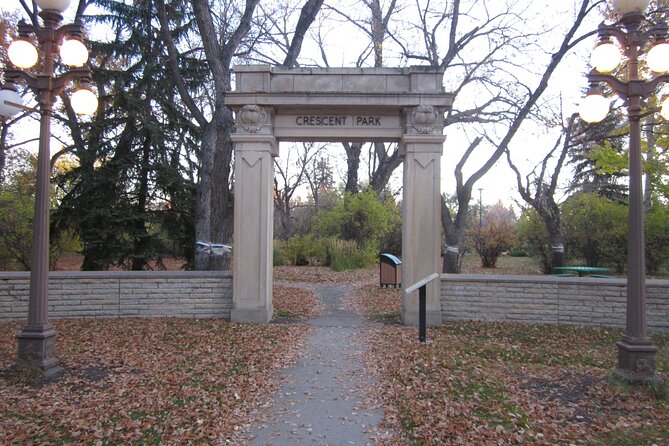
- Crescent Park: amphitheatre, war memorials, fountains, and tennis
- Swimming pool and geothermal: natatorium and Temple Gardens
- Churches and odd stories: St. Mark’s and St. Aidan
- Rail and Prohibition intrigue: CNR station and the bootleg liquor story
- Tunnels of Moose Jaw: the main attraction, with separate admission
- Civic Moose Jaw: city hall, land titles, courthouse, and the old fire hall
- Main Street heritage: Eaton’s building, theatres, and the army/navy store
- More murals and community art: Breaking New Ground and the tribute to Louis Riel
- Sports, culture, and public life: Mosaic Place and the rail yard to arena vibe
- Haunted and historical personalities: Hopkins Dining Parlour, Walter Scott, and more
- Schools and big houses: Central Collegiate Institute and Latimer residence
- Practical tips so this tour goes smoothly
- Should you book Sights of Moose Jaw Smartphone Audio Walking Tour?
- FAQ
- How much does the tour cost?
- How long does it take?
- What do I need to use for the tour?
- Does the tour require internet or cell signal during the walk?
- Is the Tunnels of Moose Jaw admission included?
- Is this a group tour with other people?
- What is the cancellation policy?
Key things I’d clock before you go
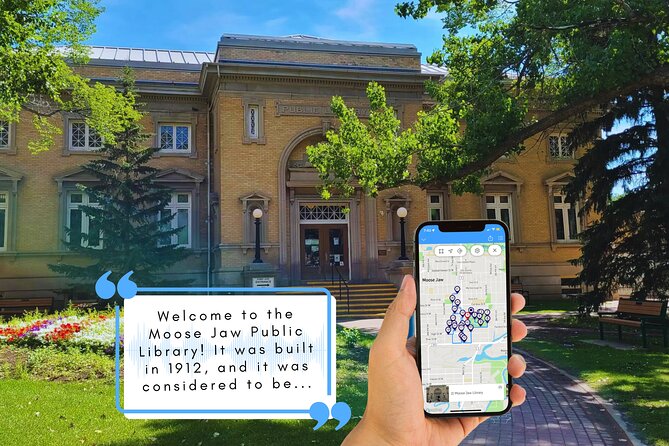
- Live GPS triggers audio as you walk, so you are never guessing where to go next.
- No group timing pressure, you can take your time and finish in the 1 to 2 hour window only if you feel like it.
- Over 30 downtown stops across heritage buildings, churches, murals, and civic landmarks.
- Trivia at locations is optional, but it’s an easy way to stay engaged while you look around.
- Most stops are free listed as free entry, with one major exception for tunnel admission.
Still shortlisting? Here is how a few other Canada bookings stack up.
- Discover Downtown Regina: a Smartphone Audio Walking Tour★ 4.0 · 7 reviews
- Toronto: Prohibition & Spirits History Walking Tour★ 4.8 · 5 reviews
Price and value for a $6.71 audio tour
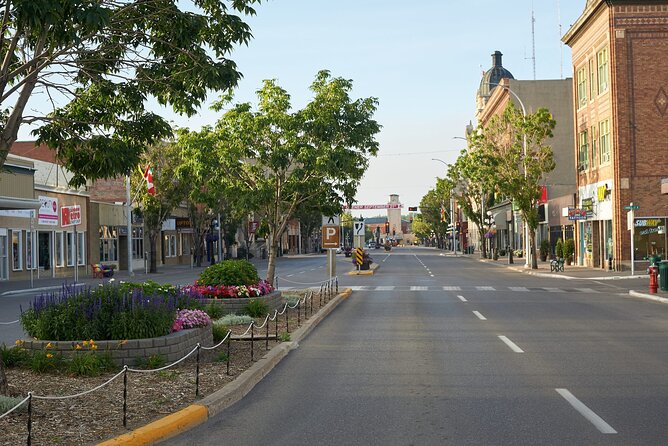
At $6.71 per person, this is one of those low-cost, high-satisfaction ways to see a town’s story without paying for a heavier, ticket-heavy tour. You are paying for the structure: the route plan, the GPS guidance, the audio commentary, and the mini trivia. That matters, because downtown history can blur together fast if you are just wandering on your own.
What you get for the money is practical. The tour is designed for a relaxed walking loop through central Moose Jaw, with most stops listed as admission free. When you pair that with the phone-based navigation, it turns a simple stroll into a self-paced guided tour, without the usual markup for a live guide and group logistics.
The tradeoff is that you are managing your own device. If you go in expecting to borrow a headset, or relying on weak battery life, you’ll feel the limitation. Bring a charged phone and, if you’re the type, a portable charger.
Route basics: Crescent Park start to the Oxford Street finish
This walk starts at Crescent Park, Langdon Crescent, Moose Jaw and ends near 37 Oxford St W (the Latimer residence). The tour is described as an easy walk through the historic downtown area, and most people finish in about 1 to 2 hours. The nice part is that it is not locked to a strict timetable. The tour is yours to keep and enjoy anytime, not only on the booking day.
Even though the stop markers are often set at around 5 minutes each, the route is flexible. You can linger at a mural. You can step closer to a church doorway. You can backtrack if you missed a detail. The audio is built to meet you where you are.
It’s also near public transportation, which helps if you want to pair the walk with other plans in town. And if you are traveling as a private group, it is set up so only your group participates.
The smartphone audio setup: download on WiFi, no signal needed
This is not a streaming experience. You download the tour on WiFi before you start, and the tour is described as not requiring signal or using data while you walk. That is a big deal in small cities where reception can be patchy.
Once you are outside, you will use your phone for two jobs:
- The live GPS map shows where you are and where to go next.
- The guide commentary automatically plays when you get close to each stop.
Headphones are optional. If you have them, great. If not, the audio can play from your device speaker. That’s handy if you’re walking alone and don’t want to fuss with earbuds.
Trivia questions are part of the mix, and they are optional. After the commentary plays at a stop, you tap your guess on your phone. It’s quick, and it’s a fun reason to actually look at plaques and details you might otherwise skip.
How the walking stops tell Moose Jaw’s story in layers
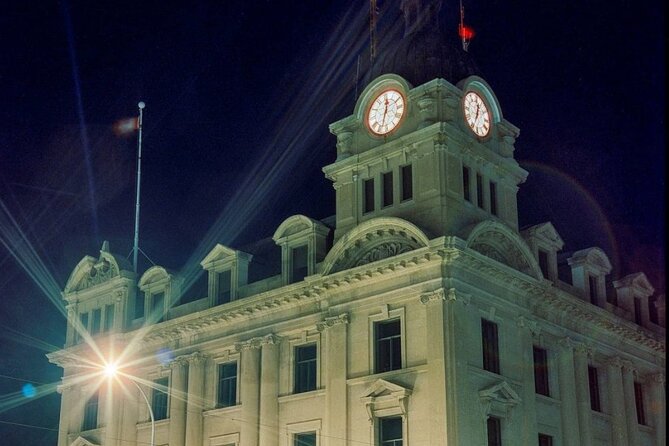
Moose Jaw’s downtown history shows up in layers: civic power, rail and commerce, war memorials, architecture, art on walls, and even underground stories. This tour pulls those threads together by sending you from landmarks to nearby buildings and back again through the same central streetscape.
Below is the flow you’ll experience, with what each stop adds and what to watch for as you walk.
Opening act: Moose Jaw Public Library and the downtown overview

You begin at the Moose Jaw Public Library, and the tour frames the whole city through that starting point. It sets expectations for what you are about to see: historic buildings, churches, and murals that make the Moose Jaw historical downtown area worth a slow look.
From here, the tour moves you through multiple points on foot, often with short commentary segments. That pacing is helpful if you like history but get impatient with long speeches. You stay in motion, yet each stop has a clear theme.
If you’re planning your timing, this is the spot where you can get your bearings fast. Use the first audio segment to orient yourself, then let the GPS guide do the navigation.
Crescent Park: amphitheatre, war memorials, fountains, and tennis
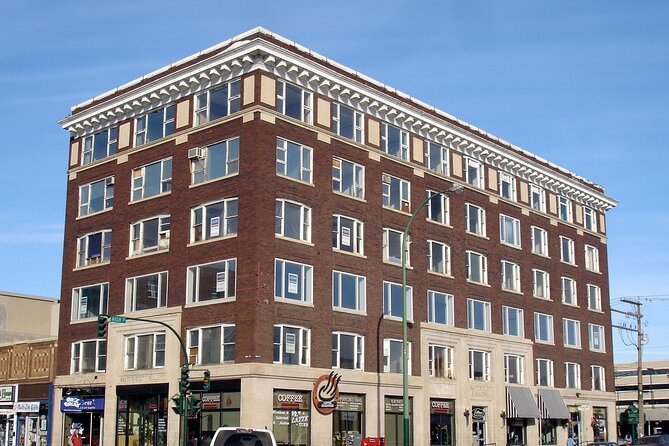
A huge chunk of the charm here is that the park is both pretty and full of story.
At the Crescent Park Amphitheatre, you learn how it came to fruition in 1972, plus the background behind the painted murals. It’s a good example of how public art in Moose Jaw is tied to community identity, not just decoration.
Next comes the Crescent Park Cenotaph. This war memorial, also called the Cross of Sacrifice, was designed by Reginald Bloomfield and constructed by the Moose Jaw Marble and Granite Company in 1923. The tour also notes it was unveiled at the first Armistice Day ceremony. When you stand there, you can almost feel how the town chose to honor loss in a permanent, visible way.
Then you reach the Crescent Park Fountain, with the tour guiding you through the water features like fountains and waterfalls. It’s a pleasant change of pace after memorial-heavy stops, and it gives you a moment to reset before the route shifts back to buildings and institutions.
You’ll also hear about the Crescent Park Tennis Club and why these courts have a story worth sharing. It’s a reminder that even everyday recreation spaces can carry local history.
Swimming pool and geothermal: natatorium and Temple Gardens
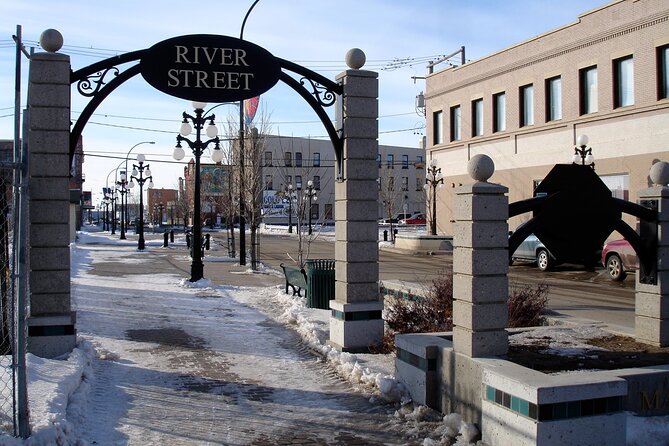
From park grounds, the tour heads into two different kinds of local draw: community recreation and natural resources.
At the Moose Jaw Natatorium (Phyllis Dewar Outdoor Pool), the audio focuses on the famous Moose Jaw Mermaid. Even if you only half-listen at first, the mermaid story makes you look at the building and its surroundings with new eyes.
Then you move to Temple Gardens Hotel and Spa, where you learn how Moose Jaw’s geothermal mineral waters were accidentally discovered in 1910. This stop matters because it turns a simple hotel into a turning point in how people thought about the town’s health and tourism potential.
A practical note: this is one of those spots where a “recommended attraction” could be closed or inaccessible at certain times. Since the tour explicitly warns that some attractions may be closed, check your timing and be ready to treat it as a photo and exterior stop if you can’t get inside.
Churches and odd stories: St. Mark’s and St. Aidan
Moose Jaw’s architecture is a big part of why the downtown feels so walkable and memorable. The tour uses churches to show that history wasn’t only about business and government.
At St. Mark’s Presbyterian Church, the narration points you toward its rather odd history and tells you about the occupants over the years. The word odd here is not random. It’s basically telling you to look past the facade and pay attention to who lived and worked around the institution.
At St. Aidan Anglican Church, you get the Gothic Revival angle and a built in 1909 date. The tour cues the wow factor, so slow down here. Read what you can on-site and look at the details around windows and stonework. This is the kind of stop where a few extra minutes make your photos better.
Rail and Prohibition intrigue: CNR station and the bootleg liquor story
If you like stories with a plot, the rail stops deliver.
At the Canadian National Railway Station, you’ll hear about the design and a bit of the station’s history. Even if you are not a rail buff, the architecture tells you how seriously people once treated transit hubs, both for travel and for commerce.
Later, at the CPKC Rail Moose Jaw Yard, the audio brings in an especially Moose Jaw angle: during Prohibition, the station was used like a funnel for bootleg liquor, and the story highlights the irony of what happened next. This is one of the moments where you’ll likely want to stand a little longer and picture the flow of people and goods through the space.
Then the tour moves toward the big headline.
Tunnels of Moose Jaw: the main attraction, with separate admission
At the Tunnels of Moose Jaw, the tour leans into the Al Capone connection and explains the lowdown behind why this place became part of Moose Jaw’s legend. It’s a high-energy stop, and you’ll see why this is often the reason people want to schedule time for the downtown loop.
Important practical point: tunnel admission is not included. So budget for that if you plan to go inside. If you skip the tunnel visit due to time or cost, the route still works because the audio story up to this point has already taught you why tunnels matter.
Civic Moose Jaw: city hall, land titles, courthouse, and the old fire hall
After the intrigue, you pivot back to the institutions that ran the town.
At Moose Jaw City Hall, the tour points you toward a detail tying the building and fossils together. It’s a nice reminder that civic pride often mixes practical governance with public display.
Then you hit the Land Titles Building, built in 1910. Here the audio explains its role in the transfer of land titles in the region at the turn of the century. You start to understand why Moose Jaw grew so fast, because controlling land transactions is how communities expand.
Next, the Moose Jaw Courthouse is framed as a National Historic Site with a distinction the tour highlights. Watch how the tour invites you to connect architecture to legal authority and local identity.
Finally, the Old Fire Hall stop gives you history on what the building was and how it fits into the town’s story. These civic stops are often the easiest to overlook if you’re rushing, so slow down. Read the plaques. Look for dates.
Main Street heritage: Eaton’s building, theatres, and the army/navy store
Moose Jaw’s downtown has a “shopping and show” feel, and the audio leans into it.
At the Eatons Building, the commentary ties the site to another of Canada’s iconic department stores. That’s useful because it helps you place the building in a wider national retail story, not just a local one-off.
Then you come to Capital Theatre / Mae Wilson Theatre. The tour shares the theatrical and performing arts history of the heritage building. Even if you don’t catch a performance, the audio helps you understand why a town invests in a stage.
You’ll also hear about the Moose Jaw Cultural Centre and the Army Navy Store it connects to, showing how the building contributes to the streetscape.
More murals and community art: Breaking New Ground and the tribute to Louis Riel
Murals are part of this tour’s visual rhythm. If you like public art, you’re going to enjoy the way the tour points out specific stories on walls.
At the Breaking New Ground mural, the audio explains how the mural shows the process of gaining land ownership in Saskatchewan. It’s a powerful “read the painting” moment, even if you’re not much of an art person.
At the Tribute to the Metis mural, the tour highlights Louis Riel, a Metis leader connected to the North West Rebellion. This is one of the stops where you should look carefully at the details, because the narration is doing more than describing art, it’s connecting it to identity and political history.
Sports, culture, and public life: Mosaic Place and the rail yard to arena vibe
At Mosaic Place, the tour gives a run down on varied sporting, musical, and performance events the arena has hosted. Even if you don’t attend anything during your visit, this stop helps you see Moose Jaw as a town with an active events scene, not just a heritage stop.
This is also where the route balances intensity. After several history-heavy buildings, the arena stop feels like a bridge back to modern community life.
Haunted and historical personalities: Hopkins Dining Parlour, Walter Scott, and more
Two more stops add character, one spooky and one literary.
At Hopkins Dining Parlour, the tour says it’s known as one of the most haunted places in Saskatchewan and tells you by who. Since the tour data does not name the haunting figure here, I can’t fill that in. But expect a story you’ll remember later when you walk past the building on a future trip.
At the Walter Scott Building, you’ll hear about what Walter Scott himself may have said about the building and its purpose back when it was built. That person-focused approach is another reason this tour works well for readers who like human stories more than dates.
Schools and big houses: Central Collegiate Institute and Latimer residence
The tour ends by leaning into education and long-lived architecture.
At Central Collegiate Institute, over 110 years old, the narration says it is one of the oldest operating public schools in Saskatchewan and mentions famous people it has hosted. Even without going inside, it’s a great stop for understanding how education helped shape a town’s identity over decades.
Finally, you reach the Latimer Residence at 37 Oxford St W. The tour describes it as a 2.5 story brick-clad house completed in 1905 and set on a tree-lined street with neighbors of similar age and scale. The commentary also notes it still retains many original features. This is a good “last look” stop, because it makes you notice the calm, residential side of downtown Moose Jaw, not only the landmarks.
Practical tips so this tour goes smoothly
- Charge your phone first. This tour is GPS-driven and audio-driven, so low battery can cut your walk short.
- Use WiFi to download before you leave home. The tour is designed to work without signal after download.
- Bring a small water bottle. Many stops are outdoors and the route is easy but active.
- Plan for one paid add-on. If you want the full tunnel experience, remember that admission is not included.
- Consider skipping headphones if you want. The audio can play from your device speaker, which is handy if you prefer not to wear earbuds.
Should you book Sights of Moose Jaw Smartphone Audio Walking Tour?
I think you should book this if you want history without a schedule. It’s ideal for couples, solo walkers, or anyone who dislikes standing around waiting for a group. The live GPS and automatic audio timing help you get your bearings quickly, and the stop-by-stop structure keeps your walk from turning into random wandering.
I’d skip it or adjust expectations if you strongly prefer a live human guide, or if you know you struggle with phone battery. Also, if you want to do the tunnels, plan for that separate admission cost.
For a low-cost way to see Moose Jaw’s best-known downtown landmarks, plus the murals and civic buildings that connect the whole story, this one is an easy yes. Download it on WiFi, give your phone a full charge, and let the city talk back to you as you walk.
FAQ
How much does the tour cost?
The tour costs $6.71 per person.
How long does it take?
It takes about 1 to 2 hours on average.
What do I need to use for the tour?
You need a smartphone or tablet for the mobile ticket and audio. Headphones are optional, and the audio can play from your device speaker too.
Does the tour require internet or cell signal during the walk?
No. You download the tour on WiFi before you start, and during the tour the guidance is described as not requiring signal or using data.
Is the Tunnels of Moose Jaw admission included?
No. The tour notes that Tunnels of Moose Jaw admission is not included.
Is this a group tour with other people?
This is private. Only your group participates.
What is the cancellation policy?
Free cancellation is available. You can cancel up to 24 hours in advance for a full refund, and cancellations within 24 hours are not refunded.
Canada on Foot


The Prairie Capitals
Just off the notebook: recent Canada write-ups
- Sights of Moose Jaw Smartphone Audio Walking Tour
★ 4.5 · 6 reviews - Discover Downtown Regina: a Smartphone Audio Walking Tour
★ 4.0 · 7 reviews
Grizzly Bears & Wildlife Safaris, compared.
 ★ 3.9Banff: Evening Wildlife Safari Guided TourFrom $55465 reviews
 ★ 5.0Great Bears of Bute: Grizzly Bear Viewing & Indigenous Cultural TourFrom $457336 reviews
 ★ 3.915 min. Tadoussac : Black Bear Observation with Expert GuideFrom $37150 reviews
 ★ 4.5Discover Grizzly Bears from Banff145 reviews
 ★ 3.9Tadoussac/Charlevoix: Whale Watching Tour & Bear ObservationFrom $144123 reviews
 ★ 4.3Whistler: Morning with the Bears Land Rover Scenic ExcursionFrom $143113 reviews
 ★ 5.0Campbell River: Bute Inlet Grizzly-Watching Tour & Boat RideFrom $572112 reviews
 ★ 4.0Whistler: Afternoon Bears Spotting Tour in Land RoverFrom $143104 reviews
Browse the lists this tour appears in