
REVIEW · OLD QUEBEC CITY WALKING TOURS
Quebec City Shore Excursion: Grand Walking Tour of Quebec City
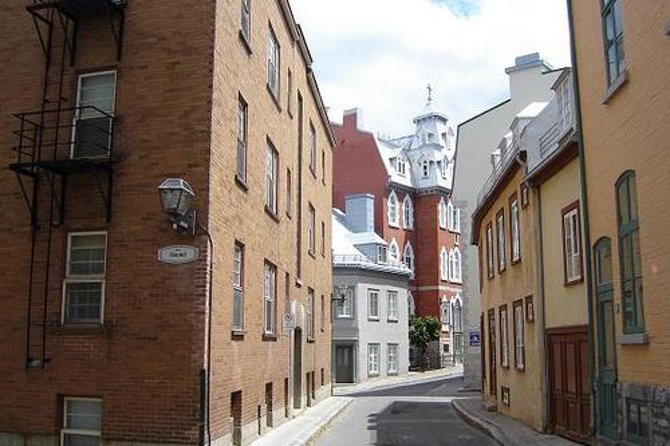
Old Quebec is best on foot. This Grand Walking Tour turns a cruise stop into a guided story-walk, with close-to-port meeting points and a downhill route through the city’s big landmarks. I also like how the tour connects places like Place Royale and Château Frontenac to the larger idea of Quebec as a fortified French city. The main tradeoff is that the experience is mainly for seeing from the street, so you should not count on going inside every major building.
One strong reason this works well on a port day is the small group size, capped at 15 people, and the fact it runs in English. Guides named in past runs, like Yves, Paul, Anne, Helene, and Jocelyne, are repeatedly praised for keeping a fast, friendly pace and answering questions as you go. If the streets have construction noise while you are there, you may have to work a bit to hear every detail.
In This Review
- Key highlights worth planning for
- Where You Meet and End, and Why It Matters on Cruise Day
- Haute-Ville to 1608 to Today: How the Downhill Story Walk Works
- Place Royale and Château Frontenac: The First Big Payoff
- Fortifications and the Only Walled City North of Mexico
- Notre-Dame-des-Victoires and the Citadelle Area: Church and Military Side by Side
- The Mid-Route Checkpoint and the Walk to the Funicular Finish
- Price and Value: What $27.78 Buys You in Two Hours
- The Guides: Humor, Control, and Answering Your Questions
- Who This Quebec City Shore Walking Tour Fits Best
- FAQ
- How long is the Quebec City Grand Walking Tour?
- What is included in the tour price?
- Where do we meet, and where does the tour end?
- Is the tour offered in English?
- How many people are in the group?
- Does the tour run in bad weather?
- Will we go inside Notre-Dame or other major sites?
- Should you book this Quebec City walking tour?
Key highlights worth planning for
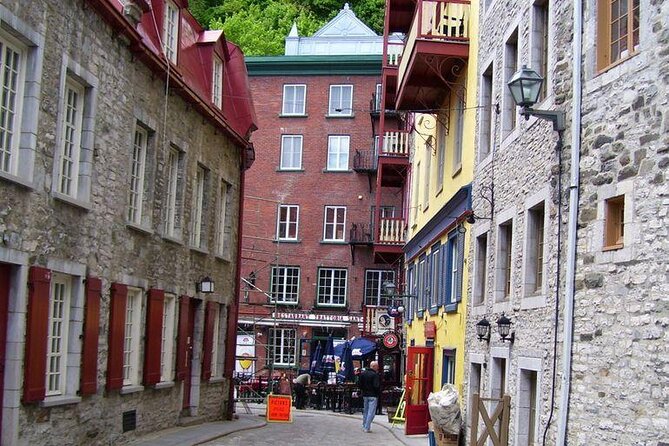
- Upper Town to Lower Town downhill flow that keeps your energy for photos instead of guesswork
- Place Royale and Château Frontenac as early anchors for understanding Quebec City’s identity
- Fortifications and defense stories tied to what you are seeing, not just dates
- Notre-Dame-des-Victoires and the Citadelle zone for a fuller sense of the city’s religious and military roles
- End near the funicular, so you can keep exploring Lower Town right after the tour
More walks inside the walls of Old Quebec
- Quebec City Walking Tour★ 5.0 · 4,716 reviews
- Quebec City: Guided Tour of Fairmont Le Château Frontenac★ 4.7 · 3,027 reviews
- Québec City: Guided Sightseeing River Cruise★ 4.4 · 3,000 reviews
- Half-Day Trip to Montmorency Falls and Ste-Anne-de-Beaupré from Quebec city★ 4.0 · 2,718 reviews
Where You Meet and End, and Why It Matters on Cruise Day
This tour is built for the reality of a cruise port. You start at 12 Rue Sainte-Anne, and the meeting area is described as a short walk from where your ship docks. The finish is in the Lower Town district, ending near the Funiculaire du Vieux-Québec. From there, you are about a 5-minute walk to the cruise ship terminal.
That start and end design is a big deal. Quebec City has hills. If you choose an excursion with long transfers or a complicated handoff, you lose time to walking back to the ship. Here, you do most of the work right where you are staying for the day.
Also note the practical timing style: it’s listed at about 2 hours, and in real life it may run a bit longer to fit in questions and key stops. That is common for small-group walking tours, but it can still help to be mentally ready for a slightly extended return. If your ship day feels tight, you will appreciate that the tour is intentionally positioned near the port and the funicular.
Finally, the tour offers a mobile ticket, which cuts down on lines and paper handling. That is a small thing, but on a cruise excursion it keeps you from burning precious minutes.
Haute-Ville to 1608 to Today: How the Downhill Story Walk Works
Your tour begins in the Upper Town (Haute-Ville). Expect a downhill path from the start toward the end of the Old Québec area. The effect is simple but useful: you do not have to plan stair routes or decide between viewpoints. You follow a guide who frames what you are seeing, from the founding era into the city’s modern life.
This is the part of Quebec City that can feel confusing if you are trying to do it alone. The streets are narrow, the viewpoints are separated by elevation changes, and the names of districts can blur quickly when you are tired from travel. With a guided start in Haute-Ville, you get an orderly sequence of sights and the reason they exist.
A key theme is how the guide turns the city into a timeline. In the background, you are learning that Quebec City is a UNESCO World Heritage site, and that it still carries visible clues from the eras when survival depended on walls, gates, and military readiness. This tour ties those ideas to actual locations you pass.
Fitness note: the tour is described as a walk for people with moderate physical fitness. Since it is a downhill route, that can be easier for some legs than a full uphill slog. Still, it is walking. Wear shoes you trust on stone streets and uneven sidewalks, and keep water handy if it is warm.
Place Royale and Château Frontenac: The First Big Payoff
After the Upper Town start, one of your early anchors is Place Royale. This area is often described as the birthplace of French America, and it is easy to see why it is treated like the emotional center of the old city. It is not just pretty. It helps you understand the old Quebec idea of a French settlement that became a strategic stronghold.
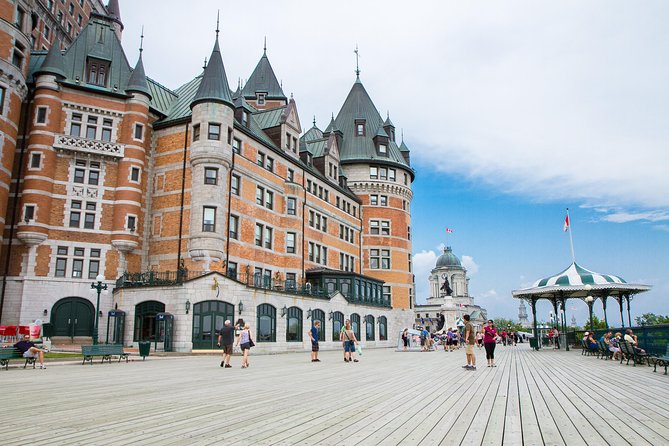
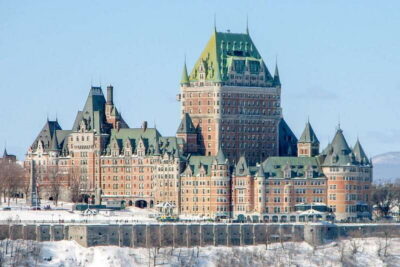
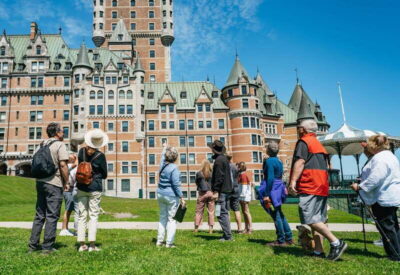
You also get the classic Quebec City scene tied to the name Château Frontenac. Even if you have seen it in photos before, the guide’s context changes how you see it. You start connecting the postcard view to the deeper story, like why Quebec City was worth fortifying in the first place.
Place Royale is also a good place to get your bearings. If you are new to Quebec City, you will likely feel that you are looking at a city that is both European in feel and North American in layout. That mix is part of the charm, and the tour uses Place Royale as a way to make the rest of the walk click.
One practical note from the way this tour is described: many stops are designed around passing important structures and learning the story tied to them. That means your time is optimized for coverage and flow, not for waiting around for indoor access at every site. If you love checking off interiors, you may find this tour more rewarding if you think of it as a street-level history lesson.
Quebec City at walking pace, a few more routes

Fortifications and the Only Walled City North of Mexico
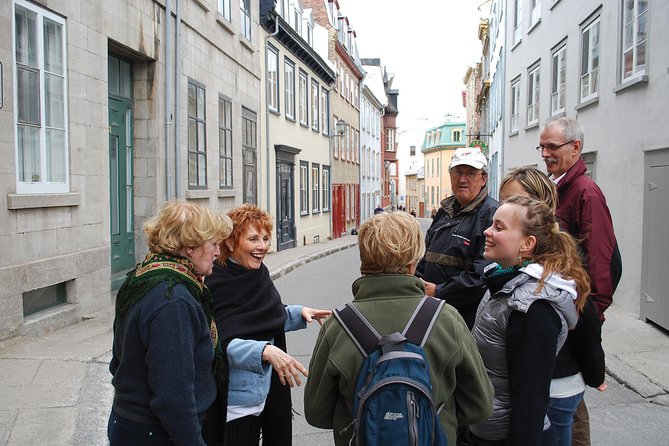
Quebec City’s story is inseparable from its defenses. As you move through Old Québec, you will learn about the role of the city walls and why they mattered for centuries. The tour specifically frames Quebec as the only walled city north of Mexico, which is a wild detail, but also a useful way to understand the city’s uniqueness in North America.
When you hear about fortifications while looking at the city’s structure, the information sticks. You can see how elevation, gates, and controlled access work together. Even without going deep into museum-style exhibits, you get a sense of why a fortified city could survive and grow.
You may also notice how the tour blends “big famous” sights with less famous explanations. A guide who is doing a great job can point out why you should look up at certain lines, or how a stretch of street connects to the city’s defensive logic. That is where the small-group format helps. There is less crowd pressure, and it is easier to ask a question and get an answer while you are standing in front of the relevant spot.
One more context point that comes up during the walk: Quebec City is still active in modern Canada. That is why some military and official buildings matter, not just as architecture but as living institutions.
Notre-Dame-des-Victoires and the Citadelle Area: Church and Military Side by Side
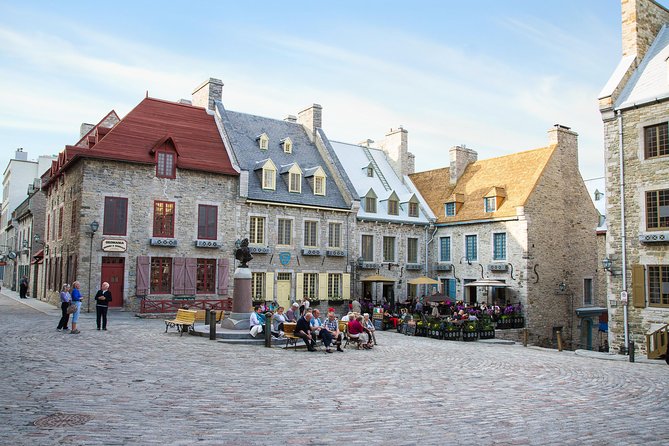
The walk also includes stops tied to Notre-Dame-des-Victoires Church and the Citadelle of Québec area. These two themes, religious beginnings and military presence, show how Quebec City was built as both a community and a fortress.
Notre-Dame-des-Victoires is described as one of the oldest stone churches in Canada, and it stands on the spot where Quebec began. That is a powerful sentence to hear while you are in the neighborhood, because it reframes the building from an old structure into a starting point for the city itself.
Then comes the Citadelle. The tour highlights it as an active military installation and the official residence of both the Canadian monarch and the Governor General of Canada. That is another detail that can be easy to forget once you are used to thinking of historic sites as frozen in time. Here, the guide ties it back to how Quebec City still functions with institutions that have a real role today.
Also look for the fortress-city idea, including original gates mentioned as part of the tour experience. You learn how these elements connect to defense systems, and how that system shaped daily movement through the city long before modern roads made travel easier.
Construction noise is the only real snag here. Some guides have handled street conditions well, but you might still struggle to hear if equipment is loud nearby. If you care about every word, plan to stand where you can hear best, and do not be afraid to ask the guide to repeat something when the street is noisy.
The Mid-Route Checkpoint and the Walk to the Funicular Finish
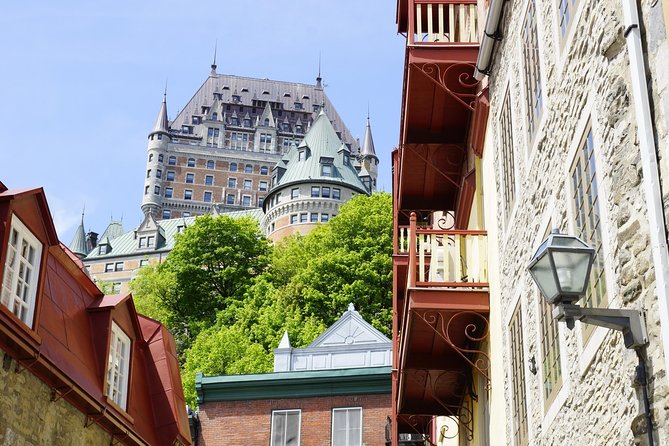
The tour includes a stop labeled near Tours Voir Quebec, and then it continues through Old Québec toward the end near the funicular. Even if you do not know what to do with that mid-route checkpoint at first, it matters because it keeps the group coordinated. Walking tours can drift when people stop for photos or look at menus, so guides use these anchor points to reset the flow.
As you near the end, you will transition into more Lower Town energy. The tour ends near the funicular station at 16 Rue du Petit Champlain. That is a smart finish point because it lets you keep exploring after the guided portion ends. You can also use the funicular for easier movement depending on what you want to do next.
One more thing to understand: this is not a museum tour. The tour description emphasizes seeing major attractions, learning stories, and moving through both the upper and lower towns. A couple of past experiences shared that not every site gets entered, and some groups focused on exterior views. So if your dream is to sit inside every church or go behind every door, you might need a separate plan for that.
Still, for most cruise days, this style is exactly right. You get the key architecture and the meaning behind it, without losing time waiting for long entry lines.
Price and Value: What $27.78 Buys You in Two Hours
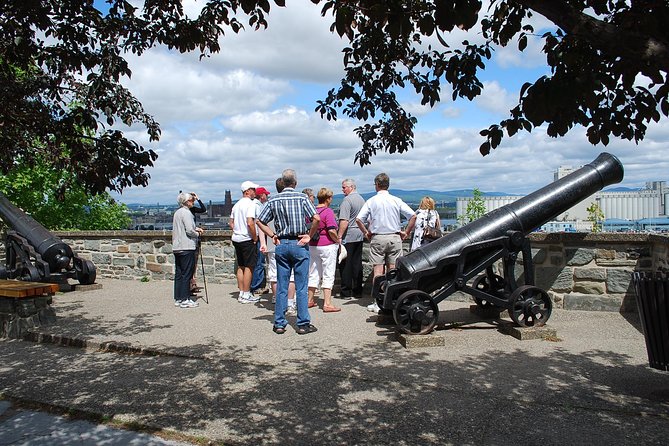
At $27.78 per person for about 2 hours, the value comes from what you get packaged together. You are paying for a licensed, professional guide, plus local taxes, and the route is designed to be walkable from the cruise port. That is important. A cheap excursion that takes 45 minutes to reach and return often feels expensive in the end because it drains your day.
Here, most of the cost is tied to expert guidance and the efficiency of covering both Upper and Lower Town highlights. You also get a small group cap of 15, which typically means you are not swallowed by a large crowd. That matters when you want to ask a question, or when you want the guide to keep an eye on the group pace.
Another value detail: the tour includes the main guided walking, and the stops listed are described with free admission where applicable in the itinerary. In plain terms, you should expect to spend your time looking and learning, not paying surprise site entry fees for each stop.
Two practical tips to get your money’s worth:
- Go with photo and listening goals, not interior-exploration goals.
- If you are sensitive to noise, position yourself where you can hear the guide and watch for the quieter stretch of street.
The Guides: Humor, Control, and Answering Your Questions
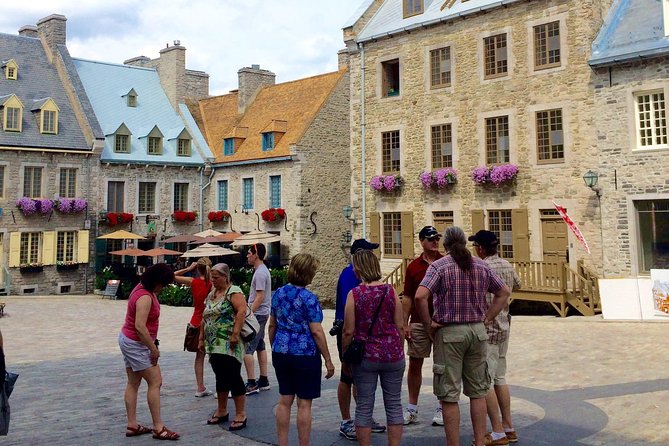
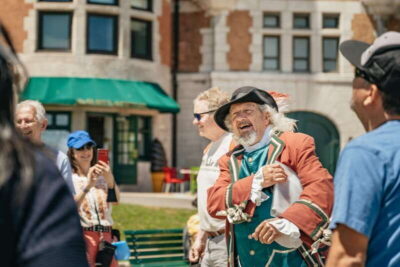
This tour’s best reputation theme is the guide. In past walks, people praised guides like Paul for keeping history fun and engaging, and Anne for being exceptionally informative while staying entertaining. Others specifically called out pace control, like a guide named Helene who kept things moving without boredom.
It is also common for guides to include personal angles, such as family roots and local stories. When you hear those during the walk, Quebec City feels less like a list of landmarks and more like a place where people actually live. One guide named Jocelyne is noted for sharing both history and current visit tips during the tour.
What you should take from that for your own planning is simple: if you enjoy asking questions and getting explanations on the spot, this tour style fits well. A small group makes it more likely the guide can manage questions without stopping the flow too often.
The only recurring caution is hearing. Street construction can make it harder to catch every detail. A good guide can keep the pace and still get the key points across, but you might want to be ready to miss a sentence or two when machines are loud.
Who This Quebec City Shore Walking Tour Fits Best
This tour is a strong choice if you want:
- A first-time orientation to Old Québec without having to map out hills and streets
- A guide-led way to understand why the city walls and gates matter
- A well-paced route that includes major names like Place Royale, Château Frontenac, Notre-Dame-des-Victoires, and the Citadelle area
It may be less ideal if your priority is going inside every building. The tour is designed around walking and seeing, and there are signs from past experiences that interior access can vary. Think of it as a guided stroll through the city’s meaning from the street.
Also, if your legs do not do well with cobblestones and stone sidewalks, you may want to consider a less physical plan. The tour is described for moderate fitness, which usually means you can handle a couple of hours on your feet, but it is not a light stroll.
Finally, this tour has an emphasis on moving efficiently from Upper Town down into Lower Town and ending near a useful transit option. That makes it ideal when you have a limited time window, like a shore excursion.
FAQ
How long is the Quebec City Grand Walking Tour?
It is listed at about 2 hours (approx.), and it may run a bit longer to cover key stories and allow for questions.
What is included in the tour price?
Included items are the 2-hour guided walking tour, a licensed professional guide, and local taxes. Port pickup and drop off are not included.
Where do we meet, and where does the tour end?
You meet at 12 Rue Sainte-Anne, Québec, QC G1R 3X3, and the tour ends near the Funiculaire du Vieux-Québec at 16 Rue du Petit Champlain in the Lower Town district.
Is the tour offered in English?
Yes, the tour is offered in English.
How many people are in the group?
The tour has a maximum of 15 travelers.
Does the tour run in bad weather?
It operates in all weather conditions, so you should dress appropriately.
Will we go inside Notre-Dame or other major sites?
The tour focuses on walking and learning as you pass major attractions. Access to interiors can vary, and some experiences describe stopping mainly for exterior viewing.
Should you book this Quebec City walking tour?
If you want a smart, efficient shore day that helps you understand Old Québec fast, I think this tour is a great bet. The combination of a small group, a guide-led storyline from Upper Town into Lower Town, and an ending near the funicular and your cruise terminal makes it feel built for time-limited visits.
Book it if you care more about getting oriented, learning why the city looks the way it does, and seeing major sights along the way. Skip it, or plan extra time elsewhere, if your main goal is guaranteed indoor access to every big church or building.
For many cruise stops, this is the kind of outing that lets Quebec City feel like a real place, not just a list of stops.
The Whole of Quebec City in a Day




Quebec City on Foot


Inside the Walls of Old Quebec
Just off the notebook: recent Quebec City write-ups
- Quebec City: Historic District Walking Tour (2h)
★ 5.0 · 4 reviews - Quebec City: Fat Bike Guided Tour
★ 4.7 · 4 reviews - Quebec City Photo Tour
★ 5.0 · 5 reviews - Experience île d’Orléans and the falls with a local guide
★ 4.5 · 5 reviews - Private Québec City walking tour with Lenny.
★ 5.0 · 5 reviews - Heritage Upper Town E-Bike Tour
★ 5.0 · 6 reviews
Old Quebec City Walking Tours, compared.
 ★ 5.0Quebec City Walking TourFrom $304,716 reviews
 ★ 4.7Quebec City: Guided Tour of Fairmont Le Château FrontenacFrom $193,027 reviews
 ★ 4.4Québec City: Guided Sightseeing River CruiseFrom $473,000 reviews
 ★ 4.0Half-Day Trip to Montmorency Falls and Ste-Anne-de-Beaupré from Quebec cityFrom $702,718 reviews
 ★ 4.5From Montreal: Quebec City and Montmorency Falls Day TripFrom $362,669 reviews
 ★ 4.8Old Quebec City: Grand Walking Tour with Private OptionFrom $292,609 reviews
 ★ 4.0Quebec City and Montmorency Falls Day Trip from MontrealFrom $362,437 reviews
 ★ 4.6Quebec City: Montmorency Falls with Cable Car RideFrom $192,392 reviews
Browse the lists this tour appears in