
REVIEW · OLD QUEBEC CITY WALKING TOURS
Private Walking Tour in Old Quebec by Tours Accolade
Old Quebec hits you fast. This private 3-hour walk brings you to the best corners without feeling rushed, with incredible photo opportunities at the key viewpoints. I especially like that the route is tailored live, so you are not stuck with a scripted lecture.
Another win is the undivided attention. You can ask questions as you go, and guides like Johanna, Neil, Xavier, Pierre, Paula, and Josee have shown a knack for making details click, from funny history moments to street-level explanations. One thing to plan for: it is still a walking tour with a moderate fitness level, and it is outdoors in all weather.
In This Review
- Why This Private Old Quebec Walk Works So Well
- Key Points You’ll Care About Before You Go
- Entering Old Quebec Through the Right Door: Meeting and Starting
- The Big Sights, The Best Angles: Cathedral to Château Frontenac
- A practical tip I’d use
- Holy Trinity, National Assembly, and City Hall: Where the City’s Power Lives
- St. Louis Gate, Kent Gate, and St. Jean Gate: The Walls You Can Walk
- A small reality check
- Place Royale and Notre-Dame-des-Victoires: Petit Champlain Starts to Feel Personal
- Fresque des Québécois, Petit Champlain Streets, and Battery Views
- What you might notice with a guide
- Séminaire de Québec: A Quiet Stop With Big Context
- What’s Included, What’s Not, and How It Affects Your Day
- Guides Who Actually Adapt: The Human Factor
- Price and Value: Paying for Focus, Not for Crowds
- Who Should Book This Old Quebec Private Tour
- Should You Book This Private Walking Tour in Old Quebec?
- FAQ
- How long is the Private Walking Tour in Old Quebec?
- Is this tour private, or do I join other people?
- Is there a pickup from my hotel?
- What language is the tour offered in?
- Are entrance fees included?
- Does the tour run in bad weather?
- Is it suitable for children and how active is it?
Why This Private Old Quebec Walk Works So Well
This tour is built around one simple idea: you are in charge of what you want to see most. The itinerary is live, not canned, so the guide can adjust based on your pace, interests, weather, and crowd level. That matters in Old Quebec, where the streets can get tight and the best photo angles are sometimes only available when you time your stops right.
You’ll hit a strong mix of landmarks: major churches, government buildings, historic city gates, and the charming streets of Petit Champlain. And because it is private, you are not competing with strangers for the guide’s attention, or for time at the best viewpoints.
The biggest potential drawback is also the most honest one. There is no guaranteed hotel pickup. Instead, the guide starts where you are as long as you are in Old Quebec or Old Port. If you’re staying farther out, you may need to meet the tour closer to the historic area.
More walks inside the walls of Old Quebec
- Quebec City Walking Tour★ 5.0 · 4,716 reviews
- Quebec City: Guided Tour of Fairmont Le Château Frontenac★ 4.7 · 3,027 reviews
- Québec City: Guided Sightseeing River Cruise★ 4.4 · 3,000 reviews
- Half-Day Trip to Montmorency Falls and Ste-Anne-de-Beaupré from Quebec city★ 4.0 · 2,718 reviews
Key Points You’ll Care About Before You Go
Private means truly private, just your group, no mixing.
A tailored itinerary means the guide responds to your pace and interests.
You’ll see top Old Quebec landmarks and gates, often from the most photogenic angles.
Most stops are best for viewing and photos, since entrance fees are not included.
Guides can add helpful details on the spot, including fun facts and practical local tips.
Entering Old Quebec Through the Right Door: Meeting and Starting
The tour has a listed start point near 3004 Av. Honoré-Mercier, Quebec, QC, but the practical reality is this: the guide starts with you where you are, as long as you’re already in Old Quebec or Old Port. In other words, it is set up to reduce the “where do I stand?” stress that can ruin the first 15 minutes of a walking day.
That approach is especially handy if you are arriving by cruise. Old Port is right there, and you can often align with the tour without extra taxi juggling. If you’re not in the historic core, plan to get yourself to Old Quebec first, then focus on the walk.
The tour runs about three hours. That’s long enough to make real progress through the city walls and Petit Champlain, but short enough that you are not stuck for half a day if your energy runs out. You’ll also want a moderate fitness level, because Old Quebec’s streets are uneven in spots and you’ll be on your feet for the full duration.
The Big Sights, The Best Angles: Cathedral to Château Frontenac
Old Quebec has plenty of postcard shots, but the difference here is that you’re guided to the moments that actually make sense. Your first major stop is the Cathedral Basilica Notre-Dame de Québec. The cathedral is a natural anchor point, and the guide’s role is to help you read what you see, not just point at it. Expect architecture context and street-level orientation so you feel like you understand where you are in the city, even if it’s your first time.
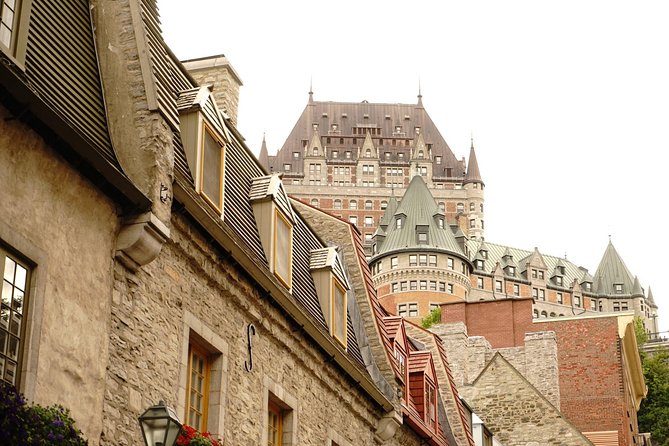
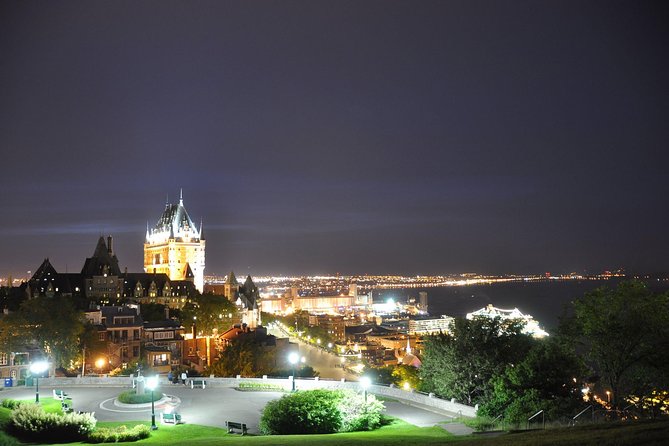
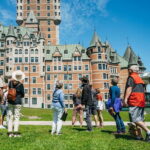
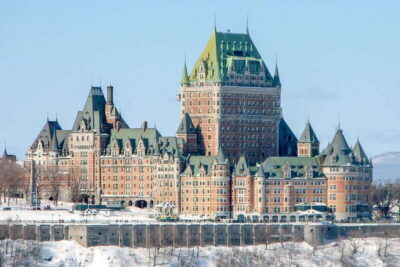
Next up is Château Frontenac, outside only. That matters. This is not a “we go in and do the full interior tour” style stop. Still, outside viewing can be very satisfying if you catch the right angle for photos. Frontenac is one of those landmarks where the real payoff is the scale and the way it frames the whole area. The guide can also help you position yourself so you’re not just taking a blurry shot through crowd gaps.
Quebec City at walking pace, a few more routes

A practical tip I’d use
If your main goal is photos, tell your guide early. A good guide will shift the order of small stops inside the tour flow so you’re at the right place at the right time.
Holy Trinity, National Assembly, and City Hall: Where the City’s Power Lives
After the cathedral and Frontenac area, you move into a part of Old Quebec where the buildings feel official and imposing. You’ll see Holy Trinity, then you’ll head toward provincial and municipal landmarks.
The National Assembly of Québec Province is a key stop for anyone who wants more than fairy-tale city charm. From the outside, it is a chance to understand the modern face of Quebec City, not just the historic one. The value of a guide here is simple: you can connect what you see to how Quebec’s political life works, without needing to research beforehand.
Then you’ll reach City Hall of Quebec City. Municipal buildings often look like they belong in a different world than the cobbled streets around them, and that contrast is exactly why it works. The guide can help you connect the dots between the institutions and the everyday Old Quebec streetscape.
A detail that I love about this kind of tour is when a guide goes beyond generalities. One highlight example from guide feedback is the ability to point out very specific things, like noticing why certain colonial-era cannons have a particular marker. You might not get that exact cannon story on every tour, but the point is: you are likely to get the kind of attention to specifics that makes the city feel more real.
St. Louis Gate, Kent Gate, and St. Jean Gate: The Walls You Can Walk
Old Quebec is famous for its fortifications, and the city gates are where you really feel the defensive design. This tour includes fancy gates like St. Louis Gate, Kent Gate, and St. Jean Gate.
These gates are worth your time because they’re not just pretty entrances. They mark the way the city was organized, controlled, and protected. You’ll get orientation on where you are in relation to the walls, so you don’t wander thinking you’re still on a random street loop. The guide helps you understand the “why” behind the stonework.
A small reality check
City gates can be busy photo zones. If crowds are high, the guide can adjust your timing and give you a few strategies for better shots without turning the whole tour into a bottleneck.
Place Royale and Notre-Dame-des-Victoires: Petit Champlain Starts to Feel Personal
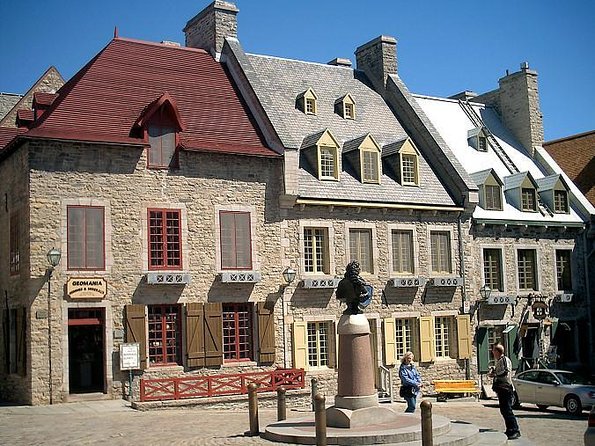
Then you shift into the style of Old Quebec that most people came for: winding charm, historic stone, and the feeling that time moved slower here. The tour brings you to Place royale in Petit Champlain. This is a good anchor for the area because Place Royale sits at the heart of what people associate with early Quebec City life.
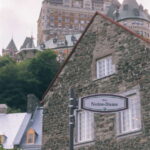
Next, you’ll see Notre-Dame-des-Victoires. Churches in Old Quebec are not only spiritual landmarks, they are also reference points for architecture and neighborhood identity. The guide can help you notice details you would probably miss on your own, like how the church fits into the street pattern and what it represents in the city’s evolution.
Petit Champlain is a bit of a mood change. It’s where you go from “major landmark tour” into “walk and feel the place.” If you like small-scale discoveries, this is where you’ll get it.
Fresque des Québécois, Petit Champlain Streets, and Battery Views
This tour includes Fresque des Québécois, plus time in Petit Champlain again. The mural stop is useful because it adds a modern layer to all that old stone. It helps you understand how Quebec City tells stories now, not only how it looked in the past.
Then you’ll spend time back in Petit Champlain, including the historic defenses area at Batterie royale in Petit Champlain. A stop like Batterie royale works well for two reasons. First, you’ll get a clearer understanding of how this district defended itself. Second, it’s often a strong photo area because you’re not just photographing buildings, you’re capturing the setting and the sense of elevation and structure.
What you might notice with a guide
A good guide can connect the defense layout to what you see around you. Without that connection, you might enjoy the views but miss the meaning. With it, the area starts to read like a living map.
Séminaire de Québec: A Quiet Stop With Big Context
The tour finishes with Séminaire de Québec. Even if you are not a “buildings guy,” this is a stop worth paying attention to because seminaries represent education and long-term influence in Quebec City. It’s one of those places that can feel slightly calmer than the busiest photo streets, which gives you a chance to reset your brain after the denser Petit Champlain areas.
If you’re the type who enjoys how cities form over time, you’ll likely appreciate this last portion. A well-run walking tour ends with a feeling that you now understand the city’s structure, not just its highlight reel.
What’s Included, What’s Not, and How It Affects Your Day
Included:
- Professional local guide
- Private walking tour
- Tailored itinerary, with no canned lecture style delivery
- Viator fees
Not included:
- Entrance fees, if applicable
- Food and drinks, if applicable
This matters because it helps you plan your budget for whatever you want to do next. Since entrance fees aren’t included, treat this as primarily an outdoor, viewing-and-interpretation experience. If you decide you want to enter a site along the way, you can expect to pay admission separately when it applies.
Also, bring snacks or plan a meal break outside the tour if you want one. The tour is three hours, and you’ll likely work up an appetite even if the weather stays kind.
Guides Who Actually Adapt: The Human Factor
This is where the tour earns its high marks. The route is tailored live, and that shows up in small ways. Guides can slow down for questions, add stops when it makes sense, and keep the history lively instead of turning it into a monotone reading.
In the guide feedback I saw reflected in the provided details, I noticed a pattern:
- Guides like Johanna and Josee are described as engaging, patient, and able to answer questions based on your curiosity level.
- Xavier shows up in feedback as flexible on pace, even including cruise-ship style meetups and break opportunities.
- Pierre is praised for making history fun and interesting.
- Neil is credited with detail-level observations, like explaining quirky facts tied to historical objects.
- Paula is noted for being excellent in a private setting for families and business groups alike.
I don’t care who you get, I care that you get the right approach. And this tour is clearly set up to deliver that.
Price and Value: Paying for Focus, Not for Crowds
We don’t have a price figure here, but the value logic is clear: this is priced per group, not per person in a bus-size setup. That can be a great deal if:
- You’re traveling as a couple or small family
- You want someone to respond to your interests
- You’d rather pay for attention than spend time reading guidebooks in advance
The tour also includes a professional local guide and a private format, which means you’re paying to avoid the usual friction of group tours. If you’re someone who hates feeling herded, this structure tends to feel worth it.
Who Should Book This Old Quebec Private Tour
Book this if you want:
- A tailored walking experience in Old Quebec, not a rigid script
- Strong landmark coverage, including city gates and Petit Champlain
- A guide who can slow down, answer questions, and add local recommendations
You might pass if:
- You only want one specific attraction and don’t care about context. A guided walk may feel like more city time than you want.
- Your group struggles with uneven walking. The tour asks for moderate physical fitness, and Old Quebec is not made for roller skates.
If you’re traveling with kids, the tour says children must be accompanied by an adult. That’s useful because it implies your guide will likely adapt to a family pace, but you still need to plan around walking time.
Should You Book This Private Walking Tour in Old Quebec?
Yes, if you want an efficient, high-quality way to understand Old Quebec without turning your day into homework. The blend of cathedral area landmarks, gates, government buildings, and Petit Champlain gives you a city-wide story in about three hours.
I’d book it especially if you care about photos but also want meaning behind the views. And if you like asking questions in real time, the tailored-live format is the whole point.
If your priorities are purely interior attractions, this might feel too exterior-focused since entrances are not included. In that case, combine it with a museum or church visit on your own after the walk.
FAQ
How long is the Private Walking Tour in Old Quebec?
It’s about 3 hours.
Is this tour private, or do I join other people?
It’s a private tour, so only your group participates.
Is there a pickup from my hotel?
Pickup is not described as a standard hotel pickup. Instead, the tour starts where you are as long as you are in Old Quebec or Old Port of Quebec City.
What language is the tour offered in?
The tour is offered in English.
Are entrance fees included?
Entrance fees are not included if applicable.
Does the tour run in bad weather?
It operates in all weather conditions, so dress appropriately.
Is it suitable for children and how active is it?
Children must be accompanied by an adult. The tour requires a moderate physical fitness level.
Just Your Group




Quebec City on Foot


Inside the Walls of Old Quebec



Just off the notebook: recent Quebec City write-ups
- Quebec City: Historic District Walking Tour (2h)
★ 5.0 · 4 reviews - Quebec City: Fat Bike Guided Tour
★ 4.7 · 4 reviews - Quebec City Photo Tour
★ 5.0 · 5 reviews - Experience île d’Orléans and the falls with a local guide
★ 4.5 · 5 reviews - Private Québec City walking tour with Lenny.
★ 5.0 · 5 reviews - Heritage Upper Town E-Bike Tour
★ 5.0 · 6 reviews
Old Quebec City Walking Tours, compared.
 ★ 5.0Quebec City Walking TourFrom $304,716 reviews
 ★ 4.7Quebec City: Guided Tour of Fairmont Le Château FrontenacFrom $193,027 reviews
 ★ 4.4Québec City: Guided Sightseeing River CruiseFrom $473,000 reviews
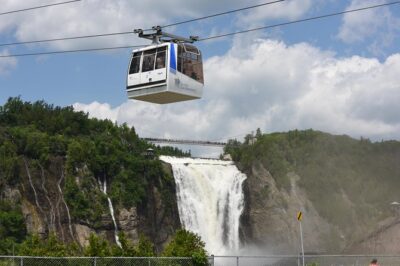 ★ 4.0Half-Day Trip to Montmorency Falls and Ste-Anne-de-Beaupré from Quebec cityFrom $702,718 reviews
 ★ 4.5From Montreal: Quebec City and Montmorency Falls Day TripFrom $362,669 reviews
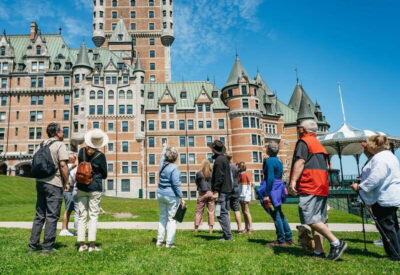 ★ 4.8Old Quebec City: Grand Walking Tour with Private OptionFrom $292,609 reviews
 ★ 4.0Quebec City and Montmorency Falls Day Trip from MontrealFrom $362,437 reviews
 ★ 4.6Quebec City: Montmorency Falls with Cable Car RideFrom $192,392 reviews
Browse the lists this tour appears in