
REVIEW · WALKING TOURS
Pete’s Historic Walking Tour
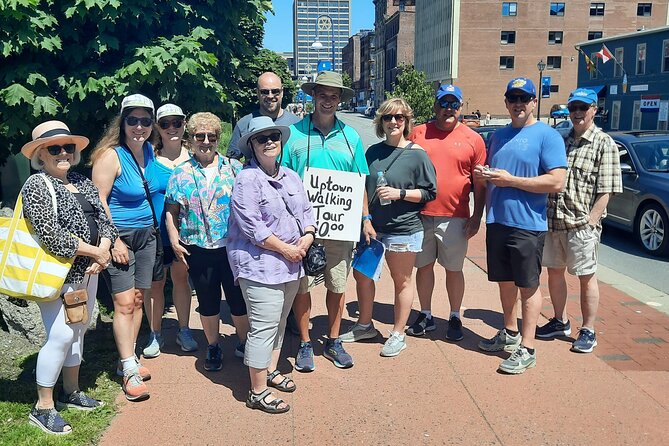
Saint John comes alive block by block. I like the small group feel, which keeps you close to the guide and makes questions easy. I also like the visual aids Pete uses, including copies of rare photos that make the past feel real. One consideration: the tour is story-heavy, so you will spend some time standing at corners and landmarks instead of only walking.
You get a 2.5-hour, English walking loop that runs both morning and afternoon. For $33.80 per person, it’s a solid value if you want history tied to real streets, especially from Water Street and Market Square all the way to the Marco Polo cruise terminal area.
In This Review
- Key points before you go
- Walking Saint John from Water Street to the Marco Polo Terminal
- Price and value: $33.80 for 2.5 hours of street-level context
- Route logistics that actually matter: timing, pacing, and group comfort
- Stop-by-stop: the story of Saint John through streets, squares, and architecture
- Stop 1: Water Street and Furlongs liquor store
- Stop 2: Market Square, Loyalist Landing, and the Marco Polo model
- Stop 3: Saint John City Hall and the story behind Pete’s Pub
- Stop 4: Saint John City Market and quick shopping time
- Stop 5: Charlotte Street murals in an alley
- Stop 6: King’s Square, Great Fire metal, and statues
- Stop 7: Irving Oil headquarters and the K.C. Irving story
- Stop 8: Imperial Theatre and vaudeville origins
- Stop 9: Admiral Beatty building and Amelia Earhart ties
- Stop 10: Trinity Church and Loyalist Church artifacts
- Stop 11: Germain Street and the Union Club
- Stop 12: Princess Street and preservation-minded building design
- Stop 13: Prince William Street, Wall Street of Canada, and Partridge Island
- Stop 14: Three Sisters Lamp at St. Patrick Park
- Stop 15: Marco Polo Cruise Terminal and Area 506 Waterfront Container Village
- The guide factor: why Pete’s approach gets such high marks
- A balanced look at what might not fit your style
- Who should book this Saint John history walk, and who should skip it
- Should you book Pete’s Historic Walking Tour?
- FAQ
- How long is Pete’s Historic Walking Tour?
- How much does the tour cost?
- When does the tour run, morning or afternoon?
- Where does the tour start?
- What language is the tour offered in?
- What is the maximum group size?
- Are there admission fees at the stops?
- What happens if weather is poor?
- Can I bring a service animal or a dog?
Key points before you go
- Pete Ferguson’s storytelling voice is made for hearing clearly without a microphone, even toward the back of the group
- Rare-photo copies and visual aids help you picture vanished scenes and fires you can read about but not see
- No extra admissions are listed at the stops, so your money goes to the guide, not entrances
- It’s designed for an easy walk, with guidance that can use the pedway system to reduce hills
- You cover “uptown” Saint John fast, including Loyalist Landing context, the Great Fire, and Partridge Island immigration history
- You end near the working waterfront, where the cruise industry story connects the past to what’s happening now
Saint John at walking pace, a few more routes
- Saint John Walking Tour★ 4.5 · 39 reviews
- Indigenous Storytelling Walk on Harbour Passage★ 4.5 · 6 reviews
Walking Saint John from Water Street to the Marco Polo Terminal
If Saint John feels quiet on first glance, this tour fixes that fast. The route takes you through the parts of town where early settlers, disaster, rebuilding, and modern business all left physical clues. You are not just collecting names of buildings. You’re learning why those spots matter, then linking it to what stands there today.
I like that the walk starts in the busiest, most historic-feeling corridor and works outward. Water Street and Market Square give you the early baseline, then the route climbs into churches, squares, theaters, and the financial-and-immigration story along Prince William Street. By the time you reach the Marco Polo Cruise Terminal and Area 506 Waterfront Container Village, you are thinking about the city’s connection to travel and trade, not just local life.
The group size matters here. With a maximum of 20 people, it does not feel like a slow-moving classroom. You get frequent pauses to take in a view, then Pete connects it to an event, a person, or a detail you might otherwise skip.
Price and value: $33.80 for 2.5 hours of street-level context
At $33.80 per person for about 2 hours 30 minutes, this sits in the “good buy” category for a city history tour. Here’s why that price feels fair for your time:
- You get a lot of stops in a short window, roughly 15 moments of story and sight.
- There are no paid admissions listed at the stops. The itinerary marks each stop as admission ticket free.
- You get a local guide who uses personal context, especially with his long connection to the pub culture of Saint John.
If you’re visiting for a day and want the fastest way to understand what you are seeing, this is the kind of tour that saves you from Googling your way through town later. You come away with a framework, like Loyalist Landing in 1783, the Great Fire’s start, and how immigration and quarantine played out through Partridge Island.
Route logistics that actually matter: timing, pacing, and group comfort
This is a walking tour with a moderate physical fitness level. That usually means you do not need to train for a hike, but you should expect uneven city sidewalks, short uphill stretches, and a fair amount of stopping.
A practical tip: Saint John has hills, and the tour can be routed through the pedway system to reduce hill climbing. That can make a big difference if your legs get tired on cobblestones or steep grades. Wear comfortable shoes, bring a light layer, and plan to stand for explanations at key corners.
Two more small details that help your day:
- It’s available in both morning and afternoon times. If you want softer lighting for photos, pick morning. If you want a late start after breakfast and coffee, pick afternoon.
- Mobile ticket and English only means you can travel light and focus on listening.
Also note the weather requirement. This experience requires good weather, and if it’s canceled due to poor weather, you are offered a different date or a full refund.
More routes into older Saint John

Stop-by-stop: the story of Saint John through streets, squares, and architecture
Stop 1: Water Street and Furlongs liquor store
You begin on Water Street, on the way to Market Square, with a quick stop at Furlongs liquor store. This is one of those setups where you learn early context without needing an entrance ticket. You get a sense of where the tour will lead, then you roll forward to the heart of the city.
Practical value: starting here helps you orient to the waterfront and the street grid before the bigger landmarks.
Stop 2: Market Square, Loyalist Landing, and the Marco Polo model
At Market Square, Pete points out where the Loyalist Landing in 1783 happened, where the Great Fire of Saint John began, and he brings in details tied to the Prince Charles and Lady Diana walkabout. If that last part sounds unexpected, that’s the point. This tour treats the past as continuous, not locked in a museum year.
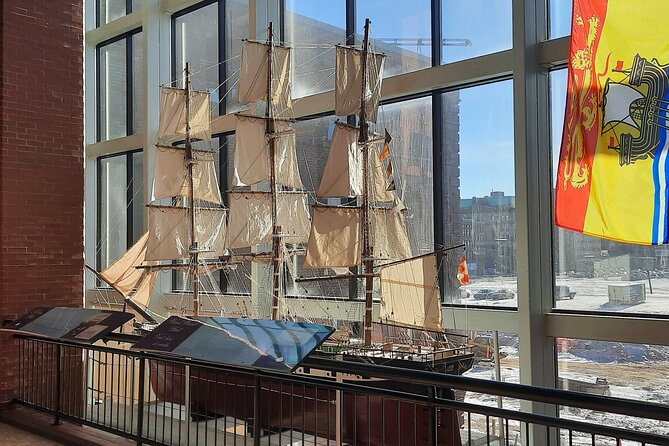
Inside Market Square, you’ll see the Marco Polo sailing ship model and hear history connected to the famous ship. This is a good place to learn how maritime stories helped shape Saint John’s identity.
A small planning note: Market Square is also where shopping tends to tempt you. If you want to browse, go in with a quick, realistic game plan so you do not feel rushed later.
Stop 3: Saint John City Hall and the story behind Pete’s Pub
Next up is Saint John City Hall. Here Pete shares history tied to Pete’s Pub, including his 35 years involved and the bar’s sports and entertainment stories. It’s not just local trivia. It’s a way to understand how a community gathers, which is often more revealing than architecture.
This stop is a big reason the tour feels personal. You learn how public spaces, like a pub, become informal anchors for neighborhood memory.
Stop 4: Saint John City Market and quick shopping time
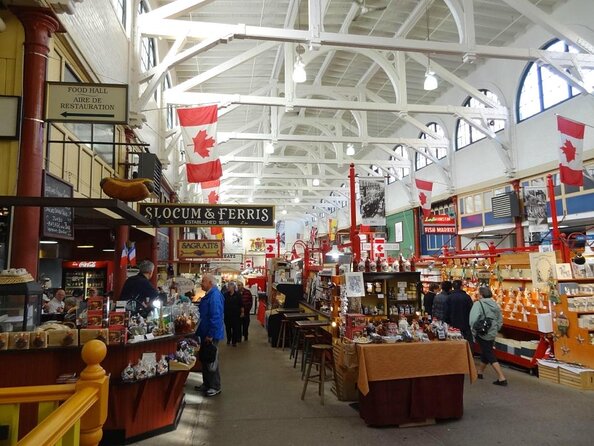
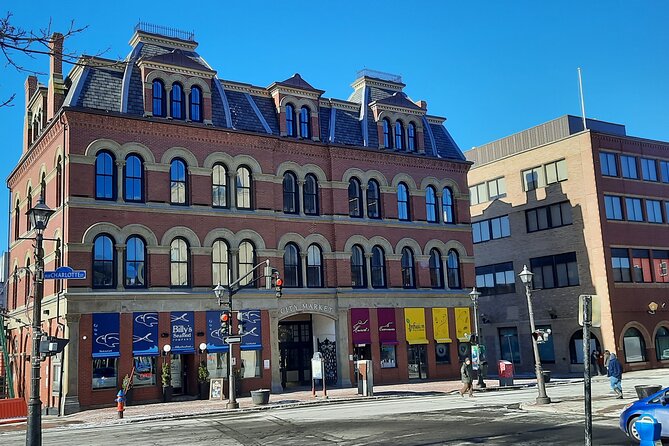
At Saint John City Market, Pete explains architectural features and the market’s history. The market is described as the oldest continuously operating market in Canada, and that alone is worth a few minutes of attention.
You’ll also get extra minutes to shop. Keep it simple: if you want souvenirs or snacks, this is when you do it. If your priority is listening, you can also treat this as a “look and move” stop and save shopping for after.
Stop 5: Charlotte Street murals in an alley
After City Market, the tour heads to Charlotte Street. Pete points out large murals of famous Saint John people, tucked down an alley. This is where the tour leans into the “small details you miss on your own” side.
This stop is short, but it’s a nice mental reset. Murals work well because they are visual, and Pete connects them back to the people and stories behind the city.
Stop 6: King’s Square, Great Fire metal, and statues
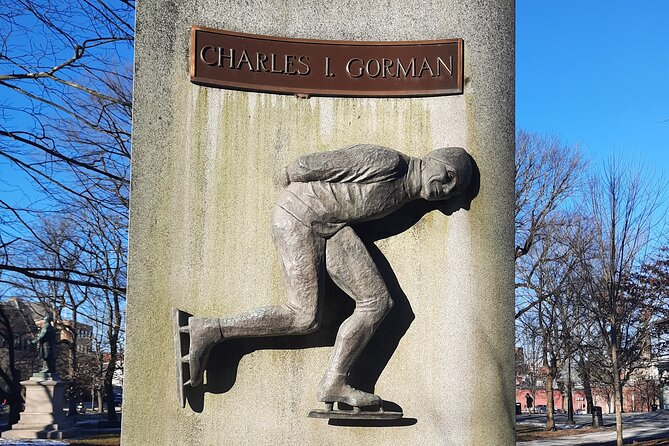
King’s Square is the park stop that adds drama. Pete points out main points connected to the park established in 1785, and he also describes a mass of molten metal from the Great Fire. He then moves through notable monuments and features, including the William Young statue, the Charles Gorman statue, and the King Edward VII Bandstand.
Even if you don’t usually care about statues, this stop helps you understand how a city memorializes disaster and recovery. It turns a skyline into a record.
Stop 7: Irving Oil headquarters and the K.C. Irving story
Across from King Square, you pass the Irving Oil headquarters and hear the history of the Irving family in New Brunswick, starting with K.C. Irving in 1899.
This is a good “modern history” pivot. It helps you see that Saint John’s story is not only Loyalists and fires. It’s also business families, industry, and the long arc of New Brunswick growth.
Stop 8: Imperial Theatre and vaudeville origins
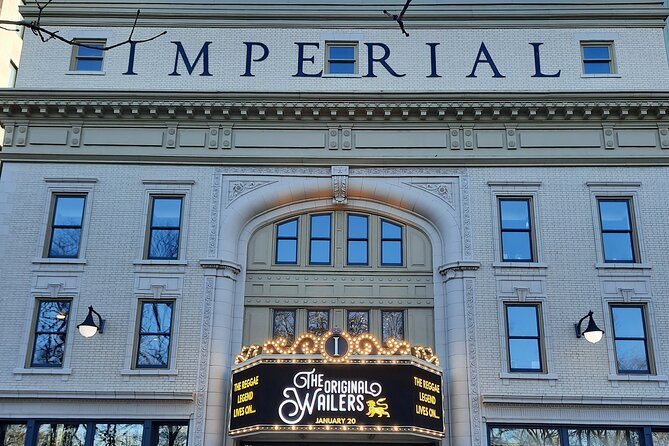
Next is the Imperial Theatre. Pete shares the theater’s history beginning as a vaudeville theatre in 1913, and he explains features including the chandeliers.
This stop works well because it mixes visual details with time. If you only glance at the exterior, you might miss the theatrical clues. The guide’s focus makes you notice what you would otherwise walk by.
Stop 9: Admiral Beatty building and Amelia Earhart ties
Beside the Imperial Theatre, Pete shows the Admiral Beatty building and tells its history beginning as a luxury hotel in 1925. He also notes famous visitors, including Amelia Earhart prior to her famous transatlantic flight.
This is one of the stops where you can feel the city’s broader connections. Saint John is not just local. The people and the architecture point outward.
Stop 10: Trinity Church and Loyalist Church artifacts
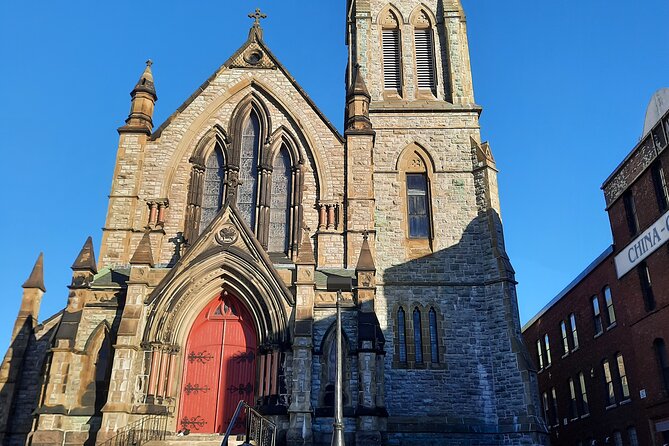
At Trinity Church, the tour focuses on features and history of the Loyalist Church, including four main artifacts held there. It’s a longer stop than some others, which makes sense because churches tend to reward careful attention.
If you like symbolism and design details, you’ll get more out of this stop than you would by rushing through.
Stop 11: Germain Street and the Union Club
From Trinity Church, you head to Germain Street. Pete notes that Germain Street is named after Lord George Germain, then he brings in the Union Club directly across from Trinity Church, a business club from 1884.
This is another “people and place” stop. You learn how street names and institutions reflect political and social history.
Stop 12: Princess Street and preservation-minded building design
At Germain and Princess Streets, the route turns right on Princess Street toward Prince William Street. Pete points out an example where newer construction follows preservation standards, then he explains the historic Ritchie building and its features.
This stop is practical if you care about how cities keep old identity while allowing new buildings. You can look at the street and see the logic, not just the result.
Stop 13: Prince William Street, Wall Street of Canada, and Partridge Island
This is one of the most information-dense parts of the walk. Prince William Street once had a nickname tied to finance and commerce, described as the Wall Street of Canada. Pete shows key buildings and features, including Chubb’s Corner with carved stone heads, the old City Hall, the old post office, the Jarvis building, the Bank of New Brunswick Palatine building, and the Seamen’s Mission.
Then you get a strong human history moment through the Partridge Island mural. Pete explains immigration and quarantine at Partridge Island, with emphasis on Irish immigration during the Potato famine.
This is the stop where the tour does more than explain architecture. It explains why people arrived, where they were processed, and how a city handled crisis and newcomers.
Stop 14: Three Sisters Lamp at St. Patrick Park
At the foot of Prince William Street, you reach the Three Sisters Lamp in St. Patrick Park. Pete explains why it has that name and how the lamps saved lives.
It’s a short stop, but it gives you a tangible link between technology, safety, and everyday survival.
Stop 15: Marco Polo Cruise Terminal and Area 506 Waterfront Container Village
The tour finishes at the Marco Polo Cruise Terminal and Area 506 Waterfront Container Village. Pete connects the dots to the history of the cruise industry in Saint John, including how it began.
This ending works because it mirrors where you started, in maritime space. You go from early arrivals and maritime models to cruise tourism and modern port life.
One note to keep your expectations aligned: the activity is listed as ending back at the meeting point, even though the final sights are near the terminal. That means the final walk back is likely part of the tour flow rather than a separate plan.
The guide factor: why Pete’s approach gets such high marks

Pete Ferguson is the reason this tour feels more like a conversation than a lecture. From the tour info and repeated pattern in feedback, he brings three strengths:
- Humor and warmth. You get laughs, but they don’t replace facts. The stories keep you engaged while you absorb a lot of dates and place names.
- A practical teaching style. Pete uses visual aids such as copies of rare photos, and he explains features you would not automatically notice.
- Strong audience connection. People report it’s easy to hear him and that the group stays comfortable, even when you are not in front.
The tour also has a reputation for being flexible with how hills are handled. If you end up using the pedway system, it makes the whole walk feel easier without losing the historical route.
A balanced look at what might not fit your style
This is an easy walking tour overall, but it is not a quick, sightseeing-only loop. One common downside in feedback style is that there can be a lot of time standing while Pete explains multiple locations. If you prefer a more motion-heavy tour, you might feel the pacing more than you’d expect.
Also, the market stop includes shopping time, but it’s not long. If the market is your main shopping target, plan to browse fast.
Finally, the tour is weather dependent. If the day looks rough, be ready for a reschedule offer or a refund.
Who should book this Saint John history walk, and who should skip it
Book this if you want:
- a street-by-street explanation of how Saint John became what you see today
- a guide who uses rare-photo style visuals and detailed place context
- an easy, manageable walking plan that still covers a lot of ground
- a mix of major events (like the Great Fire) and human stories (like Partridge Island quarantine and immigration)
Consider skipping if you want:
- mostly panoramic views and minimal narration
- a museum-style experience with long time inside buildings
- lots of free time at one single stop
Good matches include couples, solo visitors, and anyone who likes history but also likes it told in plain language with humor.
Should you book Pete’s Historic Walking Tour?
Yes, if your goal is to understand Saint John quickly and leave with a map in your head. For $33.80 and about 2.5 hours, you get a tight route, no listed entrance fees, small-group pacing, and a guide who clearly loves the city. The Partridge Island immigration and quarantine story, the Great Fire references, and the way maritime history ties into the Marco Polo terminal make the tour feel purposeful.
If you hate standing during explanations or you want a strictly walking-only experience, you might find the pace slower than you like. But if you are the type who enjoys stopping to look closely, then this is one of the better ways to turn Saint John from a place you visited into a place you understood.
FAQ
How long is Pete’s Historic Walking Tour?
The tour lasts about 2 hours 30 minutes.
How much does the tour cost?
It costs $33.80 per person.
When does the tour run, morning or afternoon?
Morning and afternoon tour times are available for convenience.
Where does the tour start?
The meeting point is Duke Street and Water Street, Saint John, NB E2L 5G1, Canada.
What language is the tour offered in?
The tour is offered in English.
What is the maximum group size?
The tour has a maximum of 20 travelers.
Are there admission fees at the stops?
The itinerary lists admission ticket free at each stop.
What happens if weather is poor?
This experience requires good weather. If it is canceled due to poor weather, you are offered a different date or a full refund.
Can I bring a service animal or a dog?
Service animals are allowed, and pet dogs are welcome.
The Older Saint John

Saint John on Foot


Just off the notebook: recent Saint John write-ups
- Introduction to Sailing in Saint John, NB
★ 5.0 · 5 reviews - Fundy Shore Tour By Bus
★ 3.5 · 5 reviews - Exclusive Sightseeing Tour in Saint John
★ 5.0 · 5 reviews - Private Sightseeing Tour In Saint John
★ 4.0 · 6 reviews - Saint John Small Group Night Tour with Fort La Tour + Martello
★ 4.5 · 6 reviews - Indigenous Storytelling Walk on Harbour Passage
★ 4.5 · 6 reviews
Walking Tours, compared.
 ★ 5.0Quebec City Walking TourFrom $304,716 reviews
 ★ 4.8Old Quebec City: Grand Walking Tour with Private OptionFrom $292,609 reviews
 ★ 4.5The Original Old Montréal Walking Tour by GuidatourFrom $262,217 reviews
 ★ 5.0Old Montreal Small-Group Walking Tour | Max 10 | by MTL DetoursFrom $442,088 reviews
 ★ 5.0Gastown Historic Walking Food TourFrom $1161,863 reviews
 ★ 5.0Old Quebec Classique Walking Tour with FunicularFrom $421,317 reviews
 ★ 5.0Vancouver Lost Souls of Gastown Walking TourFrom $291,273 reviews
 ★ 4.6Quebec: Crimes of New France Animated Walking TourFrom $20926 reviews
Browse the lists this tour appears in