
REVIEW · CANADA
Pen Making With The Woodworker Himself
Turning wood into something you can use is rare. This workshop gives you that, with expert help and a friendly pace. You spend about three hours learning the full pen-making flow on a lathe, including the turning, sanding, polishing, and assembly steps that turn a plain blank into a personal keepsake.
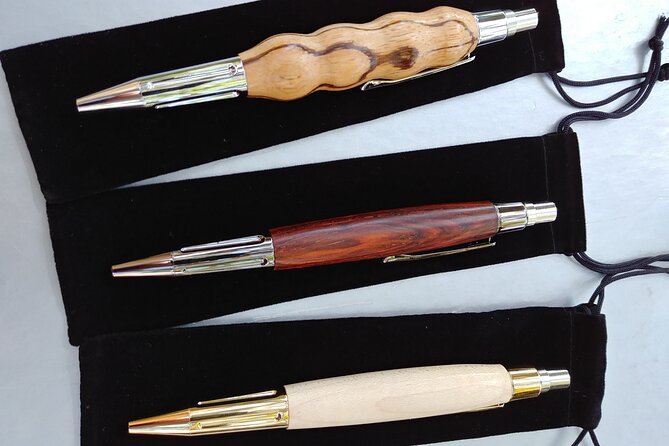
I especially love that you get real instruction at every stage, not just a watch-and-clap demo. Jonathan guides the process with a relaxed, fun energy, and he keeps it practical so you actually understand what you are doing. I also like the wood choice. You pick from a mix of exotic and local woods, so your finished pen has a look that is uniquely yours.
One possible drawback to think about is time and pace. Three hours is long enough to make progress, but it is still a workshop, not a full-day build. If you expect slow, extra practice time for multiple pens, you might feel a little rushed.
In This Review
- Key things I’d highlight before you book
- Woodturning in Montreal: making a pen you can actually keep
- Meeting point at 4710 Rue Saint-Ambroise: plan your arrival smart
- Safety first: what the briefing helps you avoid
- Choosing your wood: exotic options with real personality
- The turning lesson: from blank to shaped pen
- Hand-on time: operating the lathe with real guidance
- Sanding and polishing: where the finish takes over
- Assembly: the moment it becomes a usable pen
- How long it really takes: what 3 hours feels like
- Price and value: is $161.10 worth it?
- Who should book this pen-making workshop
- Practical notes that can save you headaches
- Should you book Pen Making With The Woodworker Himself?
- FAQ
- How long is the pen-making workshop?
- Where does the workshop start?
- What is the price per person?
- Is the workshop offered in English?
- How many people are in each group?
- What should I expect to make?
- Can I bring a service animal?
- What if I need to cancel?
Key things I’d highlight before you book
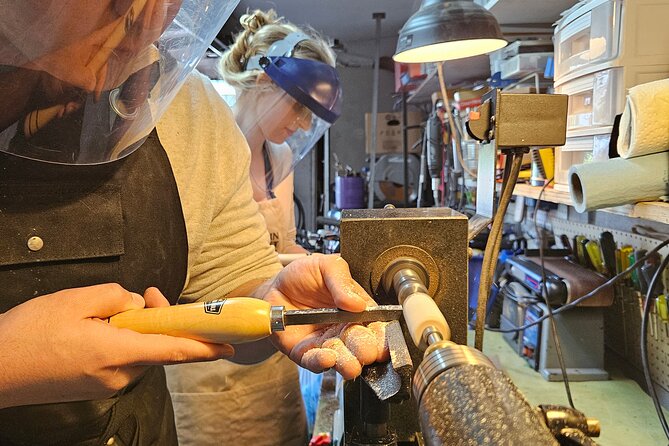
- Hands-on lathe time with guidance, so you do the work, not just observe.
- Wood selection includes both exotic and local options, meaning different colors, grains, and vibes.
- Safety briefing first, so you know what matters before tools start spinning.
- Full pen-making sequence: turning, profiling, sanding, polishing, and assembling.
- Small group size with a maximum of 9 travelers, which helps you get help when you need it.
- A laid-back teacher with laughs in the room, based on the consistent way Jonathan is praised.
Still shortlisting? Here is how a few other Montreal bookings stack up.
- Montreal: Guided Bus Tour★ 4.4 · 3,064 reviews
- Montreal: Hop-On Hop-Off Double-Decker Bus Tour★ 4.1 · 2,760 reviews
- From Montreal: Quebec City and Montmorency Falls Day Trip★ 4.5 · 2,669 reviews
- Montreal Mile End Authentic Food Tour with 7 Delicacies Tastings★ 5.0 · 2,598 reviews
Woodturning in Montreal: making a pen you can actually keep
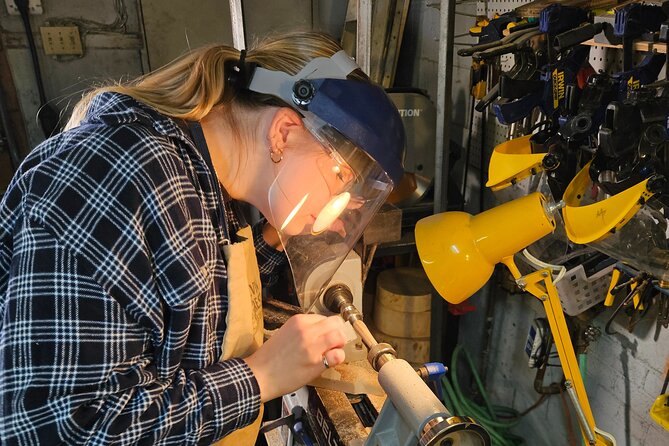
If you like making things with your hands, this is a great Montreal activity. Not because it is complicated on paper, but because it is tangible. You leave with a wooden pen you chose, shaped, and finished. That is the best kind of souvenir, the kind you use at home.
The workshop runs about 3 hours and is held at 4710 Rue Saint-Ambroise, in Montreal. It is offered in English, and the group is capped at 9 travelers. That small size matters. You do not get shuffled into the background. You get closer attention and clearer feedback, which makes a big difference when you are learning a lathe.
The tone here also sounds intentional. The instruction style is described as relaxed and fun, with Jonathan keeping the atmosphere light. That matters for beginners. You can ask questions without feeling like you are slowing everyone else down.
Meeting point at 4710 Rue Saint-Ambroise: plan your arrival smart
You start and end at the same place. The meeting address is 4710 Rue Saint-Ambroise, Montréal, QC H4C 2C7. Because you are doing hands-on work, arrive a few minutes early. It gives you time to check in, settle in, and get ready before the safety briefing.
The location is described as near public transportation, which is a relief if you do not want to hunt for parking. Still, Montreal days can move fast, especially if you are pairing this with other sights. I recommend blocking out a solid chunk of time around the workshop window. With a hands-on craft, you do not want to rush your arrival and then feel flustered when you are trying to focus.
If you have ever taken a class where you are late, you know how it goes. You miss the first instructions, then you spend the next hour playing catch-up. Arriving early is the simple fix.
Safety first: what the briefing helps you avoid
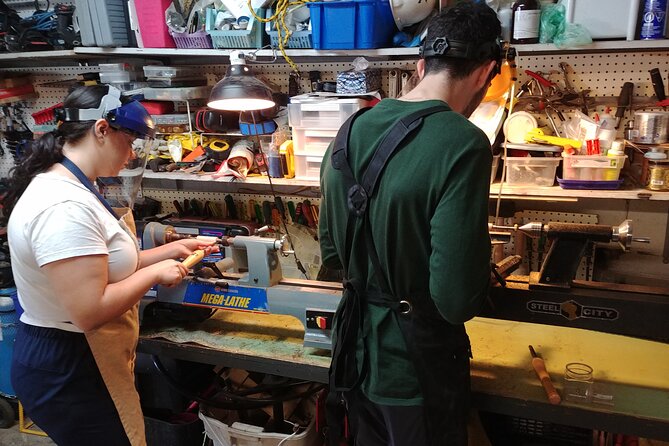
Before turning anything, you get a thorough safety briefing. That is not just a formal step. It shapes how you learn the tools.
On a lathe, the key challenge is that the workpiece moves fast and the risks are real. A good safety talk helps you understand what to pay attention to right away, like posture, how to handle tools, and how to stay focused while you are shaping wood. With a workshop that wants you operating the equipment yourself, safety training is what makes the experience feel confident instead of stressful.
You also get a quick introduction to the lathe’s parts and a look at its history. The history bit may sound optional, but I like it for one reason. It turns the machine from a scary black box into a tool with a purpose. Once you understand the parts and what each does, the hands-on part feels more logical.



Choosing your wood: exotic options with real personality
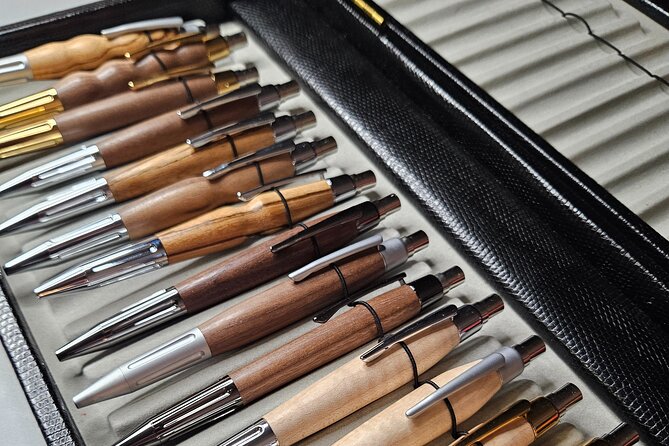
One of the most rewarding parts is choosing your wood. You will select from a variety of exotic and local woods, and that choice affects the entire look of your finished pen.
Here is what you should think about when you choose:
- Grain pattern: Some woods have calmer lines. Others show bold figure. The grain you choose will define the pen’s final character.
- Color range: Even within exotic categories, tones can shift a lot. If you want a pen that feels classic, pick a wood with steadier coloration. If you want something dramatic, go for contrast.
- Your comfort level: If you are unsure, choose something that visually matches what you like using daily. You will likely keep it more if it feels like your style.
I also love that the wood choice is part of the ownership. This is not a generic souvenir. The pen becomes personal through a small decision you make at the start.
The turning lesson: from blank to shaped pen
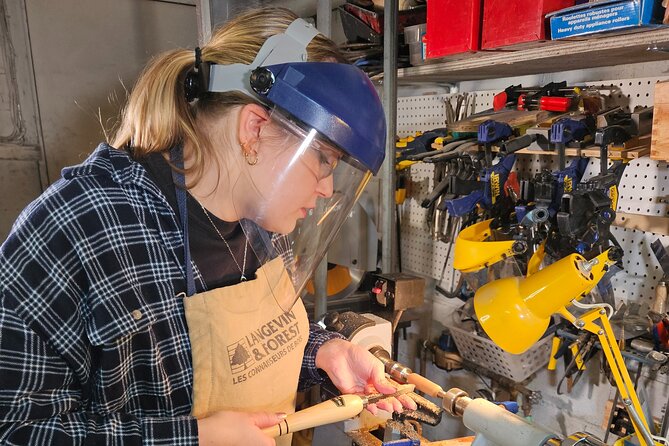
The core skill here is wood turning. You start with the lathe process and follow along from start to finish, then you get to do it yourself with guidance.
The workshop covers the pen-making steps in a clear order:
- turning
- profiling
- sanding
- polishing
- assembling
That sequence matters. Turning shapes the pen body. Profiling refines the form so it fits the pen components correctly. Sanding smooths out tool marks and evens the surface. Polishing gives that satisfying finish that makes wood look deep and clean. Assembly is the moment it becomes a functional pen rather than just a crafted object.
When you learn this flow in order, you understand not only what to do, but why each step exists. That is a big difference from casual DIY. It turns you into someone who can repeat the steps later, not just someone who completed a one-time activity.
Hand-on time: operating the lathe with real guidance
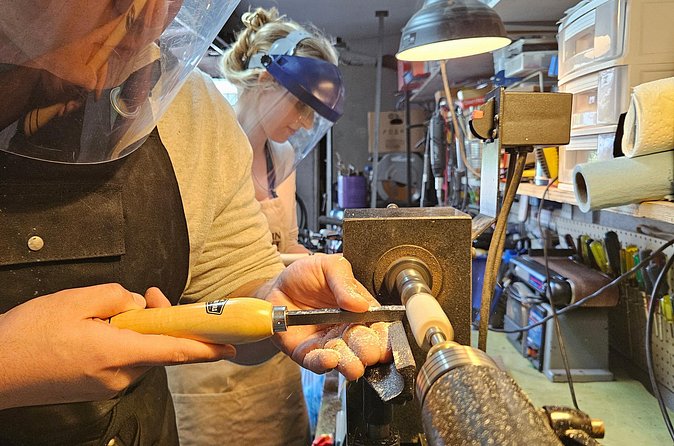
You do not just watch. The experience is built around getting your hands on the lathe yourself.
With that kind of setup, it helps that the workshop is small. With a max group size of 9, you are more likely to get quick feedback when something needs adjusting. In a lathe workshop, micro-corrections are everything. The right technique is hard to guess. You learn it best by trying, then getting pointed guidance.
Jonathan’s teaching style is repeatedly praised as supportive and fun. That combination is practical. When you feel comfortable, you focus better. When you focus better, your technique improves faster. It is a simple chain.
If you are a first-timer, expect that your first attempts will feel awkward. That is normal. The workshop value is that you are learning while the process is still clear. You are not left alone with a machine that feels mysterious.
Sanding and polishing: where the finish takes over
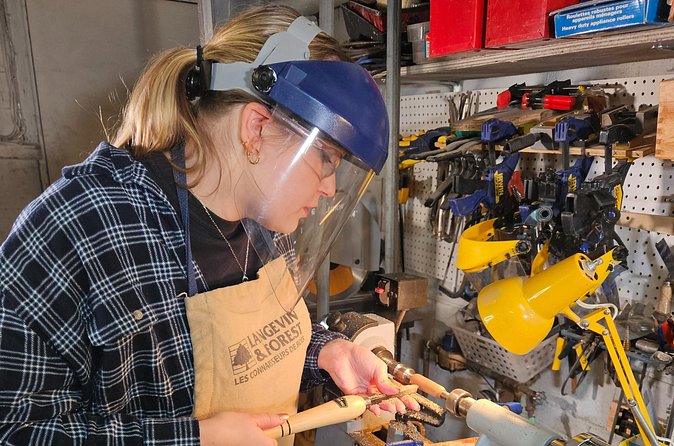
Turning and profiling are the flashy steps, but sanding and polishing are where your pen starts looking finished, not rough.
The workshop includes both:
- sanding to smooth the surface
- polishing to refine the final look
What I like about this approach is that it teaches you patience. Sanding is the step that turns a shaped cylinder into a pen you want to hold. You can even get a quick feel for how wood grain changes as you go from rougher to finer grits, and then to polishing.
Polishing also helps you see the wood at its best. Wood can look good in a block and then look disappointing on the lathe. This is the step that brings the “wow” back, because it evens out reflections and highlights the grain. If you care about the final appearance, do pay attention here.
Assembly: the moment it becomes a usable pen
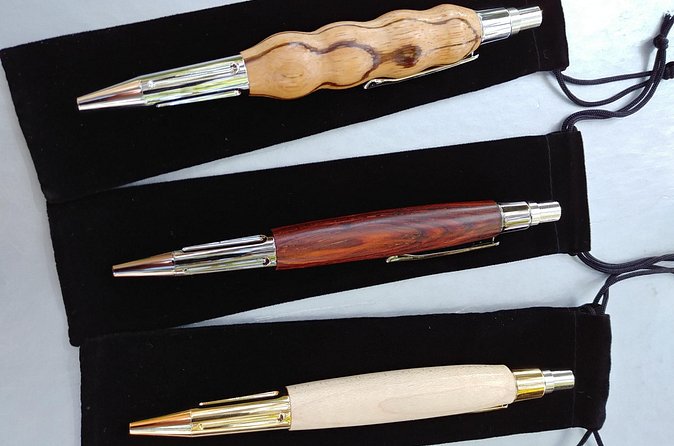
After all the shaping and finishing, the last step is assembling your pen. This is where it stops being a craft object and becomes something functional.
Assembly is also emotionally satisfying. You can see progress. Turning an object is interesting, but assembly makes it personal and real. It is the moment you can picture it on your desk, in your bag, or as a gift.
This is also a good time to learn how the pen parts fit together. Even if you never make another pen, having that basic understanding helps you appreciate what you created.
How long it really takes: what 3 hours feels like
The workshop is listed as about 3 hours. In real life, that time is usually a blend of instruction, safety steps, turning time, and cleanup, plus the time needed for sanding and polishing.
So here is the mindset I recommend:
- Don’t expect perfection on your first try.
- Expect learning through one main build.
- Think of it as a complete intro to the pen-making process.
If you are the type who likes to go slow and repeat steps, you may wish the class were longer. But if you want a focused session with a finished item by the end, this time window is a sweet spot.
Price and value: is $161.10 worth it?
The price is $161.10 per person for the approximately 3-hour workshop.
To judge value, look at what is included in the real work:
- You get instruction on lathe parts and lathe history.
- You get a safety briefing.
- You follow the full pen-making process from turning to assembly.
- You pick your wood from exotic and local options.
- You operate the lathe yourself with guidance.
This is not just a casual craft night where you leave with a pre-made kit. You are learning a real tool skill and making an object that uses that skill. In a small group setting, that guided time matters, and it is hard to replicate for similar money elsewhere.
Also, the group limit of 9 pushes the value up. You are more likely to get feedback, and feedback is what makes you better during the session.
If you enjoy making things and you like woodwork, this price feels fair. If you are only interested in the final look and would rather avoid machines, you might decide it is too involved.
Who should book this pen-making workshop
This workshop fits best if you want one of these outcomes:
- You want a hands-on craft experience with instruction and a clear finished product.
- You like wood and you want to work with real wood choices, not just one preset material.
- You want a small-group class in Montreal that feels friendly instead of formal.
It is also a strong option for travelers who enjoy learning a skill. Instead of collecting another photo, you collect technique and a pen you can use.
If you are short on time and need a quick sightseeing hit, this is not the fastest option. But if you want a meaningful activity that produces something, you are in the right place.
Practical notes that can save you headaches
Here are a few practical pointers based on how these workshops typically run and what this one promises:
- Bring a curious mindset. The lathe work is best when you focus on learning steps in order.
- Take the safety briefing seriously. It will help the whole session feel easier.
- Choose your wood thoughtfully. You will live with that decision because the pen design will reflect it.
Also, you can ask about flexible scheduling. If you do not see a date that works, you can reach out and the host will do their best to accommodate your schedule.
Should you book Pen Making With The Woodworker Himself?
I think you should book it if you want a guided, hands-on wood turning experience with a real take-home object. The combination of small-group size, a complete step-by-step process, and teaching that feels relaxed with Jonathan as the guide makes it a strong bet for beginners and curious travelers.
Skip it if you hate machinery or you want something purely observational. This experience is built around you operating the lathe and doing the finishing steps too.
If you fall somewhere in the middle, you still have a good chance to enjoy it. The structure is clear, the safety is handled up front, and the wood choice gives you a personal result.
If you are in Montreal and you like doing rather than just watching, this one is worth your time.
FAQ
How long is the pen-making workshop?
It lasts about 3 hours (approximately).
Where does the workshop start?
It starts at 4710 Rue Saint-Ambroise, Montréal, QC H4C 2C7, Canada, and it ends back at the same meeting point.
What is the price per person?
The price is $161.10 per person.
Is the workshop offered in English?
Yes, the workshop is offered in English.
How many people are in each group?
The activity has a maximum of 9 travelers.
What should I expect to make?
You will craft a wooden pen from start to finish, including turning, sanding, polishing, and assembling, and you can take it home.
Can I bring a service animal?
Yes, service animals are allowed.
What if I need to cancel?
You can cancel for a full refund if you cancel up to 24 hours in advance of the experience start time (local time).
Just off the notebook: recent Montreal write-ups
- Secret Food Tours: Montreal – Jean-Talon & Little Italy
★ 4.0 · 4 reviews - Montreal to Quebec City Tour with Private Transportation
★ 5.0 · 4 reviews - Montreal: Iconic Landmarks All-Inclusive VIP Experience
★ 4.7 · 4 reviews - A Walking Tour of Old Montreal
★ 3.8 · 4 reviews - Day at Mont-Tremblant National Park
★ 4.0 · 5 reviews - Old Montreal: Self-Guided Tour from Place D‘Armes to Old Port
★ 5.0 · 5 reviews