
REVIEW · OLD MONTREAL WALKING & HISTORY TOURS
Montreal: Private Customizable Walking Tour of Old Montreal
Old Montreal moves fast, in a good way. In just two hours, you get a clear 1642-to-today story, plus a guide who can tailor the walk to what you care about most.
What I like most is the fully private format and the way the guide keeps things practical. In the reviews, I see names like Carole, Pierre, Thomas, and Stacey, and they all come up for the same reason, they answer questions well and keep the tour fun even for mixed ages and abilities. One thing to consider, this is a walking tour through narrow, older streets, so it is not a fit if you use a wheelchair or have mobility limits.
If you want to see the key squares and building exteriors without getting lost, and you like history explained in plain language, this is an excellent value when booked for a group.
In This Review
- Key things that make this Old Montreal tour worth your time
- A 1642-to-Today Story in a 2-Hour Walk
- Private and Customizable, Without the Usual Herd
- Entering Old Montreal by the Public Squares That Matter
- Notre-Dame Basilica and City Hall Exteriors: Big Architecture, No Ticket Lines
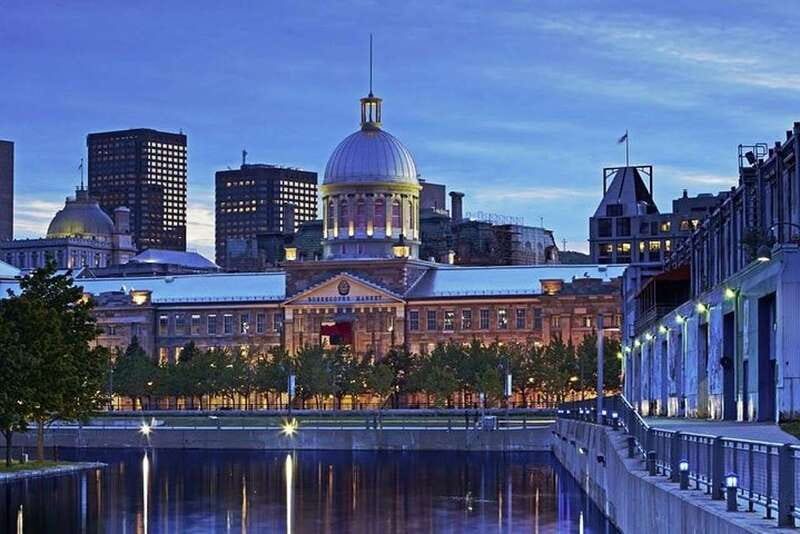
- The Bonsecours Market and the Working-Port Feeling
- St-Jacques Street: The Former Wall Street of Canada
- Hôtel-Dieu and Cours Le Royer: When the City Started Taking Care of People
- The Sulpician Seminary and the Oldest Stone in the Historic District
- Château Ramezay, Notre-Dame-de-Bon-Secours Chapel, and the Architecture Mix
- Old Port Context: Making the Waterfront Feel Like Part of the Story
- Price and Value: $164 per Group, Not a Per-Person Surcharge
- Who This Tour Fits Best, and Who Should Rethink It
- Guides Who Make It Work: Responsiveness, Tone, and Real Questions
- Should You Book This Private Old Montreal Walking Tour?
- FAQ
- How long is the Montreal private customizable walking tour of Old Montreal?
- What is the price for this tour?
- Is the tour private?
- Can the itinerary be customized?
- What landmarks will we see?
- Will the tour run in bad weather?
- What languages are offered for the guide?
- What should I bring?
- Where is the meeting point?
- Is the tour suitable for wheelchair users or people with mobility impairments?
Key things that make this Old Montreal tour worth your time
- Private guide, private pacing, so you can ask questions and change directions when you want
- Customizable route and content, including your focus areas and what you skip
- Iconic exteriors on foot, like Notre-Dame Basilica, City Hall, and the big landmark squares
- A smart timeline, from Fort Ville-Marie’s founding in 1642 to modern Montreal
- Old Port context, so the waterfront makes more sense, not just prettier photos
- Guides praised for responsiveness, including Carole, Pierre, Thomas, and Stacey
More cobblestone hours in Old Montreal
- Montreal Mile End Authentic Food Tour with 7 Delicacies Tastings★ 5.0 · 2,598 reviews
- The Original Old Montréal Walking Tour by Guidatour★ 4.5 · 2,217 reviews
- Old Montreal Small-Group Walking Tour | Max 10 | by MTL Detours★ 5.0 · 2,088 reviews
- Montréal: The Original Old Montréal Walking Tour★ 4.8 · 911 reviews
A 1642-to-Today Story in a 2-Hour Walk
Old Montreal can feel like a maze, which is exactly why a guide helps. Your walk is built around a clear arc, starting with the foundation of Fort Ville-Marie in 1642 and ending at today’s city. That timeline matters, because it turns random stone facades into a living map of why Montreal grew where it did.
You will spend time in the historic core where public squares, churches, institutions, and the port all connect. Even though the tour is short, it is designed to help you see patterns: how power and religion shaped early neighborhoods, how commerce moved toward the water, and how major civic buildings became part of the city’s identity. It is a good pace for first-timers, and it is also useful if you have already walked around a bit but still feel like you are missing the why.
One practical note: the tour takes place rain or shine, so you will want comfortable shoes you can trust on old pavement.
Private and Customizable, Without the Usual Herd
This is a private group tour, up to a maximum recommended group size of 15. That number is not just about comfort, it also affects how much attention you can realistically get. With fewer people, your guide can slow down at the spots you care about and speed through the bits you do not.
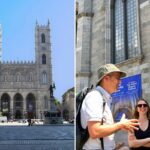
The real win is that the departure time, duration, route, and content are customizable. That means if you want more time on civic sites like City Hall and the courthouses, you can lean that way. If your interest is more religious or early settlement life, you can ask for the sections tied to institutions like l’Hôtel Dieu or the Sulpician Seminary.
Languages are also covered well. You can book a guide who speaks French, Spanish, or English, and the experience is built for real conversation, not just a lecture you listen to while walking.
And the reviews point to something you will feel in real life: guides who actively answer questions. People mention guides like Stacey being responsive, Thomas being friendly and passionate, Carole being very nice and answering everything, and Pierre keeping the tour engaging and quick.
Entering Old Montreal by the Public Squares That Matter
Your route commonly includes major squares, and for a reason. Squares are Montreal’s outdoor living rooms, where politics, religion, and commerce all had a stage. When you stand in these spaces with context, the city starts to make sense fast.
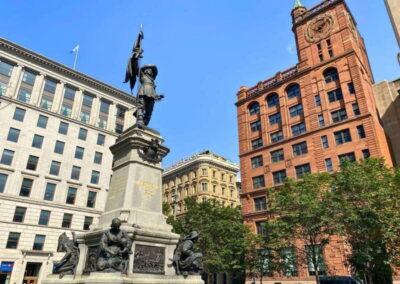
One of the likely stops is Place d’Armes, a classic civic space. Here you get a sense of how public life organized the city, and you also get a natural snapshot of the institutions that surround it.
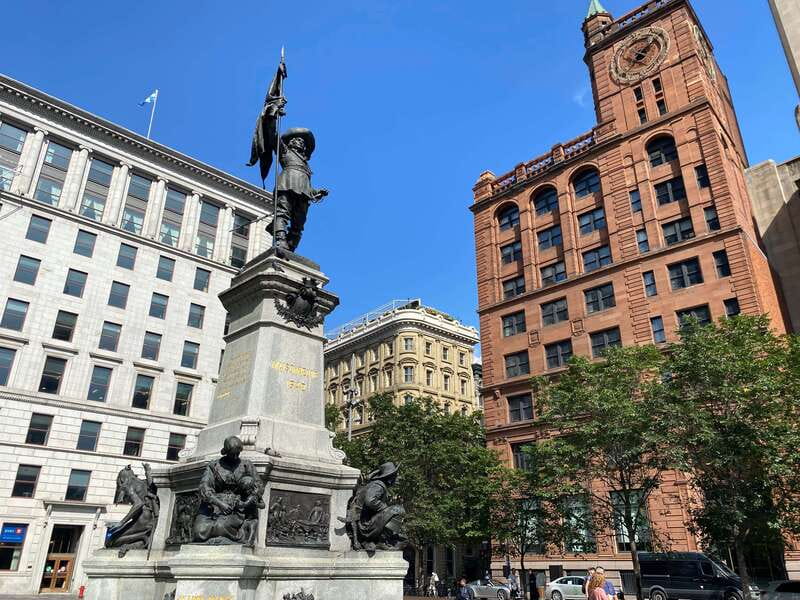
From there, you may move to Place Royale and Place Jacques-Cartier, both key in how Old Montreal presents its story. The monuments and works of art in these places are not just decoration. They are Montreal’s way of telling you who it was, what it valued, and how it remembers itself.
If you are the type of traveler who likes to understand the layout before you take photos, spend a moment at each square just watching foot traffic. On a private tour, your guide can point out small things you might otherwise miss, like how streets funnel visitors between landmarks and how the squares act like checkpoints.
Montreal at walking pace, a few more routes

Notre-Dame Basilica and City Hall Exteriors: Big Architecture, No Ticket Lines

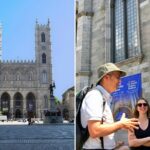
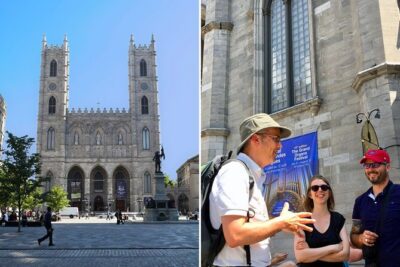
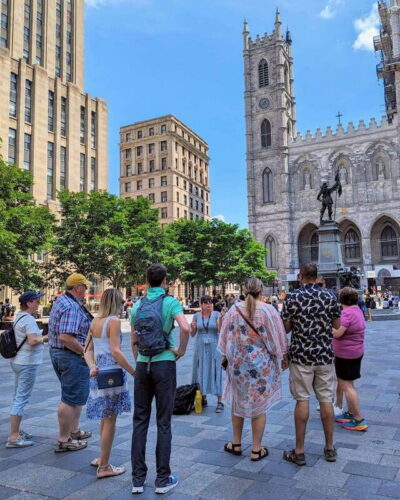
You will see the exterior of Notre-Dame Basilica. Even if you do not go inside, this is still a worthwhile stop because you get to connect the building to the broader story of Montreal’s development. Churches in this part of the city were not only spiritual centers, they were also community anchors.
The tour also commonly passes major civic sites like City Hall and other institutional architecture. You will likely admire the outside of the three courthouses as well. This is one of those times when an exterior walk beats a rushed interior visit, because you can compare the styles and imagine how these spaces functioned day to day.
If you love architecture but hate doing everything through tickets and lines, this tour hits a sweet spot. You get the wow factor of the big names without turning your day into paperwork.
The downside is straightforward: you are mostly focused on exteriors. If your dream is a long, inside-the-building museum day, plan separate time for that. This is a story-walk, not a deep dive into interiors.
The Bonsecours Market and the Working-Port Feeling
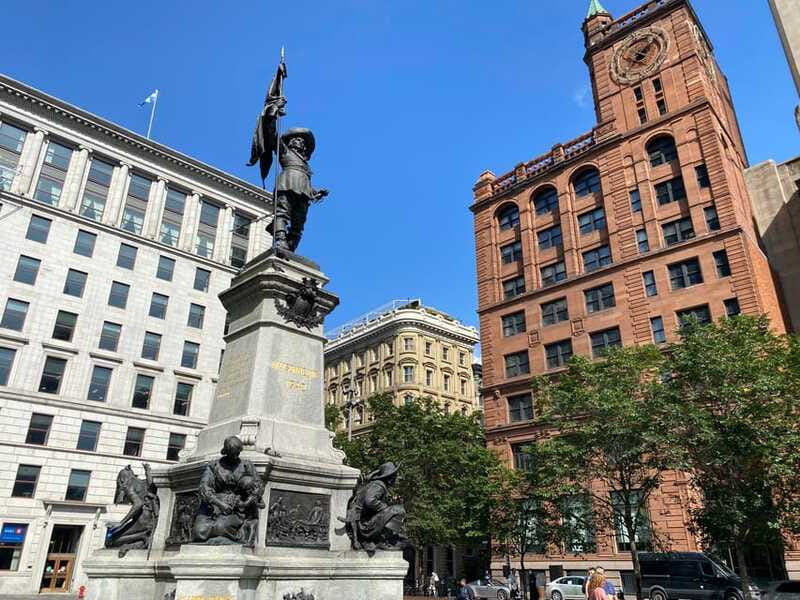
Old Montreal has a tourist side, but it also has a working identity. That is why the walk often includes Bonsecours Market and takes you along the area linked to the Old Port.
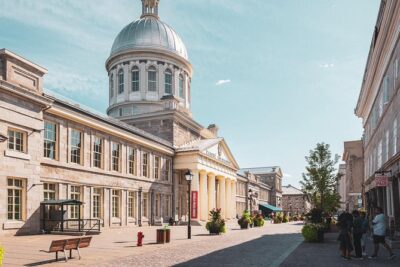
Bonsecours Market is useful as a stop because it gives you a bridge from sacred and civic structures into commerce. Even from the outside, you can start to understand how goods, people, and money moved through the historic center.
The Old Port connection is what turns your photos into something more. With context, the waterfront is not just pretty buildings. It becomes a clue to how Montreal grew into a major city.
If you are traveling in seasons with cold or rain, the outdoor nature of these areas matters. You will be walking between landmarks, so you will appreciate the fact that this tour is designed for movement rather than long static museum time.
St-Jacques Street: The Former Wall Street of Canada
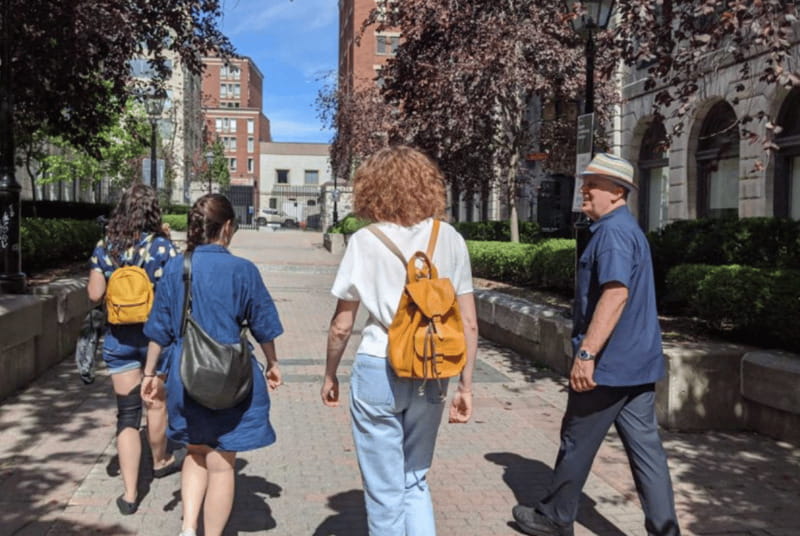
One of the fun, specific details you can look forward to is St-Jacques Street, often described as the former Wall Street of Canada. That phrase is a hook, but your guide’s job is to explain what it means in real life.
As you walk, it helps to notice how the street sits in relation to the squares and institutions you have already seen. Streets like this are where Montreal’s financial and commercial identity would have played out, linking the city’s central power with the flow of people and goods.
This kind of street context is one of the reasons a guided tour feels different from scrolling a map on your phone. Your guide can connect dots between buildings you would otherwise just label as historical.
Hôtel-Dieu and Cours Le Royer: When the City Started Taking Care of People
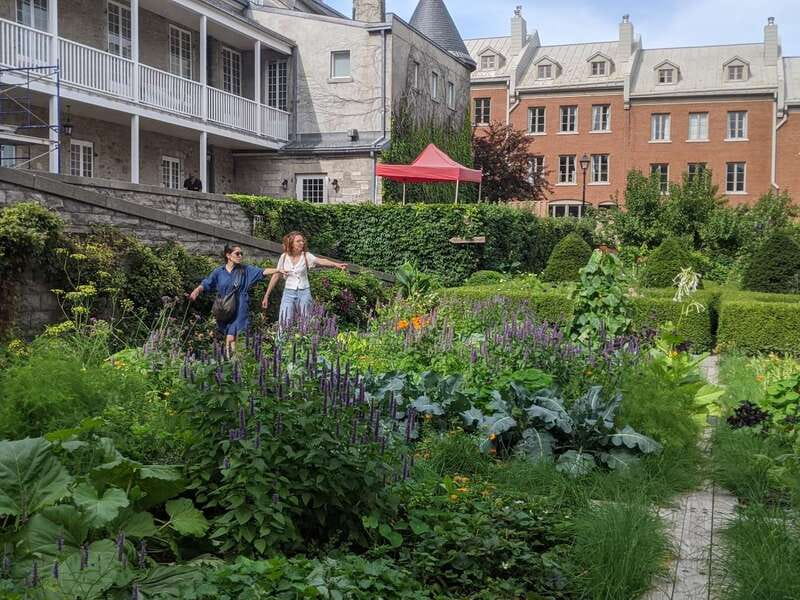
Not all landmark stops are about grand architecture. This part of the route often includes the foundation site of the city’s first hospital, l’Hôtel Dieu, in Cours Le Royer.
Why this matters: early hospitals show you how a city planned for real human needs. They also help you understand that Montreal’s growth was not just trade and politics. It was a community effort, with institutions that served daily life.
If you are interested in social history, this stop can be a standout. It gives your walk a grounded, human-scale anchor in the middle of the big-name buildings and squares.
The Sulpician Seminary and the Oldest Stone in the Historic District
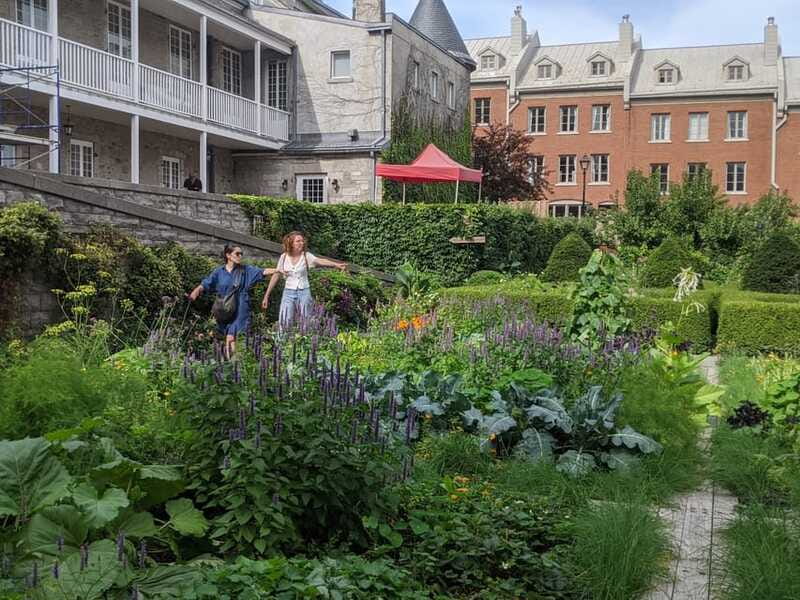
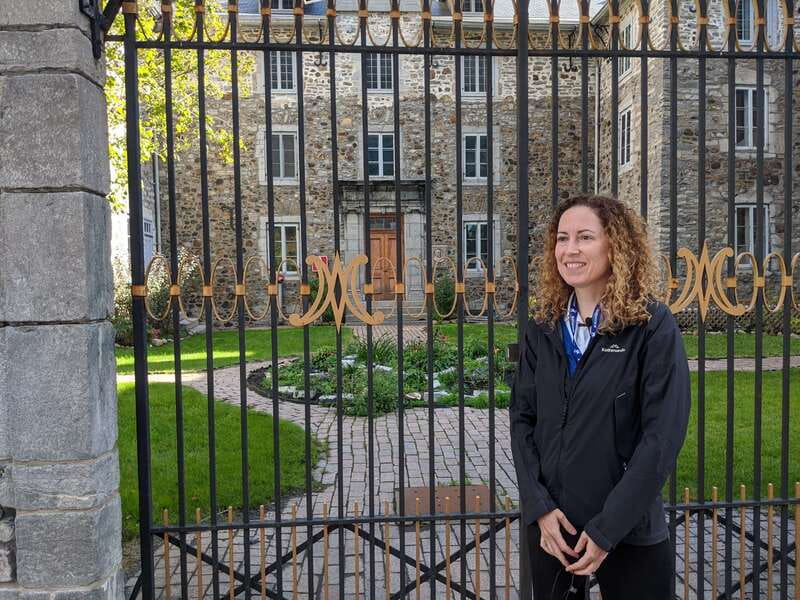
Another specific exterior you may visit is the Sulpician Seminary, described as the oldest building in the historic district. That kind of claim is exactly where a guide can turn facts into meaning.
When you see an older structure like this, you are standing at the intersection of education, religion, and long-term influence. It helps you understand why certain institutions lasted, and why their locations remained important even as Montreal changed.
This is also a great stop for travelers who enjoy learning why a place survived when others were transformed. Even without going inside, the setting gives your timeline a physical anchor.
Château Ramezay, Notre-Dame-de-Bon-Secours Chapel, and the Architecture Mix
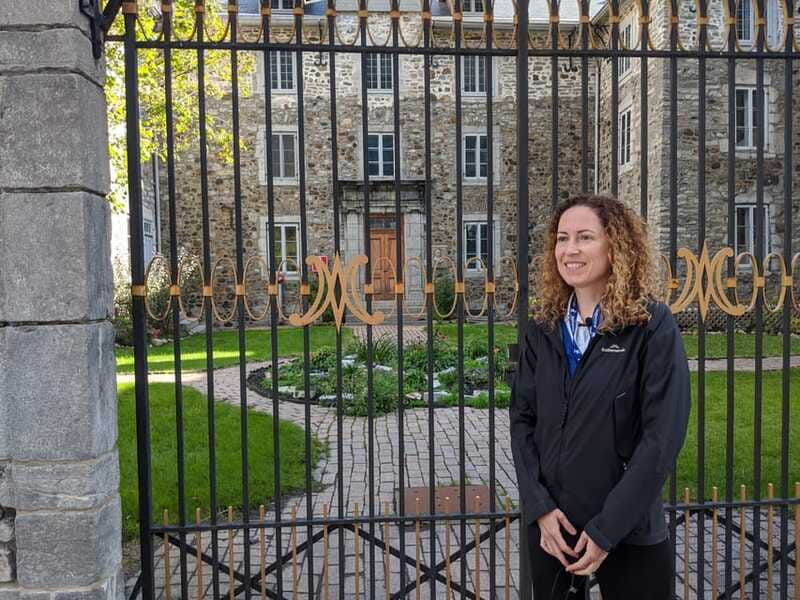
Your tour may include Château Ramezay and stops around the Notre-Dame-de-Bon-Secours Chapel. Together, these add variety to your walk so it does not feel like you are only repeating the same type of landmark.
Château Ramezay, as a stop, is useful because it helps explain how buildings signaled status and influence. A “château”-style structure stands out visually, and with a guide, it becomes more than a photo spot. It becomes part of the story about who held power and how that power used architecture.
The chapel at Notre-Dame-de-Bon-Secours adds a spiritual layer. It also helps you see how religion was woven through the city’s public identity, from the grand cathedral exterior down to smaller landmark places.
Old Port Context: Making the Waterfront Feel Like Part of the Story
You will likely spend time with the Old Port as part of the walk. In Montreal, the waterfront area can feel like a separate zone if you do not have context. A good guide prevents that.
On this tour, the Old Port is presented as part of the broader timeline. That means you will connect the city’s early growth and commerce to where people and ships mattered most. It is the difference between seeing the harbor as scenery and seeing it as a reason Montreal became big.
If you plan to eat after the tour or do a self-guided wander toward the waterfront, this stop sets you up. You will know what you are looking at, instead of walking through blur.
Price and Value: $164 per Group, Not a Per-Person Surcharge
The price is listed as $164 per group up to 15 for about 2 hours. That pricing structure can be excellent value when you have a small group, because it is not escalating with every new traveler.
Here is the practical way I think about it: if you book as a couple or a few friends, you are effectively paying for private attention. You get a guide who can tailor the route and answer questions, and you do not have to share that with strangers.
If you are traveling with a family or a group of friends and can fill more of that 15-person cap, the cost per person drops fast. Even if you do not reach the full number, you still get the big benefit: a tour that moves at your pace.
Also remember the “what you are actually buying.” You are not just buying landmark names. You are buying someone to connect Fort Ville-Marie’s founding in 1642 to the streets you walk today, plus help choosing what to focus on based on your interests.
Compared to a generic group tour, the private format is what makes the value feel real.
Who This Tour Fits Best, and Who Should Rethink It
This tour is a great match if you want:
- A first-pass intro to Old Montreal with a timeline you can remember
- A guided walk where you can ask questions and adjust the focus
- Architecture lovers who are happy with exterior views
- Travelers who like squares, streets, and institutional landmarks
It may be less of a fit if:
- You need mobility support. The tour is not suitable for people with mobility impairments or wheelchair users.
- You do not want any walking on uneven, historic streets. You should expect plenty of time on foot, and the tour is rain or shine.
Good call here: pack comfortable shoes, because this is a “walk and learn” experience, not a sit-down history lesson.
Guides Who Make It Work: Responsiveness, Tone, and Real Questions
One of the most praised parts in the reviews is the guide. The names show up clearly, and so do the reasons: people describe guides as friendly, very knowledgeable, and especially good at responding to questions.
Jennifer’s review mentions a guide who catered to a wide age range and different abilities, which tells me the guide is good at keeping the tour accessible without talking down. Another highlight is that tours can feel quick. Claire’s review describes Pierre’s tour as interesting and playful, saying it passed fast. Donna calls Stacey amazingly informative and delightful, with strong responsiveness.
That all matters because private tours live or die by your guide’s energy and flexibility. On this walk, you can expect a conversational approach, not a rigid script.
If you care about asking questions, this is the kind of tour that rewards curiosity.
Should You Book This Private Old Montreal Walking Tour?
I think you should book if you want a smart, private introduction to Old Montreal that connects the 17th century story to today. The combination of a customizable route, a 2-hour time window, and the fact that you will see the major landmarks and squares makes it an easy win for value.
You should skip or at least consider an alternative if you want mostly interior visits, long museum time, or if mobility limitations make walking hard. This tour is designed for getting around on foot through narrow historic streets.
If you are choosing between rushing landmarks on your own and taking one guided walk early in your trip, this is the guide-first option. You will leave with a much clearer sense of where you are and why Montreal grew the way it did.
FAQ
How long is the Montreal private customizable walking tour of Old Montreal?
The tour lasts 2 hours.
What is the price for this tour?
The price is $164 per group, for up to 15 people.
Is the tour private?
Yes, it is a fully private guided experience.
Can the itinerary be customized?
Yes. The departure time, duration, route, and content of the tour can be customized based on your interests and needs.
What landmarks will we see?
You can expect to visit or pass by the exterior of sites such as Notre-Dame Basilica and City Hall, and areas like Place d’Armes, Place Royale, Place Jacques-Cartier, Bonsecours Market, St-Jacques Street, l’Hôtel Dieu in Cours Le Royer, the Sulpician Seminary, and the Old Port.
Will the tour run in bad weather?
Yes. The tour takes place rain or shine.
What languages are offered for the guide?
Guides are available in French, Spanish, and English.
What should I bring?
Comfortable shoes are recommended.
Where is the meeting point?
The meeting point may vary depending on the option booked.
Is the tour suitable for wheelchair users or people with mobility impairments?
No. It is not suitable for people with mobility impairments or wheelchair users.
Just Your Group




Montreal on Foot



More Cobblestone Hours

Just off the notebook: recent Montreal write-ups
- Secret Food Tours: Montreal – Jean-Talon & Little Italy
★ 4.0 · 4 reviews - Montreal to Quebec City Tour with Private Transportation
★ 5.0 · 4 reviews - Montreal: Iconic Landmarks All-Inclusive VIP Experience
★ 4.7 · 4 reviews - A Walking Tour of Old Montreal
★ 3.8 · 4 reviews - Day at Mont-Tremblant National Park
★ 4.0 · 5 reviews - Old Montreal: Self-Guided Tour from Place D‘Armes to Old Port
★ 5.0 · 5 reviews
Old Montreal Walking & History Tours, compared.
 ★ 5.0Montreal Mile End Authentic Food Tour with 7 Delicacies TastingsFrom $942,598 reviews
 ★ 4.5The Original Old Montréal Walking Tour by GuidatourFrom $262,217 reviews
 ★ 5.0Old Montreal Small-Group Walking Tour | Max 10 | by MTL DetoursFrom $442,088 reviews
 ★ 4.8Montréal: The Original Old Montréal Walking TourFrom $25911 reviews
 ★ 4.7Old Montreal: Traditional Ghost Walk of the Haunted CityFrom $24746 reviews
 ★ 4.5Old Montreal Ghost Walking TourFrom $26726 reviews
 ★ 4.9Montreal: Top Rated Small Group Old Montreal Walking TourFrom $46611 reviews
 ★ 5.0Walking tour of Old Montreal – 16/42 ToursFrom $27592 reviews
Browse the lists this tour appears in