
REVIEW · OLD MONTREAL WALKING & HISTORY TOURS
Montreal: Discover Reso – The Underground City
Getting lost underground is easy. This small-group tour turns RESO into something you can actually use, with photo-ready stops and a clear orientation. I like that it mixes landmark culture with practical wayfinding, so you are not just staring at hallways. Two standout perks for me are the World Trade Centre stops, including the Berlin Wall piece, and the guide’s hands-on Metro tips that help you move with confidence later. The main drawback to plan for is that it is a lot of walking and stairs, so it is not ideal if your mobility is limited.
Your guide, Misha, keeps the pace friendly and the group small, capped at 10 people. It also fits Montréal’s seasons well, because you get out of the wind during cold snaps, the rain during downpours, and the heat when sidewalks feel like an oven. You will still feel some temperature swings underground, so comfy shoes and a camera are smart.
In This Review
- Key things that make Discover Reso different
- Why Montréal’s Underground City feels like a secret superpower
- Meeting at Complexe Desjardins, the perfect first landmark
- Complexe Desjardins, fountain views, and the indoor mood shift
- World Trade Centre Montreal: the Berlin Wall piece and God of the Sea
- Quick Metro 101, then a short ride that makes it click
- Central Station and the transit brain of downtown
- Cathcart Terrace, Biergarten time, and a food stop that keeps you moving
- The Ring outside: a simple break from tunnels
- 1000 de la Gauchetière ice rink, plus espresso or juice in the tunnels
- Les Cours Mont-Royal: architecture that makes the underground feel real
- Eaton Center (Time Out Market), Place Montreal Trust, and the shopping layer
- The Barbie Expo selfie zone: the funniest photo moment on the route
- Price and value: why $29 works for a 2-hour plan
- Practical tips so you enjoy the walking instead of cursing it
- Who should book this Underground City tour
- Should you book Discover Reso?
- FAQ
- How long is the Discover Reso Underground City tour?
- What is the meeting point for the tour?
- How much does the tour cost?
- What languages are offered?
- Is the tour wheelchair accessible?
- What kind of walking should I expect?
- Is this tour good for rainy or cold weather?
- Are there any items you cannot bring?
- Are meals included?
- Does the tour include ice skating?
Key things that make Discover Reso different
- A guide like Misha, a Montreal native who gives stories you can picture, not just facts
- Hands-on Metro 101, including a quick ride so the system clicks fast
- Major photo stops, from the Barbie Expo selfie moments to historic windows
- RESO orientation route map, so you can retrace what you liked later
- Season-proof sightseeing, with indoor wandering and a year-round ice rink stop
- Culture across surprises, from a historic bank-turned café to the Cathcart Terrace area
More cobblestone hours in Old Montreal
- Montreal Mile End Authentic Food Tour with 7 Delicacies Tastings★ 5.0 · 2,598 reviews
- The Original Old Montréal Walking Tour by Guidatour★ 4.5 · 2,217 reviews
- Old Montreal Small-Group Walking Tour | Max 10 | by MTL Detours★ 5.0 · 2,088 reviews
- Montréal: The Original Old Montréal Walking Tour★ 4.8 · 911 reviews
Why Montréal’s Underground City feels like a secret superpower
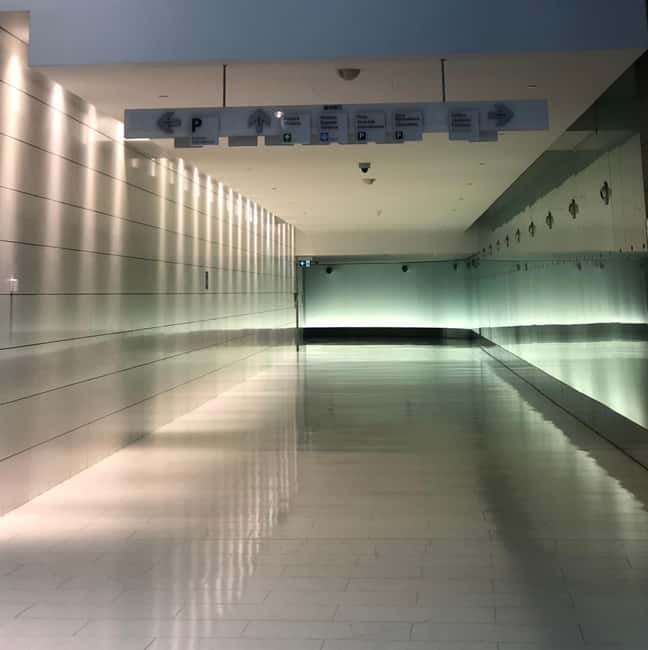
Montréal’s RESO is not just a cold shortcut. It is a connected layer over the downtown core, linking offices, stations, malls, and public spaces through tunnels, corridors, and indoor plazas. Once you learn how to read the flow, you start to feel the city at walking speed without fighting weather.
This tour is built for your first day, because the goal is orientation. You will get a quick crash course on how to use the Metro, then you will practice moving through the indoor streets. That matters because the underground can be confusing when you are trying to find a specific entrance or station.
The other reason I like this style of tour is the balance. You get big “Montréal-that-you-would-miss-on-your-own” moments like the World Trade Centre exhibits and the big indoor public spaces. You also get small, useful stops where you can later grab coffee, plan a reroute, or simply feel less lost.
Meeting at Complexe Desjardins, the perfect first landmark
You meet at Complexe Desjardins, 175 René-Lévesque Boulevard West, Montréal, QC H2X 3Y2. Once you get inside, go downstairs to the main atrium near the large water fountain, where the guide is waiting near the benches.
This is a smart pick for the first stop. In fall and winter especially, you can start indoors and stay comfortable while you learn the layout. The fountain area also acts like a built-in landmark, which helps you reset mentally when you are about to go underground for longer stretches.
If you are camera-ready, this meeting point gives you an easy first photo. The fountain is a circular basin with water jets, and it is often lit up with colorful displays, which makes the atrium feel less like a transit hub and more like a public square.
Complexe Desjardins, fountain views, and the indoor mood shift
After the meet-and-greet, the tour begins in the area around the fountain, then moves into the adjacent commercial and transit connections. This part is about momentum. The guide helps you get your bearings fast, so the underground does not feel like one long hallway.
One thing you will notice quickly is how the environment changes. Even though you are indoors, you are moving through different “zones,” with open atriums, narrow corridors, and places where art and architecture show up in ways you would not expect from underground space.
You will also have time for a souvenir stop route and quick orientation instructions. That small shopping detour is practical: it teaches you where the local-style browsing happens and helps you map out where you can stop later without derailing your day.
Wider sweeps across Montreal
World Trade Centre Montreal: the Berlin Wall piece and God of the Sea
A major highlight is the World Trade Centre of Montréal. This is where the tour turns from practical navigating into story-rich sightseeing.
You will view a piece of the Berlin Wall. It is the kind of object that makes the underground feel connected to world events, not just a local gimmick. You will also see the “God of the Sea” statue, a striking visual moment that gives you something to anchor your photos to.
I like this stop because it breaks the underground stereotype. RESO is famous, but it can also feel like you are only passing through. Historic art and symbolism here give you a reason to slow down, frame shots, and actually look.
Quick Metro 101, then a short ride that makes it click
Next comes a quick Metro 101 crash course, followed by a ride. This is not a lecture. It is training for your feet and your eyes.
If you have ever taken public transit in a new city and felt lost the second you step onto a platform, you will understand why this matters. The guide walks you through the basics you need for the route decisions you will make later on your own.
You also get a confidence boost for Central Station, because the underground city is built around transit nodes. Once you know where you are aiming, the corridors and stairs start to feel logical instead of random.
Central Station and the transit brain of downtown
Central Station is the city’s transit hub, and it is one of the places where RESO becomes a network, not a theme. Even if you are not planning to take trains during your trip, this stop helps you understand how Montréal organizes movement.
The tour’s value here is orientation. You learn how to connect indoor routes to the places you will likely want later, like major downtown streets and other transit links. When you can “think in routes,” you stop spending your day checking your phone for the next entrance.
This is also where you can benefit from the small-group pace. You can ask questions while things are still fresh, and you are not just waiting in line with everyone else.
Cathcart Terrace, Biergarten time, and a food stop that keeps you moving
You will spend time at Cathcart Terrace restaurant and Biergarten. The tour includes dining time in that area, but meals and drinks are not generally included unless specified. Translation: you get the chance to sit, recharge, and decide what you want to order on the day.
What makes this stop worth it is timing and placement. By the time you reach this area, you have already walked a good portion and you are ready for a break. The underground can be physically tiring, even when the weather outside is perfect.
If you like planning your meals while sightseeing, this is a helpful checkpoint. You see where the food and seating are, and the guide can point you toward practical next steps so you do not lose time later.
The Ring outside: a simple break from tunnels
There is a moment where you step outside to see “The Ring,” a historical window that frames 200+ years of downtown history. This matters because it reintroduces the street view into your mental map.
Even one short look outside helps you remember what the underground is connected to. You also get a change of lighting for photos, which can make your tour album feel less repetitive.
Think of this stop as wayfinding with context. It helps you relate the underground corridors back to the real downtown.
1000 de la Gauchetière ice rink, plus espresso or juice in the tunnels
The tour includes the 1000 de la Gauchetière indoor ice rink, and it is open year-round. If you want one of those Montreal “only-here” experiences, an indoor rink stop is a great way to do it without gambling on the weather.
Ice skating itself is listed as part of what is included, with the note that you should check the rink’s schedule in advance if you are interested. That means you should plan your expectations based on the day and timing.
Between walking stretches and stairs, the underground can also get tiring in a subtle way. That is why the espresso or juice tasting in the tunnels is a clever touch. It is a quick recharge moment, and it also gives you another photo opportunity while you pause.
Les Cours Mont-Royal: architecture that makes the underground feel real
Les Cours Mont-Royal is one of those stops that reminds you RESO is not just functional. It is designed, and that design shows up in how spaces open up and how details are handled.
This stop is good for you if you like architecture but do not want a museum pace. You get enough time to appreciate the look and to take photos without turning the tour into a slow crawl.
If you are building your Montreal “best of” list, this is a strong add because it connects indoor wandering with visually memorable spaces you can recall later.
Eaton Center (Time Out Market), Place Montreal Trust, and the shopping layer
The tour also includes time at Eatons Center (Time out market) and exploration around Place Montreal Trust. These stops round out the underground city in a way that feels realistic.
RESO is where people work, shop, and meet. So when you include the commercial side, you start seeing the underground as living city space, not an attraction. It also helps you plan if you want to build a simple day around indoor routes, meal stops, and quick errands without taking taxis every time.
If you like having options, this is a good segment. Even if you do not buy anything, walking through these places tells you where the day’s easiest conveniences are.
The Barbie Expo selfie zone: the funniest photo moment on the route
One of the most playful stops is the Barbie Expo, described as a photo-lover’s paradise, plus there is access to a selfie zone. This is the kind of stop that keeps the tour light and gives everyone a reason to pause, laugh, and take photos that are not just “me in a hallway.”
I think this works even if you are not a big Barbie person. It is a break from serious sightseeing. It gives your brain a rest and it makes your underground memory feel distinctly different from other city walks.
It also tends to be one of those moments where you stop relying on your phone and actually have fun with the setting.
Price and value: why $29 works for a 2-hour plan
At about $29 per person for a 2-hour small-group tour, the value comes from what you get, not just how long you are outside for. You are paying for a guided route that covers a concentrated set of RESO highlights, including major indoor landmarks, transit orientation, and multiple photo-ready stops.
You also get small inclusions that add up. Espresso or juice tasting in the tunnels is included, and the itinerary includes ice rink time plus several landmark visits. The rest of what you might do on your own, like trying to figure out entrances and transit connections, is exactly what a guide saves you from.
If you are visiting Montréal for a short stay or you hate wasting half a day getting oriented, this price is easier to justify. It is basically buying time, clarity, and better photos in one package.
Practical tips so you enjoy the walking instead of cursing it
Wear comfortable shoes. The route is a lot of walking, and there are stairs at various points as you connect between buildings and levels. If you are only comfortable with flat surfaces, you may find this tiring.
Bring a camera, and plan for varying temperatures. Even underground, some areas can feel cooler or warmer depending on ventilation and where you are moving.
If you want the ice rink experience, check the rink’s schedule in advance. The rink being open year-round helps, but the exact timing still matters for whether you can skate when you want.
Also note what you cannot bring. Baby strollers are not allowed, luggage or large bags are not allowed, and unaccompanied minors are not allowed.
Who should book this Underground City tour
This is a great match if you want to:
- learn how to navigate RESO instead of guessing
- get photo-ready stops across art, transit, and quirky exhibits
- visit during cold days, rainy days, or heat waves, without losing your sightseeing time
- enjoy a small-group vibe, capped at 10 participants
It is probably not your best option if you:
- need wheelchair access, since wheelchair users are listed as not suitable
- are traveling with a stroller or large bags
- have very limited fitness, since the walking and stairs can be a lot
- are bringing kids under 5, since the tour is not suitable for children under 5
Language-wise, it runs in English and French, which is handy if your group includes bilingual needs.
Should you book Discover Reso?
If you want an efficient way to understand Montréal’s underground city and get your bearings for the rest of your trip, I think you should. The $29 price makes sense because you get both landmarks and practical wayfinding, and you do it with a guide who keeps the route fun, photo-friendly, and easy to follow.
Skip it only if your mobility needs more accessibility than this kind of walking tour can provide. Otherwise, book it early in your visit. Once you learn the layout, your later days feel calmer, and your RESO time stops being a maze.
FAQ
How long is the Discover Reso Underground City tour?
The tour lasts about 2 hours.
What is the meeting point for the tour?
Meet at Complexe Desjardins, 175 René-Lévesque Boulevard West, Montréal, QC H2X 3Y2. Once inside, head downstairs to the main atrium near the large water fountain, where the guide will be waiting.
How much does the tour cost?
The price is $29 per person.
What languages are offered?
The live tour guide offers English and French.
Is the tour wheelchair accessible?
No. Wheelchair users are listed as not suitable.
What kind of walking should I expect?
The tour involves plenty of walking and stairs, so it may not be ideal for people with low fitness.
Is this tour good for rainy or cold weather?
Yes. The tour is specifically described as a great option on cold days, rainy days, and heat waves because it helps you escape into the Underground City.
Are there any items you cannot bring?
Yes. Baby strollers are not allowed, and luggage or large bags are not allowed. Unaccompanied minors are also not allowed.
Are meals included?
Meals and drinks are not included unless specified. Food and drinks are available for purchase at various stops, and the tour includes espresso or juice tasting in the tunnels.
Does the tour include ice skating?
Ice skating at the 1000 de la Gauchetière Ice Rink is included, and you should check the ice rink’s schedule in advance if you are interested.
The Whole of Montreal in a Day




More Cobblestone Hours



Just off the notebook: recent Montreal write-ups
- Secret Food Tours: Montreal – Jean-Talon & Little Italy
★ 4.0 · 4 reviews - Montreal to Quebec City Tour with Private Transportation
★ 5.0 · 4 reviews - Montreal: Iconic Landmarks All-Inclusive VIP Experience
★ 4.7 · 4 reviews - A Walking Tour of Old Montreal
★ 3.8 · 4 reviews - Day at Mont-Tremblant National Park
★ 4.0 · 5 reviews - Old Montreal: Self-Guided Tour from Place D‘Armes to Old Port
★ 5.0 · 5 reviews
Old Montreal Walking & History Tours, compared.
 ★ 5.0Montreal Mile End Authentic Food Tour with 7 Delicacies TastingsFrom $942,598 reviews
 ★ 4.5The Original Old Montréal Walking Tour by GuidatourFrom $262,217 reviews
 ★ 5.0Old Montreal Small-Group Walking Tour | Max 10 | by MTL DetoursFrom $442,088 reviews
 ★ 4.8Montréal: The Original Old Montréal Walking TourFrom $25911 reviews
 ★ 4.7Old Montreal: Traditional Ghost Walk of the Haunted CityFrom $24746 reviews
 ★ 4.5Old Montreal Ghost Walking TourFrom $26726 reviews
 ★ 4.9Montreal: Top Rated Small Group Old Montreal Walking TourFrom $46611 reviews
 ★ 5.0Walking tour of Old Montreal – 16/42 ToursFrom $27592 reviews
Browse the lists this tour appears in