
REVIEW · CANADIAN GHOST WALKS & HAUNTED TOURS
Ghost Tour of Queen’s University
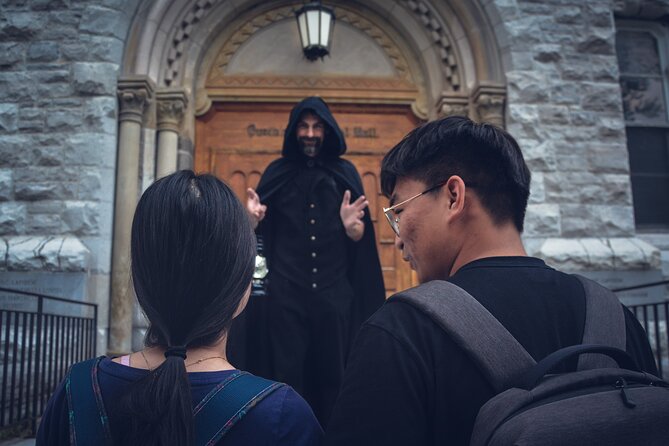
A campus at night tells better stories. This Ghost Tour of Queen’s University mixes listening time with landmark stops, so the scary bits always have a real place and reason behind them, starting right at the courthouse. I especially liked the way the guide connects what you see to the ghost story.
The group stays small, and you get a mobile ticket for an easy start. I also like the tight timing, about 1 hour 15 minutes, which makes it a good evening plan without eating your whole night.
One heads up: it runs outdoors and you need good weather. If you are the type who hates cold wind or standing around in the dark too long, dress for it and bring patience.
In This Review
- Key highlights you will feel right away
- Price and logistics that keep this ghost tour low-stress
- The meeting point at Kingston’s courthouse, limestone and lore
- Chalmers United Church, Gothic Revival chills for a historic landmark
- Walking Queen’s University campus, where old campus buildings do the talking
- Fleming Hall and the Electrical Engineering thread of stories
- Four Directions and Summerhill, two stops with real human weight
- Hospitals in Kingston, why empty space can feel haunted
- Agnes Etherington Art Centre, and the kind of haunting art likes
- Dunning Hall and the John Deutsch University Centre finale
- Who this tour is for, and when to skip it
- Should you book Ghost Tour of Queen’s University?
- FAQ
- How long is the Ghost Tour of Queen’s University?
- What time does the tour start?
- Where does the tour start and where does it end?
- What is the cost per person?
- Is the tour offered in English, and how big is the group?
- Do I get a mobile ticket?
- Are service animals allowed, and is it near public transportation?
- Does the tour run in bad weather, and what is the cancellation policy?
Key highlights you will feel right away
- Small group size (max 20) means you actually hear the stories and move at a human pace
- Building-focused storytelling makes each stop make sense, from architecture to campus uses
- A mix of campus and city landmarks keeps the walk from feeling like one long hallway
- Family-friendly tone for curious kids works well when you pick the right expectations
- Multiple “story zones” across the Queen’s campus gives you variety instead of repeating the same type of haunting
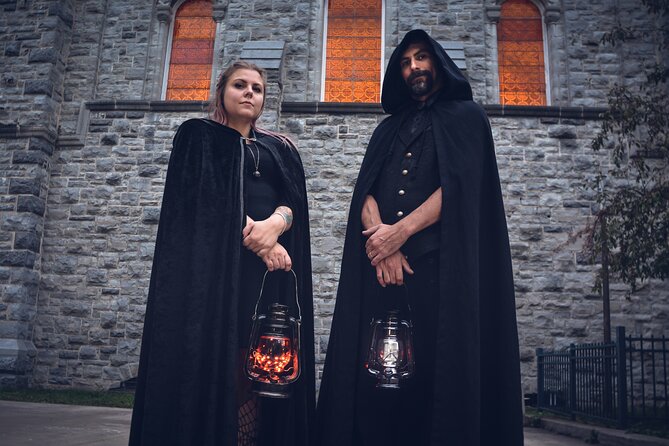
More lantern-lit stories after dark
- Orignal Haunted Walk of Kingston 75-Minute Ghost Tour★ 4.5 · 113 reviews
Price and logistics that keep this ghost tour low-stress
The price is $25.31 per person, which feels fair for a guided walk that uses major Kingston landmarks and a real institutional setting like Queen’s University. You are not paying for a scripted show you could watch on a screen. You are paying for a guide to interpret what you are looking at while you move through it.
Start is 8:00 pm, and the tour runs about 1 hour 15 minutes. That timing matters. You get the atmosphere of night, but you are not stuck until late. If you have dinner plans, this usually slots in cleanly before you call it a night.
The tour caps at 20 travelers, so the experience stays personal. This also helps with hearing the details, because a crowded group makes every outdoor tour feel like a guessing game.
The meeting point at Kingston’s courthouse, limestone and lore

You start at the Kingston (Frontenac County) Courthouse on Court Street. The building is a limestone Greek Revival structure built in the late 1850s, and it became a National Historic Site of Canada in 1980. It is an imposing spot, and it makes a strong opening because it looks like it belongs in serious drama, even before the first story begins.
Your guide starts there and shares the first ghost tale. The bonus here is that the courthouse is not just a random “spooky landmark.” You get a sense of how Kingston’s institutions shaped the town, and then the haunting theme slots into place.
Potential drawback: this is a dark outdoor start. If you rely on great visibility for photos or reading details, plan on keeping your phone brightness sensible and expect short moments of low light.
Chalmers United Church, Gothic Revival chills for a historic landmark
Next is Chalmers United Church, known for its striking Gothic Revival architecture. It was built in 1890, and it is recognized as a heritage building. The architecture alone already gives you sharp lines and strong shadows, but the ghost story is where it clicks.
This stop works because it slows you down just enough to really notice the building’s shape. Gothic Revival churches often feel like they were designed to make you look upward, and at night that effect gets stronger.
If you are traveling with kids, this is a good moment to judge their comfort level. The stories can be spooky, but the guide keeps them grounded in place, which helps nervous listeners feel less trapped in pure mystery.

Walking Queen’s University campus, where old campus buildings do the talking
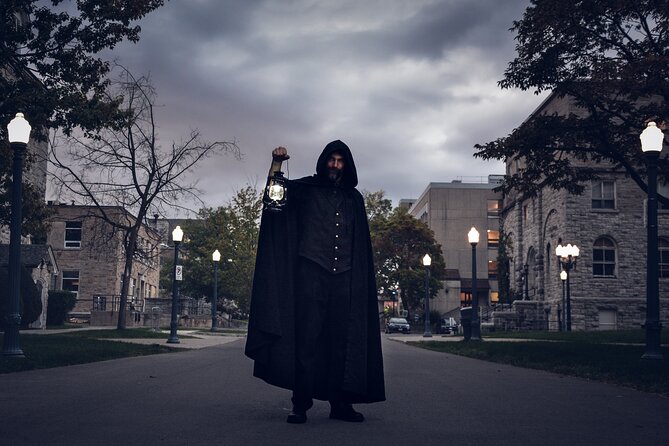
The tour then moves onto the Queen’s University campus, which traces back to the 1840s. This part is more than a background scene. Queen’s is an actual academic and social environment, so you are not just looking at an abandoned set. You see green space, historic architecture, and modern facilities all sharing the same walking route.
Most of the ghost stories happen here. That choice makes the tour feel cohesive. Instead of bouncing between far-off neighborhoods, you stay within a defined campus story world, with the architecture acting like a set of anchors.
The benefit for you is clarity. You can connect each haunting to what the building is used for, or how it was used. That turns “ghost talk” into something you remember, not just something you pass by.
Fleming Hall and the Electrical Engineering thread of stories
Fleming Hall is next, and it is one of the most meaningful stops for anyone who likes stories with a specific angle. The building honors figures in Queen’s history. The original building carried the name of Sir Sandford Fleming, who served as a chancellor of Queen’s.
There is also a technical twist. Three other honourees were affiliated with Electrical Engineering, which was located in Fleming Hall until 1989. Then the Jemmett Wing gets tied to a chilling story, connected to Douglas Mill Jemmett.
This is the kind of stop that makes the tour feel smart. You are learning something practical about the campus, while also getting a narrative hook. If you like history that has names and timelines, Fleming Hall is a highlight.
One consideration: because Fleming Hall covers multiple wings and functions, your guide’s storytelling pacing matters. If you are prone to drifting during long narrations, bring your attention early and follow the guide’s pointing, not just your own curiosity.
Four Directions and Summerhill, two stops with real human weight
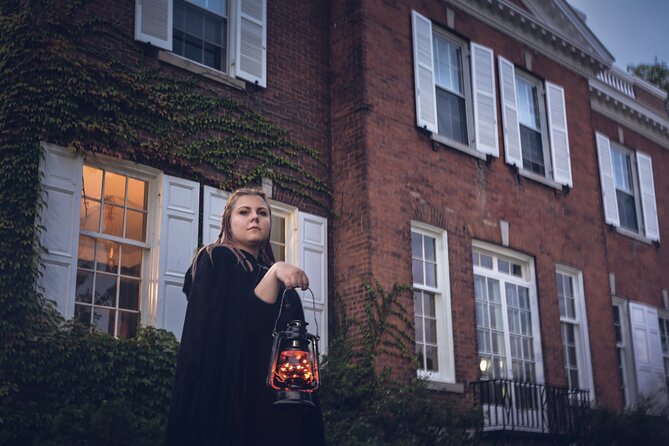
Two stops in the middle of the tour add emotional weight, and they change the tone from “campus spooky” to something more personal.
First is Four Directions. It was founded in 1996 to support the success of Indigenous students, and moved into its home in 2000. The building itself was originally built in 1886, and it has had notable residents including Canadian poet Charles Sangster. The tour shares his tragic story here, which gives the haunting theme a different texture. It is not only about fright, it is about loss.
Next comes Summerhill, constructed in 1839 as a country villa for Archdeacon George O’Kill Stuart. When Kingston became the capital of Canada, it was used for a time as a boarding house for members of the Legislative Assembly. Queen’s purchased it in 1854, and for many years it was the university’s only building. Later, it housed the medical school and was used for very macabre practices.
That medical school detail is exactly why this stop lands. It tells you how ordinary campus life and serious institutional work can coexist with dark chapters. If you want your ghost stories to connect to how people lived and studied, Summerhill delivers.
Possible drawback: this area can feel heavy if you are sensitive to stories tied to medicine. If that is you, you might want to mentally prep, or sit with your discomfort and let the guide steer you carefully.
Hospitals in Kingston, why empty space can feel haunted
After Summerhill, the tour shifts toward Kingston’s hospital training scene. Kingston has many hospitals that are used for training medical students, and Kingston General Hospital is a major example. It was built in 1835.
The story at Kingston General Hospital is especially vivid: once the original building was completed, there was no money left in the budget to purchase furnishings, leaving the building standing empty for three years. In time, the hospital served many uses, including acting as Canada’s first temporary parliament building.
The tour shares ghost stories from two Kingston hospitals, though the second hospital is not specified in the details you have. Even so, the pattern is clear. The haunting theme links to institutional roles, empty spaces, and how buildings get reused when budgets and politics shift.
If you like a haunting that feels like it could be true, this is the part to savor. The stories ride on real constraints, and that is often scarier than pure invention.
Agnes Etherington Art Centre, and the kind of haunting art likes
The tour moves to the Agnes Etherington Art Centre on campus. This is the art museum stop, and it helps break up the more intense medical and institutional themes.
The centre is known for a collection of over 17,000 works of art. It hosts exhibitions and programming year-round, with art that spans from ancient to contemporary. You also get the quiet outdoor feel of the museum spaces, which can make the ghost stories feel even stranger in a calm setting.
And yes, it is also haunted. This stop is good because it changes your senses. Instead of only focusing on stone and institutional halls, you focus on culture, display spaces, and the way a place frames human creativity.
Dunning Hall and the John Deutsch University Centre finale
Two more campus buildings bring the tour toward its ending.
Dunning Hall is a lesser-known haunt on the university campus. It was built in 1960 and is home to Queen’s Department of Economics, including some of the university’s largest lecture halls. It is a good reminder that not all hauntings belong to the oldest buildings. Newer structures can carry their own lore.
Then comes the John Deutsch University Centre. The current building was rebuilt in 1947 after the original Student’s Union was destroyed in a fire. This is where the tour leans hardest into the most famous campus spirit mentioned on this route, the ghostly figure of Alfie Pierce. Most of the ghostly events attributed to Alfie tend to take place here.
That finale matters because it gives the tour a satisfying arc. After courthouse, churches, campus landmarks, and institutions, you end where campus life, student history, and a specific haunting character come together.
Who this tour is for, and when to skip it
You will probably enjoy this ghost tour if you like stories tied to real architecture and you enjoy walking around a university campus at night. The guide’s style also seems to land well with families and curious kids, especially when your group is more excited than scared.
You might want to skip it if you want lots of action or theatrical effects. This is a listening walk, and the value is in the guide’s storytelling and the building context.
If you are traveling solo, it can still feel welcoming. A group of up to 20 is small enough that you are not lost in the crowd.
Should you book Ghost Tour of Queen’s University?
I think you should book it if you want a Halloween-ish evening without committing to something long or intense. It is timed well, priced reasonably for a guided nighttime walk, and it uses campus landmarks that make each story feel specific.
Book it sooner rather than later if your dates are fixed, because it is commonly booked about 10 days in advance on average. And on the actual night, show up ready for a short outdoor walk. Wear something warm. Bring comfortable shoes. Then lean into the best part, letting the buildings do the storytelling for you.
If you want a ghost tour that feels grounded in place, not just random spooky vibes, this one is a strong choice.
FAQ
How long is the Ghost Tour of Queen’s University?
The tour lasts about 1 hour 15 minutes.
What time does the tour start?
It starts at 8:00 pm.
Where does the tour start and where does it end?
It starts at Kingston (Frontenac County) Courthouse, 5 Court St, Kingston, ON K7L 2N4, Canada, and it ends back at the meeting point.
What is the cost per person?
The price is $25.31 per person.
Is the tour offered in English, and how big is the group?
The tour is offered in English, and it has a maximum of 20 travelers.
Do I get a mobile ticket?
Yes, the tour uses a mobile ticket.
Are service animals allowed, and is it near public transportation?
Service animals are allowed, and the tour is near public transportation.
Does the tour run in bad weather, and what is the cancellation policy?
The experience requires good weather. If it is canceled due to poor weather, you will be offered a different date or a full refund. You can cancel up to 24 hours in advance for a full refund.
After Dark in Kingston
Just off the notebook: recent Kingston write-ups
- Ghost Tour of Queen’s University
★ 4.5 · 6 reviews - Kingston Self-Guided Walking Tour & Scavenger hunt (updated)
★ 3.5 · 10 reviews - Trolley City Tour of Kingston
★ 5.0 · 27 reviews - Heart of the 1000 Islands Sightseeing Cruise
★ 4.0 · 80 reviews - Orignal Haunted Walk of Kingston 75-Minute Ghost Tour
★ 4.5 · 113 reviews
Canadian Ghost Walks & Haunted Tours, compared.
 ★ 5.0Vancouver Lost Souls of Gastown Walking TourFrom $291,273 reviews
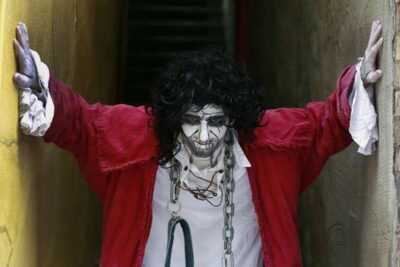 ★ 4.6Quebec: Crimes of New France Animated Walking TourFrom $20926 reviews
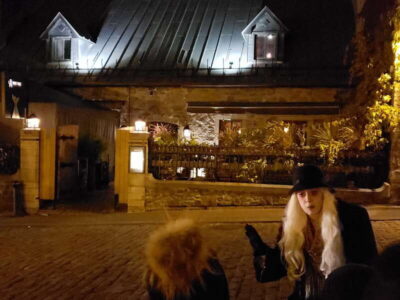 ★ 4.7Old Montreal: Traditional Ghost Walk of the Haunted CityFrom $24746 reviews
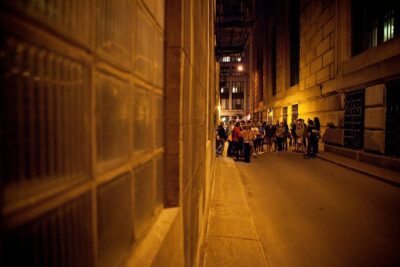 ★ 4.5Old Montreal Ghost Walking TourFrom $26726 reviews
 ★ 4.5Ottawa: Haunted Night Walking TourFrom $23341 reviews
 ★ 4.5Original Haunted Walk of OttawaFrom $25284 reviews
 ★ 4.7Vancouver: Lost Souls of Gastown TourFrom $28279 reviews
 ★ 4.7Toronto: Dark History Nighttime Walking TourFrom $20273 reviews
Browse the lists this tour appears in