
REVIEW · SNOWSHOEING & WINTER TRAILS
Coast Mountain Backcountry Snowshoe Tours
Old-growth forests on snowshoes, early. I love the way this tour turns a simple trek into a lesson on the region’s geology, all while you walk through winter powder. You also get to move at a comfort level that fits kids and adults, plus snowshoe rentals and poles are included so you are not scrambling for gear.
The main thing to plan around is access. Transportation is not included, and if your route needs Whistler Blackcomb you may need a gondola lift ticket or season pass, at an extra cost.
In This Review
- Key things I’d pay attention to
- Entering The Winter Backcountry Near Whistler
- Morning Start at 8:30 am, What Your Day Feels Like
- First Stop: Vancouver Coast and Mountains Through Powder and Granite
- Ancient Cedars and Geology-Forward Trails at a Relaxing Pace
- Choosing Crater Rim vs Joffre Lakes Timing and Effort
- The Guide Makes It Work, Including With Kids
- What’s Included, What’s Not, and the Real Value
- Gear and Clothing Tips for a Full Winter Day
- Terrain and Fitness: Average Fitness, Real-World Comfort
- Logistics Without the Headaches, Mobile Ticket and Meeting Point
- Who Should Book This Snowshoe Tour (and Who Might Not)
- Should You Book Coast Mountain Backcountry Snowshoe Tours?
- FAQ
- How long is the Crater Rim snowshoe tour?
- How long is the Joffre Lakes snowshoe tour?
- What time does the tour start?
- Where does the tour meet?
- Where does the tour end?
- What is included in the tour?
- Do I need to bring food and drinks?
- Is prior snowshoe experience required?
- What is the minimum age?
- Will I need extra tickets for Whistler Blackcomb?
- What happens if the weather is poor?
Key things I’d pay attention to
• Geology-based narration as you hike through snow and rock formations
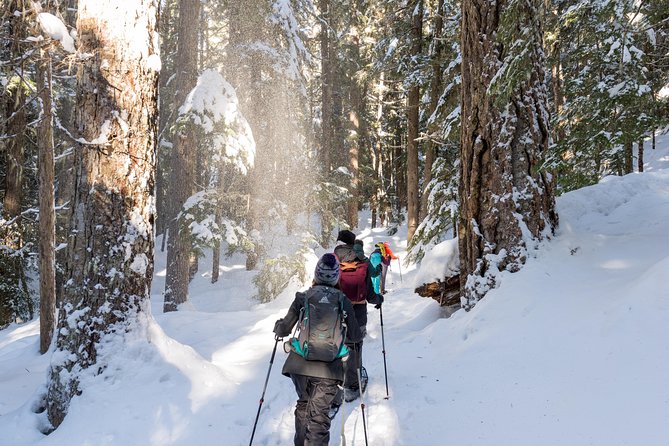
• Old-growth forests with giant trees and ancient cedars in the winter
• Rentals and poles included, which saves time and packing space
• Small group size capped at 8 travelers for more personal guiding
• Fitness-tailored pace, with average fitness and no experience required
• Two route options, Crater Rim (up to 4 hours) and Joffre Lakes (up to 6 hours plus driving time)
More trails worth breaking in winter
- Medicine Trail Snowshoe Tour★ 5.0 · 279 reviews
- Ice Fishing Adventure in Whistler★ 5.0 · 35 reviews
- Whistler: Backcountry Snowshoeing Tour with Guide★ 5.0 · 9 reviews
Entering The Winter Backcountry Near Whistler
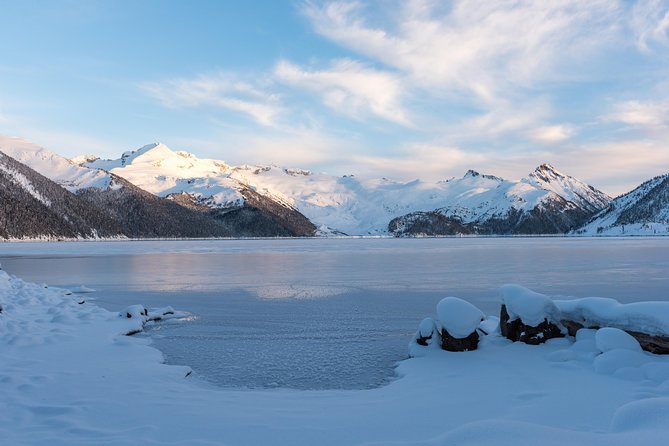
This is one of those winter tours where the setting does most of the talking, and your guide helps you actually see it. Around Whistler, the snowshoe trails feel like a true backcountry escape, with powder underfoot and tall old-growth trees overhead. You gain a real sense of place, because the walk is tied to the area’s geological history, not just scenic descriptions.
I also like that the experience is built for mixed groups. The tour is suitable for children and adults of all ages, and the route is tailored to the group’s fitness level. That matters, because snow days can swing from playful to tiring fast, and you do not want a hike that is either too easy to enjoy or too hard to finish happily.
One more practical point I appreciate: the group cap is 8 travelers. That tends to make it easier for a guide to keep an eye on footing, adjust breaks, and answer questions without turning the hike into a long line.
Morning Start at 8:30 am, What Your Day Feels Like
You start at 8:30 am in Whistler (meeting point in the Whistler BC V8E area), and the activity ends back at the meeting point. That “back where you started” structure is handy when you are building a packed itinerary in town. You get your full winter outdoor time, then you can head out for lunch or a late morning plan without needing a complex shuttle.
The tour format is also friendly for first-timers. There is no prior snowshoeing experience required, and average fitness is enough. The guide is responsible for getting you moving safely and at the right tempo, so your day is mostly about enjoying the winter scenery and the geology stories, not working out how to walk on snow.
Weather matters here. This experience requires good weather, so if conditions are poor you may be offered a different date or a full refund. In practical terms, you should treat this like an outdoor trip where the day’s plan depends on visibility and trail conditions, not just the calendar.
First Stop: Vancouver Coast and Mountains Through Powder and Granite
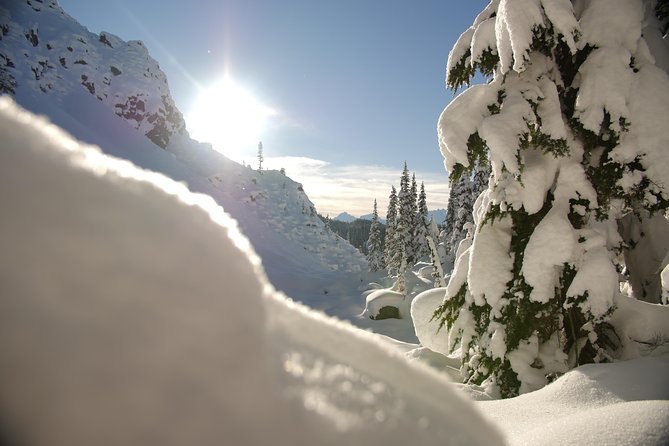
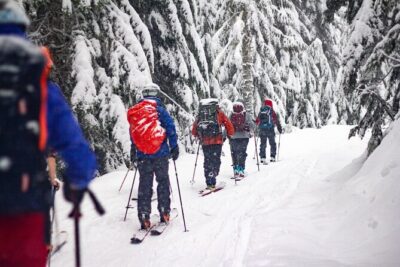
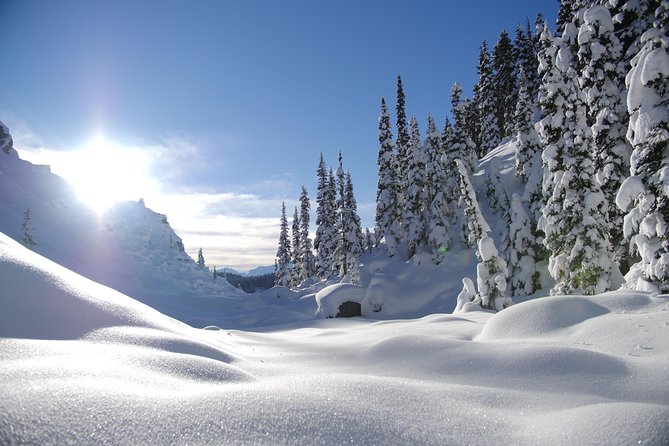
The core experience starts with a trek into the Vancouver Coast and Mountains winter realm. Expect pristine snow and a setting dominated by giant old-growth trees. As you move through the forest, the tour shifts from flat trail strolling to moments where you gain more elevation and views.
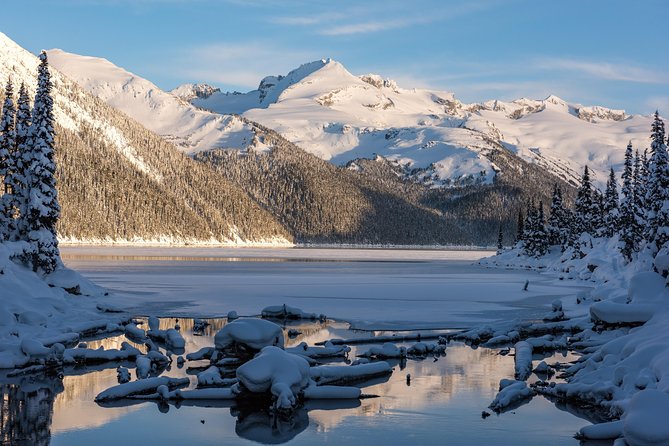
A standout detail in the description is the idea of snow-topped granite ridges. Even if you are not hunting for big summit panoramas, ridges are where snow starts to reflect light differently and where the terrain tells a stronger geological story. This is also where the guided narration can feel extra relevant, because you are moving through the environment that shaped the rock and the landforms you are seeing.
What you might notice along the way:
• The forest walk tends to feel immersive in a practical way, because trees break wind and soften the cold
• Your guide’s pacing and stop points matter more on snow ridges, so pay attention when they pause to check footing
• You will likely spend time looking outward, then back down at the snowshoe track patterns, because both are part of the experience
If you are traveling with kids, this first segment is a good fit. You are outdoors in a dramatic winter setting, but the pace can stay “walk, pause, look, repeat,” which helps keep attention and energy steady.
More cold-weather bookings around Whistler
Ancient Cedars and Geology-Forward Trails at a Relaxing Pace
After the initial backcountry push, you spend time in another set of winter trails shaped by old-growth forests and ancient cedars. This part of the tour leans into a calmer “rejuvenating excursion” vibe, at a relaxing and enjoyable pace.
Why I think this matters: a geology lesson sticks best when you are not rushing. When your guide points out how the land was formed, you can connect those ideas to what you are actually walking through, such as the mixture of forest structure, snow cover, and exposed rock where it appears.
The most helpful thing you can do as a participant is slow down when the guide calls for a stop. On snowshoes, it is easy to keep moving out of habit, but that is when you miss the small moments, like how the light hits rock, or how the terrain shifts from gentle forest grades to more interesting ground.
This segment is also where a group-friendly pace shows up. Since the tour is tailored to fitness levels, you should feel comfortable asking the guide to pause a bit longer for photos or kid re-centering. The overall design here is for enjoyment, not for speed.
Choosing Crater Rim vs Joffre Lakes Timing and Effort
You will see two main snowshoe tour options tied to different time commitments.
Crater Rim Snowshoe Tour
This one runs up to 4 hours. If you want a half-day outing that still feels substantial, this is the more compact option. It is a solid pick when you want a morning adventure and still plan to enjoy the rest of your day in Whistler.
Joffre Lakes Snowshow Tour
This option is listed as up to 6 hours, and an important note is that the driving time from Whistler to the Joffres Lake trailhead is not included in that duration. The additional driving time is listed as 2 hours. So in real life, plan your schedule accordingly. You are not just signing up for a longer snowshoe, you are committing to more of the day overall.
How to decide based on how you travel:
• Choose Crater Rim if you want less total time and a simpler day plan
• Choose Joffre Lakes if you are okay with a longer outing and want the extra time investment for a more extended route
Either way, the guiding and included gear make the experience approachable. You are not managing the logistics of snowshoe rentals, and you are not trying to interpret trail conditions on your own.
The Guide Makes It Work, Including With Kids
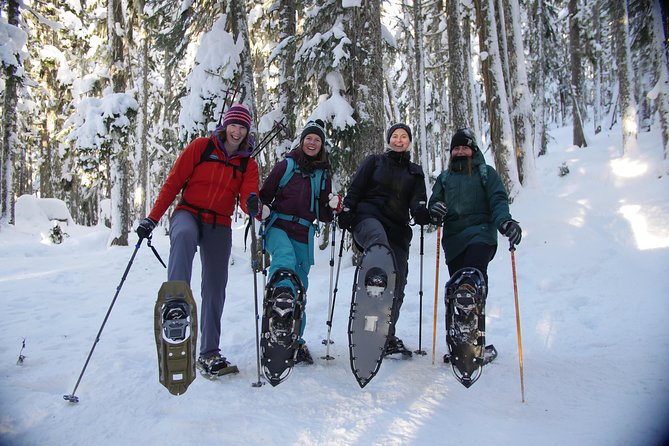
One detail that really came through is the quality of the guide experience. In one review, the guide is named Devin and the response thanks Devon, and either way the key point is consistent: the guide was engaging, knowledgeable about the area, and patient with kids. That combination is gold.
Here is why it matters for you:
• Kids do better when the guide builds in curiosity, not just walking
• Adults benefit too, because geology stories land when the guide can explain them in a way that keeps interest
• Patience is not just nice, it is practical on snow trails where everyone moves at a different pace
The tour is limited to a small group, which gives your guide room to be flexible. If you need slower pacing, more frequent stops, or a quick reset, that is where a good guide earns their keep.
What’s Included, What’s Not, and the Real Value
Included in your tour:
• Professional guide
• Snowshoe rentals and poles
Those inclusions matter more than they seem. Snowshoe rentals and poles are bulky to pack and often tricky to source last minute. Having them provided lets you focus on dressing correctly and showing up ready.
Not included:
• Transportation to and from the locations
• Food and drinks
So your “value” calculation should not be about whether you are paying for views. You are paying for a guided winter hike with gear handled for you, and that is a strong setup for first-timers and families. You just need to budget a bit for meals and any access costs, like a possible gondola ticket if the route uses Whistler Blackcomb.
If you are planning meals, bring your own lunch, snacks, and drinks as advised. The tour is designed for being outside, so you will want steady energy, especially if the snow is deep or the elevation feels more than you expected.
Gear and Clothing Tips for a Full Winter Day
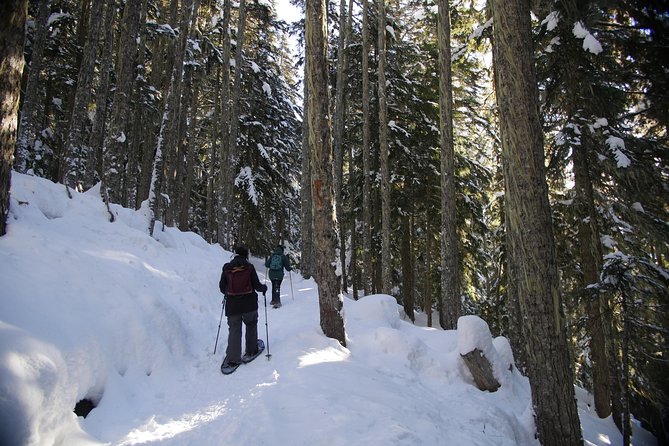
The tour guidance is simple: dress appropriately for a full winter day outside in the mountains. I take that at face value. Snowshoeing is not like a quick city walk, because wind chill and wet snow change how you feel quickly.
A safe approach is to dress in layers you can manage:
• Base layer that stays warm and helps with moisture
• Insulating layer you can keep on during pauses
• Outer layer that blocks wind
• Warm hat and gloves, because you will stand still long enough to feel cold if you are underprepared
Also, listen to the guide on how to use your poles and how to walk on your snowshoes. Even without technical experience, you can avoid needless fatigue by following basic technique they show you at the start.
If you are bringing kids, treat clothing comfort as the main “success factor.” A child who is cold or wet is not going to care about granite ridges or ancient cedar stands. The best way to keep the mood good is to get clothing right early, before you start moving.
Terrain and Fitness: Average Fitness, Real-World Comfort
The tour calls for no experience and average fitness. That is a broad statement, and in practice it usually means the guide can adjust pace and breaks. You will still be outside for a few hours, and snowshoeing engages your legs differently than normal walking.
What you should do if you are unsure about your fitness:
• Arrive ready to start slowly
• Plan on breaks when the guide suggests them
• Use the guide’s tailored pace instead of trying to match the strongest hikers
Because the group is small, the guide can also influence how hard the hike feels. If conditions allow a calmer route, or if the group needs more rest, the guide can steer the experience.
If you are traveling with people who are new to winter hiking, I like this tour format. It is not marketed as a stunt hike, it is built as a guided snow walk with time to enjoy the learning and the scenery.
Logistics Without the Headaches, Mobile Ticket and Meeting Point
You will use a mobile ticket, and the tour is offered in English. The meeting point is in the Whistler BC V8E area, and the tour ends back there as well. That is convenient because you do not lose half your day to complicated end-point changes.
You also have the benefit that it is near public transportation. That is helpful if you are staying in Whistler and do not want to rely on taxis to get moving early.
Just remember the transport note: transportation to and from locations is not included. If you are using the Crater Rim option this may feel like a straightforward day. If you choose the Joffre Lakes option, the extra driving time should be treated as part of the commitment.
Also, if you access the area via Whistler Blackcomb, a gondola lift ticket or season pass may be required, with additional cost. Check this before the day, so you are not stuck figuring it out while everyone is dressed for cold weather.
Who Should Book This Snowshoe Tour (and Who Might Not)
I think this tour is a great match if you want a family-friendly winter outing that mixes fun, gentle effort, and actual information. It is suitable for children and adults of all ages, with a minimum age of 8, and it is paced for the group’s fitness level.
It is also a good choice if you want the “I did something real in the mountains” feeling without needing specialized skills. Snowshoe rentals and poles are included, and you get a professional guide who can explain the region’s geology in a way that keeps the hike interesting.
You might hesitate if:
• You are looking for a hike that you can do without weather sensitivity
• You do not want to manage extra access costs such as possible Whistler Blackcomb gondola tickets
• You prefer tours where transportation and meals are fully handled for you
Should You Book Coast Mountain Backcountry Snowshoe Tours?
Book it if you want a guided, gear-included snowshoe experience that feels welcoming for mixed ages, and you like the idea of learning how the land formed while you walk through winter old-growth forests.
I would book the Crater Rim option if you want a clean half-day schedule. I would book the Joffre Lakes option if you can handle the longer outing and the extra driving time, and you want more hours on the trail.
Quick decision tip: if you are traveling with kids or a group where fitness varies, the small group size and the guide’s flexible, patient approach are exactly what make this kind of winter tour worth it.
FAQ
How long is the Crater Rim snowshoe tour?
Crater Rim is listed as up to 4 hours.
How long is the Joffre Lakes snowshoe tour?
Joffre Lakes is listed as up to 6 hours. The 2 hours of driving time from Whistler to the Joffres Lake trailhead is not included in that duration.
What time does the tour start?
The start time is 8:30 am.
Where does the tour meet?
The meeting point is Whistler, BC V8E, Canada.
Where does the tour end?
This activity ends back at the meeting point.
What is included in the tour?
The tour includes a professional guide, plus snowshoe rentals and poles.
Do I need to bring food and drinks?
Yes. Bring your own lunch, snacks, and drinks.
Is prior snowshoe experience required?
No experience is necessary. Average fitness is required.
What is the minimum age?
The minimum age is 8.
Will I need extra tickets for Whistler Blackcomb?
A gondola lift ticket or season pass may be required if the location is accessed via Whistler Blackcomb, and it is an additional cost.
What happens if the weather is poor?
This experience requires good weather. If it is canceled due to poor weather, you will be offered a different date or a full refund.
When Whistler Freezes Over
Trails Worth Breaking
Just off the notebook: recent Whistler write-ups
- Whistler: Guided Wilderness Hike
★ 5.0 · 4 reviews - Paradise Valley: Bee Adventure Tour!
★ 5.0 · 4 reviews - From Vancouver: Shannon Falls and Whistler Sightseeing Tour
★ 4.1 · 4 reviews - Whistler Helicopter Tour: Glaciers and Black Tusk
★ 4.8 · 5 reviews - Whistler Family Buggy Easy Tour
★ 5.0 · 5 reviews - Whistler: Axe Throwing Experience
★ 5.0 · 6 reviews
Snowshoeing & Winter Trails, compared.
 ★ 5.0Medicine Trail Snowshoe TourFrom $117279 reviews
 ★ 5.0Abraham IceBubble, Peyto, Bow Lake with Snowshoeing& IcewalkFrom $74146 reviews
 ★ 4.7Quebec City: Jacques-Cartier National Park Snowshoeing TourFrom $108127 reviews
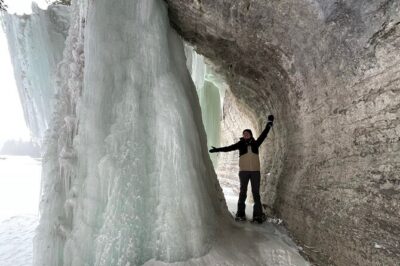 ★ 5.0Snowshoeing with mountain goats Private activityFrom $86104 reviews
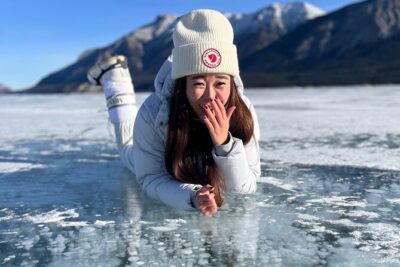 ★ 5.0Abraham Ice Bubble/Sunwapta Falls,Snowshoeing,Icefield, Bow&PeytoFrom $6886 reviews
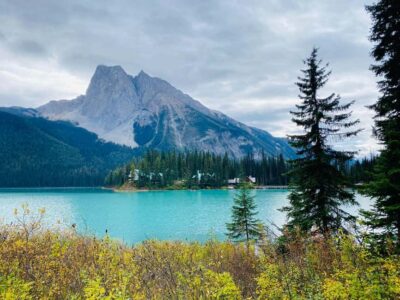 ★ 4.9Abraham IceBubble, Peyto, Lake Louise, Bow Lake, SnowshoeingFrom $4279 reviews
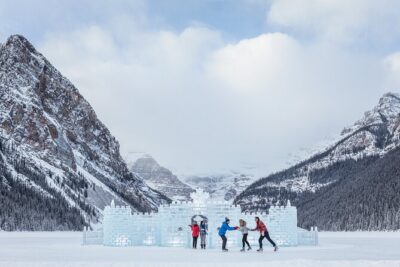 ★ 5.0Banff, Lake Louise and Johnston Canyon – Winter Wonderland TourFrom $18077 reviews
 ★ 5.0Winter Wonder Tour-A Journey Through the Tunnels Behind the FallsFrom $8966 reviews
Browse the lists this tour appears in