
REVIEW · HOP-ON HOP-OFF & SIGHTSEEING BUS TOURS
Toronto: Night Sightseeing Tour on a Double-Decker Bus
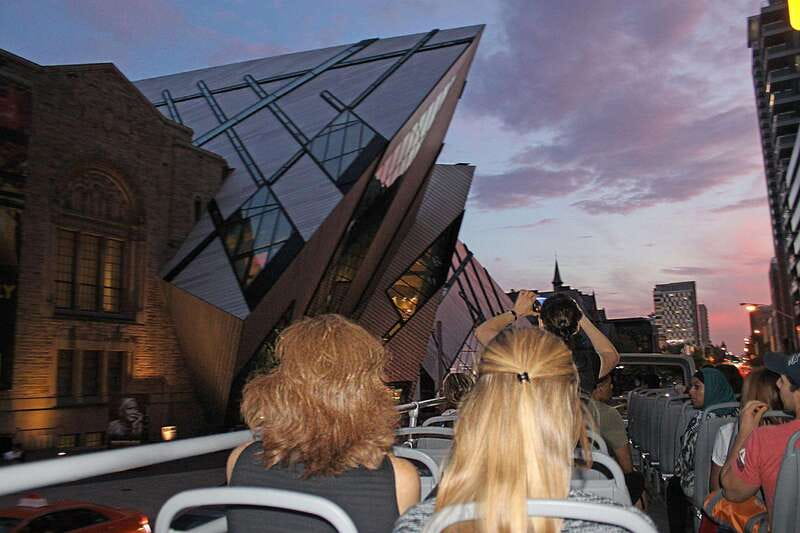
Toronto at night feels like a movie set. This double-decker bus turns the skyline into a guided photo walk, with guaranteed upper-deck seating and live commentary that helps you connect the lights you see to the city behind them. I especially like the way the route threads through big-name sights and key neighborhoods without making you plan, and how the night lighting makes even familiar buildings feel new.
One thing to consider: the experience depends on the night itself. If it is wet or cold, you will want proper layers, and if the audio dips, you may not catch every detail from the back.
In This Review
- Key things to know before you ride
- A 90-minute night loop that actually saves you time
- Who it suits best
- Finding City Sightseeing at Yonge-Dundas Square
- Top-deck night views: skyline lights, CN Tower energy, and photo tips
- How to get better photos from a moving bus
- What the live guide adds: context you can use later
- How commentary helps with night navigation
- The downtown highlights you will pass, and why each one matters
- Yonge-Dundas Square and the downtown gateway
- The Fairmont Royal York area, plus a classic downtown feel
- University of Toronto, St. George Campus sightlines
- Chinatown at night: color, energy, and street-level texture
- Nathan Phillips Square and the civic heart
- Along Yonge Street and the Flatiron Building moment
- Church Wellesley and Queens Park: neighborhoods with identity
- Old Toronto and the Financial District glow
- The Esplanade finish feel
- Open-top versus closed-top in November and December
- Comfort, sound, and the small annoyances to plan around
- Audio might not reach every seat
- Bus cleanliness can vary
- Tree branches and street angles can interrupt photos
- Is it worth $32 for a Toronto night?
- When it is a smart “first night” move
- Should you book this Toronto night double-decker bus tour?
- FAQ
- Where do I meet for the Toronto night tour?
- How long is the tour?
- Is upper-deck seating guaranteed?
- Is the bus open-top year-round?
- What language is the live guide commentary in?
- What should I bring, and what is not allowed?
Key things to know before you ride
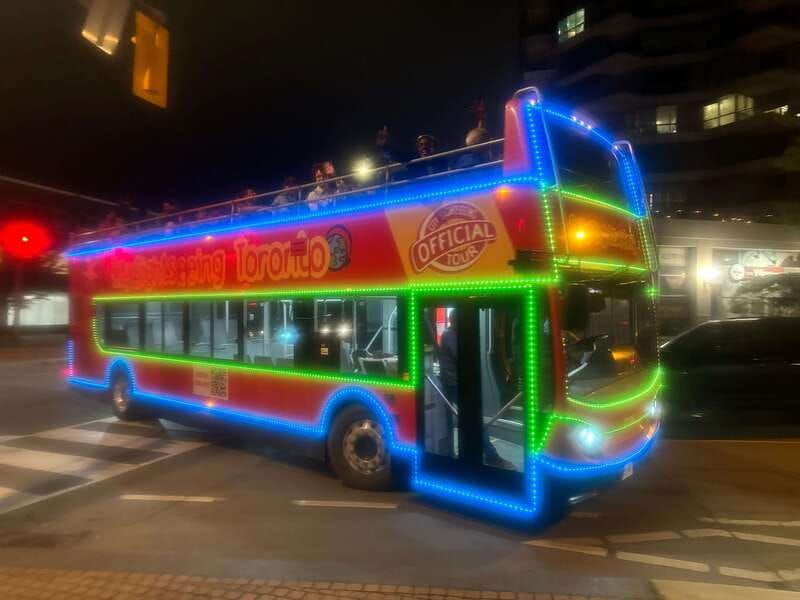
- Guaranteed top-deck seating for the best viewing angles without jockeying for position
- Live English guide commentary as you pass major downtown landmarks
- A tight 90-minute loop that gives you a big-picture view fast
- Photo reality check as the bus moves, branches and reflections can block some shots
- Open-top in most months, closed-top in Nov and Dec based on the season
- A practical meeting point right at Yonge-Dundas Square
More open-top loops around Toronto
- Toronto: City Sightseeing Hop-On Hop-Off Bus Tour★ 4.3 · 2,544 reviews
- City Sightseeing Toronto Hop-On Hop-Off Bus Tour★ 3.5 · 726 reviews
- Toronto: Niagara Falls Bus Tour with Maple Tasting and NOTL★ 4.6 · 524 reviews
- Toronto: City Sightseeing Helicopter Tour★ 4.9 · 282 reviews
A 90-minute night loop that actually saves you time
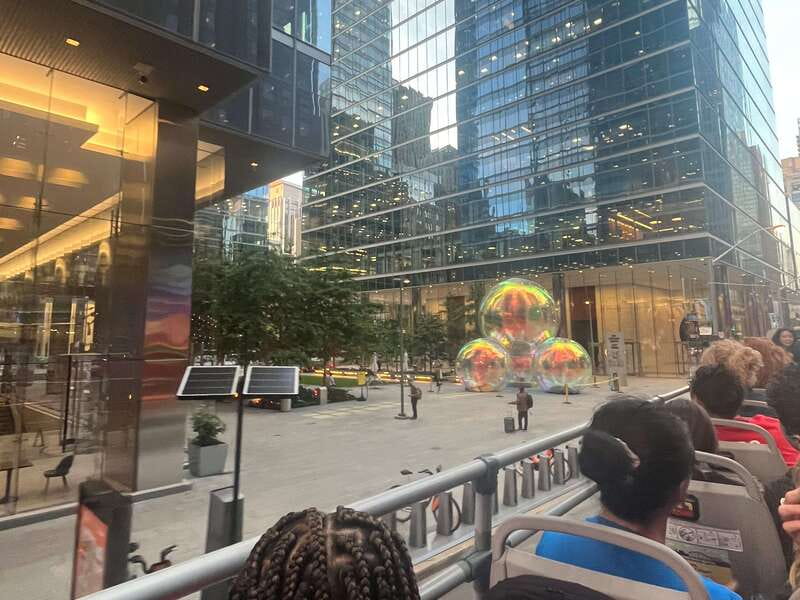
This is the kind of Toronto night activity that works even when your schedule is messy. At 90 minutes, you get a guided sweep through downtown, with your bus doing the boring driving while you focus on the view.
The value is in what is included. For $32 per person, you are paying for three things at once: the bus ride, live guiding, and upper-level seating guaranteed. That last part matters. If you have ever tried to get a good spot on a sightseeing bus, you know how fast the best seats disappear.
Also, this is a great add-on if you are doing daytime sights too. People who match the night tour with the daytime version often find they are seeing different angles and a different city mood. Daytime shows you the shape of Toronto. Night shows you why the skyline is the skyline.
Who it suits best
I would book this if you want:
- A fast orientation to downtown
- Landmark photos without standing in crowds all evening
- A guide to put some meaning behind what you see
If you want lots of stop-and-stroll time at each location, this is not that kind of tour. This ride is built around passing major sights, not long photo breaks.
Finding City Sightseeing at Yonge-Dundas Square
Meet at the Visitor Information Kiosk in Yonge-Dundas Square. (It is noted as soon to be Sankofa Square, so the area may be getting a name change in signage.) This is a central spot, easy to reach, and it puts you right where the action starts.
A small practical tip: arrive a few minutes early so you can settle upstairs without stress. The tour promises guaranteed upper-deck seating, but you still want a smooth start.
And because this is an open-air style experience depending on the season, plan to dress for the weather you will actually be in, not the weather app you hope for.
Other ways into a Toronto evening


Top-deck night views: skyline lights, CN Tower energy, and photo tips
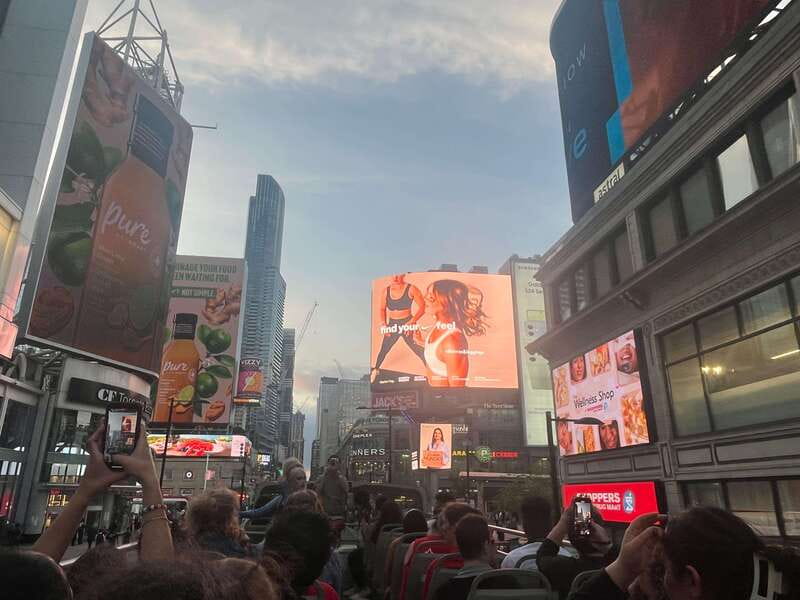
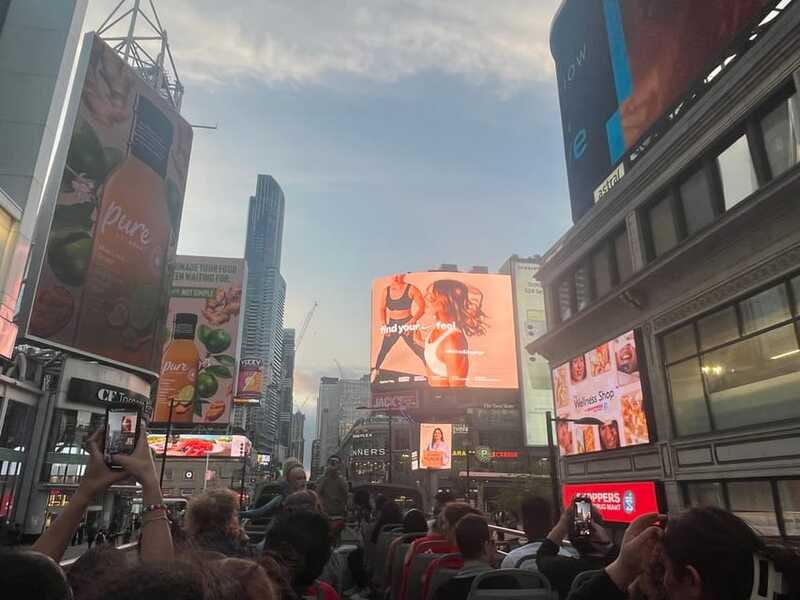
The star power is real here. As the bus rolls through downtown, you get that classic Toronto look where buildings turn into glowing landmarks. The route runs past key photo magnets, including the area around the CN Tower, plus downtown streets where the lighting makes architecture pop.
From the top deck, you get a wider feel for distance and layout. That is the big benefit of the guaranteed upper deck: you do not have to gamble on whether you end up on the lower level. You also get better sightlines for grabbing photos over other people’s heads.
How to get better photos from a moving bus
Here is the honest part. You are on a bus, so:
- You will not stop for every shot
- The bus movement can blur some images
- Reflections and glare can mess with shots when streetlights hit glass
Bring your phone or camera settings for night. If you are using a phone, tap to focus on the bright building edges, then steady your hands. If the bus has any low branches along the route, you may need to angle your device down or slightly to avoid obstruction.
One more real-world detail: some people have mentioned that certain photo opportunity angles do not always work out because of passing traffic or what is physically between you and the building. That is not a dealbreaker, just a reason to keep expectations flexible.
What the live guide adds: context you can use later
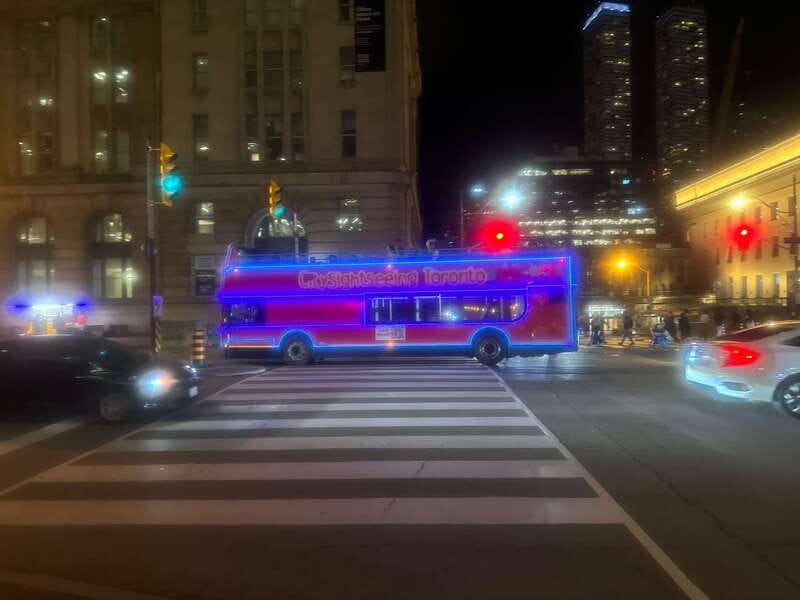
A big reason this tour works is the live commentary. The guide is not just naming streets. The better guides connect the landmarks to how the city grew, and they add context that helps you understand what you are looking at later, whether that is on your next walk or in your next museum stop.
The tour’s guide style seems to vary by group, but the patterns are consistent. People describe guides who:
- Give a clear downtown overview
- Share facts about what you are seeing in real time
- Point out local events and what is worth noticing beyond the obvious landmarks
For example, I noticed mentions of guides like Marilyn with Steve driving, and guides such as Mohammed and Grace who made the ride feel informative and upbeat. The common thread is energy plus structure. You are not left alone with a windshield and a wish.
How commentary helps with night navigation
Night is disorienting, especially in a big downtown. The commentary acts like a moving map. When you hear what you are passing, the city stops feeling like random buildings. Instead, it becomes neighborhoods with a story.
That is also why the tour can be a good first evening activity. You come away with a mental framework for where things are.
The downtown highlights you will pass, and why each one matters
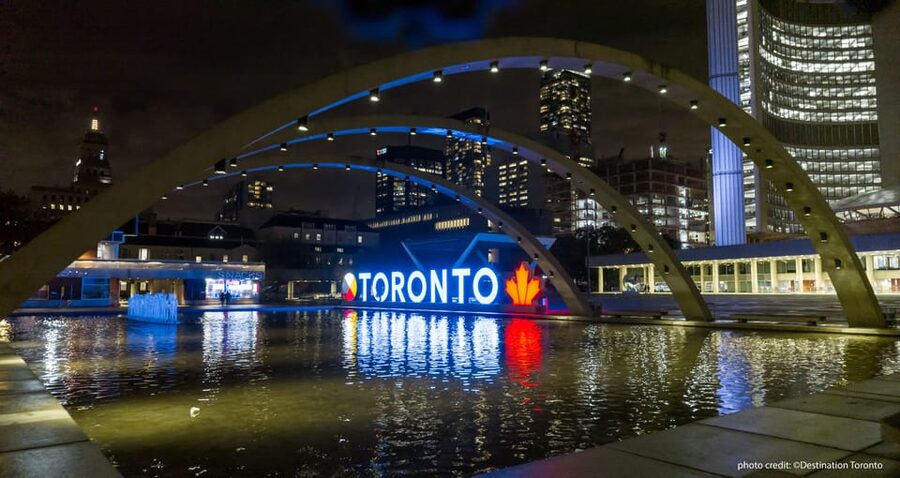
This route is built around downtown landmarks and the neighborhoods that shape Toronto’s day-to-day feel.
Yonge-Dundas Square and the downtown gateway
You start at Yonge-Dundas Square, then cruise through the surrounding core. This is where Toronto’s big-screen energy shows up. Even at night, the area feels like the city’s main junction.
From here, the bus ride becomes a visual timeline. You start with the modern downtown vibe, then keep moving toward older areas and financial streets.
The Fairmont Royal York area, plus a classic downtown feel
You will pass the Fairmont Royal York area. Even if you do not step inside, the setting gives you a quick sense of downtown’s grand hotel history and how the city’s formal side sits right next to everyday street life.
It is a good contrast moment. You see the polished, landmark scale, then you move on.
University of Toronto, St. George Campus sightlines
Next up is the University of Toronto, St. George Campus area. At night, campus buildings can look extra graphic, with lighting that emphasizes shape and columns. You also get that “this city has students and research right downtown” context.
If you like atmosphere, this stop is less about a single famous building and more about how education still anchors the middle of the city.
Chinatown at night: color, energy, and street-level texture
You pass through Chinatown. Night lighting here often makes street-level details stand out more than you would expect from a fast-moving bus. It is one of those sections where the city’s cultural identity feels closer to the ground.
Even when you are not getting out to walk, the bus route can still show you how dense and layered the neighborhood is.
Nathan Phillips Square and the civic heart
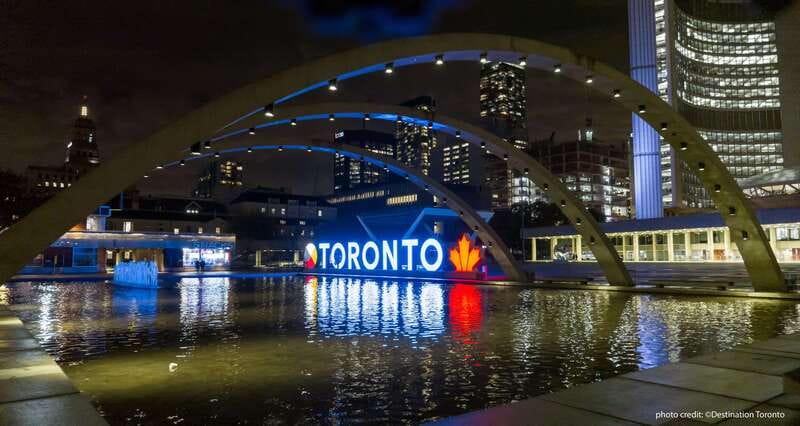
You will pass Nathan Phillips Square, which is tied to Toronto’s civic identity. At night, it becomes easier to see it as a gathering space rather than just a landmark photo spot.
You also get that sense of open space in a city that otherwise feels tightly built.
Along Yonge Street and the Flatiron Building moment
The bus travels along Yonge Street, one of the most famous downtown stretches. This is where you notice rhythm. The city’s scale is different block to block, and the lights help you see that.
You also pass the Flatiron Building. Even from a moving bus, it tends to show up as a distinctive shape, a reminder that Toronto has more than just towers. It has quirky angles too, and that is part of its charm.
Church Wellesley and Queens Park: neighborhoods with identity
As you head toward Church Wellesley Village and Queens Park, the city starts to feel more neighborhood-led and institutional at the same time. You get a sense of where people live, gather, and work, not just where tourists point.
This part of the ride is helpful if you want your Toronto evening to feel more real, not only like a billboard tour.
Old Toronto and the Financial District glow
You pass Old Toronto areas and the Financial District. Here, the night effect is strongest. Modern glass towers reflect light dramatically, and older streets look sharper because the contrast is higher.
If you are into architecture, this is your stretch. Keep your camera ready, but also be ready to accept imperfect shots, because the bus never pauses long enough for you to perfect everything.
The Esplanade finish feel
As you approach the Esplanade, it feels like the tour is steering you toward the downtown spine that connects multiple districts. It is a nice closing atmosphere, a final reminder that Toronto is stitched together more than one downtown “zone.”
Open-top versus closed-top in November and December
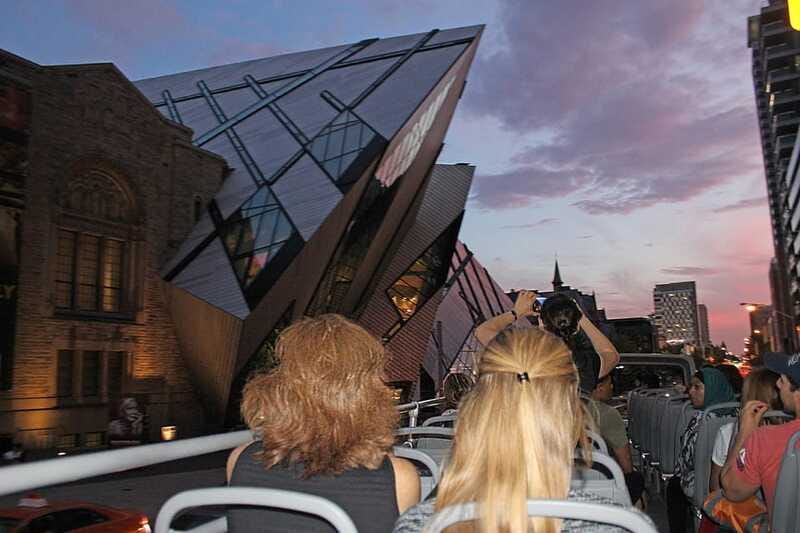
Season matters here. The tour notes that closed top double-decker vehicles may be used in November and December.
In plain terms: plan for weather. If you ride in late fall, you might still get top-level sightlines, but your comfort will depend on how the operator handles the cover. Either way, bring weather-appropriate clothing. If it is cold, dress for standing outside even briefly. If it is wet, treat your seat and your hands like they will feel the elements.
This is one of those tours where layers win. A scarf, gloves, and a hood can make the difference between cozy watching and impatient shivering.
Comfort, sound, and the small annoyances to plan around
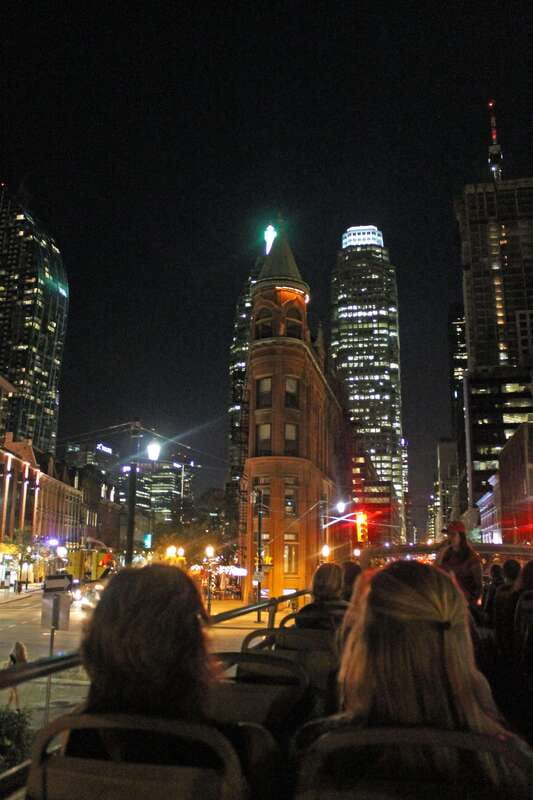
Most people rate this tour very highly, and the biggest praise is the combination of fun and a strong overview. But there are a few practical issues worth knowing so you are not surprised.
Audio might not reach every seat
One review specifically flags that the mic and speaker needed improvement, especially from the back. If you are sensitive to audio, try to choose a seat closer to the front when you board, especially upstairs.
Bus cleanliness can vary
Another point mentioned was that the bus was not clean enough. That is not something you can control, but it is fair to keep in mind if you have high standards for cleanliness.
Tree branches and street angles can interrupt photos
Some people have also mentioned ducking due to branches along the route. Others noted that certain photo spots were blocked or less effective because the bus was moving or something sat between you and the landmark. That is just the reality of riding an open-air bus through a dense city.
You can still get good photos. You just need flexibility.
Is it worth $32 for a Toronto night?
For $32, you are buying:
- A guided downtown circuit
- Live English commentary
- Guaranteed upper-deck seating
- A compact 90-minute use of your evening
That pricing can be a good deal if you would otherwise spend time figuring out routes, waiting for transit, or piecing together multiple short stops. The tour also reduces fatigue. Night walking in downtown can be great, but it can also wear you out fast.
You are not paying for food here, and you should plan accordingly. Bring snacks if your evening needs it, or eat before you go.
When it is a smart “first night” move
If you are only in Toronto for a short stay, this kind of tour helps you get oriented in one shot. It gives you a blueprint for what to revisit later in daylight, when you have time to explore streets on foot.
Should you book this Toronto night double-decker bus tour?
I would book it if you want an efficient way to see downtown glow, learn what you are looking at, and get photos without long lines or constant decision-making.
Skip it, or at least set expectations, if you need lots of time at each stop or if your priority is quiet, distraction-free listening. The tour is a ride through the city, not a series of long scenic pauses.
If you are traveling in late fall, dress for the weather since open-top comfort can change. And if you care about audio, aim for seats where you are more likely to catch the guide clearly.
FAQ
Where do I meet for the Toronto night tour?
Meet at the Visitor Information Kiosk in Yonge-Dundas Square, soon to be Sankofa Square.
How long is the tour?
The tour lasts 90 minutes.
Is upper-deck seating guaranteed?
Yes. You get guaranteed seating on the upper level.
Is the bus open-top year-round?
It is an open-top bus experience, but closed top double-decker vehicles may be used in November and December.
What language is the live guide commentary in?
The live tour guide provides commentary in English.
What should I bring, and what is not allowed?
Bring weather-appropriate clothing. Alcohol and drugs are not allowed.
When the Lights Come On


Open-Top Loops Around Toronto


Just off the notebook: recent Toronto write-ups
- From Toronto: Niagara Falls Guided Day Tour with Boat Cruise
★ 4.2 · 4 reviews - Toronto: Niagara Falls Day Tour with Niagara City Cruise
★ 4.5 · 4 reviews - Toronto Islands: Sunrise Breakfast Bicycle Tour
★ 5.0 · 4 reviews - Kensington Market ‘Taste the World’ Food Tour
★ 4.5 · 4 reviews - Toronto: Great White North Food Tour
★ 5.0 · 4 reviews - From Toronto: Customizable Guided Day Trip to Niagara Falls
★ 5.0 · 4 reviews
Hop-On Hop-Off & Sightseeing Bus Tours, compared.
 ★ 4.4Montreal: Guided Bus TourFrom $263,064 reviews
 ★ 3.5Big Bus Vancouver Hop-On Hop-Off Sightseeing TourFrom $483,028 reviews
 ★ 4.1Montreal: Hop-On Hop-Off Double-Decker Bus TourFrom $262,760 reviews
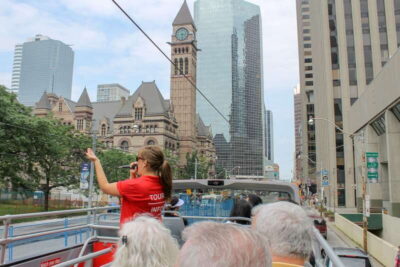 ★ 4.3Toronto: City Sightseeing Hop-On Hop-Off Bus TourFrom $492,544 reviews
 ★ 4.0Montreal City Sightseeing Tour with Live CommentaryFrom $541,953 reviews
 ★ 3.9Vancouver: Hop-on Hop-off Sightseeing Tour with 10 StopsFrom $471,807 reviews
 ★ 4.5Vancouver City Sightseeing Tour: Granville Island & Stanley ParkFrom $681,782 reviews
 ★ 5.0Vancouver City Sightseeing Tour: Capilano Suspension Bridge & Vancouver LookoutFrom $1451,556 reviews
Browse the lists this tour appears in