
REVIEW · CYCLING TOURS
Toronto: Heart of Downtown 3.5-Hour Bike Tour
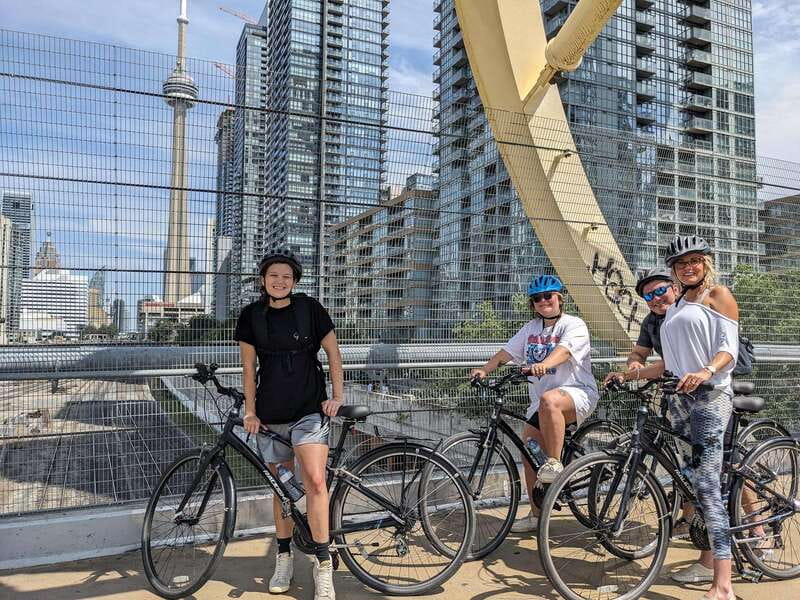
Downtown Toronto clicks into place on a bike. This 3.5-hour tour blends safe riding, expert local guidance, and entertaining stories that make the city feel personal fast. I love the easy pace and the safety-minded route that uses bike lanes and quiet streets. I also love how many major sights you can realistically “touch” in one afternoon, from CN Tower to the waterfront. The one possible downside is that it is a long loop with lots of stops, so you will not get long, sit-down time at every location.
From the first pedal stroke, you get a clear sense of how downtown is laid out, and where you might want to return later for a deeper look. Expect an overall ride of about 15 km spread across roughly 3 hours, with plenty of photo breaks and short history chats. For the money, it is a strong way to get oriented, especially if you are arriving for the first time and want a plan by the end of the tour.
In This Review
- Key moments that make this ride worth your time
- Why Toronto feels different from two wheels
- Pace, safety, and who this tour fits best
- The Dundas meeting point, and what to bring for a smooth start
- CN Tower and Royal York Hotel: the downtown skyline hit
- Union Station to Chinatown: getting the transit heart and the street edge
- Eaton Centre and Dundas Square: the commercial core in one swing
- Queen Street West, Art Gallery of Ontario, and OCAD: culture you can pedal to
- Hockey Hall of Fame, Massey Hall, and Rogers Centre: sports and stages, up close
- City Hall, St. Lawrence Market, and the old-town corners you can actually feel
- Sherbourne Common, Corus Quay, and Sugar Beach: waterfront Toronto with wind in your face
- Financial district and the Entertainment District: modern Toronto’s two speeds
- Price and value: is $90 for a 3.5-hour downtown bike tour worth it?
- My honest booking advice: who should book and who should pass
- FAQ
- How long is the Toronto Heart of Downtown bike tour?
- What is the price per person?
- What is included in the tour?
- Is a helmet provided, and is it required?
- Where do I meet the tour?
- What languages are available for the live tour guide?
- Is the tour suitable for beginners?
- Is the tour refundable if my plans change?
Key moments that make this ride worth your time
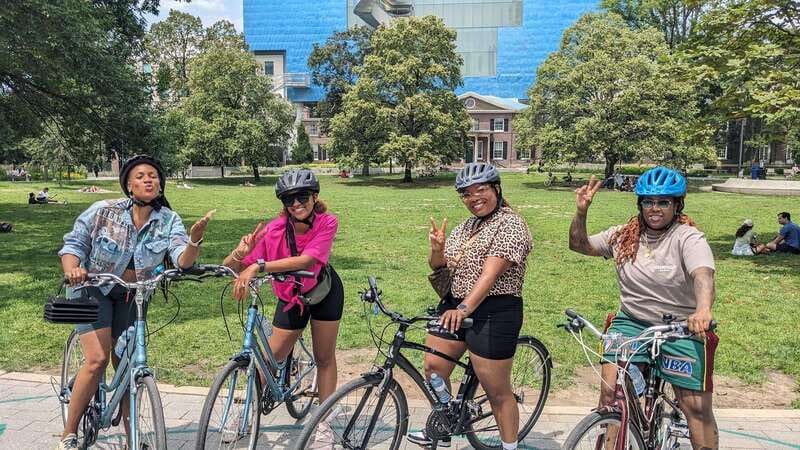
- Beginners welcome, serious about safety: helmets mandatory, routes planned for low-stress cycling.
- A real downtown sampler: CN Tower, Union Station, Chinatown, Kensington Market, City Hall, and more.
- Lots of “stop and look” breaks: quick pauses so you can hear stories and take photos without racing.
- Comfort items included: helmet, bicycle, water, and snacks so you can focus on the ride.
- You cover big sights without car traffic: bike lanes and park paths help you move smoothly.
More of Toronto at bike speed
- Downtown Toronto Bike Tour★ 5.0 · 336 reviews
- Toronto Islands: Morning or Twilight 3.5-Hour Bike Tour★ 4.8 · 304 reviews
- Toronto Islands Morning Bike Tour★ 5.0 · 192 reviews
- Toronto Islands Evening Bike Tour★ 5.0 · 93 reviews
Why Toronto feels different from two wheels
Toronto can be confusing on foot. Blocks stretch. Intersections blur. By bike, you get a better rhythm, and you feel the city’s shape instead of just seeing it. This tour is built for that exact moment when you want the lay of the land but you also want it to be fun.
You are not just rolling past landmarks. You are stopping often enough to connect what you are seeing with what makes Toronto tick. That story thread matters in a place like downtown, where old and new sit side by side. One minute you are near grand institutional buildings, the next you are in neighborhood streets with a totally different vibe.
I also like that it is not trying to be a marathon. The easy pace makes it doable even if you are a little rusty. You still get real movement and fresh air, which is a lot more satisfying than standing in lines or waiting at curb stops.
Pace, safety, and who this tour fits best
The ride is paced for a mixed group, including people new to city cycling. The operator plans routes that use quiet streets, park paths, and bike lanes, and you get safety instructions before you set off. Helmets are provided and mandatory, which is a big deal when you are riding near busy downtown intersections.
What that means for you: the tour is built to reduce the scary surprises. You are not being thrown into high-speed chaos. Guides keep the group together and make sure everyone can handle the ride comfortably. In practice, that gives you permission to enjoy the sights instead of white-knuckling the handlebars.
Who it is best for:
- First-time visitors who want orientation fast
- Anyone who wants to see a wide range of downtown neighborhoods in one outing
- People who like photos, because the tour pauses often
- Cyclists who are comfortable at an easy pace, plus beginners who want support
One small consideration: downtown cycling always involves at least a few stretches where you are sharing space with traffic. The route is managed for safety, but this is still a city ride. If you are extremely nervous around cars, the pace and bike lanes help, but you should go in with realistic expectations.
The Dundas meeting point, and what to bring for a smooth start
You meet at a parking garage about 50 m south of Dundas, on the west side of the street. Go into the garage, look for the yellow signs, and ride down to P2, then find section H.
That underground start matters. You want to arrive early enough to find the signs and get your gear sorted without rushing. One practical tip: take a screenshot or map pin of the entrance so you are not trying to decode directions while you are already late.
What to bring:
- Weather-appropriate clothes for a bike ride
- Sunglasses and sunscreen
- A camera (or phone, but keep it secure)
- Comfortable footwear, skip dress shoes and fancy clothing
- Minimal carry, since you will likely want your hands free for the ride
There is locker space available for leaving items. Plus, each bike comes with a water bottle holder, so hydration stays easy.
Languages offered are Spanish, English, and French. If you prefer one, pick a departure time that matches your language comfort.

CN Tower and Royal York Hotel: the downtown skyline hit
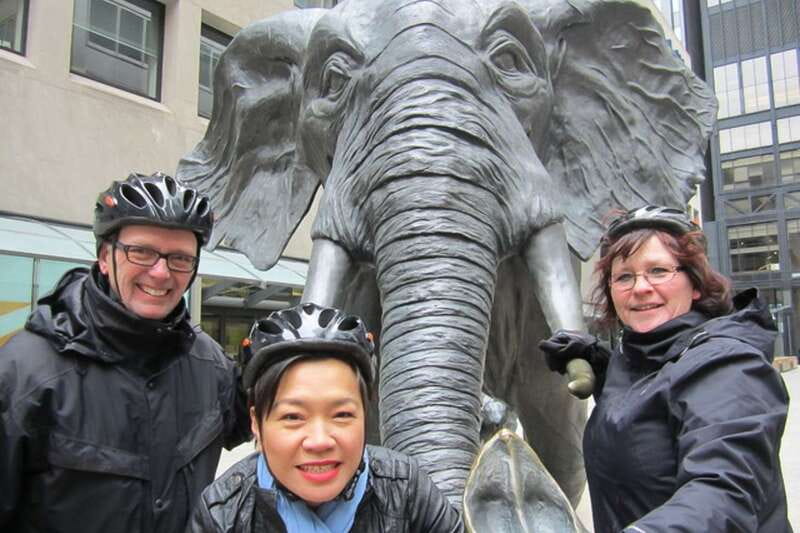
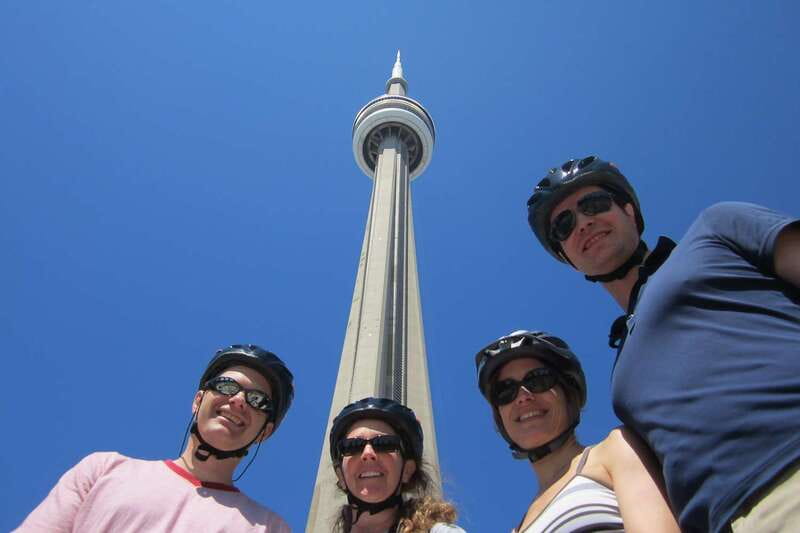
Even if you know Toronto from photos, seeing the skyline in motion hits different. This tour includes a stop area for the CN Tower, where you can take in the scale of the city and understand why the tower is such a downtown anchor.
Next comes the Royal York Hotel, the kind of landmark that instantly signals big-city status. Seeing it up close by bike helps you notice details you would miss from a distance. It is also a good “breather” spot in the loop, since you can stand, look, and reset before rolling again.
What I like here is the pacing logic. You get iconic views early enough that the rest of the neighborhoods feel more meaningful, like you are building a map in your head.
Union Station to Chinatown: getting the transit heart and the street edge
Union Station is Canada’s idea of a grand front door, and it is one of those places where downtown history and daily life overlap. On a bike tour, you get a front-row sense of how major transit shapes the city around it. Even if you never take a train that day, it helps you understand Toronto’s movement.
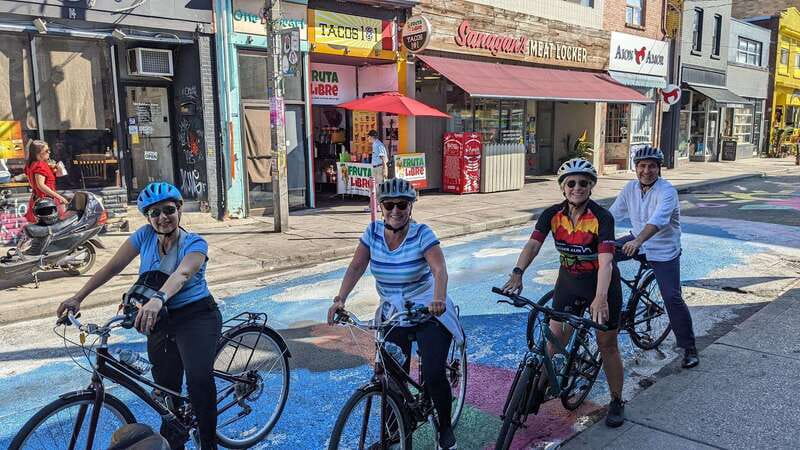
Then the tour shifts toward Chinatown and Kensington Market. This is where downtown becomes less “monumental” and more everyday. You start noticing smaller street textures: storefronts, side streets, and the kind of energy that is hard to capture on a bus.
What you should watch for:
- How the neighborhood streets change quickly from the institutional blocks
- Where the bike lanes and quiet streets help you glide instead of stop-and-go
- How your guide frames the area, so it feels more than just a list of attractions
If you like to plan your next day based on what felt most alive, these market and Chinatown stops are where you often find your personal favorites.
Eaton Centre and Dundas Square: the commercial core in one swing
You will pass through Eaton’s Centre, one of downtown’s busiest shopping anchors. From a bike seat, you can see how commercial Toronto stacks up beside cultural and civic spaces. It is also a convenient reference point for future planning, because you instantly know where you are in the grid.
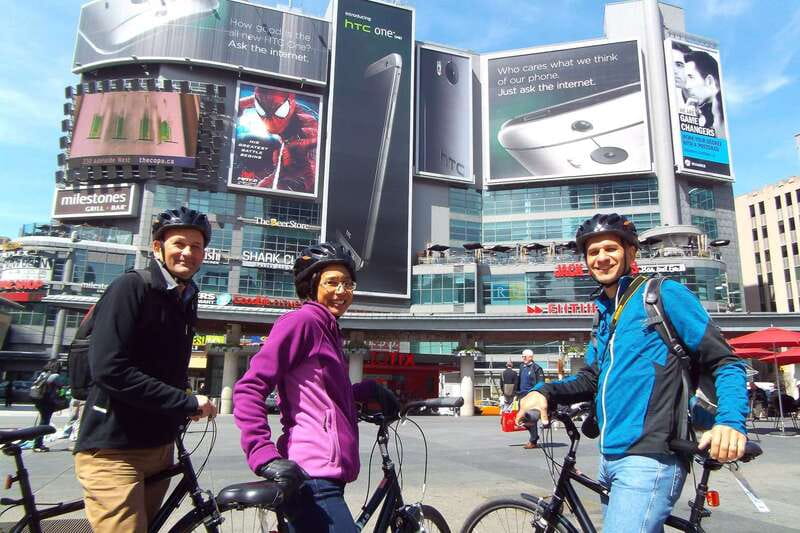
Then comes Dundas Square, which is basically downtown in public square form. You notice the density, the street activity, and the way people move between districts. If you are thinking about where you want to meet friends later or where you might want an easy starting point for evening plans, Dundas Square helps you lock it in.
The catch with big commercial areas: they can feel like one big flow. That is why the guide’s stop-and-listen moments matter. Without that context, it is easy to just watch crowds and miss what you are actually looking at.
Queen Street West, Art Gallery of Ontario, and OCAD: culture you can pedal to
Queen Street West is one of those Toronto corridors that feels like a statement. You get the sense of creativity, retail variety, and neighborhood mood along the way. It is a smart inclusion because it gives you a “daylight Toronto” feel, not only an attractions checklist.
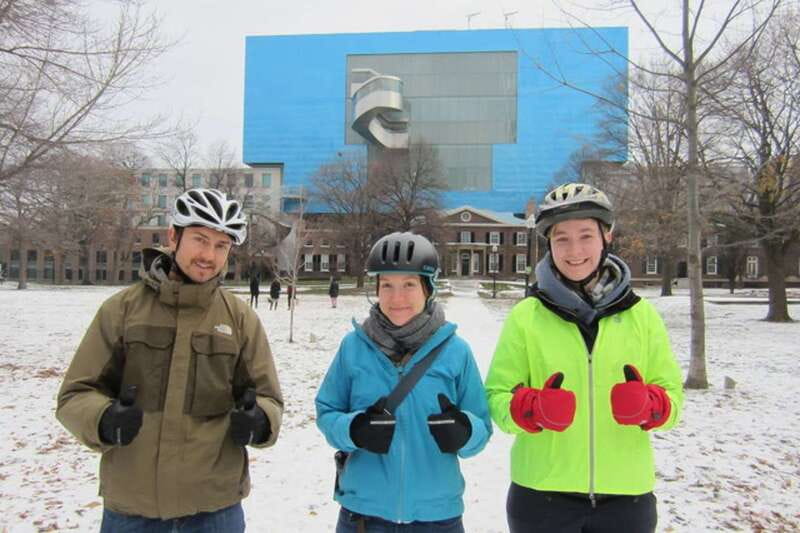
The tour then includes major cultural stops: the Art Gallery of Ontario and the College of Art and Design area. Seeing those institutions by bike gives you a stronger sense of how education and arts sit inside the city’s day-to-day.
Why this matters for you: if you like arts, you now have more than one reason to return. You know roughly where to go, and you understand the vibe around those buildings. If arts are not your focus, you still benefit from the architecture and the layout, which makes the rest of downtown easier to navigate later.
Hockey Hall of Fame, Massey Hall, and Rogers Centre: sports and stages, up close
This is the part of the tour where downtown turns into a power trio of entertainment. You will see the Hockey Hall of Fame, a destination for anyone who cares about Canada’s sports mythology. Even if you do not plan to go inside today, the exterior stop plus your guide’s context helps it click.
Next, Massey Hall brings a different kind of cultural weight. It is the kind of building that reminds you Toronto is not just about games and towers. It also hosts performances that shape the city’s identity.
Then you reach the Rogers Centre, and nearby you also visit Round House Park. The combination works well: stadium energy plus a more relaxed park setting. It is a good reminder that downtown can be both high-intensity and walkable-comfy in the same afternoon.
One practical takeaway: if any of these three locations sparks your interest, the tour gives you a clear “yes, I should return” list. That is one of the strongest values of a bike overview, it helps you decide faster.
City Hall, St. Lawrence Market, and the old-town corners you can actually feel
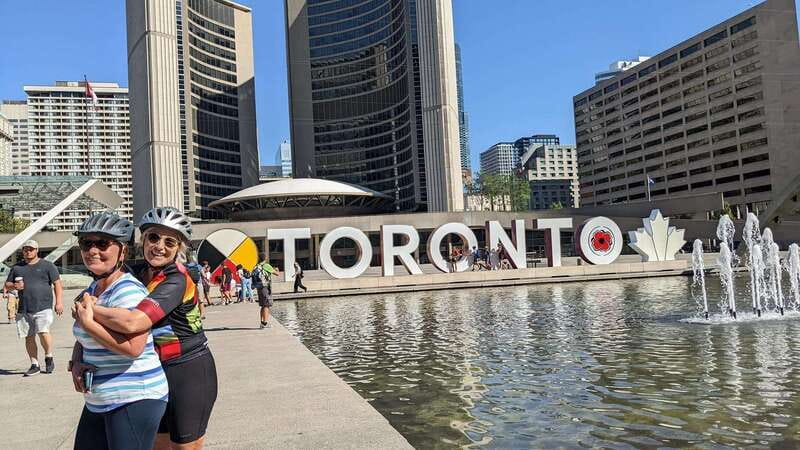
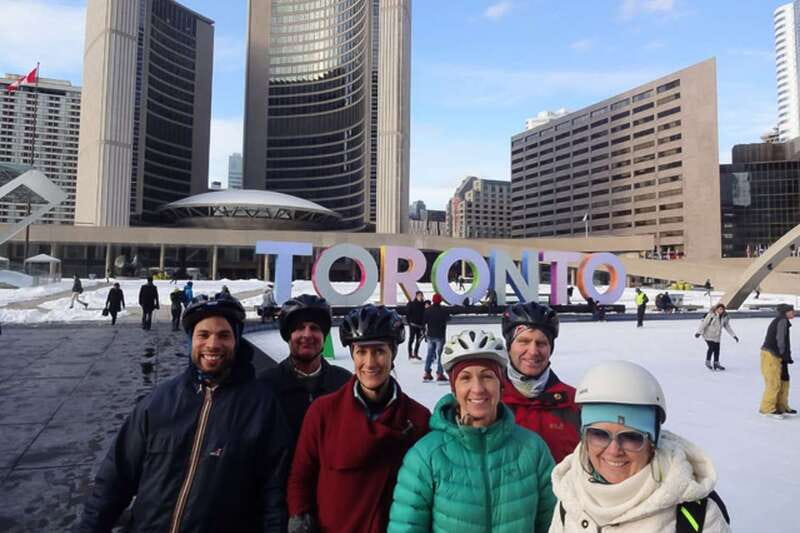
Downtown’s civic core gets its moment with City Hall and nearby plazas. Seeing it from street level by bike helps you understand why it remains a center of gravity for the city. It is not just a landmark, it is a place people reference for direction, photos, and public events.
Then comes one of Toronto’s most practical food and street-life hubs: St. Lawrence Market. Even if you do not plan a full meal right then, the stop helps you picture how market life works within the city. It is also a natural pause point because you can grab a snack and reset.
The tour also includes the Flatiron building and St. James Cathedral and Square. These are the kinds of spots that reward slowing down for a minute. The architecture and the surrounding streets give you a sense of Toronto’s older soul, right inside downtown.
A small note from my point of view as a cyclist: these stops are where you start taking real photos, because the skyline and street geometry line up nicely.
Sherbourne Common, Corus Quay, and Sugar Beach: waterfront Toronto with wind in your face
Then the tour swings toward the water, which is where the city gains a different texture. You will pass Harbourfront and Lake areas, plus later stops including Sherbourne Common, Corus Quay, and Sugar Beach.
Waterfront Toronto can look different depending on the day, and cycling close to it helps you feel that change. If the weather is good, this is often the stretch where you finally exhale. You are moving, but not trapped under traffic pressure.
Sugar Beach is a particularly fun inclusion because it is recognizable and easy to anchor your memory to later. Corus Quay adds a media and modern waterfront feel, not only a postcard shoreline vibe.
If you care about where to go for a calm walk after the tour, this waterfront stretch gives you a direct map in your head. You can picture the next step without searching.
Financial district and the Entertainment District: modern Toronto’s two speeds
Downtown has two gears, and the tour covers both. The Financial district is where you feel the business pulse: tall office blocks, a more structured street feel, and a sense of order.
Then you roll into the Entertainment District, which shifts the energy. The contrast is why I like this tour layout. You leave with an understanding that downtown is not one place. It is a set of neighborhoods that behave differently at different hours.
This is also where your guide’s storytelling keeps it from becoming just “look at that building.” The best guides connect what the buildings mean to how the city operates, past and future.
Price and value: is $90 for a 3.5-hour downtown bike tour worth it?
At $90 per person, the price is not budget, but it is not extreme either for a guided, gear-included city experience. You get a bicycle and helmet, plus water and snacks, and you also get guided route planning. That is the real value. Someone else handles the bike logistics and the safe routing, so you can focus on seeing.
Think about what you trade off:
- You trade some flexibility for structure. You are on a planned path.
- You trade time at individual sites for coverage across many districts.
For me, it is worth it when you are short on time or you want a practical plan. People often use this kind of tour on their first or second day because it tells you where you want to return, and where you can skip without regret.
Also, bike tours beat passive sightseeing when you actually want orientation. You move through the city in the same way locals do: directly, at street level, with fewer barriers than a bus route.
My honest booking advice: who should book and who should pass
Book this tour if:
- You want a downtown overview in one afternoon
- You like bike-friendly pacing with frequent stops for stories and photos
- You want to see far more than what you could cover by foot comfortably
- You are comfortable riding at an easy pace and you can follow group instructions
You might think twice if:
- You need lots of long, quiet time at a single attraction
- You are very uncomfortable with any street riding near traffic, even with bike lanes and safety guidance
- You prefer self-guided wandering where you can stop whenever you want for as long as you want
If you are the type who likes to come out with a shortlist of where to return, this tour is a smart first move.
FAQ
How long is the Toronto Heart of Downtown bike tour?
The tour lasts 210 minutes, which is about 3.5 hours.
What is the price per person?
The price is $90 per person.
What is included in the tour?
You get a bicycle and a helmet, plus water, snacks, and tour guide(s).
Is a helmet provided, and is it required?
Yes. Helmets are mandatory and provided with the bike.
Where do I meet the tour?
Meet at a parking garage located at the meeting point address, about 50 m south of Dundas on the west side of the street. Enter the garage and follow the yellow signs down to P2 level, section H.
What languages are available for the live tour guide?
The live tour guide is offered in Spanish, English, and French.
Is the tour suitable for beginners?
Yes. The tour moves at an easy pace with plenty of stops, and it uses quiet streets, park paths, and bike lanes with safety instructions before each tour.
Is the tour refundable if my plans change?
There is free cancellation up to 24 hours in advance for a full refund.
Toronto on Two Wheels


Just off the notebook: recent Toronto write-ups
- From Toronto: Niagara Falls Guided Day Tour with Boat Cruise
★ 4.2 · 4 reviews - Toronto: Niagara Falls Day Tour with Niagara City Cruise
★ 4.5 · 4 reviews - Toronto Islands: Sunrise Breakfast Bicycle Tour
★ 5.0 · 4 reviews - Kensington Market ‘Taste the World’ Food Tour
★ 4.5 · 4 reviews - Toronto: Great White North Food Tour
★ 5.0 · 4 reviews - From Toronto: Customizable Guided Day Trip to Niagara Falls
★ 5.0 · 4 reviews
Cycling Tours, compared.
 ★ 5.0The Grand Bicycle Tour by Cycle City ToursFrom $961,827 reviews
 ★ 5.0Epic Electric Bike Tour by Cycle City ToursFrom $118848 reviews
 ★ 5.0The Stanley Park Bicycle Tour by Cycle City ToursFrom $81785 reviews
 ★ 5.0Montreal eBike Sightseeing TourFrom $81573 reviews
 ★ 4.9Vancouver: Guided Bike TourFrom $83435 reviews
 ★ 4.8Montreal: E-Bike Sightseeing TourFrom $79365 reviews
 ★ 5.0eBike Adventure in WhistlerFrom $124365 reviews
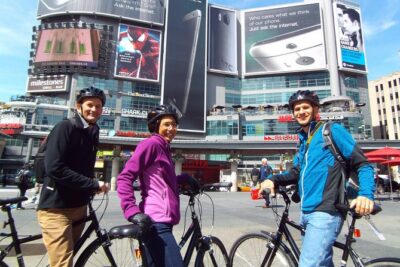 ★ 5.0Downtown Toronto Bike TourFrom $93336 reviews
Browse the lists this tour appears in