
REVIEW · PACIFIC COAST WHALE & MARINE WILDLIFE
Tadoussac/Charlevoix: Whale Watching Zodiac Tour
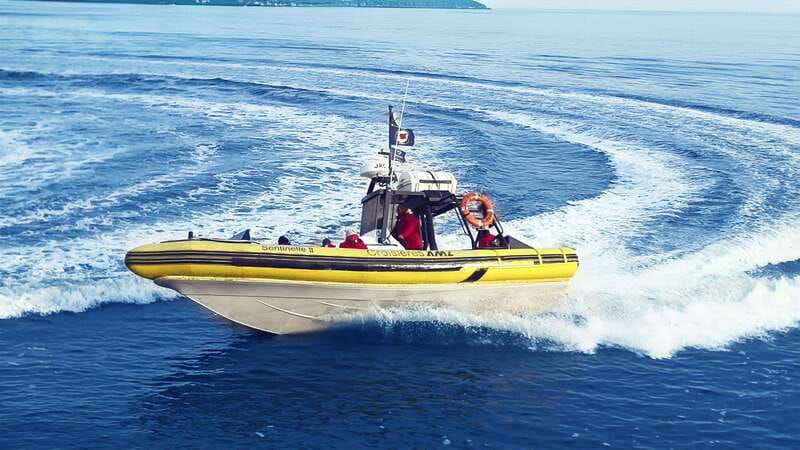
Whales up close is the plan. This Zodiac boat tour from Tadoussac pairs intimate, near-water viewing with guides trained to spot and explain up to 13 whale species in the Saguenay-St. Lawrence region. Add the option to head into the Saguenay Fjord when conditions allow, and you get more than a straight point-and-stare outing.
I especially love how close you can get on a Zodiac, meaning blowholes, spouts, and surfacing rhythms feel real, not distant. I also like the storytelling, with bilingual certified naturalists guiding you through what you are seeing and where to look, including moments when the guide gives tips that actually pay off. The main drawback is simple: even with included waterproof gear, the water and wind can feel cold fast, so you really need warm layers.
If you come prepared, this is one of those trips where the scenery and the wildlife work together. You spend the time looking for whales, then you get the facts to understand how they behave in this protected marine park.
In This Review
- Key highlights to expect
- Why Tadoussac is a whale magnet in the Saguenay-St. Lawrence Marine Park
- Zodiac boat experience, waterproof gear, and how cold you should plan for
- Choosing your departure time: early riser, midday, or sunset runs
- Getting to the right dock: where you meet and how the pickup works
- The route you’ll cruise: Prince Shoal Light, Pointe-Noire, and the Caribou Falls area
- The Saguenay Fjord detour: steep cliffs, big views, and why it might not happen every day
- How the guides help you spot whales (and why names matter)
- Whale watching ethics: non-intrusive viewing that still gets results
- What you might see: humpbacks, minke, belugas, and more
- Price and value: is 98 per person a good deal?
- Who should book, and who should skip (based on real limits)
- Should you book the Tadoussac Zodiac whale watch?
- FAQ
- How long is the Tadoussac/Charlevoix whale watching Zodiac tour?
- Where does the tour start?
- What is included in the price?
- Is food or drink included?
- What language is the guide?
- What should I wear or bring?
- Is there a cancellation policy if the weather is bad?
- Is the fjord excursion guaranteed?
Key highlights to expect
- Zodiac closeness: top-line 24 or 60-passenger Zodiac boats for panoramic views close to the water
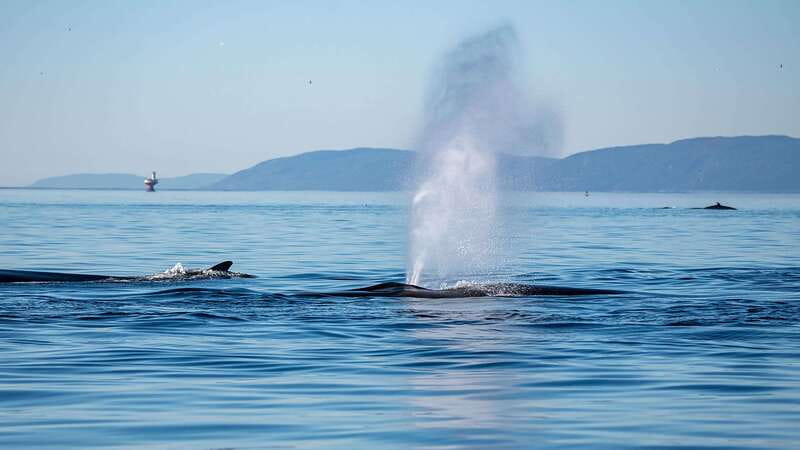
- Up to 13 whale species: your guide will help you identify what surfaces, when, and how
- Saguenay Fjord option: a detour only if time and weather allow, with steep cliff scenery
- Bilingual certified naturalists: English and French commentary that turns spotting into learning
- Photo stops and viewpoints: including Prince Shoal Light along the route
- Real cold-water prep: waterproof jacket and pants included, but you still need proper warmth
Other boats, other sightings on this coast
- Tadoussac/Charlevoix: 3-Hour Whale Watching Boat Tour★ 4.2 · 2,179 reviews
- Tadoussac/Charlevoix: Whale Watching Tour★ 4.0 · 437 reviews
- Tadoussac/Charlevoix: VIP Lounge OR UpperDeck Whale Watching★ 4.3 · 313 reviews
- Tadoussac/Charlevoix: Whale Watching Tour & Bear Observation★ 3.9 · 123 reviews
Why Tadoussac is a whale magnet in the Saguenay-St. Lawrence Marine Park
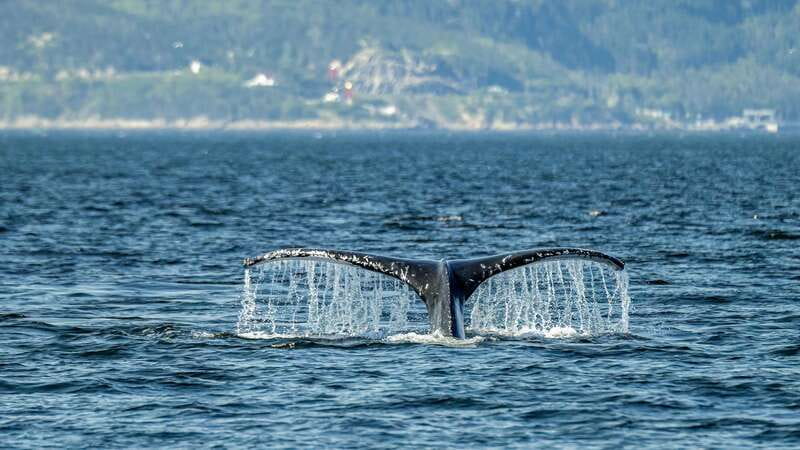
This part of Quebec earns its reputation because it sits where rich waters and deep currents meet. The Saguenay-St. Lawrence Marine Park is built for wildlife, and the whale concentration can be strong from spring through early fall. In practical terms, that means May through October is your best bet for sightings, with the highest odds when conditions are stable and the animals are actively feeding.
What makes it feel special is that the tour is not just about ticking species off a list. You are riding out onto the water in a place where marine life shows patterns. Once you learn what your guide is watching for, the whole trip changes from random luck into a guided search.
And yes, the scenery matters too. Even when you are waiting for that first spout, the rugged shoreline and fjord views keep the ride moving. Reviews often mention the mix of whales, seals, and porpoise sightings, and that matches the real goal here: a full wildlife experience, not a one-species mission.
Zodiac boat experience, waterproof gear, and how cold you should plan for
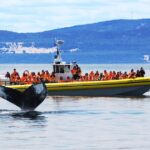
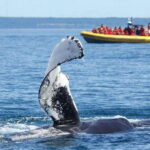
Zodiacs are the reason this kind of whale watching works so well. The boat sits low in the water and keeps you close enough that you can see surfacing behavior clearly. With 24 or 60-passenger Zodiac options, you are not stuck staring from far back on a large platform, and the guides can position you better for viewing and photos.
You also get waterproof jacket and pants included, which is a big deal because this is a coastal, wind-on-the-water environment. Still, do not treat the gear as magic. Reviews repeatedly call out that it can get really cold, really wet, and really windy, even when it looks fine from shore. Think wind-chill more than sunshine.
My practical advice: dress in layers you can manage on the move. Closed shoes only, long pants, and a long-sleeved sweater are specifically suggested. If you tend to run cold, bring gloves and a warm hat. One of the most common mistakes is dressing for land weather, then discovering water trips steal heat from your body fast.
One more note that matters for comfort: this is typically a standing-and-looking style experience. People mention being able to stand up in the boat for better sight lines, so pick footwear and layers that let you stay steady.
Choosing your departure time: early riser, midday, or sunset runs
You can pick the time window that matches your energy level and your comfort with cold. Here are the options:
- Early riser: 8:00 to 10:00 am
- Daytime: 10:15 am to 12:45 pm, or 1:30 pm to 4:00 pm
- Sunset: 4:30 pm to 6:30 pm
The ship departs on time, so aim to arrive early. Boarding begins about 30 minutes before departure. This is not a show-up-late-and-walk-on situation.
If you hate crowds and want daylight visibility for spotting, daytime can feel ideal. If you love the mood of low-angle light and cooler temps that often come with evening, the sunset option is a nice fit, just be ready for the extra chill.
Also, the itinerary notes the tour duration can be listed as 2 hours to about 150 minutes depending on the option you select. That is long enough to search properly, but short enough that you are not stuck out there all day.
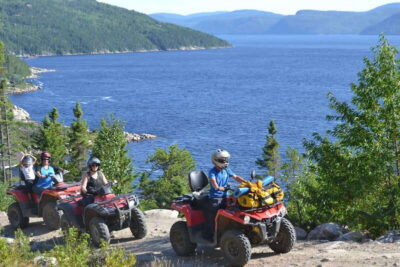
More time on the fjord and the whale road

Getting to the right dock: where you meet and how the pickup works
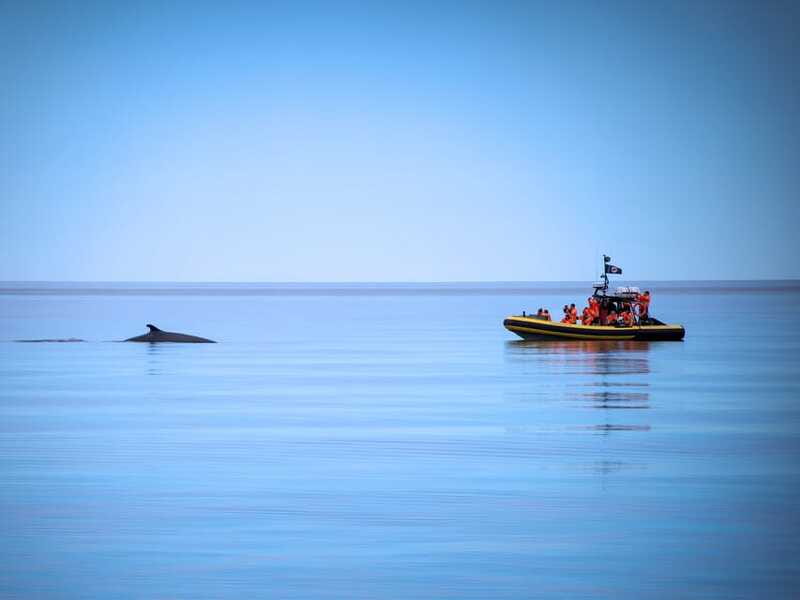
Your starting point depends on the option you book. There are two starting locations:
- 122 Rue de la Cale Sèche, 159 Rte 138
- Tadoussac
The experience is described as identical even if you come from Quebec City or Charlevoix, because the boat will pick up passengers from both locations. That is convenient when you are planning a day trip and you do not want to lock yourself into one town.
A practical tip that saves stress: the meeting point can vary, so check your exact confirmation details before you show up. Also remember that parking is not included, so plan that into your day.
Payment on board is credit card only. Cash is not accepted on board, so bring a card you are comfortable using.
The route you’ll cruise: Prince Shoal Light, Pointe-Noire, and the Caribou Falls area
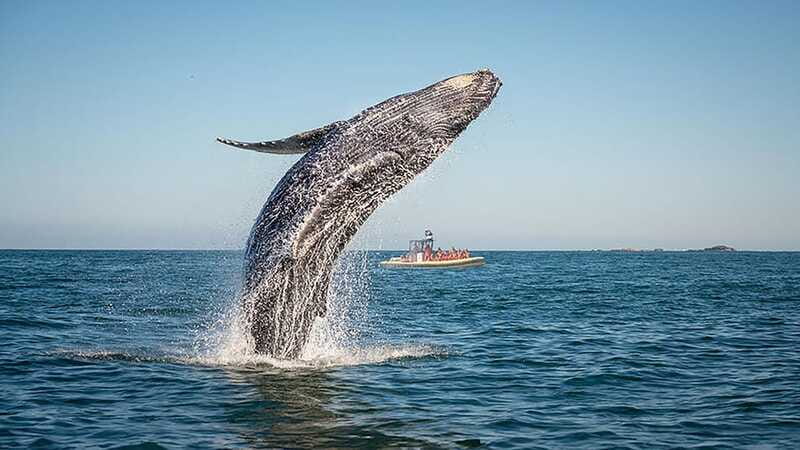
The itinerary is built around scenic passes and lookout points as you move through the whale-rich zone. While the exact whale positions change day to day, the route gives you a steady rhythm: pass, observe, take a photo, then look again.
Here is what you should expect along the way:
- You pass by Tadoussac and the Saguenay-St-Lawrence Marine Park area.
This is the “we’re in the zone” phase where your guide will start scanning early.
- Prince Shoal Light includes a photo stop.
This light point is a classic landmark along the way, and it’s a good moment to reset your camera settings and get your bearings.
- Les Dunes is passed by.
You get coastline context here, which helps you understand why the marine environment behaves the way it does.
- Pointe-Noire Interpretation and Observation Centre is passed by.
This is where the area’s marine story becomes easier to understand because it is geared toward observing the ecosystem.
- Pointe de l’Islet and Chute du Caribou are passed by.
These shoreline features add interest even when whales are quiet for a few minutes. In other words, you are not sitting in boredom waiting for the next sighting.
One thing I like about this route design is that it does not treat the ride as just travel time. You get scenery and lookout moments while you are still in whale habitat.
The Saguenay Fjord detour: steep cliffs, big views, and why it might not happen every day
The highlight option here is the potential excursion into the Saguenay Fjord. The detour is only if time and weather conditions allow, so you should treat it as a bonus, not a guarantee.
When it does happen, you will see a dramatic setting with steep cliffs rising up to about 450 meters. Fjord scenery is one of those things that makes you understand why whales use certain waters. The fjord walls change how wind and light behave and how currents move, and your brain feels that scale immediately.
How you should plan:
- If the fjord detour matters a lot to you, pick a daytime departure when weather tends to be steadier and you are more likely to have usable visibility.
- If weather turns risky, the tour can adjust, since safety and conditions matter.
In practice, this detour is what makes the day feel like more than one type of viewing. You go from open marine viewing into enclosed, cliff-lined drama, and that combination keeps the trip feeling varied.
How the guides help you spot whales (and why names matter)
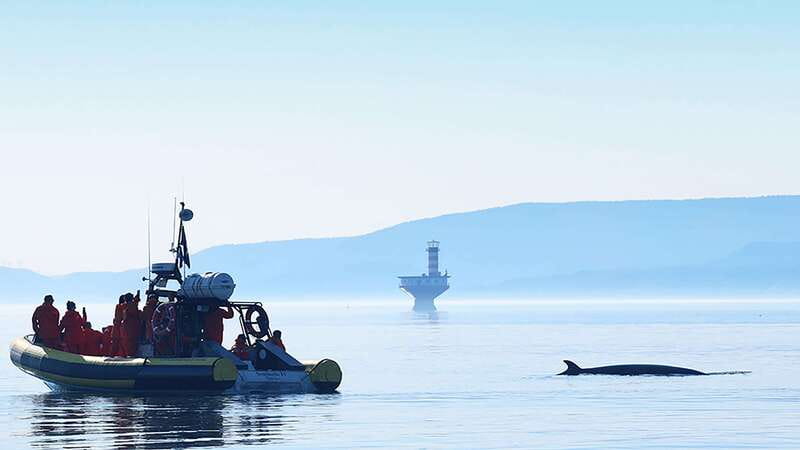
The guides are bilingual and certified as naturalists, and that shows in how they manage the ride. They do not just identify whales by a name. They help you interpret behavior: where whales surface, how they move, and what to watch for next.
One of the most praised parts in real-world experiences is how guides give hints on where to look and how they share marine knowledge in a way that keeps you actively engaged. People specifically mention guides like Catherine and Fredrick as being attentive, helpful, and experienced, with strong English-French switching so everyone stays in the loop.
There is also a very consistent theme: they aim to be respectful of whales during sensitive periods. That matters because whale watching here is not about forcing closeness. It is about staying within safe viewing distance and letting the animals set the pace.
If you like learning while you’re outside, this tour is built for you. You will come back from the water with a better sense of how many species you can actually identify by behavior alone.
Whale watching ethics: non-intrusive viewing that still gets results
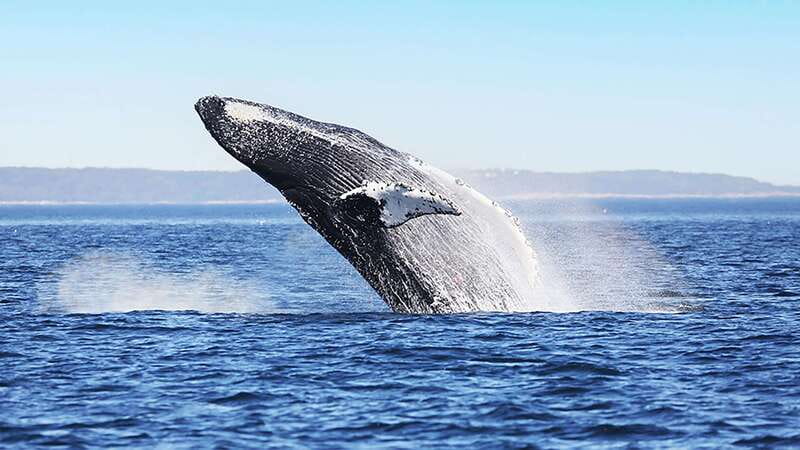
Ethics are not an abstract slogan here. They show up in the operating style. The tour description emphasizes respect for natural whale behavior and a non-intrusive approach, and that aligns with what people highlight: the crew can slow down and reposition so you get the best view without chasing.
You will also notice this in the way they handle quiet moments. Instead of revving around randomly, they look for where whales are likely to be and adjust positioning. Some reviews mention the engine being stopped whenever possible, which is exactly the kind of detail that keeps the experience calmer for wildlife and easier for you to hear and watch.
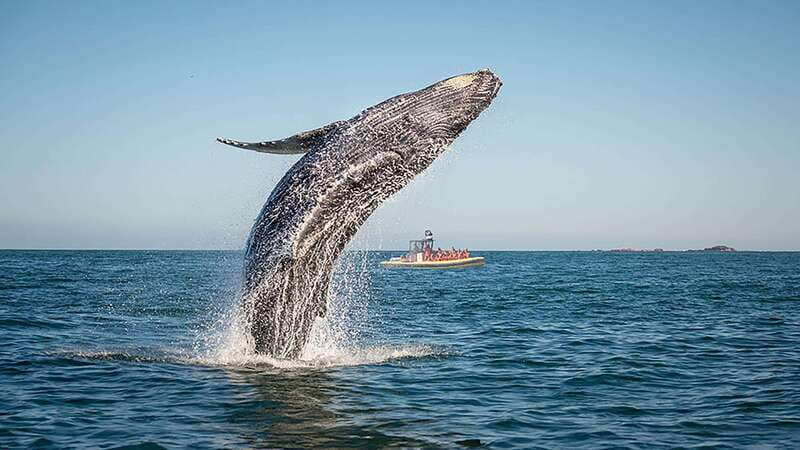
This is also why you can see whales close to the boat without it feeling like harassment. The approach helps explain why sightings like belugas with babies can happen while staying mindful of reproductive seasons.
What you might see: humpbacks, minke, belugas, and more
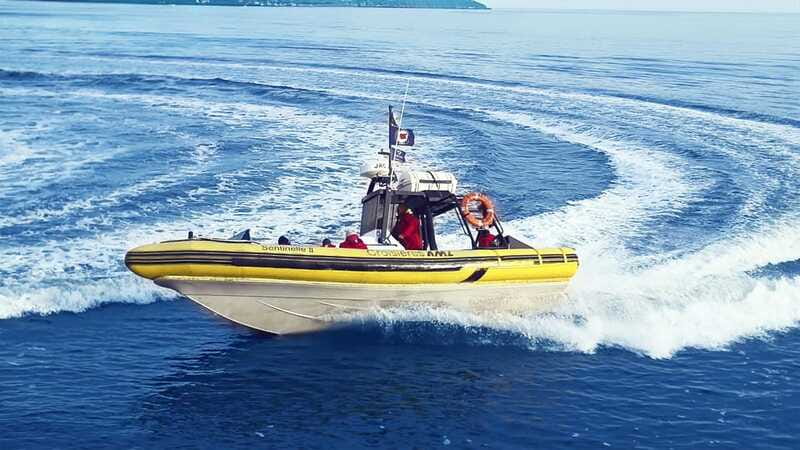
The tour sets an ambitious target: up to 13 whale species in the area. You should go in with an open mind. Whale watching always includes luck, but the odds are good in this habitat, especially in prime season.
Based on the species people commonly report, you can expect a mix of:
- Humpback whales
- Minke whales
- Fin whales
- Beluga whales, including calves in some sightings
- Blue whale reports (less common, but it happens)
- Seals and sometimes porpoise sightings
Species recognition is easier than you might think once you understand the basics your guide will teach. You start to tell the difference between a quick surfacing, a slower surface, and a bigger blow. Belugas in particular can feel almost surprising because of their presence and the way they move through the water.
And even when the day is not your personal best, you are still in a zone with frequent marine life activity. The tour’s value is not just that whales show up. It is that you get guided help to make the most of whatever shows up.
Price and value: is 98 per person a good deal?
At $98 per person for about 2 hours to roughly 150 minutes, this is not cheap in a “movie ticket and popcorn” way. But whale watching in a serious marine habitat is also not a bargain activity, because you pay for more than fuel. You pay for specialized boats, safety-certified crews, wildlife-oriented searching, and bilingual naturalist guidance.
Here’s what makes it feel like good value:
- Zodiac access gives you a closer viewing experience than big, crowded boats. People often say it is the right choice if you care about seeing whales up close.
- Waterproof gear is included, which saves you the cost and hassle of buying the basics for one short outing.
- You are not just riding, you are learning. The commentary is built into the package.
- The optional fjord detour adds scenery value when it’s possible.
What is not included is also important for planning: food and drink, binoculars, and parking. If you do not already own binoculars, you may want to bring your own or plan to buy them before you head out. Also bring a credit card, since payment on board is credit card only.
My bottom line: for a whale-focused day, $98 is a fair price when you treat it as wildlife time plus expert guidance, not just transportation.
Who should book, and who should skip (based on real limits)
This tour is a great fit if you:
- Want a close-to-the-water whale experience rather than a far-off viewing deck
- Like guided nature education in English and French
- Are comfortable dressing for cold, windy water
- Are traveling with kids age 6 and up
It is not suitable for:
- Children under 6
- Pregnant women
- People with back problems
- Wheelchair users
Pets are not allowed, and open-toed shoes are not allowed either. If you have mobility concerns, this Zodiac format may be a deal breaker.
Should you book the Tadoussac Zodiac whale watch?
I think you should book if you want the best chance of true whale encounters with a close-up feel and a guide who helps you understand what you’re seeing. The combination of a Zodiac boat, certified bilingual naturalists, and the potential Saguenay Fjord detour is exactly what makes this tour worth your time in Quebec.
Book this tour if:
- You are visiting May to October and you want a realistic shot at multiple whale species.
- You can handle cold and wind, and you will pack warm layers under the waterproof gear.
- You like learning, not just seeing.
Skip it if:
- You cannot do cold, wet conditions.
- Your group includes anyone in the non-suitable categories listed above.
If you want to maximize your odds, show up early, dress warm in layers, and bring closed shoes. Then let the guide work, because the best days happen when you combine luck with good spotting habits.
FAQ
How long is the Tadoussac/Charlevoix whale watching Zodiac tour?
It runs for about 2 hours to around 150 minutes, depending on the option you choose.
Where does the tour start?
You can start at either 122 Rue de la Cale Sèche, 159 Rte 138 or in Tadoussac. Meeting points can vary based on the booked option.
What is included in the price?
The tour includes a guided whale watching experience, commentary from a certified bilingual naturalist guide, travel by a 24 or 60 passenger top-line Zodiac vessel, waterproof jacket and pants, and a possible fjord excursion if conditions allow.
Is food or drink included?
No. Food and drink are not included, and you cannot bring food or drinks onboard.
What language is the guide?
Guided commentary is available in English and French.
What should I wear or bring?
Bring comfortable closed shoes, warm clothing, and a credit card. Sunscreen and sunglasses are suggested. Waterproof jacket and pants are provided.
Is there a cancellation policy if the weather is bad?
Cruises are not canceled due to rain unless weather presents danger to passenger security.
Is the fjord excursion guaranteed?
No. The excursion into the Saguenay Fjord happens only if time and weather conditions allow.
On the Fjord

Back Out on the Whale Road
Just off the notebook: recent Tadoussac write-ups
- 15 min. Tadoussac : Guided ATV tour excursion
★ 4.7 · 94 reviews - Tadoussac/Charlevoix: Whale Watching Tour & Bear Observation
★ 3.9 · 123 reviews - 15 min. Tadoussac : Black Bear Observation with Expert Guide
★ 3.9 · 150 reviews - Tadoussac/Charlevoix: VIP Lounge OR UpperDeck Whale Watching
★ 4.3 · 313 reviews - Tadoussac/Charlevoix: Whale Watching Tour
★ 4.0 · 437 reviews - Tadoussac/Charlevoix: 3-Hour Whale Watching Boat Tour
★ 4.2 · 2,179 reviews
Pacific Coast Whale & Marine Wildlife, compared.
 ★ 5.0Vancouver Half-Day Whale Watching Adventure with Free PhotosFrom $1935,000 reviews
 ★ 4.8Vancouver: Covered Whale Watching Adventure with Free PhotosFrom $1882,260 reviews
 ★ 5.0Victoria Half-Day Whale Watching Adventure with Free PhotosFrom $1542,259 reviews
 ★ 4.2Tadoussac/Charlevoix: 3-Hour Whale Watching Boat TourFrom $1222,179 reviews
 ★ 5.0Victoria Whale and Wildlife CruiseFrom $1461,729 reviews
 ★ 4.5Whale-Watching Tour from VancouverFrom $1571,572 reviews
 ★ 5.0Victoria Zodiac Boat Whale Watching AdventureFrom $154916 reviews
 ★ 4.3From Quebec City: Whale Watching Excursion Full-Day TripFrom $186863 reviews
Browse the lists this tour appears in