
REVIEW · CANADIAN ROCKIES ROAD TRIPS
Self-Guided Audio Tours for the Canadian Rockies
Your car becomes the tour bus.
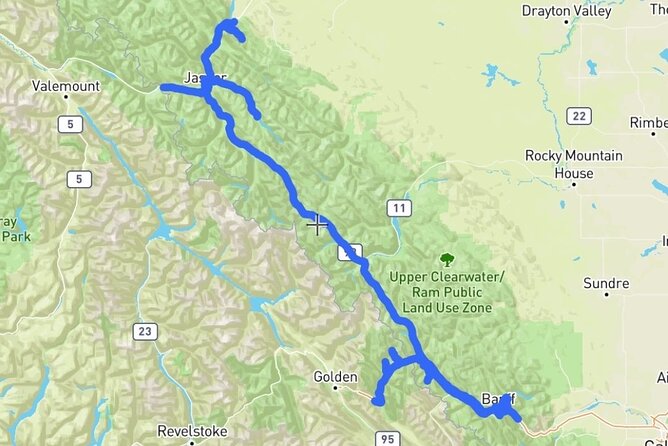
This self-guided Canadian Rockies drive is all about GPS-triggered audio that starts talking when you reach key spots, so you get context while your eyes are on the view. I also love the offline setup, because the Rockies do not always cooperate with cell service.
A second big win is value for groups. At $39.99 per group (up to 8 people), one purchase can cover everyone in the vehicle while you each listen on your own device, using the same app account. One drawback to plan for, though: major stops may require separate tickets, including Banff Gondola, Cave and Basin, and Banff Upper Hot Springs.
In This Review
- Key things I’d bookmark before you go
- How the GyPSy Guide audio tour actually guides you on the road
- Price and value: what you pay, and what costs extra
- Banff classics on your first wave of viewpoints: Sulphur Mountain, Bow Falls, Surprise Corner
- Cave and Basin to Banff hot springs: the thermal story of Banff National Park
- Lake Minnewanka, Hoodoos Trail, Vermilion Lakes: scenery with more breathing room
- Old Highway 1A and Johnston Canyon: the slower, classic Banff to Lake Louise corridor
- Moraine Lake and the Icefields Parkway: the day where the Rockies get loud
- Yoho National Park: Takakkaw Falls to Emerald Lake, with a few “short but worth it” adds
- Glacier country on the Icefields Parkway: Parker Ridge, Crowfoot, Bow Lake, Lake Louise, and the Weeping Wall
- Jasper up high and on the water: SkyTram, Athabasca Glacier, Sunwapta, Peyto, Pyramid Lakes, and Maligne
- Athabasca Falls, Old Fort Point, Mt Edith Cavell, and the practical hot-springs finish
- Should you book this self-guided audio tour?
- FAQ
- What does this tour cost?
- How long does the tour take?
- What language is the audio guide in?
- Do I need an internet connection to listen?
- What’s included with the audio tour?
- Are national park passes included?
- Are attraction tickets included?
- How do I access the tour after booking?
- Where can I start and end?
- Is there a refund if my plans change?
Key things I’d bookmark before you go
- GPS location-based audio that autoplays as you approach each waypoint
- Offline listening once the tour is downloaded
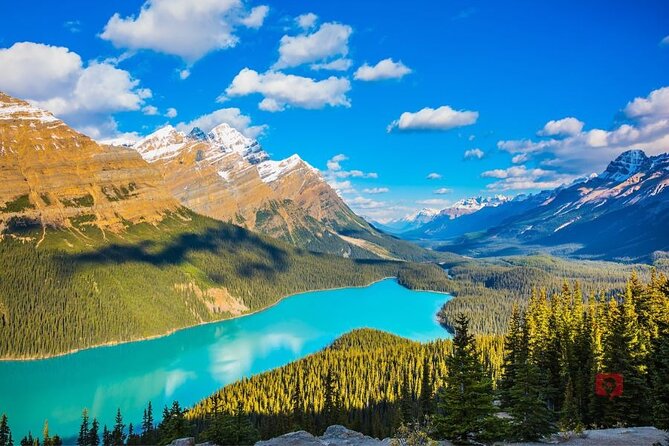
- 520 audio points across Banff, Lake Louise and Yoho, Icefields Parkway, and Jasper National Park
- One purchase per group (up to 8), making it cheaper than solo guided tours
- You control the pace, including pausing for hikes, photos, and snacks
Longer runs through the Rockies, compared
- Lake Louise, Moraine Lake and the Icefields Parkway Full-Day Tour★ 5.0 · 836 reviews
- Icefields Parkway Highlights & Secrets | Award-Winning Adventure★ 5.0 · 140 reviews
- Emerald Lake, Takakkaw Falls & Canadian Rockies Hidden Gems★ 5.0 · 116 reviews
- Canadian Rocky Mountain Food Tour★ 5.0 · 91 reviews
How the GyPSy Guide audio tour actually guides you on the road
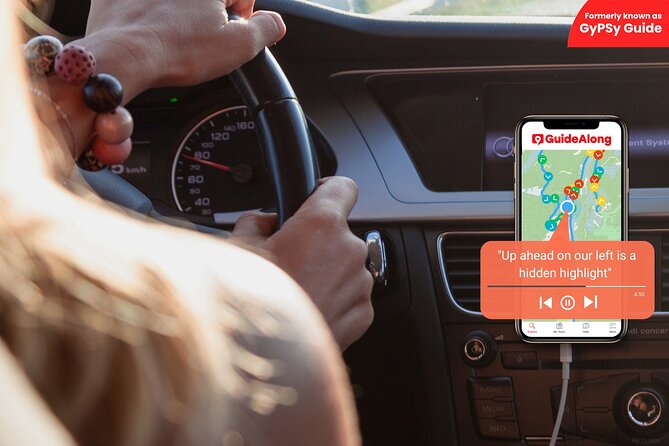
The heart of this experience is the GuideAlong app (GyPSy Guide). You download the tour before you head out, then the audio commentary plays using your phone’s GPS. That matters because it saves you from constant map-checking. You just drive, park, and press play less often than you expect.
What makes it feel closer to a private guide is the timing. Instead of hearing a big wall of facts after the fact, you hear the story when the scenery is right there in front of you. People also tend to enjoy the narration style, and one review described the experience like having a friend in the passenger seat, sometimes called Tom. You get the same vibe, including practical directions and context between stops.
This is also a flexible tour. You can start and end along the route, since commentary is tied to location, not a single strict departure time. If you want to linger at Bow Falls longer than planned, you can. If you need to skip something because weather turned, you can.
Price and value: what you pay, and what costs extra
At $39.99 per group (up to 8), you’re mostly paying for navigation plus the audio stories. If you split it across a full vehicle, the per-person cost drops fast.
What is not included is also clear, and you’ll want to budget for it:
- National park passes are not included.
- Some attractions have separate ticket prices that vary.
- The data you have shows two specific paid admissions: Banff Upper Hot Springs ($17.50 per booking) and Cave and Basin National Historic Site ($9.00 per booking).
- Banff Gondola is also listed as admission ticket not included.
So I’d think of this as a low-cost way to turn long driving days into something meaningful, while you still choose when to spend money on the optional ticketed attractions.
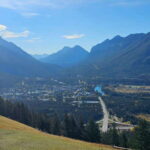
Banff classics on your first wave of viewpoints: Sulphur Mountain, Bow Falls, Surprise Corner
Banff often starts with the big “I came all this way for the peaks” moments, and this route hits them early.
Banff Gondola and Sulphur Mountain (ticket not included) is your fast track to wide views across multiple mountain ranges. From the gondola top area, you’ll follow the boardwalks toward the Sulphur Mountain Cosmic Ray Station. The boardwalks are also one of those places where wildlife sometimes shows up, including the chance of spotting bighorn sheep near the walkways. There’s also dining up top, which can be great if you’re planning a sunset stop.
Then you shift to something quieter and very “walkable Banff.” Bow Falls is free to view, located on the Bow River near the Banff Springs Hotel area. You’ll likely find it easiest from the small parking area and trail that leads you to a higher viewing spot. Since water levels change with the season, the fall look can be very different in spring thaw versus late summer.
Right after that is Surprise Corner, one of those old-school Banff photo layouts where the view seems to land perfectly: the Banff Springs Hotel, Bow Falls far below, and Sulphur and Rundle Mountains behind it. It’s also a blind corner, so treat it like a roadside stop, not a place to wander around while traffic passes.
What I like about this first trio is contrast. You get panoramic views from Sulphur Mountain, then a river-and-hotel composition at Bow Falls and Surprise Corner. It’s a good way to adjust from “drive mode” into “stop and look mode.”
More days someone else has already planned


Cave and Basin to Banff hot springs: the thermal story of Banff National Park
Cave and Basin National Historic Site (ticket not included) is a history lesson with steam and boardwalks. The story goes back to 1883 when three railway workers found the cave and thermal mineral springs, sparking attention that helped shape the tourism wave. On-site, you can visit the Interpretive Centre and walk boardwalks that lead to the original underground cave. The stop also includes a look at the endangered tiny Banff Springs snail, which adds a conservation angle to what could otherwise be a simple sightseeing visit.
If Cave and Basin feels like the origin story, Banff Upper Hot Springs is the payoff for your tired legs. This is one of the only hot springs where you can bathe inside Banff National Park. The water temperature runs about 37 to 40 C, roughly 98 to 104 F. It’s just above the gondola base station, which makes it a logical pairing on the same day.
The practical consideration here is time and tickets. Cave and Basin and the hot springs are not the same type of stop. One is a short interpretive walk, the other is relaxing and soaking. I’d plan your day so you are not rushing between them.
Lake Minnewanka, Hoodoos Trail, Vermilion Lakes: scenery with more breathing room
After the big icons, you get into the kind of Banff stops that feel easier, especially if you want wildlife time without the crowds feeling heavy.
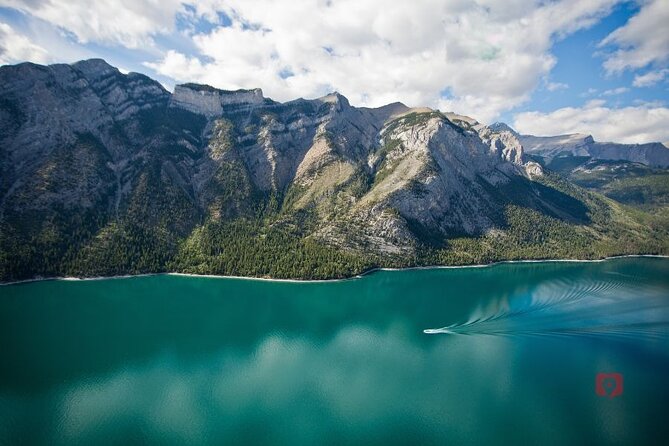
Lake Minnewanka is a glacial lake with a longer story than it looks. It was expanded through the building of three small dams. If you want to ride rather than hike, small cruise boats tour much of the lake length (about 21 km, 13 miles). If you prefer getting your steps in, the Stewart Canyon hike is described as easy and rewarding, with a 6.4 km, 4 miles return length. Locals and visitors also tend to pair it with treats, like ice cream or a BBQ, because the views make it a natural picnic-style stop.
Next is Hoodoos Trail, where geological shapes do the entertaining. Hoodoos are sometimes called fairy chimneys or goblins, and here you’ll see teetering spires formed by rain, wind, and ice eroding rock over time. It’s an easy, flat trail that still gives you a proper viewpoint with Bow River and Rundle Mountain in the frame.
Finally, Vermilion Lakes is your wildlife-friendly soft landing. These are shallow wetland lakes close to town, and the area can be great for birds, coyotes, and sometimes even bear or moose. You can walk or bike from downtown for a relaxed loop. There’s also an option to access by canoe when water connects toward Echo Creek.
My advice: do Vermilion Lakes near the quieter edges of the day, early morning or later afternoon, and keep your ears open. The scenery is the hook, but wildlife is often the real reward.
Old Highway 1A and Johnston Canyon: the slower, classic Banff to Lake Louise corridor
From Banff toward Lake Louise, the route uses the older Trans Canada Highway 1A, which is framed by peaks and described as a slower, more relaxed option than Highway 1. This is the part of your day where it helps to be patient and window-shop scenery.
You’ll get scenic pull-offs along the way, including iconic views like Castle Mountain and Morant’s Curve, where you can try to recreate the historic photo angle used to market the park by train.
The big walking stop here is Johnston Canyon. It’s one of the most popular natural attractions in Banff National Park, and it has built-in “you’ll know where to go” structure. The Lower Falls route is described as about 1.1 km, 1 mile along trail and steel catwalks built into the canyon walls. You can also crouch through a short tunnel to reach a final viewing platform. If you feel good after Lower Falls, there’s a steeper continuation to the Upper Falls.
This is also a seasonal win. In summer, the canyon air can feel cooler because you’re surrounded by fine mist. In winter, it can freeze into an icy canyon scene with frozen waterfalls and snow-covered trees.
Moraine Lake and the Icefields Parkway: the day where the Rockies get loud
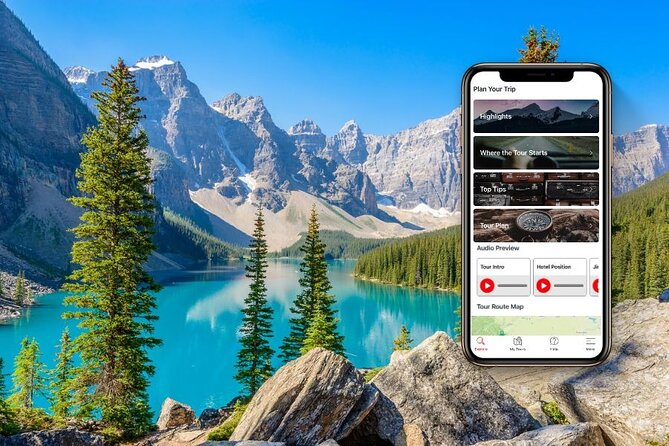
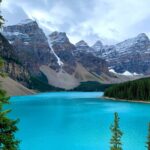
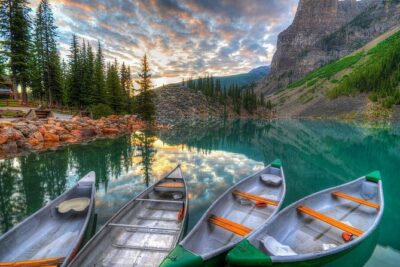
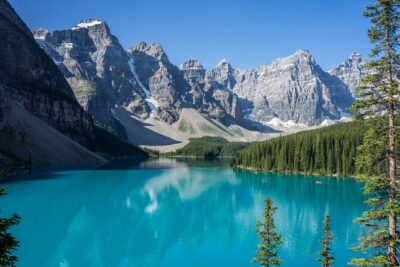
Moraine Lake is the kind of stop people talk about for a reason. It sits in the Valley of the Ten Peaks, an icon that used to appear on the Canadian $20 bill. Here you get choices: canoeing, a short walk to the Rockpile Viewpoint, or a walk to Consolation Lake. There’s also Moraine Lake Lodge for a meal. A practical note from the data you have: Moraine Lake is typically thawed from June to October.
Then you roll into the Icefields Parkway, and this is where your audio tour earns its keep. This drive is described as voted the world’s most beautiful mountain drive. Even if you’re just focusing on driving, your narration points out must-do stops and tells you where you might want extra time.
This is also where wildlife chances can improve, and where waterfalls and glaciers show up fast enough that you might miss them if you’re not listening. Your audio prompts help break the long miles into a chain of short moments.
Yoho National Park: Takakkaw Falls to Emerald Lake, with a few “short but worth it” adds
Yoho National Park continues the park system immediately west of Lake Louise. The route includes three worthwhile places and also short stop options along the way.
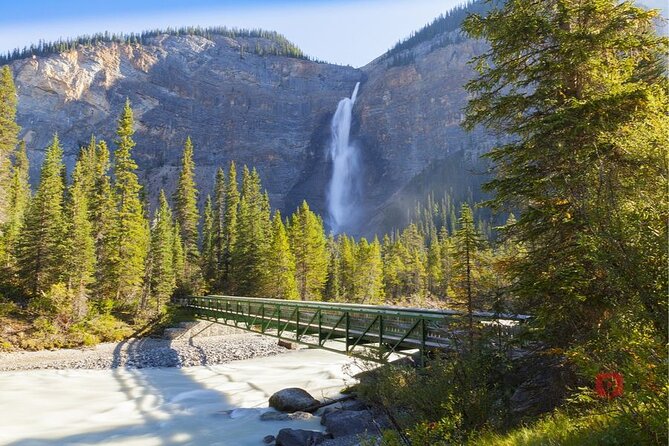
The showpiece is Takakkaw Falls, described as the biggest and mightiest of the waterfalls in the Canadian Rockies. The mist from a glacier-fed cascade is the whole point here, and you’ll often find wildlife opportunities on the drive through Yoho Valley. One scheduling note from the data: the road usually does not open until June due to avalanche hazards.
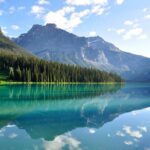
Then you shift to Emerald Lake. This is an outstanding alpine lake with strongly colored water framed by peaks. You can do a flat hike around the perimeter, or paddle a canoe. There’s also a top-notch lakeside lodge option for lunch, depending on your mood and budget. On the access road, you also get a bonus quick stop at Natural Bridge.
And if you want a different kind of “Canadian Rockies engineering story,” the route includes the Lower Spiral Tunnels Viewpoint. It ties into how engineers connected Atlantic and Pacific by rail through harsh terrain. From the viewpoint, you can look for trains moving through the two spiral tunnels in the direction that makes them seem to pass over themselves while negotiating Kicking Horse Pass.
Glacier country on the Icefields Parkway: Parker Ridge, Crowfoot, Bow Lake, Lake Louise, and the Weeping Wall
Your tour keeps stacking viewpoints like they’re cards in a deck.
Near the Icefield Centre, Parker Ridge Trail is described as short but steep. You’ll climb to views of the Saskatchewan Glacier filling the valley behind. The data warns it may feel more tiring than expected because of elevation around 6,000 feet. And it’s realistic that snow can hang around year-round on the trail, so treat it like a proper hike even if it’s “short.”
Then you get Crowfoot Glacier by Bow Lake. Crowfoot is a hanging glacier that looks stuck to the mountain, and the name comes from the glacier shape compared to a crow foot. As the glacier shrank, it went from three toes down to two, which gives you a small-scale reminder that glaciers change over time.
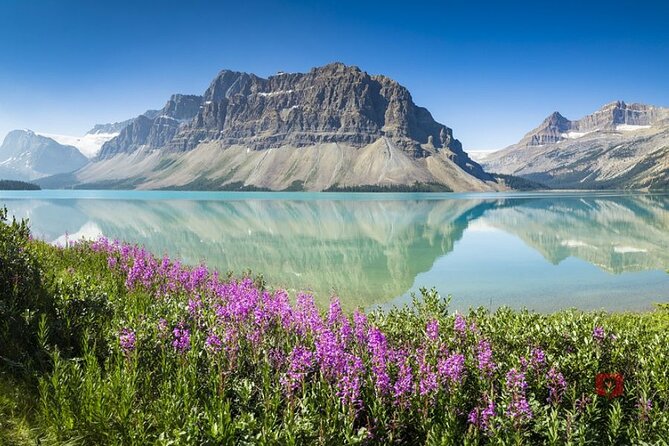
Bow Lake itself is described as excellent photo territory. It’s fed by Bow Glacier, and water flows out as the Bow River through the park. Beside the lake is Num Ti Jah, an historic lodge built by Jimmy Simpson. The lodge’s unusual hexagonal shape is tied to building constraints at the time, and it was the largest log building in the world when it was built.
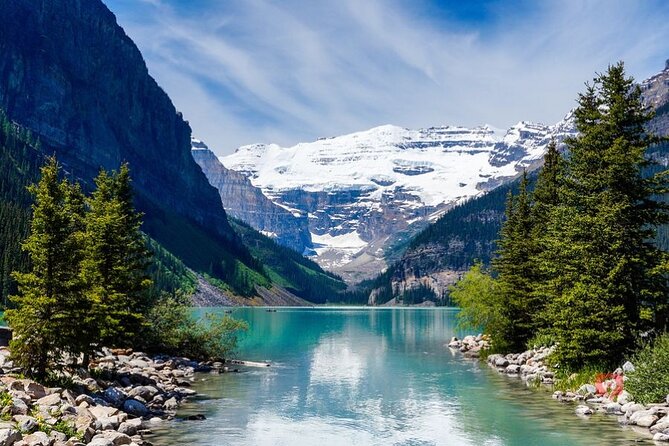
You also hit Lake Louise, the turquoise “classic” frame with towering peaks and Victoria Glacier. You can stop at the foreshore for photos, hike the Plain of Six Glaciers trail, or do the Lake Agnes Tea House options. The data includes a practical detail: bring cash for teahouses, since there is no debit or credit payment onsite. For a more relaxed pace, you can rent a canoe or use the Lake Louise Sightseeing Gondola.
One extra roadside moment is the Weeping Wall, described as a cliff that oozes snow melt through the rock and continues through winter, creating frozen falls for ice climbers.
Jasper up high and on the water: SkyTram, Athabasca Glacier, Sunwapta, Peyto, Pyramid Lakes, and Maligne
The Jasper portion of the route feels like a mix of easy pull-offs and serious “step outside your car” moments.
First, there’s Jasper SkyTram on Whistlers Mountain near town, not the Whistler ski resort in BC. The tram takes you up to about 2,200 m (7,200 feet). At the top, you can hike above the treeline to viewpoints, and you can also find mountaintop dining options. Admission is not included, so you’ll want to decide if you want the ticketed lift.
Then the tour returns to glacier country with Athabasca Glacier and the Columbia Icefield Discovery Centre. Athabasca Glacier is described as one of the most accessible glaciers in the world, where you can take in views from the Discovery Centre. You can also book the Columbia Icefield Adventure Tour to ride an Ice Explorer onto the glacier. The Discovery Centre info also includes an add-on: a separate bus takes you to a glass-bottomed SkyWalk out over a canyon. The combined experience needs at least 3 hours, and you can book SkyWalk alone if time is tight.
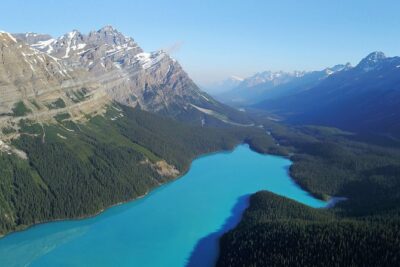
Next are shorter but sharp stops. Sunwapta Falls and Canyon includes quick access viewpoints, plus a 3 km loop trail that can take about an hour and leads you deeper into the canyon’s pools. Peyto Lake is reached at Bow Summit, described as one hour from the Columbia Icefield. Because it’s glacier-fed, it can be one of the most brightly colored lakes, and your best color odds often come with sunny weather.
You’ll also see Pyramid and Patricia Lakes. The view across Pyramid Lake to Pyramid Mountain is the main pull, and there’s a footbridge for a classic photo angle from the island. The route also includes a hint of local WWII testing history linked to Patricia Lake.
Then you go into a canyon and a lake day. Maligne Canyon is reached by a short walk from the main parking area, with many views down into the canyon. If you want a bigger hike, the data points you to trails from the 5th Bridge. After that, Maligne Lake is the big water stop at the end of Maligne Lake Road. The highlight activity is a cruise to see Spirit Lake, and it’s important to prebook your cruise time if you’re aiming for it.
Athabasca Falls, Old Fort Point, Mt Edith Cavell, and the practical hot-springs finish
Two more waterfalls and a viewpoint loop keep Jasper feeling varied. Athabasca Falls is at the Jasper end of the Icefields Parkway, cutting through hard quartz-rich rock into a narrow canyon. It’s especially impressive during spring thaw when snow melt delivers a strong water show.
For a town-adjacent view, Old Fort Point Loop Trail is described as a short stair climb and possible extensions. Big horn sheep are common here, which is a fun detail because it changes a simple viewpoint stop into a wildlife watch.
Then you have Mt Edith Cavell, a sidetrip that the data says takes a minimum of about 2 hours. You can go from Jasper or schedule it into your Icefields Parkway day if you leave early. There are two hikes listed:
- Path of the Glacier: 1.6 km with about 70 m elevation change to Cavell Pond, with the chance of seeing icebergs that have fallen from above Cavell Glacier.
- Cavell Meadows Trail: 7 km with about 500 m elevation change, mid-summer recommended for wildflowers, views of Angel Glacier, and possible pikas and ground squirrels.
Finally, you end with a recovery stop that feels made for a road trip: Miette Hot Springs. It’s on the eastern side of the park, about 50 minutes driving time from Jasper. The data calls them the hottest thermal pools in the Rockies, and you soak with scenic views while wildlife viewing can pop up along the drive on Highway 16. This is also listed as a relaxed option after a long sightseeing day, though you can visit at any time of day.
Should you book this self-guided audio tour?
I’d book it if you want a smart way to see a lot of icons without hiring multiple guides. It’s also a strong pick if you hate feeling rushed. The GPS-triggered audio means you can stop when you want, listen when you park, and keep moving when you’re ready.
Skip it, or at least adjust expectations, if you want everything to be ticketed and handled for you. This tour includes the audio and route storytelling, but key attractions have separate admissions. You’ll still make decisions at Gondola, Cave and Basin, Upper Hot Springs, and other paid experiences like SkyTram and glacier tours.
If you’re driving from Banff toward Jasper and you want the mountains to come with meaning, this is an easy yes. Download once, charge your phone, and let the road do the rest.
FAQ
What does this tour cost?
It’s priced at $39.99 per group, up to 8 people.
How long does the tour take?
It ranges from about 12 hours to 1 day, depending on how you pace your stops.
What language is the audio guide in?
The audio guide is offered in English.
Do I need an internet connection to listen?
No. You can download the tour ahead of time, and once downloaded it works offline without internet or cell service.
What’s included with the audio tour?
You get the GuideAlong (GyPSy Guide) audio tour with 520 points, location-based stories, tips and directions that autoplay, trip planners in the app and as web or PDF, and offline use. Support is available by toll-free phone, chat, and email.
Are national park passes included?
No. National park passes are not included.
Are attraction tickets included?
No. National park passes and attraction ticket prices (including Banff Gondola, hot springs, and Cave and Basin) vary, and some are listed as not included.
How do I access the tour after booking?
You receive an email and text with instructions, including a link to download and redeem your voucher code using your Apple or Google account. Then you download the tour inside the GuideAlong app under My Tours.
Where can I start and end?
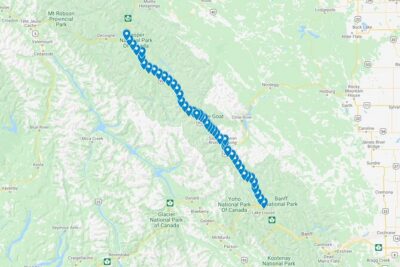
Commentary plays automatically based on your location, so you can start and end anywhere along the tour route. The listed start is in Banff National Park Improvement District No. 9, and the listed end is Jasper National Park in Jasper.
Is there a refund if my plans change?
Yes. You can cancel for a full refund if you cancel at least 24 hours in advance of the experience start time.
Easier With a Guide


The Long Way Through the Rockies

Just off the notebook: recent Banff write-ups
- Elevated Private Experience: Adventure & Wellness in Banff
★ 5.0 · 4 reviews - From Banff: Affordable Moraine Lake and Lake Louise Shuttle Bus
★ 5.0 · 4 reviews - Banff to Calgary or YYC Airport | Private Transfer
★ 5.0 · 4 reviews - Banff Gondola & Lake Minnewanka Cruise Combo
★ 5.0 · 4 reviews - Moraine Lake Lake Louise Johnston Canyon Emerald Lake Day tour
★ 5.0 · 4 reviews - From Banff: Winter Wonderland; Lake Louise & Johnston Canyon
★ 5.0 · 4 reviews
Canadian Rockies Road Trips, compared.
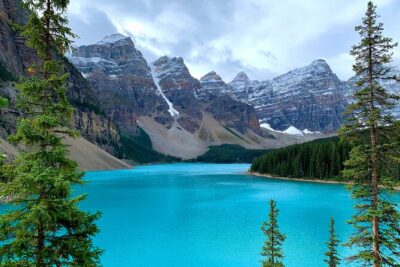 ★ 5.0Lake Louise, Moraine Lake and the Icefields Parkway Full-Day TourFrom $165836 reviews
 ★ 4.9Banff/Jasper: Canadian Rockies Scenic Helicopter TourFrom $202183 reviews
 ★ 5.0Circle West – Canadian Rockies Round Trip Bus Tour From VancouverFrom $1,469163 reviews
 ★ 5.04-Day Canadian Rockies & Banff Classic Summer TourFrom $912163 reviews
 ★ 4.5Canadian Rockies and Banff 4-Day Tour from Vancouver (Chn&Eng)From $862142 reviews
 ★ 5.0Icefields Parkway Highlights & Secrets | Award-Winning AdventureFrom $217140 reviews
 ★ 5.0Canadian Rocky Mountains & Banff 5-Day Premium TourFrom $1,666124 reviews
 ★ 4.0Icefields Parkway: a Smartphone Audio Driving TourFrom $9118 reviews
Browse the lists this tour appears in