
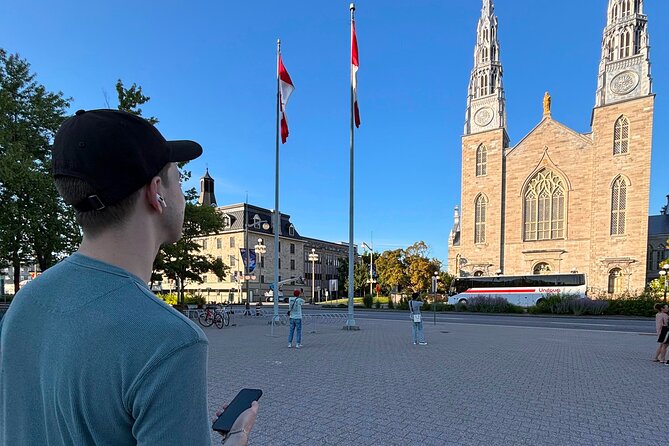
REVIEW · OTTAWA & THE CAPITAL REGION
Ottawa’s Hidden History: A Self-Guided Audio Tour
Ottawa tells its story in 70 minutes. I like how this route uses offline access and a self-guided GPS walk so you can match the pace of your day. One potential drawback: you’ll need your own smartphone and headphones, and if the app has trouble starting, it can turn an easy walk into a frustrating one.
I also enjoy the way it connects big, recognizable sights with the people and places that built Ottawa, starting at Colonel John By’s statue and rolling through the UNESCO Rideau Canal corridor. You get a tight loop of landmarks, with enough time to pause for photos, then keep moving toward ByWard Market and the cathedral on Sussex Drive.
The big practical upside is flexibility. The tour gives you lifetime use and an audiobook-style option, so you can listen now, and revisit later if you want a second look at a spot you rushed past.
In This Review
- Key points before you hit play
- Major’s Hill Park to Colonel John By: start where Ottawa was planned
- Rideau Canal UNESCO corridor: engineering you can see as you walk
- Major’s Hill Park panoramas: views of Parliament Hill without the waiting
- York Street and the York Steps: Bytown’s early survival route
- Millennium Fountain to York Street modern markers: how Ottawa keeps changing
- ByWard Market: where the city’s energy shows up
- Rochon House and the lumber story: buildings that explain an industry
- Élisabeth Bruyère and LaSalle Academy: healthcare and education as city glue
- Sussex Drive finish with Notre-Dame Cathedral Basilica near the canal locks area
- Price and logistics: is $8.99 actually good value?
- What it feels like on the ground: a focused self-guided walk
- Who should book it, and who might not love it
- Should you book Ottawa’s Hidden History?
- FAQ
- How long is Ottawa’s Hidden History?
- How much does it cost?
- Where does the tour start and end?
- Do I need my own headphones?
- Can I listen offline?
- Is the tour self-guided with GPS?
- What language is the tour offered in?
- Is it available all day?
- Can I use the tour more than once?
Key points before you hit play
- Offline maps and audio let you keep going even with shaky cell service
- A walkable route that strings together major Ottawa sights in about 50 to 70 minutes
- Colonel John By to ByWard Market to Sussex Drive gives you a clear sense of how the city grew
- Self-paced GPS means you can linger at overlooks without falling behind
- Lifetime access and virtual playback make it easy to use again later, not just once
- Bring headphones (it’s not included), and plan for the app to be the whole experience driver
More of the capital, on and off the canal
- Ottawa: Sightseeing River Cruise★ 4.3 · 1,585 reviews
- Ottawa: Rideau Canal Cruise★ 4.4 · 1,303 reviews
- Ottawa: Hop-On Hop-Off Guided City Tour Pass★ 4.4 · 1,194 reviews
- Ottawa Boat Cruise – Rideau Canal Cruise★ 4.5 · 1,127 reviews
Major’s Hill Park to Colonel John By: start where Ottawa was planned

Most audio tours start with a vague instruction and a prayer. This one starts in a real, specific place: Major’s Hill Park at Mackenzie Ave, Ottawa, ON K1N 1G8. The good news is the area is easy to reach and full of familiar views of the Ottawa River.
Now the thing that can trip you up is finding the exact start point within the park. A reviewer noted the hardest part was lining up the precise location, watching the distance readout until it clicked into place, then everything became straightforward. My advice: stand still for a moment when you think you’re there, open the app, and make sure you are at the correct point before you begin.
Once you start, the tour immediately frames Colonel John By, the visionary behind the Rideau Canal. Seeing his tribute from Major’s Hill Park works well because you’re literally looking across the water, toward the big idea that shaped Ottawa’s early identity.
Rideau Canal UNESCO corridor: engineering you can see as you walk
After the statue, the audio guides you along the Rideau Canal corridor. Even if you don’t know canal terms, you’ll feel why this matters: it’s 19th-century engineering that linked Ottawa to Lake Ontario. That connection is the kind of detail that turns a pretty river walk into a story with purpose.
This portion is especially good if you like learning while moving. You aren’t stuck reading plaques. You’re hearing short explanations while you watch the canal area, so the facts stick because your eyes are doing the remembering too.
The tour later ends in the locks zone, so you get a full arc rather than a quick pass-by. If you want a photo, aim for moments where the canal and river views line up with the skyline, not just a random angle of water.
Major’s Hill Park panoramas: views of Parliament Hill without the waiting
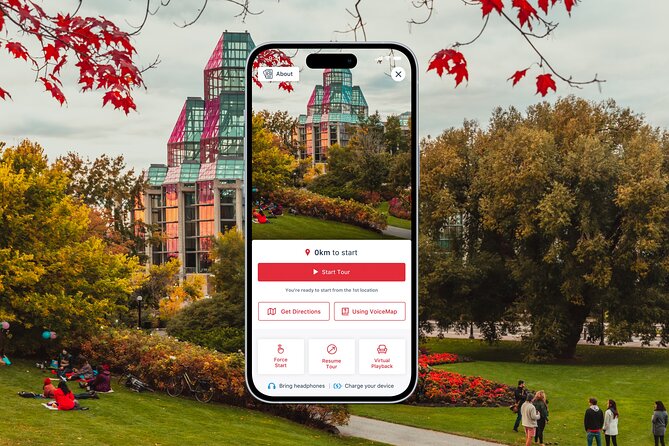
You’re not only walking here. You’re hanging out for a bit in Major’s Hill Park, with panoramic views of the Ottawa River and Parliament Hill. This is one of those spots where Ottawa looks like Ottawa, with government buildings and water in the same frame.
The trick is timing your pause. If you stop too long early, you’ll feel rushed near ByWard Market later. If you keep moving too fast, you miss the whole point of the overlook. I like to do a quick listen, then pause for one real viewpoint before you keep going.
More routes into older Ottawa



York Street and the York Steps: Bytown’s early survival route
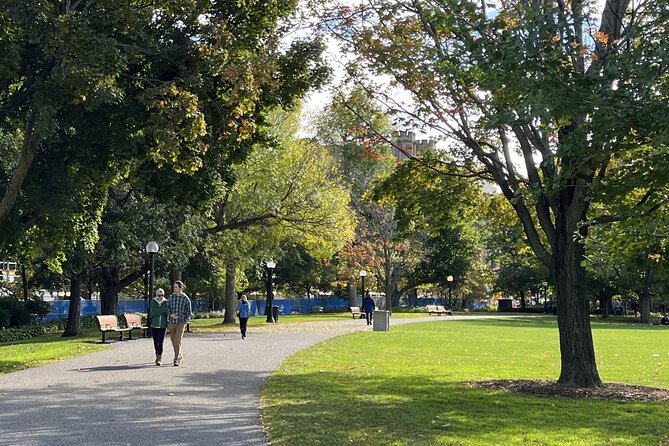
Next up is York Street, and the tour points you to the York Steps. These steps mattered in the early development of Bytown, and the audio helps you understand why something as small as a set of stairs can be a big deal.
Here’s why this stop works for you, even if you’re not a hardcore architecture person: it gives a practical, human scale. Roads and institutions feel grand, but steps show the daily problem solving that turns a place into a functioning town.
Keep your eyes on the walkway and the slope as you listen. The audio makes more sense when you can match it to the physical effort of getting from one level to another. That’s also where good walking shoes help, because you’ll be on public sidewalks and paths for the full route.
Millennium Fountain to York Street modern markers: how Ottawa keeps changing
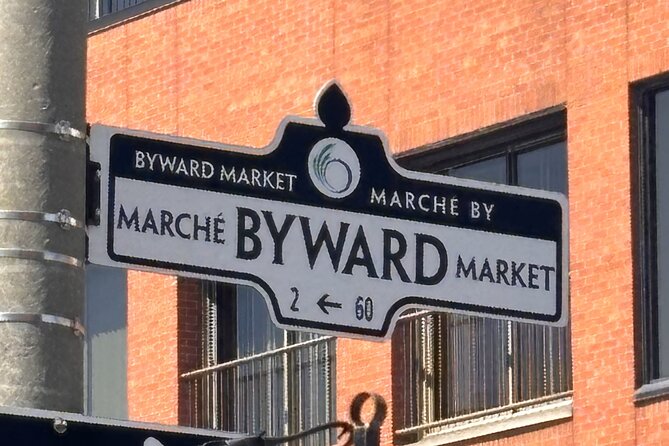
Right around York Street, you pass the York Street Millennium Fountain. It’s the kind of modern landmark that signals Ottawa’s ongoing evolution and progress. The audio doesn’t ask you to treat the fountain like a sacred relic. It uses it as a marker of time, which I appreciate.
This section is a nice transition. You go from early Bytown movement, to a present-day civic symbol, and that makes the middle of the walk feel like a bridge instead of a hard stop between eras.
ByWard Market: where the city’s energy shows up
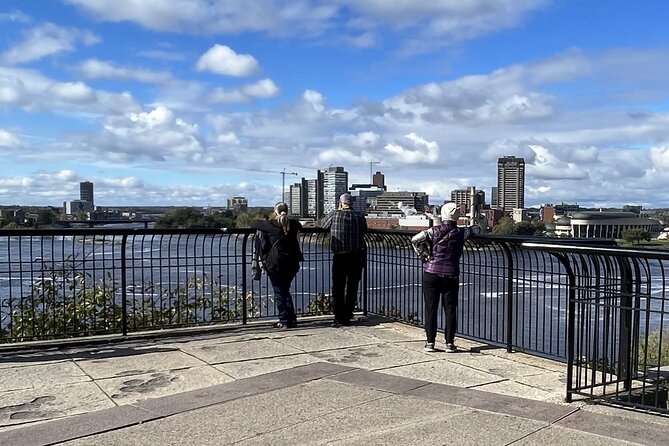
Then the tour brings you to the historic ByWard Market. This is one of Canada’s oldest and largest public markets, and it has that constant life in motion feeling. You’ll see vendors, restaurants, and artisans, and the audio frames what you’re looking at instead of treating the market like a generic stop.
What you should do here depends on your style. If you want a snack, you’ll be in a place where it’s easy to grab something nearby, but food and drink aren’t included in the tour. So treat this as a chance to pause, not a built-in meal.
Also, don’t be afraid to wander half a block off your main route. The tour is self-guided, so if you want to peek at stalls or window shop briefly, you can. The key is keeping enough time in your pocket to reach the ending area without rushing.
Rochon House and the lumber story: buildings that explain an industry
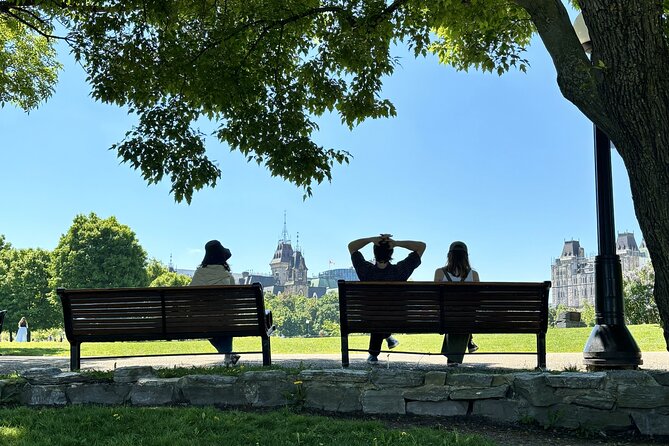
From the market, the audio moves to Rochon House, a historic building with ties to Ottawa’s early lumber industry and cultural heritage. This is one of those stops where you’ll get more out of it if you look slowly at the building rather than just read the audio and keep walking.
Why it matters: Ottawa’s growth wasn’t only about government plans. It was powered by work, trade, and the industries that fed the city. When the audio connects those dots, Rochon House becomes more than a facade.
If you pass it quickly, you might miss the point of the stop. A good strategy is to pause for one minute, listen fully, then move on.
Élisabeth Bruyère and LaSalle Academy: healthcare and education as city glue
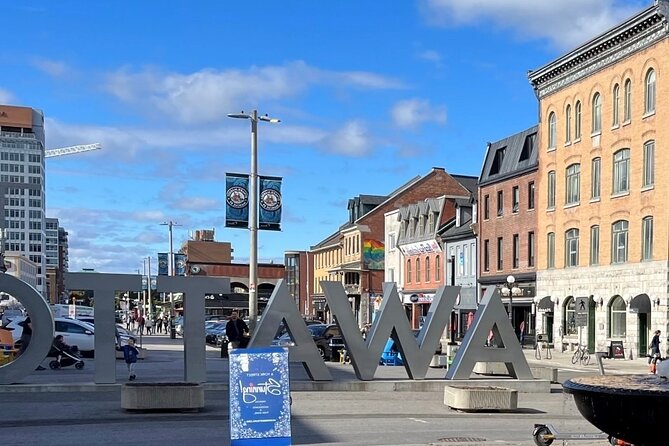
Two more institutions add depth to the walk: the legacy of Élisabeth Bruyère and LaSalle Academy. The tour covers Bruyère’s role in founding Ottawa’s first hospital to serve the community’s healthcare needs. It covers LaSalle Academy as a historic educational institution contributing to Ottawa’s intellectual and cultural landscape since it was established.
I like this pairing because it balances practical daily life. Industry and markets feed the body and economy. Healthcare and schooling shape the long-term quality of those systems. By putting both into your walking loop, you get a better sense of how Ottawa functioned, not only how it looked.
In this part of the route, your superpower is attention. Slow down just enough to let the audio connect the meaning to what you see around you, even if you are only getting partial views from the sidewalk.
Sussex Drive finish with Notre-Dame Cathedral Basilica near the canal locks area
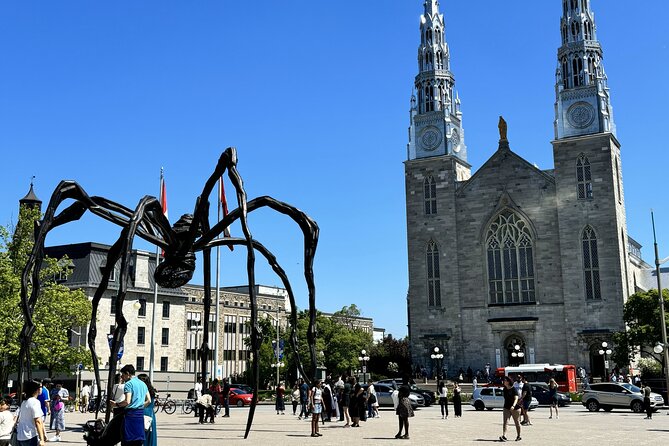
The tour’s ending zone brings you to Sussex Drive, where you’ll see the Notre-Dame Cathedral Basilica. It’s described as a magnificent example of Gothic Revival architecture and part of Ottawa’s religious heritage. That architectural style tends to be dramatic, so it’s a strong visual payoff for the walk you just did.
Your final audio experience also lines up with the Rideau Canal locks area, since the meeting points and end notes point toward locks 1 through 8 and the Sapper’s Bridge vicinity. In practice, that means your last minutes likely keep you close to the canal and the river views again, which gives your route a satisfying loop.
If you want one last photo, choose the angle that includes both the cathedral view and the overall streetscape, if possible. Otherwise, go for the cathedral details. Either way, end your walk with your ears still on. The final section is where the tour ties the landmarks together into a clear sense of Ottawa’s development.
Price and logistics: is $8.99 actually good value?
At $8.99 per person, this is priced like a budget add-on that still aims to be a real activity, not just background audio. The reason it can be good value is the mix of features you get: offline access to audio, maps, and geodata, plus unlimited lifetime use and a virtual playback option.
Most one-time tours charge you for one walk. Here, you can listen again before and after your booking date, and you can also use the virtual playback like an audiobook from anywhere. If you like the city but your schedule is tight, that flexibility is a big deal. You can fit it into an evening at your hotel later, or revisit a section when you have more time outside.
Duration also helps. The walk is roughly 50 minutes to 1 hour 10 minutes, so it won’t hijack your whole day. Plan it as a pre-dinner stroll or a morning warm-up walk after breakfast. The tour is offered in English, and it runs daily in the posted window, with hours listed as 12:00 AM to 11:59 PM during the overall range.
One practical note: you’ll need your own smartphone and headphones. No headphones, no audio. Bring wired or wireless, but make sure they work before you start, and keep your phone battery above half. Offline mode reduces data stress, but it won’t rescue a dead battery.
What it feels like on the ground: a focused self-guided walk
This tour is private, meaning it’s just your group. That matters because you can stop, rewind, and continue without worrying about matching another person’s pace. You’re using GPS for guidance, so you’re not guessing your way through an unknown neighborhood.
It also sits near public transportation, which helps if you want to start from elsewhere or if the weather changes your plan. Since it’s an outdoor walking route with paved streets and park paths, it’s best enjoyed with a light plan B: a quick shelter nearby if it starts raining.
The biggest “feel” factor is how it structures attention. It doesn’t throw 20 stops at you. It gives you a chain of meaningful points, each tied to a simple idea: planned infrastructure, commerce, institutions, and architecture. That’s why it works well even if you are traveling with limited time.
Who should book it, and who might not love it
I think this tour is a strong fit if you want authentic Ottawa vibes in a short window and you’re comfortable walking between major areas like Major’s Hill Park, York Street, and ByWard Market. It’s also great if you like learning through landmarks rather than museum time, because the audio turns streets and buildings into story prompts.
You should be cautious if you dislike relying on apps while you’re on the move. One lower review complained that the app would not start and the experience became frustrating. Another praised the route once the starting point was found. That mix tells you the main risk is technical friction, not the content. If you’re the type who enjoys troubleshooting a phone or you’ve used self-guided audio apps before, you’ll likely be fine. If you want zero tech interaction, you might feel annoyed.
Should you book Ottawa’s Hidden History?
If you want a low-cost, short, walkable way to understand how Ottawa grew from canal to commerce to institutions, I’d book it. The offline features, lifetime access, and flexible playback are the kind of value that makes the $8.99 feel fair even if you end up replaying parts later.
But do one thing before you commit: pack headphones and test the app start at home or somewhere with reliable signal. That small step protects you from the one real frustration that can derail an otherwise smooth walk. If you can handle that, you’ll get a rewarding, story-led route through some of Ottawa’s most recognizable places.
FAQ
How long is Ottawa’s Hidden History?
The tour runs about 50 minutes to 1 hour 10 minutes.
How much does it cost?
It costs $8.99 per person.
Where does the tour start and end?
It starts at Major’s Hill Park (Mackenzie Ave, Ottawa) and ends near the Rideau Canal Locks 1 through 8 area, with the tour ending at Sapper’s Bridge. The route also includes Sussex Drive and Notre-Dame Cathedral Basilica before the finish.
Do I need my own headphones?
Yes. Smartphone and headphones are not included.
Can I listen offline?
Yes. It includes offline access to audio, maps, and geodata.
Is the tour self-guided with GPS?
Yes. It’s a self-guided GPS tour with flexibility to explore at your own pace.
What language is the tour offered in?
The tour is offered in English.
Is it available all day?
The posted hours list Monday through Sunday as 12:00 AM to 11:59 PM within the stated availability range.
Can I use the tour more than once?
Yes. You get unlimited, lifetime use of the tour, including before your booking date and after it, plus a virtual playback option like an audiobook.
Easier With a Guide




The Older Ottawa



More of the Capital




Just off the notebook: recent Ottawa write-ups
- Ottawa: Guided Nature Walk & Wildlife Tour with Hotel Pickup
★ 5.0 · 4 reviews - Old-Aylmer Food Tour – Food Tour From Ottawa
★ 4.5 · 5 reviews - Ottawa Scavenger Hunt and Highlights Self Guided Audio Tour
★ 4.0 · 5 reviews - Ottawa Valley Haunted Tour – Night Trip From Ottawa
★ 4.5 · 5 reviews - Ottawa: Small-Group Walking Tour with Boat Cruise
★ 3.8 · 5 reviews - Sunset Kayak Tour in Downtown Ottawa and Gatineau
★ 5.0 · 6 reviews
Ottawa & the Capital Region, compared.
 ★ 4.6Ottawa: Bilingual Guided City Tour by Amphibious BusFrom $432,089 reviews
 ★ 4.3Ottawa: Sightseeing River CruiseFrom $391,585 reviews
 ★ 4.4Ottawa: Rideau Canal CruiseFrom $411,303 reviews
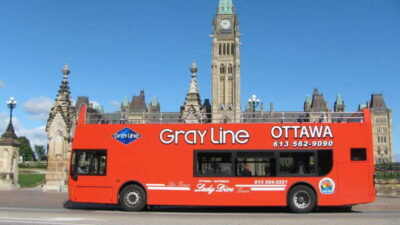 ★ 4.4Ottawa: Hop-On Hop-Off Guided City Tour PassFrom $331,194 reviews
 ★ 4.5Ottawa Boat Cruise – Rideau Canal CruiseFrom $421,127 reviews
 ★ 4.5Ottawa Boat Cruise – Paul’s Boat LineFrom $40918 reviews
 ★ 4.0Ottawa City Tour by Land and WaterFrom $44598 reviews
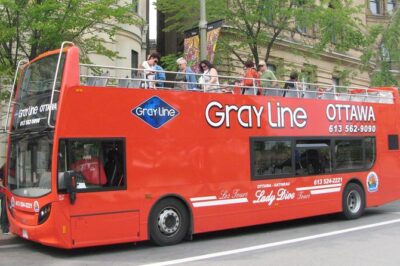 ★ 4.0Ottawa Hop-On Hop-Off Sightseeing TourFrom $40447 reviews
Browse the lists this tour appears in