
REVIEW · CANADA
One-Way High-Speed Passenger Ferry: Victoria, BC to Seattle, WA
A fast ferry day feels almost unfair. You cover Victoria to Seattle in about 3 hours, and I really like the comfortable seating and the option for Vista Class upper-deck scenery. One thing to watch: seat-class details and sailing times can be tricky, so check your confirmation before you head to the dock.
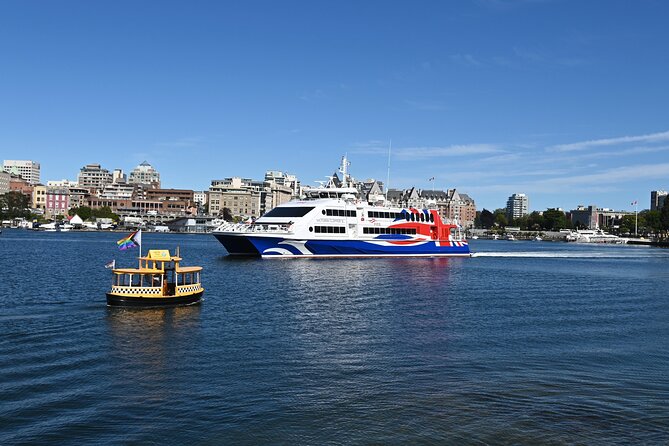
This ride starts at Victoria’s Inner Harbour and cruises past islands and inlets that make the crossing feel like part of the trip. You’ll use a mobile ticket, and there’s duty-free shopping plus an onboard food and drink setup you can buy from.
This is a passenger-only ferry, so you skip driving entirely. You get one small carry-on piece, checked bags cost extra, and the experience ends when you step off in Seattle at Pier 69.
In This Review
- Key Things to Know Before You Go
- Why This Victoria-to-Seattle Ferry Works So Well for One-Day Planning
- From 254 Belleville Street to the Clipper: Boarding at Victoria’s Inner Harbour
- Economy vs Vista Class: How to Choose the Right Seats
- The 3-Hour Crossing: Gulf Islands, Puget Sound, and Juan de Fuca Views
- Onboard Comfort, Duty-Free, and Food at the Galley
- US Customs Reality Check in Seattle (and How to Protect Your Schedule)
- Passport and Border Rules You Must Follow to Cross by Land and Sea
- Luggage Rules That Control Your Total Cost
- Arrival at 2701 Alaskan Way, Pier 69: Starting Seattle Right Away
- Price and Value: Is $136.50 a Smart Way to Travel?
- Booking Timing and Day-of Tips for a Smooth Ride
- Should You Book the Victoria Clipper One-Way to Seattle?
- FAQ
- How long is the one-way ferry from Victoria to Seattle?
- What is the price, and what’s included?
- Where do I board in Victoria, and where do I arrive in Seattle?
- What documents do I need to cross the border by land and sea?
- Is food and beverage included on the ferry?
- How much luggage can I bring, and what about checked bags?
- Can I upgrade from Economy Class to a better seating level?
- Are service animals allowed, and can I bring a bike or a dog?
- What is the cancellation policy?
Key Things to Know Before You Go
- It’s a true one-way, passenger-only route, no cars on board, just people and luggage limits.
- Economy Class seating is included, with upgrades available for upper-deck views.
- The scenery route runs through the Gulf Islands, Puget Sound, and the Strait of Juan de Fuca.
- Duty-free shopping and a galley/bar are available onboard, with food and drinks for purchase.
- Expect US customs in Seattle, and plan your timing with some breathing room.
- You get a downtown arrival at Pier 69, close to where many Seattle plans start.
Still shortlisting? Here is how a few other Vancouver Island bookings stack up.
- Victoria Whale and Wildlife Cruise★ 5.0 · 1,729 reviews
- Cowichan Bay Half Day Whale & Wildlife Adventure★ 5.0 · 393 reviews
- Great Bears of Bute: Grizzly Bear Viewing & Indigenous Cultural Tour★ 5.0 · 336 reviews
- Vancouver Island Half-Day Whale Watching Tour – Telegraph Cove★ 5.0 · 333 reviews
Why This Victoria-to-Seattle Ferry Works So Well for One-Day Planning
If you are trying to get from Vancouver Island to Seattle without the stress of a long drive or airport hassle, this one-way ferry is a very practical move. It is direct: you board in Victoria’s Inner Harbour and disembark at Pier 69 on Seattle’s waterfront, right where city plans typically begin.
The big win for me is how the comfort and the timing fit together. You are not spending half a day stuck in transit logistics, and you still get a scenic ride instead of a straight, boring commute. The trip is also short enough that it can slot into a day that is already planned.
The only “watch out” is that your experience depends on details you can control. Seat assignments, and sometimes sailing time updates, are where you want to be alert. If you keep an eye on your ticket info and show up ready, it is a smooth, low-effort crossing.
From 254 Belleville Street to the Clipper: Boarding at Victoria’s Inner Harbour
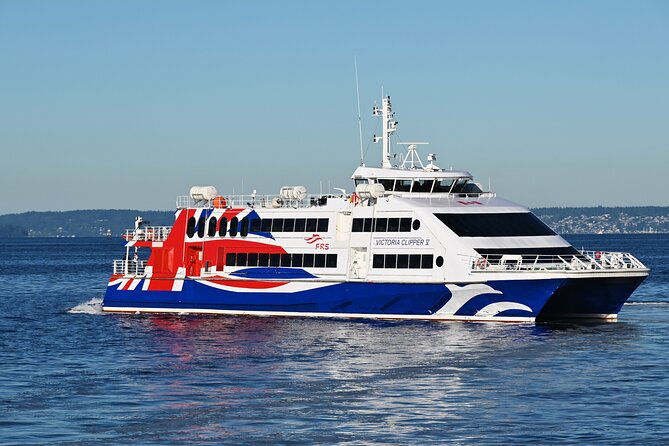
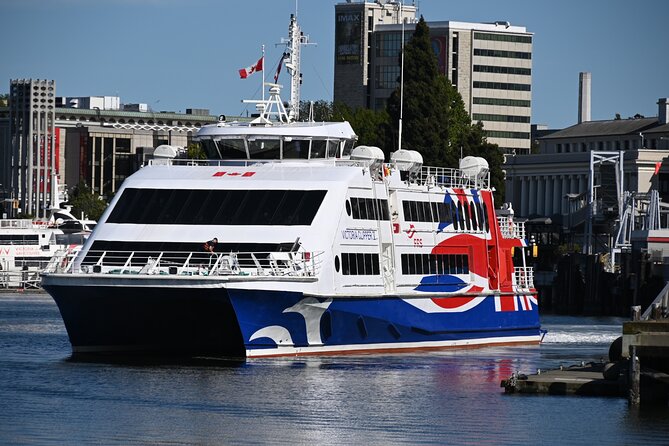
Boarding happens at 254 Belleville St., Victoria, BC at the Inner Harbour. On arrival, you check in, then you board the FRS Clipper.
The terminal setup is geared for typical ferry flow, and the vessel is accessible to wheelchairs. If you use a mobility aid, you will find staff help at boarding and disembarking. That is not something you want to improvise at the last second, so arrive with a little buffer.
Once you are on board, you choose your comfort level right away. Your ticket covers Economy Class seating, which places you in the main cabin area. If you opt for an upgrade, you can access Vista Class upper-deck seats that are made for looking out, not just sitting quietly.
Tip that keeps things simple: if your day has tight connections, treat the first hour as “get settled, find your seats, and set your phone to power-save mode.” You will likely be busy watching the water.
Economy vs Vista Class: How to Choose the Right Seats
This route is fast, but the seating choice can change your whole mood.
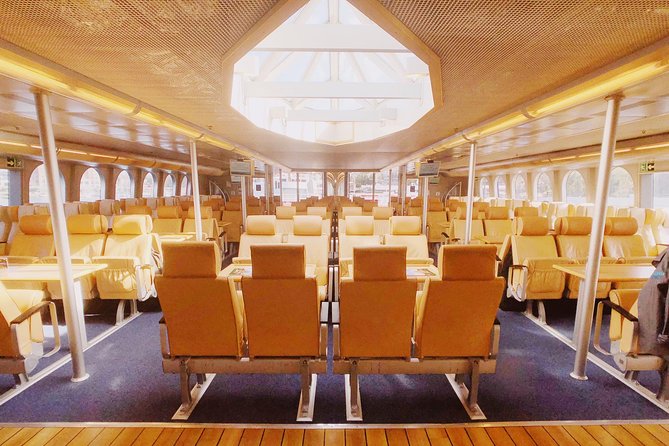
- Economy Class gives you included seating in the main cabin area. If your priority is value and you plan to spend most of the trip indoors or with casual looks out, Economy is perfectly fine.
- Vista Class is for the view seekers. Upper deck seats put you in the best position for scenery and the classic Pacific Northwest feeling of being out on the water.
In a couple of past cases, some passengers ended up dealing with seat-class confusion. That does not mean the ferry is chaotic, it means you should be proactive. When you board, verify your seat level matches what you booked. If something looks off, ask staff immediately.
If you love the idea of being outside as much as possible, Vista Class is the best match. If you want an easy ride with minimal thinking, stick with Economy and focus on relaxing.
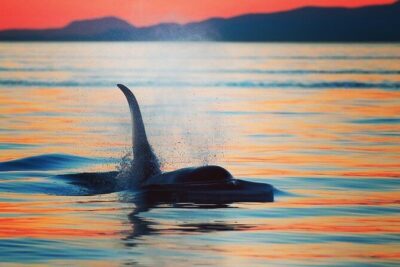

The 3-Hour Crossing: Gulf Islands, Puget Sound, and Juan de Fuca Views
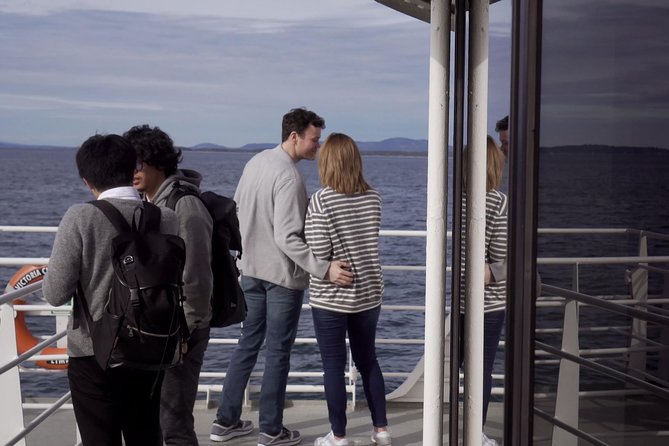
The crossing takes about 3 hours (under three hours in many cases) and you sail through some of the most photogenic water routes in the region. You will pass the Gulf Islands, then move through Puget Sound, and continue into the Strait of Juan de Fuca.
What this means in plain terms: the water view is not just “look out and hope.” The route changes as you go, so you get different angles and different shoreline vibes. It also helps break up the feeling of travel time. Three hours on a fast boat can feel like an extended boat ride, not a chore.
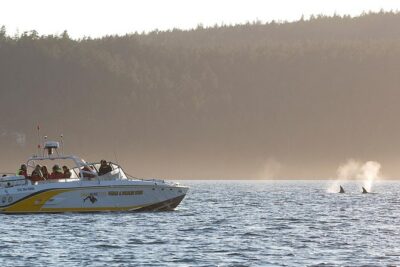
If you are wondering about wildlife: one review noted spotting pods of whales during the journey. That is not guaranteed, but it is a nice reminder that this route can be more than just scenic scenery.
Also, plan for motion like you would on any high-speed crossing. There are warnings about possible turbulent seas, and even when the ride is smooth, the boat will still move. If you get motion sick easily, pack what you normally use.
Onboard Comfort, Duty-Free, and Food at the Galley
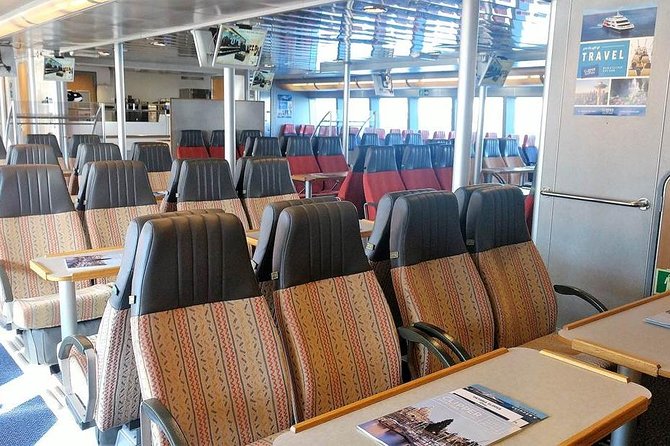
The ferry experience is built around “ride, relax, snack, repeat.” Seats are described as comfortable and roomy, and the ship is kept clean. Bathrooms are also reported as clean, which matters more than people admit.
There is an onboard galley/bar where you can purchase drinks and snacks. If you like having something to nibble while you watch the water, it keeps the trip from feeling empty. Some people also mention enjoying hot chocolate from the galley, and others found the food selection solid for a short crossing.
Duty-free shopping is part of the experience too. If you want to browse without taking up extra time on land, this is the moment.
One small practical note: you can bring one piece of luggage on board with you, as allowed by the carry-on rules. That helps you keep essentials close so you do not have to track bags during boarding and disembarking.
US Customs Reality Check in Seattle (and How to Protect Your Schedule)
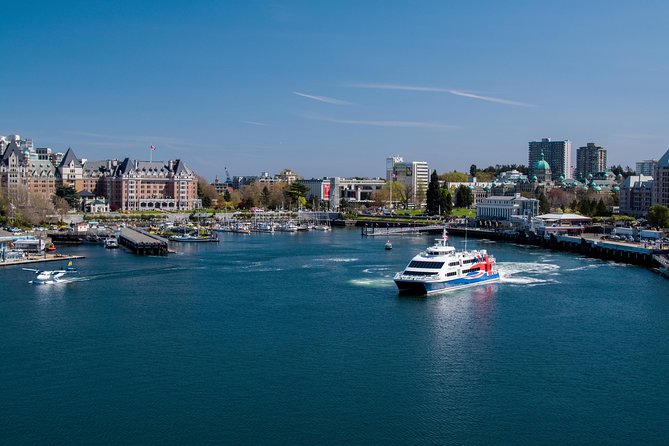
Your arrival point in Seattle is Pier 69, and once you step off, your ferry experience ends. What comes next is US border processing, and this is where timing can vary.
Most of the process is straightforward, but a review called out slow customs at Seattle. Another noted the operation is organized and quick in other situations. Translation: the ferry is efficient, but border processing is not always predictable.
So if you have a very tight plan right after arrival, build in buffer time. Think of Seattle customs as the one part of your day you cannot fully control, even if the ferry ride itself goes smoothly.
Also, double-check your travel documents before you go. This is not a “maybe you will be fine” situation. More on the exact ID rules below.
Passport and Border Rules You Must Follow to Cross by Land and Sea
Border crossing rules are the make-or-break detail here.
For crossing the US/Canadian border by land and sea, you need a US Passport, Passport Card, Enhanced Driver License, or Enhanced ID Card (EDL/ID). A US Passport is required for air travel. A Passport Card or EDL/ID are not valid for air travel.
You are also asked to advise your citizenship at booking time in a special requirements field. You must provide full names and dates of birth exactly as they appear on your passport. The booking cannot be confirmed without those details.
One more serious note: a felony may result in denial of entrance into Canada. A DUI is considered a felony in Canada. If this applies to you, confirm eligibility before you commit to the trip.
Bottom line: treat your documents like part of your ticket, not an afterthought. If anything is inconsistent, the day can turn stressful fast.
Luggage Rules That Control Your Total Cost

This is where you can accidentally spend more than you planned if you do not read the fine print.
You get permission for one small carry-on item. You also have an onboard luggage allowance of one piece. Checked luggage is separate.
Checked luggage costs $20.00 per piece of luggage, each way. If you bring more than a small carry-on, the fees can climb quickly, especially on round-trip travel. For a one-way trip, it is still worth budgeting if you are unsure you can travel light.
Reviews also mention that luggage is handled at the terminal with care, and in one case a passenger could have carried more onboard instead of paying extra. That is not an instruction, just a reminder to be honest with your packing.
Practical strategy: pack so you only need your carry-on on board. If you have to check something, keep it to the minimum.
Arrival at 2701 Alaskan Way, Pier 69: Starting Seattle Right Away
The ferry docks at 2701 Alaskan Way, Seattle, WA 98121, at Pier 69. This is a downtown waterfront location, so you can connect to city plans quickly.
The highlight is that it lands close to where you likely want to go next, including tour options. That matters because it reduces the “how do I get from the dock to the real city” time.
One small drawback to know: one review said disembarking felt a bit away from the city center and that a hotel transfer is not included. So if your hotel is far from the waterfront, you may want a ride plan ready.
If you like walking and public transit, Pier 69 is a convenient start. If you want door-to-door simplicity, line up transport before you get off the boat.
Price and Value: Is $136.50 a Smart Way to Travel?
The price is $136.50 per person for a one-way trip, with a duration of about three hours. It is not a budget deal if you compare it to certain land options, but it is often a strong value when you factor in what it replaces: the effort of driving and the hassle of getting through airport processes.
Here is what you get for that price:
- One-way ferry transportation from Victoria to Seattle
- Economy Class seating included
- Mobile ticket use
- Carry on luggage included
- GST and fuel surcharge included
What you do not get included:
- Checked luggage, at $20 per piece each way
- Seat upgrades (Comfort and Vista are available, but upgrades are extra)
- Food and beverages (available for purchase)
So the value equation is simple. If you travel light, stick to one small carry-on, and want a direct city-to-city ride, this is an efficient use of money and time. If you need checked luggage or plan to upgrade to Vista, your total cost will rise, and you should do the math before booking.
In other words: the base fare is fair for the convenience, but your packing choices decide your final cost.
Booking Timing and Day-of Tips for a Smooth Ride
This ferry is usually booked ahead. On average, it is booked about 45 days in advance, and there are multiple departure times across the day.
If you can be flexible, you can choose the departure that fits your Seattle schedule. If you are set on a specific day, book early. Short-trip ferries sell out when demand spikes.
Day-of tips that help:
- Show up early enough to handle check-in without rushing.
- If you paid for an upgrade, confirm your seat level when you board.
- Bring your travel documents within easy reach.
- Pack motion support if you are sensitive to boat movement.
Also note the ferry’s capacity is limited, with a maximum of 100 travelers. That can mean more manageable boarding, but still plan your arrival like you would for any timed transport.
Should You Book the Victoria Clipper One-Way to Seattle?
I think you should book this ferry if you want a fast, scenic, downtown-to-downtown transfer and you can travel with only a small carry-on. It is a great match for a first-timer on this route, a couple wanting an easy day plan, or anyone who hates the idea of driving cross-border and just wants to get there.
Skip it or at least plan carefully if:
- You need checked luggage, because fees add up at $20 per piece each way.
- Your schedule is ultra tight right after arrival, since US customs timing can vary.
- You are relying on a specific seat-class assignment, double-check it at boarding.
If you handle those details, this is one of the most straightforward ways to go from Victoria’s Inner Harbour to Seattle’s Pier 69, with comfort and real views built in.
FAQ
How long is the one-way ferry from Victoria to Seattle?
The trip takes about 3 hours (approx.).
What is the price, and what’s included?
The price is $136.50 per person. Included are one-way ferry transportation from Victoria to Seattle, fuel surcharge, GST, Economy Class seating, and a small carry-on item.
Where do I board in Victoria, and where do I arrive in Seattle?
You start at 254 Belleville St., Victoria, BC. You end at 2701 Alaskan Wy, Seattle, WA 98121 at Pier 69.
What documents do I need to cross the border by land and sea?
You need a US Passport, Passport Card, Enhanced Driver License, or Enhanced ID Card (EDL/ID) to cross by land and sea.
Is food and beverage included on the ferry?
No. Food and beverage are available for purchase onboard.
How much luggage can I bring, and what about checked bags?
You are allowed 1 small carry-on item. Checked luggage costs $20.00 per piece each way.
Can I upgrade from Economy Class to a better seating level?
Yes. Comfort and Vista Class seating are available for upgrade.
Are service animals allowed, and can I bring a bike or a dog?
Service animals are allowed. Bikes and dogs have restrictions, and you must advise at the time of booking if you need to bring a bike or dog on board.
What is the cancellation policy?
You can cancel for a full refund up to 24 hours in advance of the experience start time. If it is canceled because a minimum traveler number is not met, you will be offered a different date or a full refund.
Just off the notebook: recent Vancouver Island write-ups
- Victoria BC – Coast & Castle Tour by E-Bike
★ 5.0 · 5 reviews - 1 hour City Tour & Butchart Gardens: Christmas – Entry included!
★ 5.0 · 5 reviews - Parksville Half Day Whale and Wildlife Adventure
★ 5.0 · 5 reviews - Paddling Esquimalt Harbor to Cole Island
★ 5.0 · 5 reviews - Best of Victoria Private Day Tour
★ 4.0 · 5 reviews - Wildlife, Waterfalls, Caves, Old Growth on Vancouver Island
★ 4.5 · 6 reviews