
REVIEW · JOHNSTON CANYON & ICEWALK TOURS
Ice Climbing Adventure in Banff: Beginner
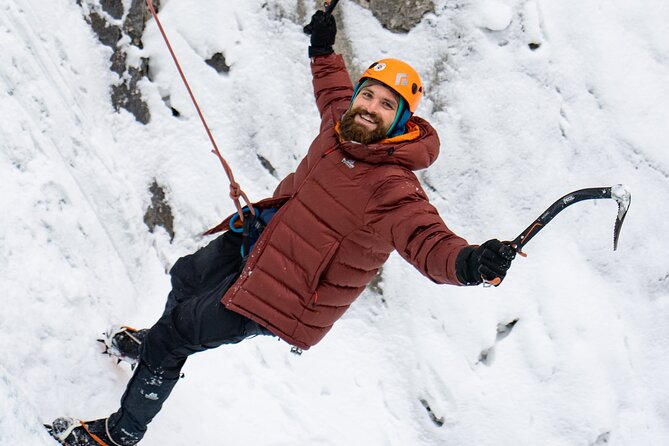
Frozen waterfalls teach fast. This beginner program in Banff gets you into the Canadian Rockies rhythm with real instruction, from gear fitting to first swings at the ice. I especially like the hands-on beginner coaching and the way guides build confidence step by step, so you are climbing quickly rather than just watching. One drawback to consider is logistics, in particular arranging your ride to the climbing site, since the exact plan may not be fully clear until closer to departure.
You also get a full day feel, with time set aside for learning core skills like walking in crampons and belaying top-rope climbers. The group stays small (max 12), so you are not stuck waiting your turn while your hands go numb. Plus, the scenery is the whole point here, Banff National Park plus a day that typically takes you through Johnston Canyon and onward to Grassi Lakes.
Do not underestimate the cold. If it is brutally cold, your day can be shortened, and the climbing can feel more like survival than sport. That said, this is still one of the most memorable active things you can do in Banff if you come prepared and flexible.
In This Review
- Key things to know before you go
- Banff beginner ice climbing: what you are really signing up for
- Meeting point and getting to the climbing site without surprises
- Banff National Park stop: safety first, then real climbing practice
- Johnston Canyon stop: first crampons, first swings, real confidence
- Grassi Lakes stop: more time on ice, more chance to learn
- Gear is included, but you still need to dress like a climber
- Guides and teaching style: what makes the difference for beginners
- Price and value: what $194.36 buys you (and what it does not)
- Weather, timing, and why your day might not be a perfect script
- Who this beginner ice climbing tour fits best
- My booking advice: should you book this Banff ice climbing experience?
- FAQ
- Is this ice climbing experience suitable for complete beginners?
- What climbing gear is included?
- Do I need private transportation to the climbing site?
- Where do we meet, and what time does it start?
- How long is the tour?
- Is lunch included?
- What is the cancellation policy?
Key things to know before you go
- ACMG/IFMGA guides and full gear provided means you show up ready to learn, not ready to rent chaos
- Crampons, belay, and tool technique are taught as actual skills, not just safety talk
- Waterfall ice location can vary, so expect a realistic adventure, not a carbon-copy script
- Small group size (max 12) gives you time with the guide and faster feedback
- Johnston Canyon is part of the day, and it is a great area to start building comfort on the ice
- Extreme cold can affect timing, so pack for real winter conditions and be ready for adjustments
Other canyons worth the cleats
- Lakes Moraine, Louise, Emerald, Johnston Canyon & Yoho Tour★ 4.8 · 1,023 reviews
- Banff: Lake Louise, Moraine, Emerald Lake & Johnston Canyon★ 4.9 · 808 reviews
- Johnston Canyon Icewalk★ 5.0 · 502 reviews
- Lake Louise Moraine Lake Johnston Canyon 1.5h Half Day Tour★ 5.0 · 323 reviews
Banff beginner ice climbing: what you are really signing up for
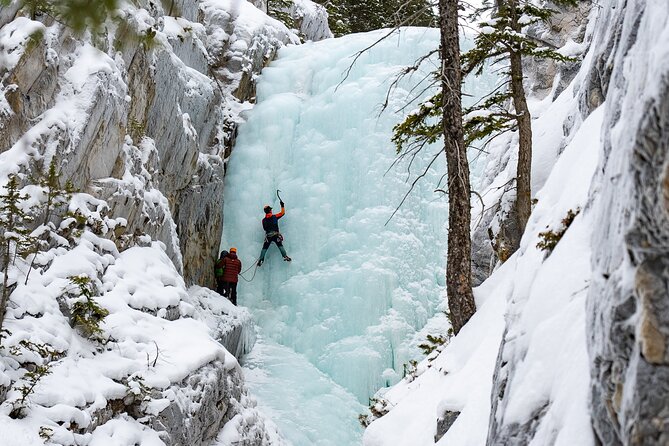
This is waterfall ice climbing, the kind where you climb frozen curtains, not a rock wall with a nice, predictable surface. The program is designed for complete beginners, but it is also built to challenge people who have climbed before and want new skills. In other words, you are not being sorted into a one-size-fits-all class.
The big value is that you learn the “system” of ice climbing. You practice how to move safely, how to manage your grip and footing in crampons, and how to work with a partner on a top-rope setup. That is how you go from standing on snow thinking this is impossible to swinging ice tools and climbing with purpose.
You should also expect that the day is a mix of movement and instruction. You will do gear fitting, get safety instructions, hike to the ice wall area, and then go through a series of on-ice skill drills. It is hands-on, fast-paced, and made for short learning cycles so your confidence grows before you freeze.
Meeting point and getting to the climbing site without surprises
You meet at 229 Bear St, Banff, AB T1L 1C3, starting at 7:45 am, and the tour ends back at the meeting point. It is near public transportation, so you have options if you are already in town and moving on foot or by bus.
Here is the part I would plan for early: private transportation is needed to get to the climbing site. That means you should line up a ride in advance, or confirm how your group is handling transport before the morning feels stressful. I would treat it like a must-do step, not a “we will figure it out later” situation.
Also note that the icefall location may vary. Even when your day includes Johnston Canyon and Grassi Lakes as stops, your actual climbing wall location can change depending on conditions. That is normal for ice climbing, but it is another reason your morning plan should be flexible.
If you are the type who likes clear checklists, I suggest you confirm your start details ahead of time in writing. Some guests reported trouble reaching the office by phone, so do not count on last-minute calls to fix logistics.
Banff National Park stop: safety first, then real climbing practice
The day typically begins with a Banff National Park stop. Think of this as your transition from “tourist cold” to “climber cold,” meaning you shift into the safety mindset and get set up properly.
You can expect the guide to run through:
- site safety and awareness (how to move around the wall area)
- how to fit and use climbing gear correctly
- crampon basics and how to walk without destroying your balance
- top-rope belaying fundamentals (what your partner needs from you)
This is the moment where good guides save your day. When the guide explains how people actually slip, how to communicate on the ice, and how to keep spacing, you stop feeling like you are doing something random. You start feeling like you are learning a sport with rules and rhythm.
For first-timers, this is also where the program earns its beginner label. You are not thrown straight onto steep ice with zero context. Instead, you are given the basics that make the next steps feel possible.
More cable, rope and canyon days


Johnston Canyon stop: first crampons, first swings, real confidence
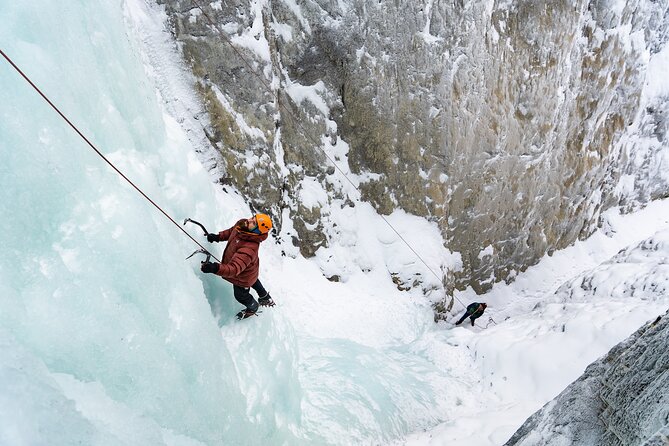
Next comes Johnston Canyon. This is a classic Banff area for active sightseeing, and it also sets you up nicely for ice climbing training.
The key thing you will do here is move from standing near the ice to actually working it:
- walking in crampons on the approach and around the wall area
- top-rope belaying (so you can participate beyond just climbing)
- movement on steep ice using crampons and swinging ice tools
If you are brand new, that last point is the heart of the experience. Ice tools feel awkward at first. They are not like a movie prop. The guide helps you learn how to place your tool, how to move your weight, and how to stay controlled on steep sections.
One strong signal for first-timers is that some groups walk roughly 20 minutes to the ice wall near Johnston Canyon before clipping in. That is not just scenery time. It is also time to get used to the traction feel of crampons so you are calmer when you reach the wall.
And yes, you will likely get off the ground more than once. The program is set up so you are “quickly be off the ground swinging ice tools and climbing,” not stuck in the tutorial stage all day.
Grassi Lakes stop: more time on ice, more chance to learn
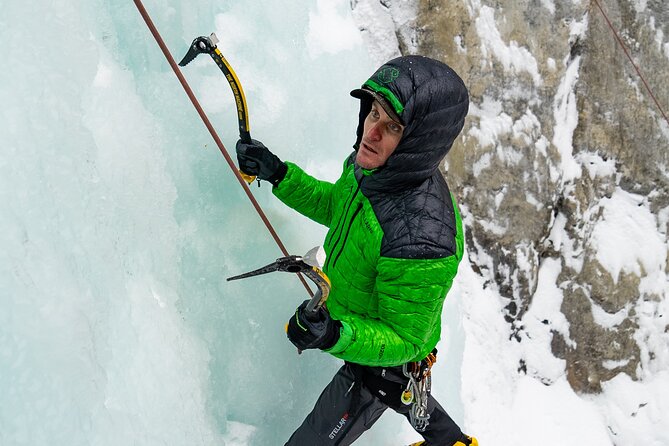
The day continues toward Grassi Lakes. Even though this is often thought of as a hiking destination, in this context it functions as another point in your training day, giving the guide flexibility to choose additional waterfall ice options depending on conditions.
If your program runs as a full day, this is usually where you get another chance to practice and repeat skills. If it runs as a longer format (some options are full-day or even 2-day), you may progress further on steep ice.
What you might learn as you go:
- advanced movement on steep ice
- placing ice screws and building V-threads
- mock leading and rappelling
You might not do all of that in the beginner version, and that is fine. The point is that the program can scale. Beginners get the foundations they need to feel safe and competent. People with prior climbing experience can push beyond the intro drills.
The value here is repetition with guidance. Ice climbing is learn-by-doing. You get better by running the same movements while your guide corrects one thing at a time.
Gear is included, but you still need to dress like a climber
The good news: your gear is included. You should get:
- helmet
- harness
- ice tools
- crampons
- climbing boots
That removes one of the biggest barriers for beginners. You do not have to guess sizing or learn the difference between the right crampons for your boots. Your guide can also fit you properly, and in winter sports, correct fit matters more than you think.
Still, your clothing choice is on you. The day starts early, and you are dealing with freezing air plus cold water spray risk from the environment. I would treat this like you are going to be outside for hours in serious winter temperatures.
If the forecast is extreme, I would plan for the possibility of shortened time on ice. One group described a day around -24 Celsius and noted the session cut short because it was too cold to enjoy. That is not something you can control, but you can control your layering choices so you are comfortable while waiting, talking, and moving between climbs.
Pro tip: bring warm layers you can move in. You need to be able to hike while wearing crampons and handle tool drills without your hands going numb.
Guides and teaching style: what makes the difference for beginners
This is led by professional mountain guides (ACMG/IFMGA). That matters because ice climbing is a technical, risk-managed sport. A credentialed guide is not just there to keep you safe, they are there to teach you how to think like a climber.
In particular, pay attention to how the guide handles three things:
- Gear fitting so nothing shifts at the worst moment
- Clear safety communication so you know what your partner and you are responsible for
- Movement coaching, especially tool placement and crampon pressure
You will likely meet guides with names like Nolan and Shea, and both show up in past guest experiences as strong teachers. That matches the program design: you are not meant to just “try once.” You are meant to learn.
Also, the customizable skill level is real. If you have never climbed, the guide can focus you on controlled movement, safety, and belay basics. If you have climbing experience, you are more likely to be offered extra progressions like advanced steep ice movement or even mock leading and rappelling options.
Price and value: what $194.36 buys you (and what it does not)
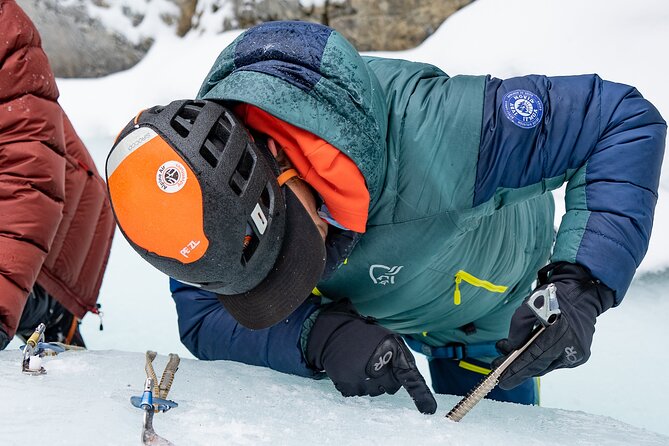
At $194.36 per person for about 7 hours, this is not the cheapest thing in Banff. But it can be good value if you price it like a full instruction plus gear package.
Here is what you are getting for your money:
- a guided ice climbing session in the Canadian Rockies
- all climbing gear included (big cost saver for beginners)
- professional ACMG/IFMGA instruction
- time built around core skills like crampons, belaying, and tool movement
What is not included:
- lunch
- private transportation to the climbing site
That means your real budget is the tour plus getting yourself and your group to where the ice is. If you already have a rental car and can handle winter driving, the cost feels more straightforward. If you are relying on other transportation, build in extra planning so the morning does not become a scramble.
If you are comparing to self-guided “try it” experiences, the value here is instruction. Ice climbing is one of those sports where learning the technique the right way prevents frustration, and sometimes prevents injuries.
Weather, timing, and why your day might not be a perfect script
Ice climbing is weather-dependent by nature. Even if your itinerary lists Johnston Canyon and Grassi Lakes, the icefall location can vary, and conditions can change what the guide chooses that day.
Cold is the big factor. One past experience described extreme cold (-24 Celsius) and said the climb was shortened because it was too cold to enjoy. That is a reminder that this is winter sport, not a casual outdoor walk.
So what should you do?
- Dress warm enough that you can wait comfortably
- Be mentally ready for adjustments
- Bring a plan for lunch since it is not included
- Keep your schedule flexible for the day’s start time
If you go in with “learn and have an epic story” as your goal, you will feel satisfied even if the day gets shorter.
Who this beginner ice climbing tour fits best
This is best for you if:
- you are a complete beginner and want structured instruction, not a blind attempt
- you want to learn more than one skill, especially crampons and belaying
- you want a day in Banff that feels like an accomplishment, not just sightseeing
- you prefer small-group attention (max 12)
It is also a good fit if you have some climbing background. The program can add progressions, like placing ice screws or mock leading, depending on the day and your comfort.
If you hate cold, or you expect a relaxed pace with lots of downtime, this might not feel like your kind of tour. Ice climbing is active, and even when you are paused for instruction, you are still in winter conditions.
My booking advice: should you book this Banff ice climbing experience?
Yes, I think you should consider booking if you want a true beginner-to-climber experience with gear handled for you and instruction that focuses on fundamentals. The highlight here is the skill stack: safety and awareness, crampons, top-rope belaying, then movement on steep ice with tools. That is the kind of learning that turns into a story you can actually tell at home.
I would hesitate if you cannot manage the transportation to the climbing site, or if you plan to rely on phone calls for day-of coordination. With winter timing, you want clarity before you are standing in the cold trying to figure out logistics.
If you do book, do two things that make the day better fast:
- show up ready for serious cold, with layers you trust
- confirm your ride plan to the climbing site ahead of time
Do that, and you give yourself the best chance of leaving Banff with a new skill under your belt, plus the kind of wild adventure story that makes people ask how you learned to climb ice in the first place.
FAQ
Is this ice climbing experience suitable for complete beginners?
Yes. The program is designed for complete beginners, and it can also be customized for more experienced climbers who want to learn additional skills.
What climbing gear is included?
The tour includes all climbing gear: helmet, harness, ice tools, crampons, and climbing boots.
Do I need private transportation to the climbing site?
Yes. Private transportation is needed to get to the climbing site. The meeting point is near public transportation in Banff.
Where do we meet, and what time does it start?
You meet at 229 Bear St, Banff, AB T1L 1C3, Canada, and the start time is 7:45 am. The tour ends back at the meeting point.
How long is the tour?
The duration is listed as approximately 7 hours.
Is lunch included?
No, lunch is not included.
What is the cancellation policy?
You can cancel up to 24 hours in advance of the experience for a full refund.
Rope, Cable and Canyon


More Canyons, More Cleats


Just off the notebook: recent Banff write-ups
- Elevated Private Experience: Adventure & Wellness in Banff
★ 5.0 · 4 reviews - From Banff: Affordable Moraine Lake and Lake Louise Shuttle Bus
★ 5.0 · 4 reviews - Banff to Calgary or YYC Airport | Private Transfer
★ 5.0 · 4 reviews - Banff Gondola & Lake Minnewanka Cruise Combo
★ 5.0 · 4 reviews - Moraine Lake Lake Louise Johnston Canyon Emerald Lake Day tour
★ 5.0 · 4 reviews - From Banff: Winter Wonderland; Lake Louise & Johnston Canyon
★ 5.0 · 4 reviews
Johnston Canyon & Icewalk Tours, compared.
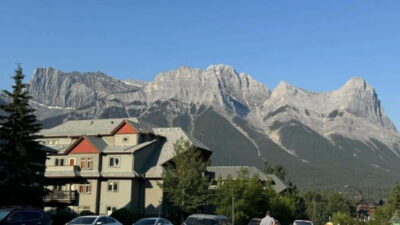 ★ 4.9Emerald Lake, Moraine, Louise, Johnston Canyon & Banff TownFrom $511,554 reviews
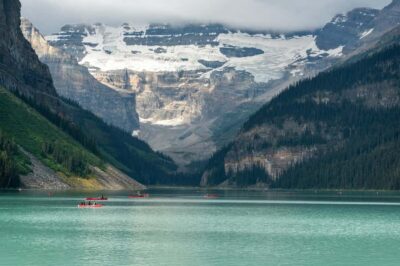 ★ 4.8Lakes Moraine, Louise, Emerald, Johnston Canyon & Yoho TourFrom $611,023 reviews
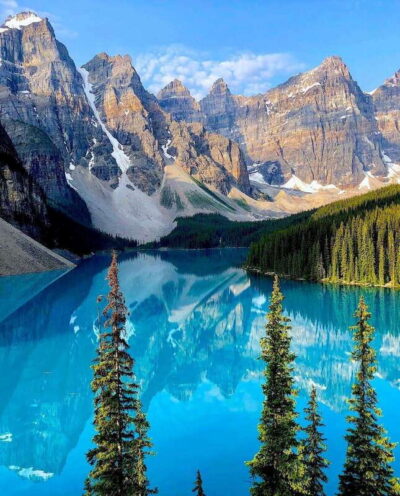 ★ 4.9Banff: Lake Louise, Moraine, Emerald Lake & Johnston CanyonFrom $50808 reviews
 ★ 5.0Johnston Canyon IcewalkFrom $81502 reviews
 ★ 5.02025 Winner-Lake Louise Moraine Lake Johnston Canyon Banff TownFrom $59376 reviews
 ★ 5.0Lake Louise Moraine Lake Johnston Canyon 1.5h Half Day TourFrom $44323 reviews
 ★ 5.0Banff Town ,Lake Louise, Moraine , Emerald & Johnston Canyon TourFrom $112256 reviews
 ★ 4.8Banff: Morning or Afternoon Johnston Canyon IcewalkFrom $79253 reviews
Browse the lists this tour appears in