
REVIEW · BAY OF FUNDY & NEW BRUNSWICK
Hopewell Cape: Hopewell Rocks Admission
Tides rewrite the shoreline in real time. At Hopewell Rocks, you get high and low tides on display, then you can walk among the sea stacks with names like Elephant, Bear, Dinosaur, and ET. The one catch is you must plan around the tide schedule, since the ocean-floor walk depends on it.
I like how the park works at your pace. Start at the Interpretive Centre, then follow trails to lookouts and sea views, and choose how you want to reach the ocean floor. If you use a wheelchair, the trails are accessible, but the ocean floor access is the part to think through.
In This Review
- Key things to know before you go
- Hopewell Rocks Admission: What the Bay of Fundy Actually Shows You
- Planning Your Visit Around Tides, Not Just Time
- Interpretive Centre First, Then Choose Your Ocean Floor Route
- Main Deck Stairs (99 Down, 101 Up): The Classic Route
- North Beach Ramp and the Bench Stops
- Demoiselle Trail Views: Shepody Mountain, Mary’s Point, Grindstone Island
- Sea Stacks Like Elephant, Bear, Dinosaur, and ET
- Trails, Lookouts, and Getting a Warm Meal In
- Price and Value: Is $14 Admission Worth It?
- Who Should Book Hopewell Rocks Admission
- Should You Book Hopewell Rocks Admission?
- FAQ
- How much is Hopewell Rocks admission?
- What is included with the ticket?
- How long is the admission pass valid?
- Is the ticket valid for more than one day during a visit?
- Where do I exchange a voucher for admission?
- Do I need to check the tide schedule?
- How many access points are there to the ocean floor?
- How many stairs are on the Main Deck route?
- Is the ocean floor accessible for wheelchairs?
- What language is the host or greeter available in?
Key things to know before you go
- Two days of flexibility: Your admission pass is valid for two consecutive days, which helps when tides shift your plans.
- Three ways to reach the ocean floor: Main Deck stairs, a ramp at North Beach, and a south trail that drops gently to sea level.
- Sturdy footwear matters: The ocean floor experience is uneven and best with solid shoes.
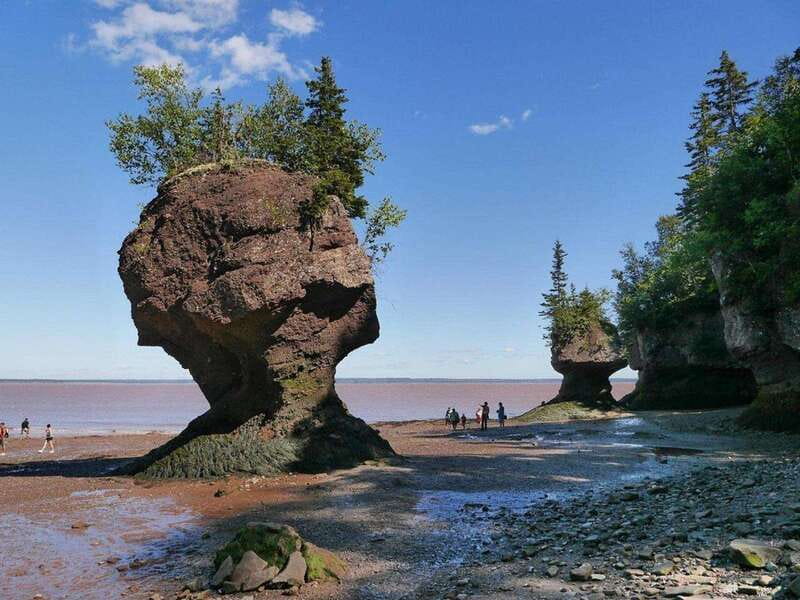
- Sea stacks are the star props: Over twenty flowerpot-style sea stacks line about two kilometers of shoreline, with playful names that make the walk fun.
- Check tides before you commit: The ocean floor walk is safe and doable only when the timing is right.
More trips timed to the biggest tides anywhere
- Hopewell Rocks Admission★ 4.5 · 343 reviews
Hopewell Rocks Admission: What the Bay of Fundy Actually Shows You
Hopewell Rocks is the kind of place that feels simple on the map, then blows your mind once you’re there. The Bay of Fundy is famous for extreme tides, and this park turns that fact into a front-row show. At the right tide, sections of shoreline that look solid at one point can become something else entirely minutes later, then something different again hours after that.
What I really like is that you are not just looking at a coastline. You are watching water levels change what is available to walk on. That turns a regular scenic stop into an experience with timing, movement, and a little bit of suspense.
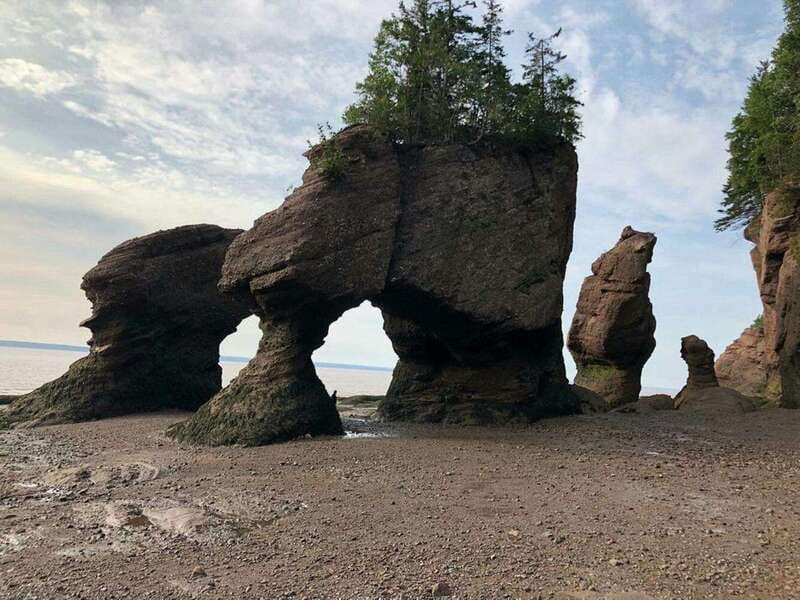
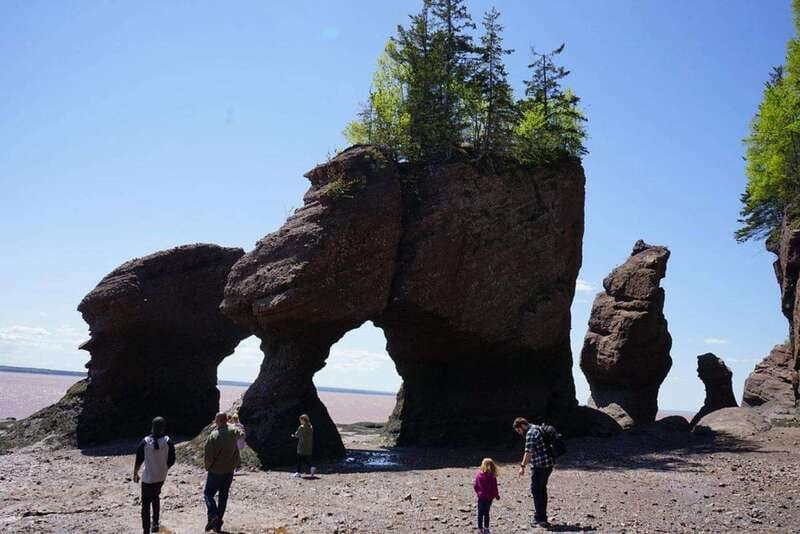
You also get the bonus of sea stacks. These free-standing rock columns were carved over thousands of years, and the park gives them names that are easy to remember. Elephant and Bear are the obvious ones, but you’ll also spot things like Dinosaur and ET. It helps you stay engaged during the walk, because your brain keeps filing the shapes as you go.
Planning Your Visit Around Tides, Not Just Time
This is not a place to treat like a drop-in museum. The park is designed so you can explore the ocean floor at low tide, and that means your best route changes with the day’s tide timing.
Before you head out to the shoreline, check the tide schedule and follow the posted guidance. If you show up at the wrong point in the tidal cycle, you may find that ocean-floor access is not the plan anymore. That’s also why admission is structured for two consecutive days. You can give yourself a second chance if the first day’s timing is tight.
There is another practical reason to time it well. The park highlights the dramatic transformation of the ocean floor over a long window, roughly six hours from start to finish. You don’t need to wait the entire six hours, but it’s a useful idea for setting expectations. If you can spend a chunk of time there, the changes feel more meaningful.
Interpretive Centre First, Then Choose Your Ocean Floor Route
The Interpretive Centre is worth doing early. It has a multi-media exhibit that helps you understand what you’re seeing, before you’re standing in salty air wondering how rocks got so weird and so tall. The staff are friendly and available around the park, so if you want help reading the tide setup or figuring out the easiest access point, you can ask.
After the Centre, the day becomes simple: walk trails, hit a lookout, then commit to one of the ocean-floor access points. The park is set up for self-guided exploration, but that does not mean you have to guess. The main choices are clearly laid out.
You also have a planning advantage here: no matter which access point you choose, the shoreline can be fully explored at low tide. So you’re not picking a shortcut to a partial view. You’re picking the style of route that fits your comfort level, mobility, and patience for stairs or ramps.
Main Deck Stairs (99 Down, 101 Up): The Classic Route
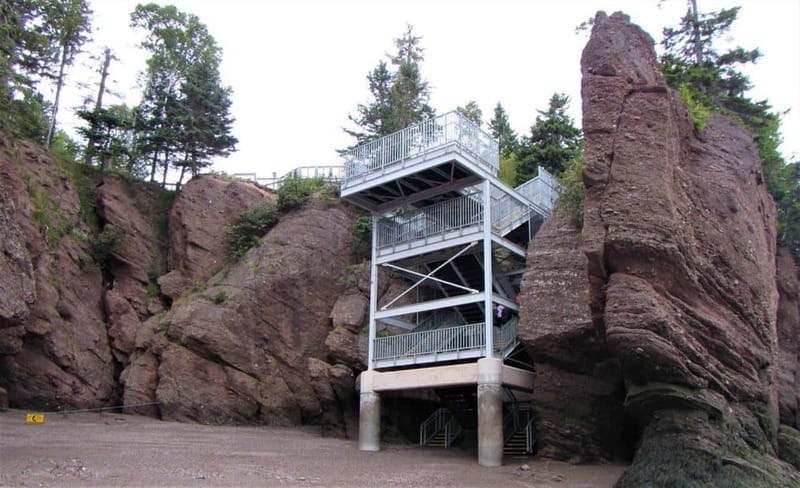
If you want the classic Hopewell Rocks experience, go for the Main Deck route. It features a large metal staircase and a spacious viewing platform near the top, which helps you orient yourself before you descend.
The walk down is described as 99 stairs, and yes, you can turn it into a bragging right on the way back up with the 101-step return. That difference matters only because it tells you this is not a flat boardwalk stroll. You’re switching from “lookout mode” to “workout mode,” so plan accordingly.
I like this option because it concentrates you close to the most iconic sightline opportunities: sea stacks, shoreline views, and the ocean-floor textures. It is also a straightforward choice for people who feel steady on stairs and want the clearest pathway into the main ocean-floor zone.
The tradeoff is obvious. If you don’t want a lot of steps, or if your knees and ankles are not happy with stair flights, this might feel like too much. That’s when the other access routes start to look better.
North Beach Ramp and the Bench Stops
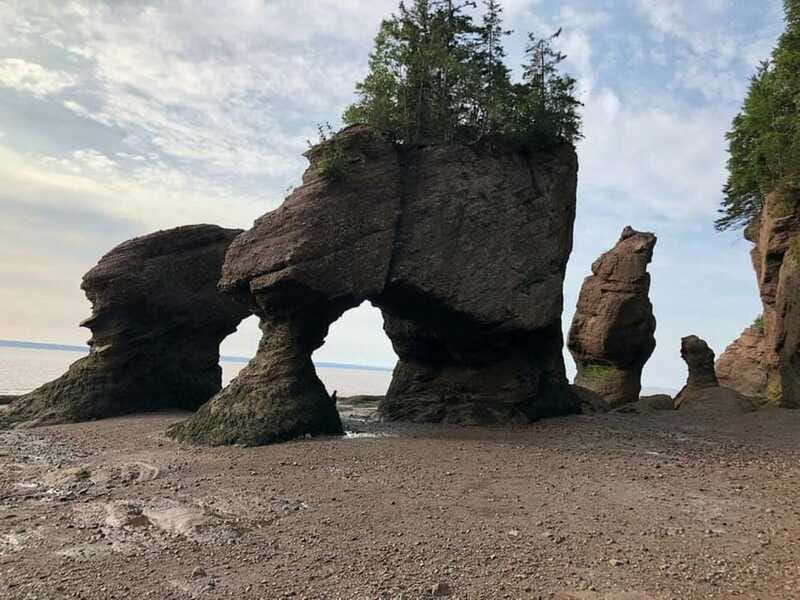
Not everyone wants stairs, and the park offers a different option at North Beach: a ramp with benches placed along the incline. It is suitable for wheelchairs, so the path itself is designed with access in mind.
Still, there’s an important reality check. Even though the ramp works for wheelchairs, many people find the ocean floor too challenging to navigate on wheels. The ocean-floor surface is part of what makes the experience special, but it is not the kind of firm, smooth terrain you’d want for an all-terrain chair.
If you are walking, I like the ramp because it feels like a gentler transition from land to sea level. Benches also help if you want to pace yourself or if you’re visiting with kids and adults who move at different speeds.
Also, because this is still ocean-floor exploration at low tide, you should still expect uneven conditions once you’re off the main ramp route. Wear footwear that gives grip and support.
Demoiselle Trail Views: Shepody Mountain, Mary’s Point, Grindstone Island
If you want your ocean-floor access to feel more like a gradual descent with wide scenery, try the south option described from behind the Interpretive Centre. The trail leading to Demoiselle gently drops to sea level and gives you impressive cliffside views.
This route is especially valuable for the “I want the scenery to keep changing” mindset. As you move, you’re not just heading toward the ocean floor, you’re also looking outward at features named in the park experience: Shepody Mountain, Mary’s Point, and Grindstone Island.
I think this access point works best when you want a less stair-heavy path and you care about panoramic views during the walk down. It’s also a nice match if you plan to spend more time exploring the shoreline at low tide, because you’ll already have a scenic lead-in rather than a sudden drop.
The tradeoff is that it’s still a trail and you should treat it as such. Even when it’s described as gentle, it’s still uneven outdoor ground. Keep your eyes on your footing.
Sea Stacks Like Elephant, Bear, Dinosaur, and ET
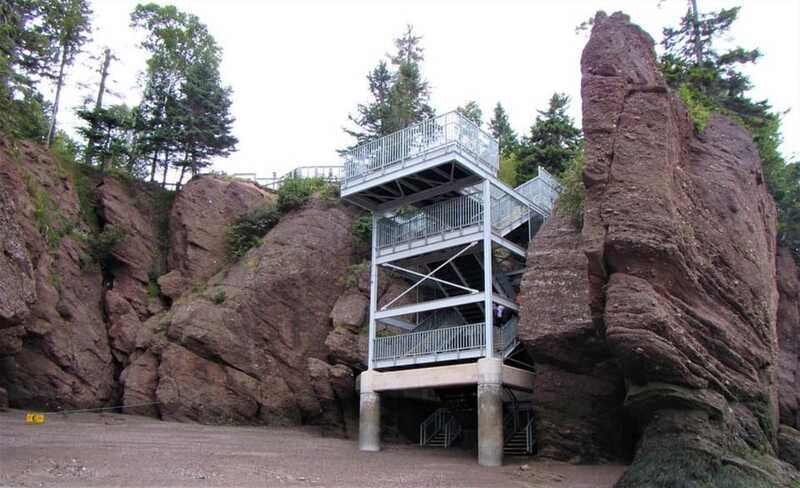
Sea stacks are the park’s characters, and they are not subtle about it. Over twenty free-standing stacks line about two kilometers of shoreline, and the park refers to them as flowerpots because of their shape and their stand-alone look against the water.
The fun part is how quickly you start seeing patterns. You pass one shape and it clicks as Elephant. Another one might look like Bear. Dinosaur shows up with enough imagination that it feels like a game, not a geology lesson. Names like ET and Mother-in-Law keep the mood playful, and that matters because it makes you want to keep walking.
I love this aspect because it turns the park into a storytelling walk. Instead of thinking only about tides and time windows, you get something to focus on while you wait for water levels to shift.
Also, sea stacks are part of the value of admission because you get them from multiple angles. From trails and lookouts you see their scale. From low tide you see how the coastline and ocean floor interact with the stacks, which makes the shapes feel even more dramatic.
Trails, Lookouts, and Getting a Warm Meal In
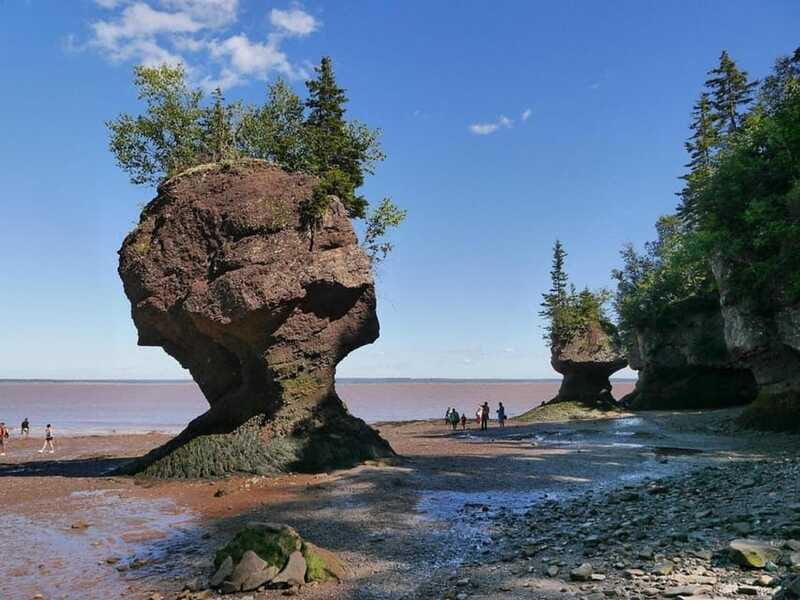
Beyond the ocean floor, Hopewell Rocks gives you well-maintained trails and lookouts, and the good news is that many of the trails are wheelchair-friendly. That means you can still enjoy a full park visit even if you decide not to go all the way down to the shoreline.
A nice detail is the option of a shuttle service, described as a nominal fee. The shuttle can take you from the Interpretive Centre to the top of the stairway leading to the ocean floor. That can save energy if you want to prioritize the ocean-floor time once conditions are right.
As for food, the park experience includes a suggestion to savor a warm meal during your visit. I find this matters more here than at some attractions, because you may end up spending time waiting for the tide shift. Having something warm to reset makes the day feel more comfortable and less rushed.
For best results, plan your day so you have at least one lookout stop between ocean-floor sessions. Lookouts help you understand where you are, and they give your legs time to recover.
Price and Value: Is $14 Admission Worth It?
At $14 per person, the admission price is reasonable for a location where timing changes what you can do. You are paying for access to the park experience, including the Interpretive Centre, the trails, and the option to walk the ocean floor when conditions allow.
Here’s how I think about value at Hopewell Rocks: you’re not paying for a static view. You’re paying for a time-based phenomenon. The tide window can turn a shoreline into a walking zone. The sea stacks are there either way, but the dramatic part is what the water level reveals.
You also get pass validity for two consecutive days, which can be a big deal. If your first day’s tide timing is not ideal for your body and schedule, you can try again the next day without starting over. That flexibility makes the price feel fair, not stressful.
Finally, the experience lasts as long as you want it to. The park suggests waiting for major transformation across a long period, around six hours. You may not do every minute, but knowing you can stay and watch the shoreline change adds weight to the cost.
Who Should Book Hopewell Rocks Admission
This is a strong match if you like nature that you can actually see changing. If you enjoy walking trails, if sea stacks catch your attention, and if you are comfortable planning around tides, you will likely have a memorable day.
It’s also a good fit for families and groups because the park includes playful, easy-to-spot sea stacks and multiple trail and ocean-floor access choices. The Interpretive Centre helps everyone get on the same page quickly.
It is not a great fit for wheelchair users who want ocean-floor access. The park is described as wheelchair accessible except for the ocean floor, and the ocean-floor terrain can be tough to manage with wheels. Wheelchair users can still enjoy the trails and lookouts, but ocean-floor exploration should be treated as uncertain or limited depending on comfort and the ramp versus ocean floor conditions.
If you have concerns about stairs, you should weigh the Main Deck route carefully. The route is memorable, but it includes a lot of steps.
Should You Book Hopewell Rocks Admission?
I’d book it if you want a Bay of Fundy experience where tides are the main event, not a background detail. With sea stacks you can name on the spot and trails that keep you moving, it’s the kind of place that rewards curiosity and good timing.
Book it even sooner if you can give yourself two days. The pass structure is built for tide-driven planning, and that makes your visit smoother. Bring sturdy footwear, give yourself time for the Interpretive Centre, and decide your ocean-floor access point based on your comfort with stairs versus ramps versus a trail descent.
If you hate tide planning or you are not willing to check conditions, this is harder. Hopewell Rocks is worth it when you play by the water’s rules.
FAQ
How much is Hopewell Rocks admission?
Admission is listed as $14 per person.
What is included with the ticket?
The ticket includes entry to Hopewell Rocks, plus access to the park experience such as the Interpretive Centre exhibits, trails, and ocean-floor access when conditions allow.
How long is the admission pass valid?
The pass is valid for 365 days.
Is the ticket valid for more than one day during a visit?
Yes. Entrance passes are valid for two consecutive days.
Where do I exchange a voucher for admission?
Go to the ticket office to exchange your voucher.
Do I need to check the tide schedule?
Yes. You should check the tide schedule before visiting so it is safe to explore the ocean floor.
How many access points are there to the ocean floor?
There are three primary access points to the ocean floor: Main Deck (stairs), North Beach (ramp with benches), and a trail leading to Demoiselle from behind the Interpretive Centre.
How many stairs are on the Main Deck route?
The Main Deck route is described as 99 stairs down to the ocean floor, and 101 steps back up.
Is the ocean floor accessible for wheelchairs?
The park is wheelchair accessible except for the ocean floor. The ramp is described as suitable for wheelchairs, but navigating the ocean floor on wheels can be challenging.
What language is the host or greeter available in?
The host or greeter is listed as English.
Timed to the Tides

Just off the notebook: recent Hopewell Cape write-ups
- Hopewell Rocks Admission
★ 4.5 · 343 reviews
Bay of Fundy & New Brunswick, compared.
 ★ 4.5Hopewell Rocks Admission343 reviews
 ★ 4.0Bay of Fundy Tour by BusFrom $99211 reviews
 ★ 5.0Go Fundy ToursFrom $195171 reviews
 ★ 4.0Fundy Coast to Fundy Shore TourFrom $9682 reviews
 ★ 4.4From Saint John: Bay of Fundy Bus Trip for Cruise PassengersFrom $8776 reviews
 ★ 4.0Best of Saint John Small Group Tour w/Fort La Tour + MartelloFrom $10047 reviews
 ★ 4.5Admission 1 person – Visit of the Acadian Historic VillageFrom $1840 reviews
 ★ 4.5Saint John Walking TourFrom $3939 reviews
Browse the lists this tour appears in