
REVIEW · CANYONING, VIA FERRATA & CLIMBING
Half Day Canyoning Experience in Revelstoke
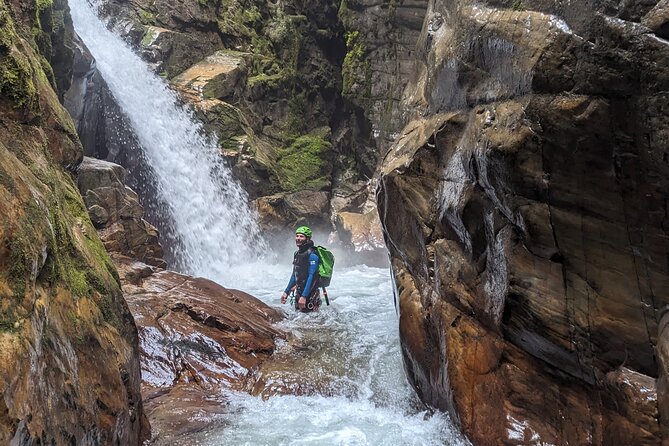
Canyoning turns creeks into your playground. You’ll follow guides into the rivers and waterfalls around Revelstoke, learning the safe way to handle ropes and harness gear and then using natural features for rock water slides and deep pool jumps. The main consideration is that it is slippery and physical, so if you have knee or ankle issues, you may find the footing mentally tough at a few spots.
In about four hours, the day runs from a meeting point in Revelstoke to a canyon staging area, where you’ll gear up in a wetsuit, neoprene socks, helmet, and canyoning harness. I like the small group size (up to 6), because you get real coaching time before you commit to the harder moves.
For $146.12 per person, you’re not just paying for thrills. You’re paying for instruction, the safety setup, and access to a guided route through places you would not find on your own, even if you’re a confident outdoor person.
In This Review
- Key highlights you will feel (almost immediately)
- Why half-day canyoning near Revelstoke is such a good use of your time
- From your accommodation to the staging area, the day starts smoothly
- Gear setup: wetsuit, neoprene socks, harness, helmet, and shoes you must bring
- Rope skills basics: where the safety learning really happens
- The canyon run: waterfalls, natural slides, creek scrambling, and deep pool jumps
- How the guide keeps the experience fun, even when you are not ready for everything
- Physical demands: what medium fitness means on a canyon route
- Price and value: is $146.12 per person worth it?
- Weather and timing: why good conditions matter for your safety
- Who should book this canyoning half-day in Revelstoke?
- Should you book Vertical Rivers for half-day canyoning?
- FAQ
- How long is the Half Day Canyoning Experience in Revelstoke?
- What time does the tour start?
- Is pickup offered?
- What should I bring with me?
- What gear is included?
- How many people are in the group?
- What happens if weather is poor?
Key highlights you will feel (almost immediately)
- You learn rope basics first, so the first rappel feels like training, not guesswork
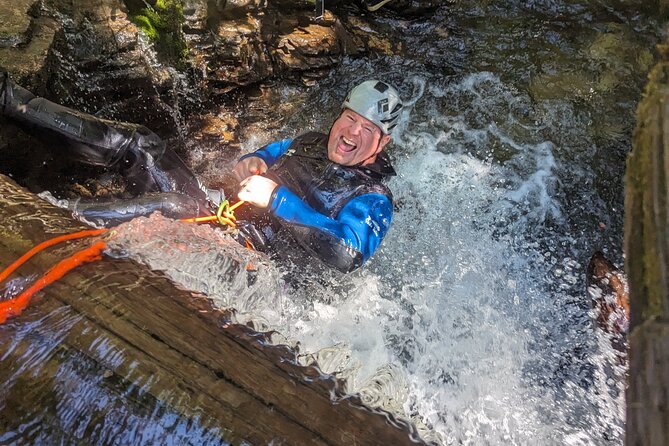
- Real canyon actions, not a viewing tour: rappels, slides, creek scrambling, and cliff jumps into deep water
- Gear is provided (wetsuit, neoprene socks, harness, helmet), so you travel lighter
- AJ-style guide adjustments happen on the fly, including alternatives when someone is not ready for every step
- Small groups of up to 6 mean more attention and less waiting around
- Cool-weather comfort is built in with neoprene, plus you’ll still get properly cold-and-satisfied when you hit the water
Still shortlisting? Here is how a few other Revelstoke bookings stack up.
- Half-Day Whitewater Rafting in Revelstoke★ 5.0 · 410 reviews
- Half Day Walk&Wade (Fly-Fishing / Spin Casting from shore)★ 4.5 · 6 reviews
- Revelstoke: Guided Canoe Tour with Snacks★ 5.0 · 5 reviews
Why half-day canyoning near Revelstoke is such a good use of your time
Revelstoke is famous for big mountains, but canyoning is a different angle on the region. Instead of chasing skyline views, you spend the morning or day moving through forest, rock, water, and fast little challenges that keep you present. That is a big reason this half-day format works: you get the full mix of skills and thrills without needing an entire day to recover.
I also like the mindset of the experience. It is not about being the toughest person in the group. It’s about learning how to descend safely, then using creek flow and water features to move through the route. Even when it gets chaotic for a second, the goal is controlled movement, not bravado.
The route is built around multiple styles of travel: ropes on waterfalls, sliding down natural rock water slides, scrambling with the creek, and cliff jumping into deep clear pools. When you stack those parts together, the experience feels varied, not repetitive, even in only a few hours.
From your accommodation to the staging area, the day starts smoothly
Your day starts in Revelstoke. You meet your guide either at a set meeting point or at your accommodation in town. Then you head to a staging area close to the canyon. This matters because you avoid spending the first chunk of your day driving, packing, and figuring out logistics.
Start time is 9:00 am, and the activity ends back where you started, which makes it easy to plan lunch afterward. If you are traveling without a car, pickup being offered helps a lot. If you do have a car, it still saves time and reduces stress.
You’ll also get a mobile ticket, which makes check-in simpler. Confirmation is sent within 48 hours of booking, subject to availability, so you will know ahead of time that your slot is locked in.
Gear setup: wetsuit, neoprene socks, harness, helmet, and shoes you must bring
The equipment part is one of the best values here. You get a full canyoning wetsuit with neoprene socks, plus a mountaineering safety helmet and a canyoning harness with the hardware you need. That means you don’t have to hunt down rental gear or worry about whether you packed the right kind of protection.
What you do need to bring is simple, but it matters. You must bring your own shoes and your own swimsuit.
Supportive shoes are the big deal. Reviews highlight that finding suitable footing can be tricky at a few spots, because rocks can be hard to see through whitewater and because you might hesitate after recovering from an injury. Good grip and secure fit help your brain relax, which helps your body move better.
For your swimsuit, plan for full water time. You’re not doing a light splash. You’ll be in the creek repeatedly, and when you slide, scramble, or jump, your clothes need to stay practical and comfortable.
Rope skills basics: where the safety learning really happens
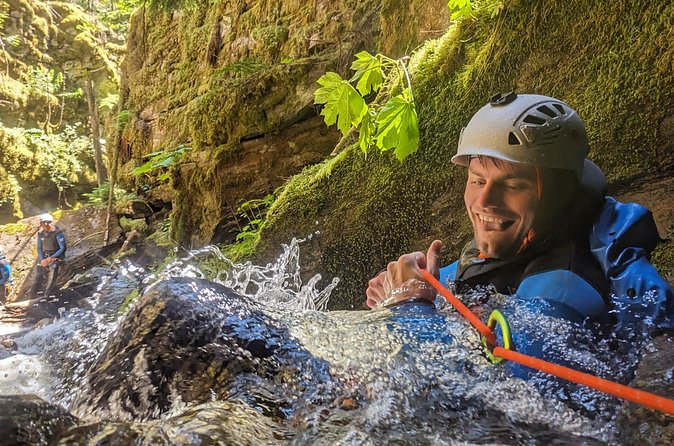
Before you enter the canyon’s main action, you’ll practice the basics you need for safe descent. You’ll learn rope skills and how to use your harness system under guidance. This is not just for technique. It’s for confidence.
In a half-day, that pre-training is what turns the rest of the day from intimidating into doable. You get a chance to understand how the equipment works, what your body should do, and what to expect when you’re clipped in and moving over uneven rock.
This matters especially if you are new to canyoning. One of the strongest points of the experience is that it is designed for both novices and more experienced canyoneers, and that only works when instruction comes first. The half-day option also helps you test the sport without making a full commitment.
If you have fear of heights, you may feel it during any rappel or exposed step. The practical answer is: pay attention in the rope practice, ask questions early, and go one move at a time.
The canyon run: waterfalls, natural slides, creek scrambling, and deep pool jumps
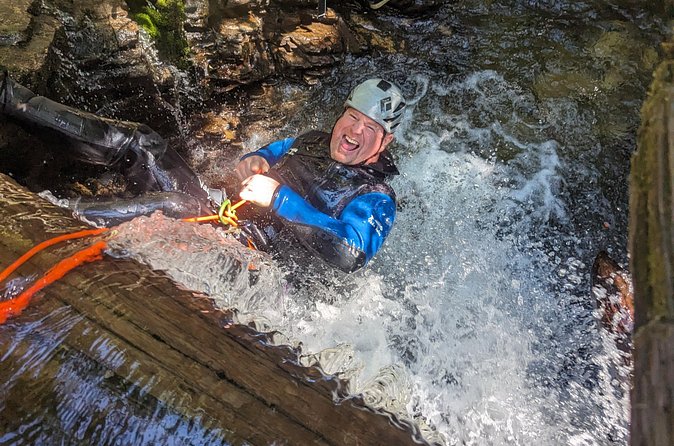
Once you’re geared up and trained, you enter the creek, and the pace starts to feel like an adventure course built by nature.
Here’s what to expect as the day unfolds:
Rappelling with ropes and a harness
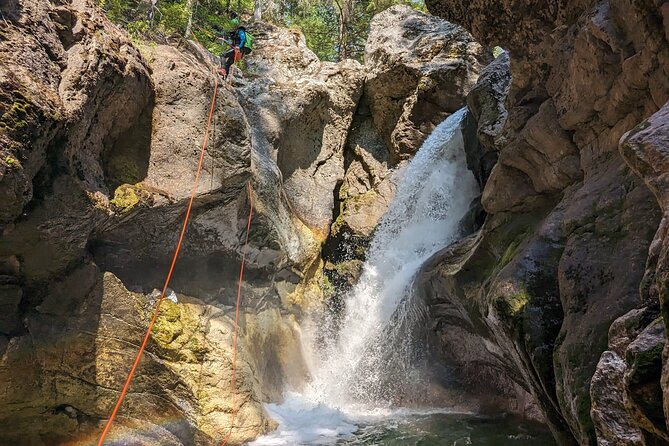
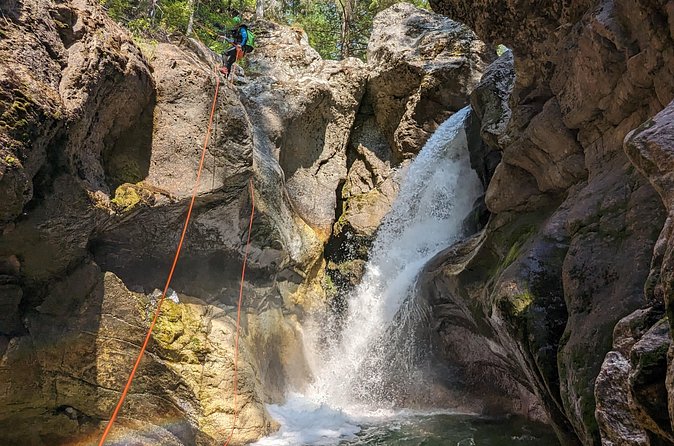
You’ll descend waterfalls using the rope-and-harness system. This is where careful movement pays off. You’ll be guided on how to position yourself and manage the descent safely. Expect the water to add slickness, and expect the surface to feel different underfoot than it does on dry land.
Sliding natural rock water slides
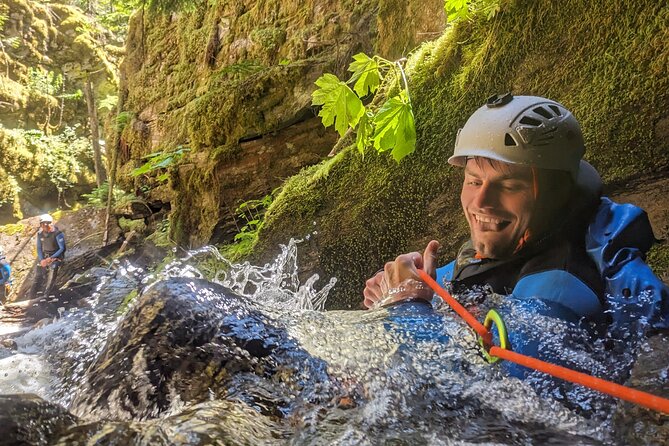
Instead of man-made slides, you’ll use the rock features shaped by water flow. It can feel playful, then suddenly real when you catch the wrong angle. The reward is that it feels wild and natural, like the creek is doing the engineering.
Scrambling with the flow of the creek
This is the in-between work that makes canyoning what it is. You’ll move along and across rock and water paths where the creek’s current helps guide you, but it also means you have to stay alert.
A practical note from what people describe: you should be ready to slip and fall at least once, because water, whitewater, and rock texture can trick you. The upside is that guides help you reset quickly, and once you stop fighting the chaos, your movement improves.
Cliff jumping into deep clear water pools
You’ll face true jumps into deep pools. Even if you’re excited, your brain will do that quick reality check when your feet leave rock. The best way to handle this is to commit only after the guide confirms the pool depth and conditions, and to follow the group flow so you are not rushing.
If you are wondering whether canyoning includes “real fear,” yes, it can. That is part of the appeal for many people, because the fear is controlled and turned into skill. One person even described the day as scary and great in equal portions, with ice-cold dunks and fairy-tale scenery that made the hard parts feel worth it.
How the guide keeps the experience fun, even when you are not ready for everything
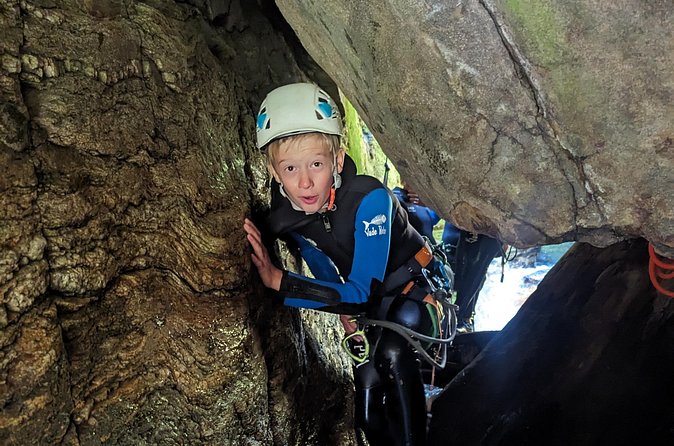
You’re not just getting safety instructions. You’re getting route management. The guide’s job is to keep you moving, keep you safe, and adjust when the group has different comfort levels.
AJ was mentioned in accounts as professional and fun, with a very hands-on approach. One person described a situation where they were the only one signed up, and the guide brought along friends so the experience still happened. Another account talked about an 11-year-old joining in, but not feeling confident about every element. The guide offered alternative ways down where needed.
That kind of flexibility is exactly what you want in canyoning. It means the day adapts to the reality of people in the group, not the other way around.
So if you are active but not a fearless climber, you are not automatically out of the running. The bigger predictor is your willingness to try, take coaching, and accept that you will get wet and slippery.
Physical demands: what medium fitness means on a canyon route
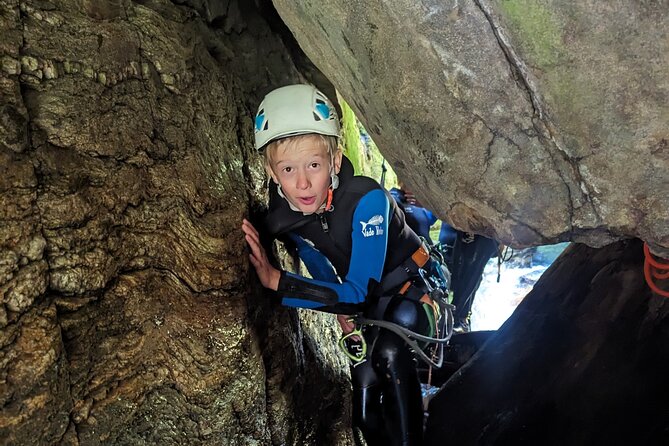
Most people can participate, but you still need to be prepared for a workout that is not gym-style. You’re climbing, balancing, hopping, sliding, and moving while standing surfaces are slick and uncertain.
One thing that stands out in the experience descriptions: even fairly active people can find a few spots mentally challenging, especially when they cannot always see rocks clearly through the whitewater. If you have knee or ankle issues, you may need more time and more careful foot placement than you expect.
A wetsuit helps with temperature. One account mentioned it was a cooler day, but they stayed comfortable in the provided wetsuit. Still, you can get cold at water-impact moments, so moving consistently and following your guide’s timing helps.
Practical mindset tips:
- Accept that falling can happen. Your goal is safe recovery, not perfection.
- Keep your shoes tight and stable. Loose footwear is your enemy.
- If you hesitate, slow down. The creek rewards calm feet.
Price and value: is $146.12 per person worth it?
At $146.12 for a half-day, you might wonder if this is more “activity hype” than value. Here’s what makes it reasonable based on what’s included and how canyoning actually works.
You’re paying for:
- Instruction plus rope skills coaching before the canyon action
- A guided route through sections of creek with multiple hazard types (water, rock, ropes, jumps)
- Provided safety gear: wetsuit, neoprene socks, harness, helmet
- A maximum group size of 6, which limits how much you get waiting time
- Pickup offered in Revelstoke and round-trip back to the meeting point
When you price out safety training and gear rentals separately, guided canyoning tends to pencil out. The equipment inclusion is the clearest value lever, because wetsuits, harness systems, and helmets are not things most people own specifically for canyoning.
Is it still a splurge? Yes, but it’s a splurge that buys time in a rare kind of terrain. This is not an attraction you can recreate easily on your own without training and local knowledge.
Weather and timing: why good conditions matter for your safety
Canyoning requires good weather. That does not mean they cancel for light clouds. It means conditions impact safe footing, water flow, and the way routes behave.
If the experience is canceled due to poor weather, you’ll be offered another date or a full refund. That flexibility is helpful, because you are planning around a natural system, not a controlled indoor attraction.
Timing is also simple: it starts at 9:00 am, and it ends back at the meeting point. If you want to use the rest of the day for exploring Revelstoke, you’ll likely have time after you get dry and eat.
One more weather-related tip: plan for rain or damp. People have done this even with rain and kept it fun, so don’t assume the day is ruined if skies turn gray.
Who should book this canyoning half-day in Revelstoke?
Book it if you want adventure that mixes outdoor movement with real instruction. It’s a strong choice if you’re active, curious, and willing to get wet, slip a little, and learn rope technique.
It’s also a good match if you like guided experiences that still feel authentic. You are going into hidden rivers and waterfalls, not standing in one spot.
Choose a different plan if:
- You strongly dislike heights or rope systems with any uncertainty
- You have mobility limitations that make slippery rock movement risky
- You know you cannot handle the mental side of uncertain footing, even if you are physically capable
That said, the guide’s ability to offer alternatives is a big plus. If you are coming with expectations of every step being mandatory, revise that. This experience is built to accommodate different comfort levels within the group.
Should you book Vertical Rivers for half-day canyoning?
If you want a short, high-impact adventure in Revelstoke, I think you should seriously consider booking this half-day canyoning trip. The value comes from real instruction plus provided safety gear, and the small group format makes it feel personal instead of crowded.
The biggest deciding factor is your attitude toward wet, slick, physical fun. If you can stay calm when your footing feels uncertain and follow coaching, you’ll likely find the day exciting in the best way. If you want guaranteed calm and dry shoes, this is not your day.
FAQ
How long is the Half Day Canyoning Experience in Revelstoke?
It lasts about 4 hours.
What time does the tour start?
The start time is 9:00 am.
Is pickup offered?
Yes, pickup is offered.
What should I bring with me?
You need to bring your own shoes and swimsuit.
What gear is included?
A full canyoning wetsuit with neoprene socks, a canyoning harness with hardware, and a mountaineering safety helmet are provided.
How many people are in the group?
The tour has a maximum of 6 travelers.
What happens if weather is poor?
The experience requires good weather. If it is canceled due to poor weather, you will be offered a different date or a full refund.
Just off the notebook: recent Revelstoke write-ups
- Revelstoke: Guided Canoe Tour with Snacks
★ 5.0 · 5 reviews - Half Day Walk&Wade (Fly-Fishing / Spin Casting from shore)
★ 4.5 · 6 reviews - Half-Day Whitewater Rafting in Revelstoke
★ 5.0 · 410 reviews
Canyoning, Via Ferrata & Climbing, compared.
 ★ 4.7Vancouver: Capilano Suspension Bridge Park TicketFrom $592,181 reviews
 ★ 4.5Capilano Suspension Bridge Park TicketFrom $611,814 reviews
 ★ 5.0Vancouver City Sightseeing Tour: Capilano Suspension Bridge & Vancouver LookoutFrom $1451,556 reviews
 ★ 4.5Capilano Suspension Bridge + Grouse Mountain TourFrom $200908 reviews
 ★ 4.8Vancouver: City+Lookout+Capilano Suspension Bridge TicketFrom $139583 reviews
 ★ 4.8Vancouver: Scenic Panorama Seaplane Tour & Suspension BridgeFrom $191569 reviews
 ★ 4.8From Vancouver: Capilano Suspension Bridge & Grouse MountainFrom $192445 reviews
 ★ 4.5Small Group Tour: Capilano Suspension Bridge and Grouse Mountain from VancouverFrom $217320 reviews
Browse the lists this tour appears in