

REVIEW · CANADIAN ROCKIES ROAD TRIPS
Discover the Rockies: 6 Self-Guided Smartphone Audio Tour Bundle
Your phone becomes your Rockies guide.
This bundle strings together six self-guided audio tours around Banff and Canmore, so you can learn history, geology, and mountain lore while you drive and walk. I like that it uses automatic, hands-free audio so you spend more time looking out the window and less time fiddling with your screen.
Two things I really like: first, everything is built for offline use, with download on Wi-Fi before you go and no signal or data needed during the tour. Second, the tours are flexible, so you can linger at a viewpoint or skip what does not interest you, without feeling like you are trapped in someone else’s schedule.
One possible drawback: you rely on your own setup, so if your phone battery is low, your audio and GPS experience can suffer. Also, since the tours use a live GPS map for navigation, you will want to keep an eye on it if reception or GPS accuracy is finicky.
In This Review
- Key highlights I think you will care about
- What this Banff and Canmore audio bundle really gives you
- Price and value, especially if you travel with friends
- The offline setup: how to avoid the most common frustration
- Driving the Rockies routes: Icefields Parkway and the Calgary to Lake Louise road trip
- Small drive-by stops that make the whole day feel smarter
- Banff by foot: parks, old buildings, and the Mr. Banff story thread
- The kind of places you will actually notice on this route
- Best time to do Banff on foot
- Canmore on foot: bears, mining cars, and the Bow River boardwalk
- The personal-feeling highlights you will likely remember
- The “short walk, big payoff” reality check
- Lake Agnes Tea House Trail and Tunnel Mountain: the hiking side of the bundle
- Lake Agnes Tea House Trail, what to expect
- Tunnel Mountain: viewpoint-driven walking
- Extra outdoor context you get on the driving side
- Timing, duration, and how to plan your day
- Should you book this Banff and Canmore audio bundle?
Key highlights I think you will care about
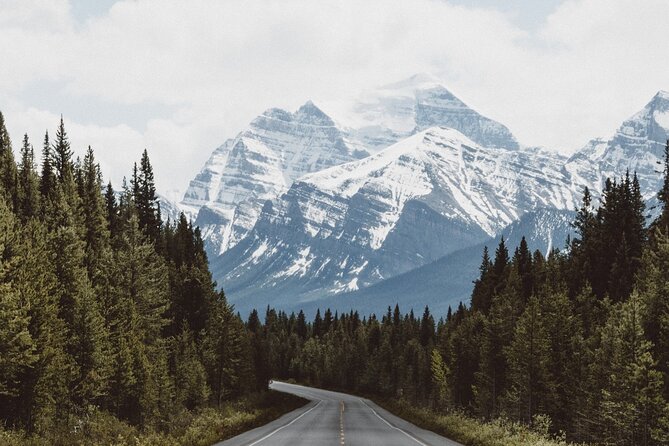
- Offline listening with no data needed for the driving and walking routes
- Hands-free audio that plays automatically as you move
- Live GPS navigation for the walking tours and key driving points
- A mix of towns and real nature (Banff, Canmore, Lake Agnes Tea House Trail, Tunnel Mountain)
- Stays flexible so you can stop longer, skip ahead, and still follow along
- Value for groups up to 15 since it is priced per group, not per person
Longer runs through the Rockies, compared
- Lake Louise, Moraine Lake and the Icefields Parkway Full-Day Tour★ 5.0 · 836 reviews
- Icefields Parkway Highlights & Secrets | Award-Winning Adventure★ 5.0 · 140 reviews
- Emerald Lake, Takakkaw Falls & Canadian Rockies Hidden Gems★ 5.0 · 116 reviews
- Canadian Rocky Mountain Food Tour★ 5.0 · 91 reviews
What this Banff and Canmore audio bundle really gives you
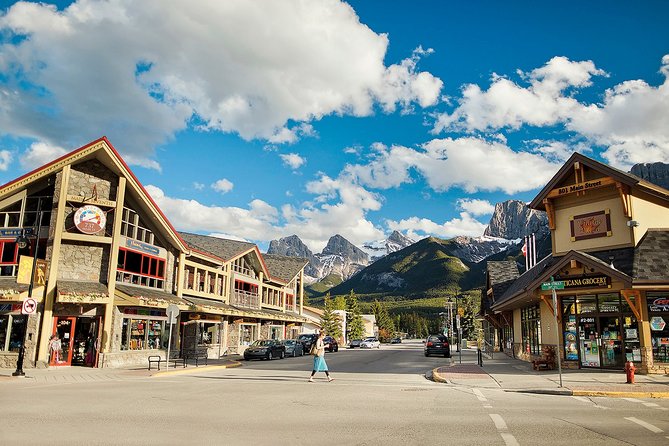
If you have ever wished a guided tour would just slow down for the view, or speed up when you are bored, this format is a smart middle path. You drive and walk on your own, but the audio keeps you oriented with stories tied to specific places.
This bundle is set up as six separate audio tours that cover Banff and Canmore on foot, plus major scenic driving routes in the area. You are not stuck with one route either. Depending on what day you have and how much hiking energy you bring, you can string together the experiences or focus on only one or two.
I also like the tone of these routes from a practical angle. You get “what you are looking at” information, but it is also the kind that helps you connect dots, like why a landmark got its name or what an old building tells you about how the town grew.
Price and value, especially if you travel with friends
The price is $35.10 per group, up to 15 people, and it is good for a 3 to 6 hour window (approx.). That matters because in the Rockies, your biggest costs often come from transport, parking, and time. This option uses your already-planned vehicle and turns it into a guided-style experience without hiring a second set of logistics.
It can be especially cost-effective for a group where one or two phones can carry the audio while everyone else rides along, as long as you are okay sharing headphones or doing quick swaps. For smaller groups, the value still holds if you like self-paced learning, because you also get lifetime tour access in the Tripvia Tours app. That means you can repeat portions if you come back or if you want a “second pass” day with different stops.
The offline setup: how to avoid the most common frustration
This is the make-or-break part for any audio tour. Here, the big promise is simple: download on Wi-Fi before, and then the tour runs without needing Wi-Fi signal or mobile data during the experience.
Here is how I would approach it to avoid headaches:
- Download before you drive into the areas where reception can be spotty
- Start with a fully charged phone, especially if you plan to do the walking segments
- Keep the Tripvia Tours app handy during the drive for the live GPS map parts
- If your app ever seems inconsistent, restart it so it can refresh your GPS location and resume the audio properly (there have been issues reported with locations and audio behavior)
One more practical note: attraction tickets are not included, so plan that if you want to go inside museums, cabins, or tea stops, you will pay those separately.
More days someone else has already planned


Driving the Rockies routes: Icefields Parkway and the Calgary to Lake Louise road trip
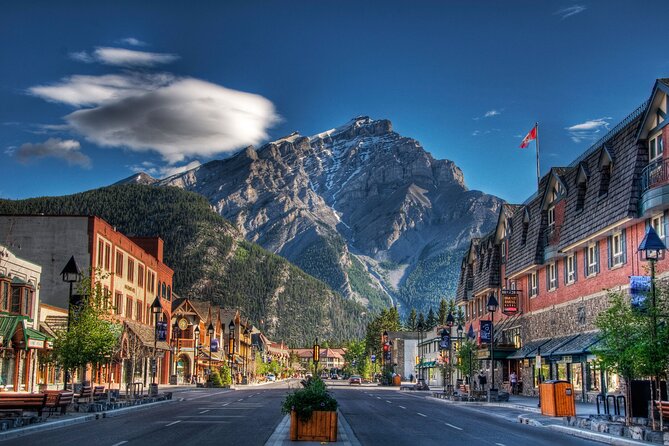
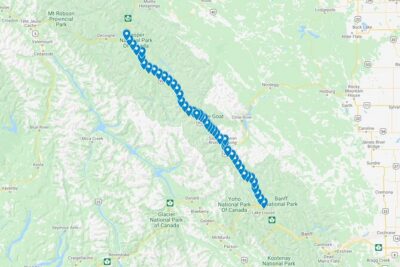
Two of the included experiences are driving tours, including Icefields Parkway and the scenic route from Calgary to Lake Louise. These are the kinds of drives where audio makes sense because you are constantly passing things that would otherwise be “pretty but unexplained.”
On the Calgary to Lake Louise side, you get stories tied to names and places you will recognize right away. You hear about how a lake on the foothills became a playground for people, plus background you would likely miss if you only skimbed signs at stops. You also get context about the area you are traveling through, including what makes the park region distinct even if you are not driving straight through the park boundary on that day.
On the Icefields Parkway style route, you get the geology and “how did they build that” angle, not just the view. The audio includes the classic big-mountain sightings, plus practical explanations that make the scenery feel less random. You will also encounter the “stop when you want” approach, so if you want to pull over for photos longer, you can. If you prefer to keep moving and stop only when you really care, you can.
Small drive-by stops that make the whole day feel smarter
This bundle does not only focus on the biggest scenic icons. It also includes a string of in-between education points you can catch while you are already in the car:
- A stop connected to the upper hot springs, with a suggestion to pause and visit during the tour
- A pass through Kananaskis Country, framed as a driving learning route
- A spot pointing out a last industrial building before entering Banff National Park (useful if you like seeing how development and conservation meet)
- Name stories for Canmore and the surrounding “you can see it everywhere” mountains
- A stop for a mountain nicknamed because it looks like a castle, plus name origin stories
- Explanations for the highway village feel of certain spots, including why their names are what they are
- A bit of “this is why it is called that” for a mountain where the name matches the experience
- More Banff National Park context for when you are not driving deep inside the park boundaries but still want the meaning behind what you pass
Even if you ignore half these micro-stops, the remaining ones tend to make the rest of your drive more memorable. That is the value of bundling stories across a route, not just giving you one “major stop” moment.
Banff by foot: parks, old buildings, and the Mr. Banff story thread

The walking tour focused on the Sights of Banff is one of the best ways to make your day feel like it belongs to Banff, not just a stop on a road trip.
This route uses a live GPS map, and you can spend as much or as little time at each point. That flexibility matters because Banff has a lot going on visually, and crowds can change how fast you want to walk.
The kind of places you will actually notice on this route
Expect a mix of gardens, cultural sites, and town infrastructure history:
- An indoor/outdoor education stop that frames how native people followed buffalo herds seasonally and hauled equipment by travois (this helps you see beyond postcard Banff)
- Big pavilion-style garden stops in a park built in the 1930s, with themed structures like the Cambrian pavilion and Devonian pavilion tied to the broader national parks story
- A look for an elevation marker in the sidewalk, plus what it represents
- Crandell Peck Cabin from 1907, built using mostly locally sourced materials
- Inukshuks, with an explanation of what they are
- The Banff Powerstation, including how it powered streetlights and homes in 1905
- Climate and weather talk while you move between stops, which is helpful in a place where conditions can shift quickly
- Historic residences like Tarry-a-while, tied to early Rockies explorer Mary Schaffer Warren
- A commercial-history corner like Caribou Corner, connected to the Brewster family arriving in 1886
- Town sculptures and murals, including the four sentries sculpture on Banff Ave, plus a mural stop that comes with a story
- Church stops, including one built in 1930 with roots stretching to St. Paul’s church established in 1887
- The Cascade lodge and Free Masons history
- Multiple museum and preservation story beats, including a museum that aims to preserve and make accessible the history and culture of the Rocky Mountains
- Central park and a prominent “pile of rocks” moment that is oddly memorable once you look for it
- The National Historic Site of Canada created in 1895, originally to house taxidermy specimens tied to the park
- A walk past heritage commercial buildings like the Dave Whyte block and Harmony Lane with river stone pillars
It also includes a “Mr. Banff” thread, including viewpoints over the Bow River from the pedestrian bridge.
Best time to do Banff on foot
If you like moving at your own pace, this tour shines early in the day when the streets feel easier to navigate. If the weather is unpredictable, the walking route still works because you can pause longer at indoor parts, and you are not stuck with timed group checkpoints.
Canmore on foot: bears, mining cars, and the Bow River boardwalk
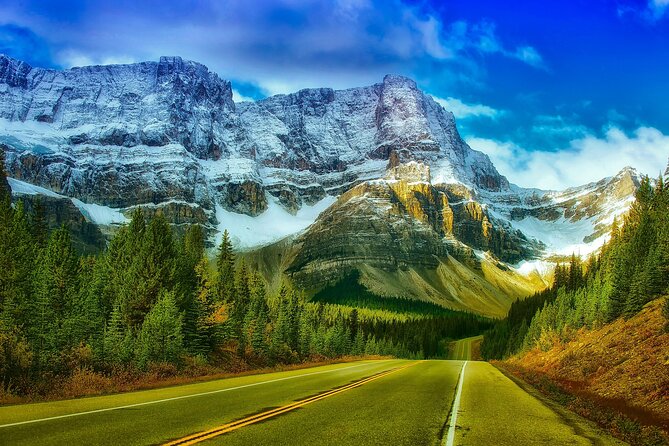
The Sights of Canmore walking tour is designed for the same flexible style, also with a live GPS map. Even though the walking portion sounds short in distance, it covers a lot of town texture and meaning.
The personal-feeling highlights you will likely remember
This tour points you toward features that help you understand Canmore as a living town, not just a view corridor:
- A start around a building tied to the Three Sisters Gallery, including why it is worth a quick look inside
- A stop across Canadian Pacific Railway tracks and how the railway shaped Canmore’s development
- A classic British red telephone box and the story behind these iconic fixtures
- A series of wildlife sculptures, including a black bear sculpture and a grizzly bear sculpture, plus differences between them
- A major naming story view of mountains to the north, including Princess Margaret Mountain, Squaw’s Tit, Mount Charles Stewart, Mount Lady MacDonald, and Mount Grotto
- A coal mining cars monument, a reminder that mining helped power early Canmore’s growth
- A nature-feeling walk with creeks and ponds where fish may be swimming, plus songbirds in forested areas
- A boardwalk story tied to the Bow River carving through Canmore
- A lookout view of Mount Rundle and more name context for the “Three Sisters” perspective
- A poignant public-art stop with a mural of Isabelle Dube and the tragic story connected to it
- A museum stop described as holding over 10,000 artifacts, welcoming visitors since 1984
- A cultural link between Canmore and the Japanese city of Higashikawa
- Main Street time, including shops, restaurants, and galleries
- Heritage architecture stops, including a stalwart built in 1890 by Count Eugene de Rambouville
- A look at the often contentious relationship between the town and miners
- A performance-story stop connected to a wooden stage inspired by Stan Rogers, plus information on the Canmore Folk Fest
- An early Presbyterian church and a mystery about its name
- A “law and order” story tied to barracks used during Canmore’s rougher early days
- Inukshuks, including a big one, plus an explanation of what they represent
- A final sculpture moment connected to the name Canmore
The “short walk, big payoff” reality check
Even if you only walk about a kilometer, the tour builds in multiple stops where you can look, read, and listen. That is ideal if you want a calm morning or an easy afternoon in town without committing to a full hike.
Lake Agnes Tea House Trail and Tunnel Mountain: the hiking side of the bundle
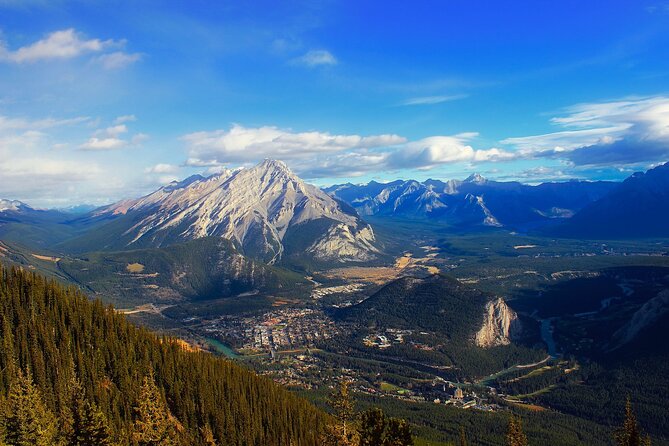
This bundle does not only do driving and town streets. It also includes nature-focused audio tours: Lake Agnes Tea House Trail and Tunnel Mountain.
Lake Agnes Tea House Trail, what to expect
This is positioned as a hiking and nature experience, so you should be ready for uneven terrain and a real walk. The payoff is the kind of Rocky Mountain scenery that makes you understand why people come back again and again, and the audio is likely there to add meaning while you walk.
Because the bundle recommends moderate physical fitness, I would not treat this as a stroll. Bring water, plan for weather changes, and give yourself time to move slowly if the trail is busy or conditions are slippery.
Tunnel Mountain: viewpoint-driven walking
Tunnel Mountain is also included as a nature/hiking tour. Like Lake Agnes, it is about getting outside and using your own route time to connect with place.
One advantage to audio here is simple: it turns the walk into a guided lecture without the pressure to keep pace with a group. If you want to pause for photos or just stare at the view for a minute, you can.
Extra outdoor context you get on the driving side
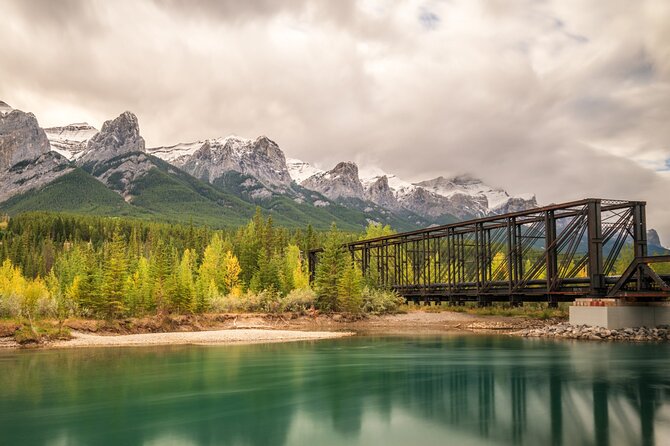
Even when you are not hiking that moment, the driving audio helps you interpret what you are seeing from your car windows.
You get:
- Frequent name stories for iconic mountains
- Explanations for why a highway runs where it does, including a tunnel through a mountain and what went wrong
- Stops that mention ski resorts and what makes each one distinctive
- A “campground you might want to sleep in under the stars” type of story beat
- A mountain river that you drive alongside multiple times, with explanations tied to what you are seeing
These parts matter because Banff and Canmore can feel like a repeating parade of peaks if you do not have a thread. The audio gives you the thread.
Timing, duration, and how to plan your day
You are looking at 3 to 6 hours total depending on which pieces you run and how long you stop. Since the bundle includes driving and walking segments, your day can scale up or down.
A practical approach I would use:
- If you have limited time, do one walking tour in town plus one short driving route segment
- If you have a full day, stack the driving tours and add a hike, but keep one buffer hour for weather and photo stops
- If you want low-stress fun, focus on Banff and Canmore walking, then do a scenic drive loop where you can pull over easily
Also watch for the fact that the activity ends in a different location. Even though the details are not listed here, that tells you to think about where you park your car and whether you will need to plan a final “return plan” for your vehicle.
Should you book this Banff and Canmore audio bundle?
Book it if you like:
- Self-guided travel with offline audio that feels like a guide, but runs on your schedule
- Learning name stories, park context, and town history while you are already moving
- A blend of town walks and real nature like Lake Agnes Tea House Trail and Tunnel Mountain
- Group value, since $35.10 per group with up to 15 people can be a smart deal
Skip it or think twice if:
- You know your phone battery usually dies quickly
- You get frustrated with apps and navigation, especially if GPS can be inconsistent on your device
- You want a classic live guided experience with a person you can ask questions to in real time
If you want Banff and Canmore with less pressure and more control, this is a strong fit. Download ahead, charge up, and treat your car and walking stops like part of the itinerary, not just transportation.
Easier With a Guide


The Long Way Through the Rockies


Just off the notebook: recent Banff write-ups
- Elevated Private Experience: Adventure & Wellness in Banff
★ 5.0 · 4 reviews - From Banff: Affordable Moraine Lake and Lake Louise Shuttle Bus
★ 5.0 · 4 reviews - Banff to Calgary or YYC Airport | Private Transfer
★ 5.0 · 4 reviews - Banff Gondola & Lake Minnewanka Cruise Combo
★ 5.0 · 4 reviews - Moraine Lake Lake Louise Johnston Canyon Emerald Lake Day tour
★ 5.0 · 4 reviews - From Banff: Winter Wonderland; Lake Louise & Johnston Canyon
★ 5.0 · 4 reviews
Canadian Rockies Road Trips, compared.
 ★ 5.0Lake Louise, Moraine Lake and the Icefields Parkway Full-Day TourFrom $165836 reviews
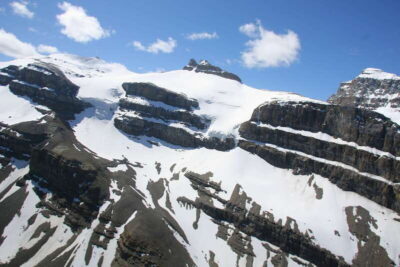 ★ 4.9Banff/Jasper: Canadian Rockies Scenic Helicopter TourFrom $202183 reviews
 ★ 5.0Circle West – Canadian Rockies Round Trip Bus Tour From VancouverFrom $1,469163 reviews
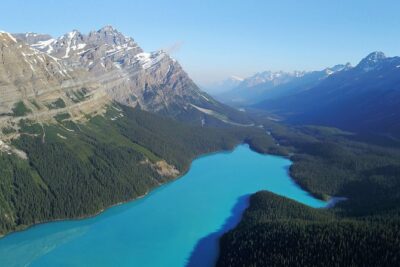 ★ 5.04-Day Canadian Rockies & Banff Classic Summer TourFrom $912163 reviews
 ★ 4.5Canadian Rockies and Banff 4-Day Tour from Vancouver (Chn&Eng)From $862142 reviews
 ★ 5.0Icefields Parkway Highlights & Secrets | Award-Winning AdventureFrom $217140 reviews
 ★ 5.0Canadian Rocky Mountains & Banff 5-Day Premium TourFrom $1,666124 reviews
 ★ 4.0Icefields Parkway: a Smartphone Audio Driving TourFrom $9118 reviews
Browse the lists this tour appears in