
REVIEW · WILDLIFE
Banff and its Wildlife – Year Round Tour
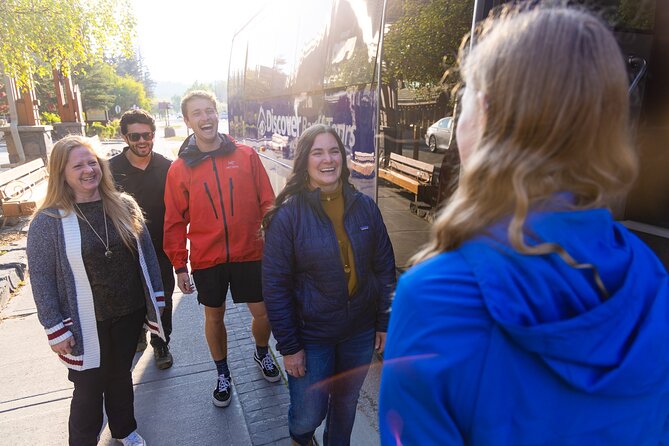
Banff mornings have a way of feeling magical. This small-group tour lines up the big Banff sights and gives you a real shot at spotting elk, deer, bears, and bighorn sheep. I especially like the round-trip pickup options and the guided storytelling that connects geology and local history to what you are seeing. The main thing to weigh is that this is not a guaranteed wildlife outing, and you also spend a good chunk of time riding between short stops.
You will roll through classic views like Bow Falls and Surprise Corner, then pause at viewpoints such as the Hoodoos Trail. Guides like Bobby and Eli have earned praise for keeping the drive entertaining and for getting people as close as they safely can. Just keep expectations realistic: if wildlife is active elsewhere that morning, you may mostly leave with scenery and stories instead of animals in the frame.
In This Review
- Key Highlights You Should Know Before You Go
- Banff wildlife chances plus the highlights in about 3 hours
- Price and value: what $72.04 buys you (and what it does not)
- Pickup timing: be ready early, or you will miss the bus
- Lake Minnewanka: the largest lake, plus the ghost-town story
- Bow Falls: limestone roar, Hollywood trivia, and fast photo time
- Surprise Corner: Castle of the Rockies in one clean view
- Hoodoos Trail: rock formations, meanings, and Sleeping Buffalo views
- Bankhead Ghost Town (summer only): a mining-era pause
- Wildlife expectations: good odds in the morning, no guarantees
- Guides can make or break the experience: Bobby, Eli, Tim, and more
- What to bring, and how to avoid common small-day annoyances
- Who this tour is best for
- Should you book this Banff and its Wildlife tour?
- FAQ
- How long is the Banff and its Wildlife tour?
- When does this tour operate?
- Is hotel pickup included, and where do I meet if I do not choose pickup?
- What is included in the ticket price?
- Are there admission fees for the stops?
- What happens if the tour is canceled due to poor weather?
Key Highlights You Should Know Before You Go
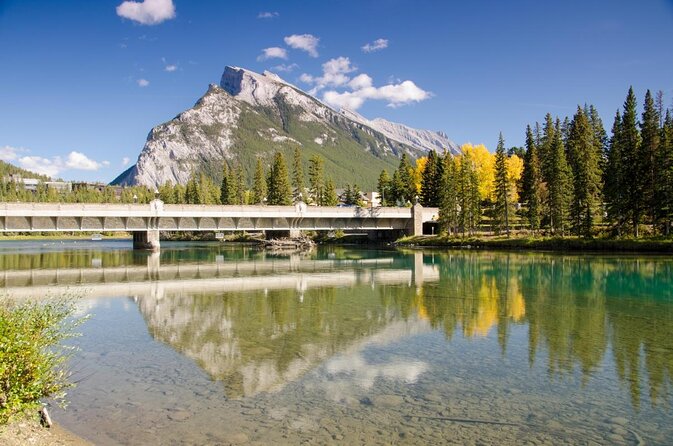
- Max group size of 24, so the bus stays lively but not chaotic.
- Guided geology and history talk tied to the exact places you stop.
- Lake Minnewanka with stories behind the underwater ghost town.
- Bow Falls roaring over limestone, plus classic Hollywood film trivia.
- Hoodoos viewpoints paired with Indigenous names and meanings shared by the guide.
- Bankhead Ghost Town is included in summer only, so timing matters.
More wildlife worth getting up early for
- Banff Highlights & Wildlife | Award-Winning Small Group Adventure★ 4.5 · 725 reviews
- Banff: Evening Wildlife Safari Guided Tour★ 3.9 · 465 reviews
- From Banff: Banff Wildlife & Scenic Highlights Premium Tour★ 4.4 · 266 reviews
- Banff: Wildlife and Sightseeing Minibus Tour★ 4.5 · 142 reviews
Banff wildlife chances plus the highlights in about 3 hours
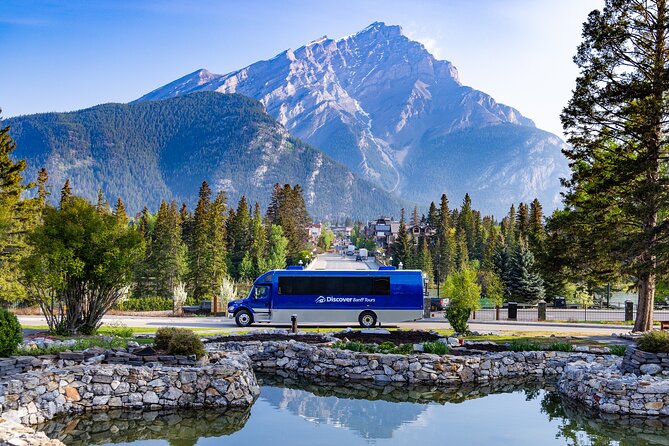
This tour is built for a morning circuit, roughly 3 hours from start to finish. You get a focused run at the places most first-timers want to see, and you also get your eyes trained for wildlife in the early hours. It is compact, with quick stops, so you are not signing up for a slow, wander-all-day adventure.
A big reason I think it works for many people is the pacing. You get short photo windows and viewpoint time, then you move on while your guide keeps the stories coming. In at least one case, people noted they spent a lot of time on the bus, which tells me you should plan for transit as part of the experience, not as a side note.
One more practical detail: the tour is seasonal and runs between April and mid-October. So even if you see the year-round name, plan around those dates.
Price and value: what $72.04 buys you (and what it does not)
At about $72.04 per person for a guided half-morning, the value comes from four things: the guide, the included snacks and drinks, and the convenience of pickup and drop-off. You are also paying for time efficiency. Instead of spending your morning driving all over Banff yourself, you get a route that targets the most famous stops without you having to juggle parking and directions.
What it is not is an all-day, fully flexible experience. Stops are short, and you are on a set schedule. And while the tour is themed around wildlife, you are not buying a wildlife guarantee, so your best bet is to treat wildlife as a bonus that might happen.
You also will not have to pay for admissions at the listed stops, since the itinerary shows those stops as free. That means the cost stays straightforward once you book, aside from optional tips.
Pickup timing: be ready early, or you will miss the bus
This is a pickup-based tour. The start time is 8:30 am, and you will have one of several pickup times around Banff. The earliest listed pickup is 7:55 am at Banff Rocky Mountain Resort, and the latest listed pickup is 8:35 am at Juniper Hotel. If you do not select pickup, your default meeting point is the public bus parking behind the Mount Royal Hotel at 8:12 am.
Here is the part you need to respect: you must be ready at your pickup point 5 minutes before your scheduled time. One unhappy review centered on arriving too close to departure, not finding the group, and missing the departure window entirely. That is the kind of mistake you can avoid by giving yourself a little breathing room.
You get a mobile ticket, and confirmation is received at booking. The tour operates in English, and the group stays small with a maximum of 24 people.
Lake Minnewanka: the largest lake, plus the ghost-town story
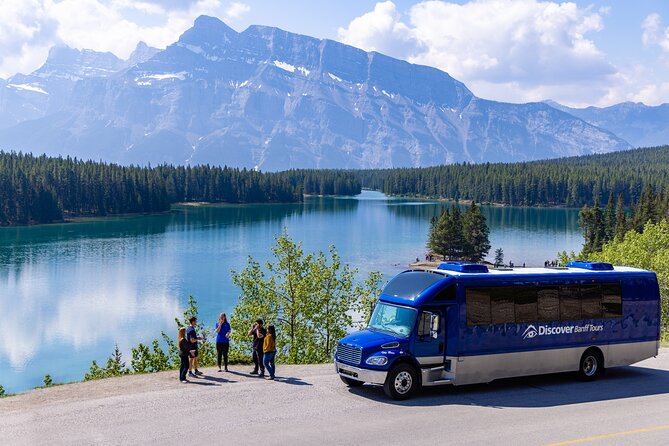
Lake Minnewanka is the first stop, with about 15 minutes on the ground. The draw here is size and story. It is Banff’s largest lake, and your guide will tell you the tale behind the underwater ghost town legend.
Even if you are only catching views from a quick stop, this is a good place to learn what makes the area tick. A lake like this is tied to glacial history and the way water shapes the valley. In practical terms, it also tends to be an easy early morning pause, which can help if you are hoping to see wildlife before the day gets busy.
The trade-off is time. Fifteen minutes goes fast, especially if you want photos from multiple angles. If you are the type who likes to linger, keep your expectations set for a quick look and a guided story rather than a long walk.
Bow Falls: limestone roar, Hollywood trivia, and fast photo time
Next up is Bow Falls, with about 10 minutes. This is where the scenery gets loud, fast. Water crashes over ancient limestone, creating a spectacle of sound and sight.
A fun detail you will likely hear from your guide is the film connection. Bow Falls were featured in classic 1950s Hollywood, including River of No Return starring Marilyn Monroe. That sort of trivia is not just fun trivia. It helps you see the waterfall as more than a postcard. It becomes part of Banff’s broader pop culture footprint.
The main limitation is the same pattern you see all day: short stop. Ten minutes works best if you show up ready to move quickly from viewpoint to viewpoint. If you need a long calm moment, or you want a leisurely walk around the area, plan on using this time for photos and listening, not for a full stretch.
Surprise Corner: Castle of the Rockies in one clean view
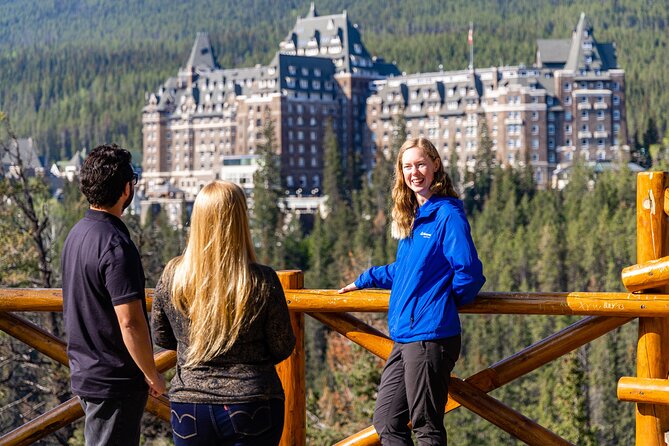
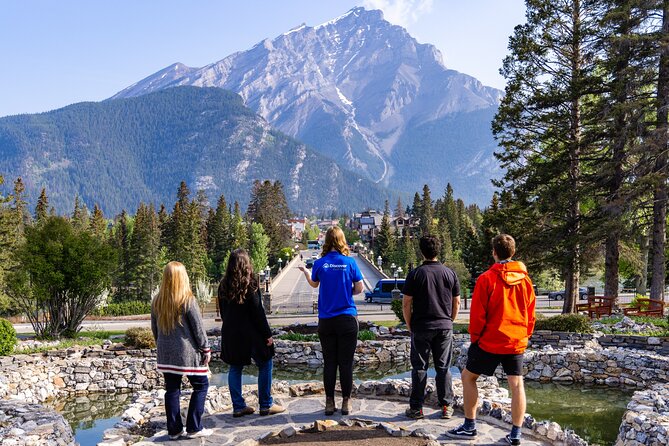
At Surprise Corner, you get around 10 minutes. This is one of those short stops that can still feel high-impact because it stacks the view elements neatly: the “Castle of the Rockies” against Sulphur Mountain, with the Bow River in the foreground.
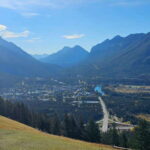
This is a great stop for anyone trying to orient themselves visually. If Banff is your first time in the Rockies, you want a mental map. Surprise Corner can give you that, because it shows how the mountains and river valley relate to each other.
One consideration: since the time window is brief, you should come prepared to take photos quickly. If lighting is harsh, you might get only one good attempt. I would treat it as a quick framing stop, not a “sit and watch the light change” stop.
Hoodoos Trail: rock formations, meanings, and Sleeping Buffalo views
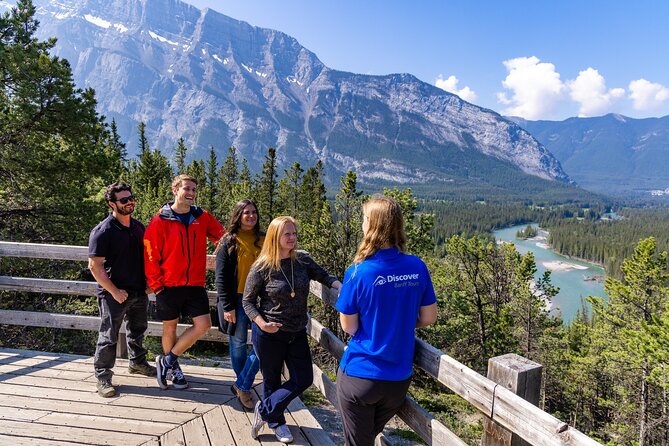
The Hoodoos Trail stop runs about 20 minutes, making it one of the longer breaks in the itinerary. Hoodoos are those strange, tall rock spires shaped by erosion, and the guide will explain how they form and what makes them look so otherworldly.
What I like about this stop is that it is not only geology. In one guided experience, the group also heard Indigenous naming and meaning tied to the area, including the view of the rock formation referred to as Sleeping Buffalo Guardian Mountain. Another part of the Hoodoos discussion included the hoodoos name and meaning in terms of Indigenous ancestors. That kind of context changes your perspective from just looking at rocks to understanding why those rocks matter culturally and historically.
The drawback is that your time is still limited. Twenty minutes can be plenty for a viewpoint and photos, but not for long trails. If your goal is hiking, this is more of a viewpoint stop than a hike.
Bankhead Ghost Town (summer only): a mining-era pause
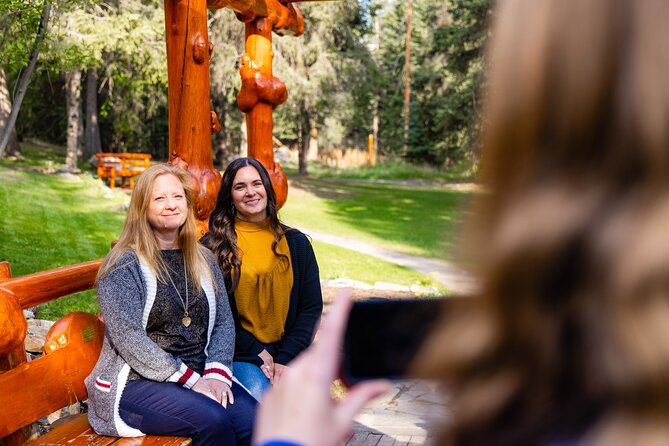
If your trip falls in summer, you may get the Bankhead Ghost Town stop. It is listed as summer only, with about 10 minutes. This is where the tour leans into Banff’s industrial past, focusing on an abandoned mining town and what remains today.
This stop adds variety to the day. You go from water and rock formations to the human layer of the story. Even in a short window, you get a feel for how mining activity once shaped the region and why artifacts and ruins sit alongside wild scenery.
The key thing to know is the timing. If you are traveling outside summer, you should not count on this stop.
Wildlife expectations: good odds in the morning, no guarantees
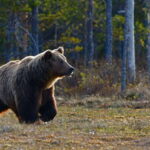
The tour is themed around wildlife, and the description explicitly says it is a good time to look for elk, deer, bears, and bighorn sheep. Many people get real sightings on these types of early routes, especially when the weather is cool and animals are active.
Still, you should treat wildlife as chance-based. One common pattern in the experiences shared is that some mornings delivered animals close by, while other mornings were quieter, especially when conditions were warmer. So yes, wildlife is part of the plan, but you are not buying a promise.
If you are the kind of person who really wants wildlife first, plan your mindset. This tour pairs wildlife spotting with major landmarks. If your priority is only animals, you might consider a dedicated wildlife-focused option instead of a general sightseeing circuit. For this tour, the best approach is simple: watch roadsides carefully, keep your eyes scanning in bursts, and be patient.
Guides can make or break the experience: Bobby, Eli, Tim, and more
The guides show up as a consistent highlight. People have praised guides like Bobby and Eli for making the morning feel smooth and informative, even when wildlife sightings varied. Others, including Alex and Tim, received compliments for clear explanations and for working to get people into good viewing positions when animals appeared.
What I take from that, and what you can use as a tip, is to engage. When your guide offers context about geology, landmarks, or wildlife behavior, you are getting more out of each stop than just the view. You also get practical benefits. For example, some guides are described as actively answering questions at the stops, which helps you move past curiosity into understanding.
The day also tends to run with a comfortable flow. One experience noted the bus was comfortable, and another highlighted the guide’s humor. That matters, because when a tour is partly sightseeing and partly riding, your guide becomes the quality control.
What to bring, and how to avoid common small-day annoyances
This tour includes a maple cookie snack and fresh water, plus hot chocolate in winter (depending on season offerings). Still, I suggest bringing a little extra flexibility for your own comfort, especially since one experience mentioned that water availability did not match expectations that day.
Plan for morning weather. It can be frosty early in the Rockies, and layers matter. The tour runs in a seasonal window, but mornings can still feel chilly even in shoulder months.
Also, keep your belongings simple. You might be carrying passports or money. Build a habit around keeping your essentials with you rather than relying on the bus for everything. You will be off and on the vehicle, and small friction adds up during a short tour.
Who this tour is best for
This is a strong pick if you want an efficient introduction to Banff. You get famous sights like Bow Falls and Lake Minnewanka, plus a viewpoint circuit that gives you a sense of the valley and ridgelines. It also suits you if you are traveling without a car, since pickup and drop-off handle the biggest logistics.
It is also a good fit for people who like learning while sightseeing. The tour includes hands-on interpretive tools, which is a nice touch for breaking up the bus-and-photos rhythm.
If you are a die-hard wildlife-first person, keep your expectations calibrated. This is a landmarks-plus-wildlife-chances morning, not a wildlife safari with a focus on tracking.
Should you book this Banff and its Wildlife tour?
Book it if you want:
- a guided, short, high-sight hit of Banff’s major natural spots
- pickup convenience and a small group size
- a morning route that looks for elk, deer, bears, and bighorn sheep
Skip it or rethink your expectations if you need guaranteed wildlife or you dislike time spent on the bus between quick stops. Also, remember it is seasonal and runs April to mid-October, so check dates carefully.
FAQ
How long is the Banff and its Wildlife tour?
The tour runs for about 3 hours.
When does this tour operate?
It operates seasonally between April and mid-October.
Is hotel pickup included, and where do I meet if I do not choose pickup?
Hotel pickup is available on request. If you do not select a pickup point, the default meeting point is the public bus parking behind the Mount Royal Hotel at 8:12 am.
What is included in the ticket price?
You get a professional guide, a maple cookie snack, fresh water, and hands-on interpretive tools. Pickup and drop-off are also included as part of the tour, with hotel pickup available on request.
Are there admission fees for the stops?
The listed stops show admission tickets as free.
What happens if the tour is canceled due to poor weather?
If it is canceled because of poor weather, you will be offered a different date or a full refund.
Worth the Early Alarm
Just off the notebook: recent Banff write-ups
- Elevated Private Experience: Adventure & Wellness in Banff
★ 5.0 · 4 reviews - From Banff: Affordable Moraine Lake and Lake Louise Shuttle Bus
★ 5.0 · 4 reviews - Banff to Calgary or YYC Airport | Private Transfer
★ 5.0 · 4 reviews - Banff Gondola & Lake Minnewanka Cruise Combo
★ 5.0 · 4 reviews - Moraine Lake Lake Louise Johnston Canyon Emerald Lake Day tour
★ 5.0 · 4 reviews - From Banff: Winter Wonderland; Lake Louise & Johnston Canyon
★ 5.0 · 4 reviews
Wildlife, compared.
 ★ 5.0Victoria Whale and Wildlife CruiseFrom $1461,729 reviews
 ★ 4.5Banff Highlights & Wildlife | Award-Winning Small Group AdventureFrom $94725 reviews
 ★ 4.5Jasper Evening Wildlife TourFrom $65710 reviews
 ★ 4.6Jasper National Park: Evening or Morning Wildlife Watch TourFrom $63691 reviews
 ★ 5.0Jasper Wildlife & Sightseeing Tour with Maligne Lake CruiseFrom $176603 reviews
 ★ 4.8Jasper: Wildlife and Waterfalls Tour with Maligne CruiseFrom $155501 reviews
 ★ 3.9Banff: Evening Wildlife Safari Guided TourFrom $55465 reviews
 ★ 5.0Cowichan Bay Half Day Whale & Wildlife AdventureFrom $159393 reviews
Browse the lists this tour appears in